Direct Vent Water Heaters: How They Work and What to Check
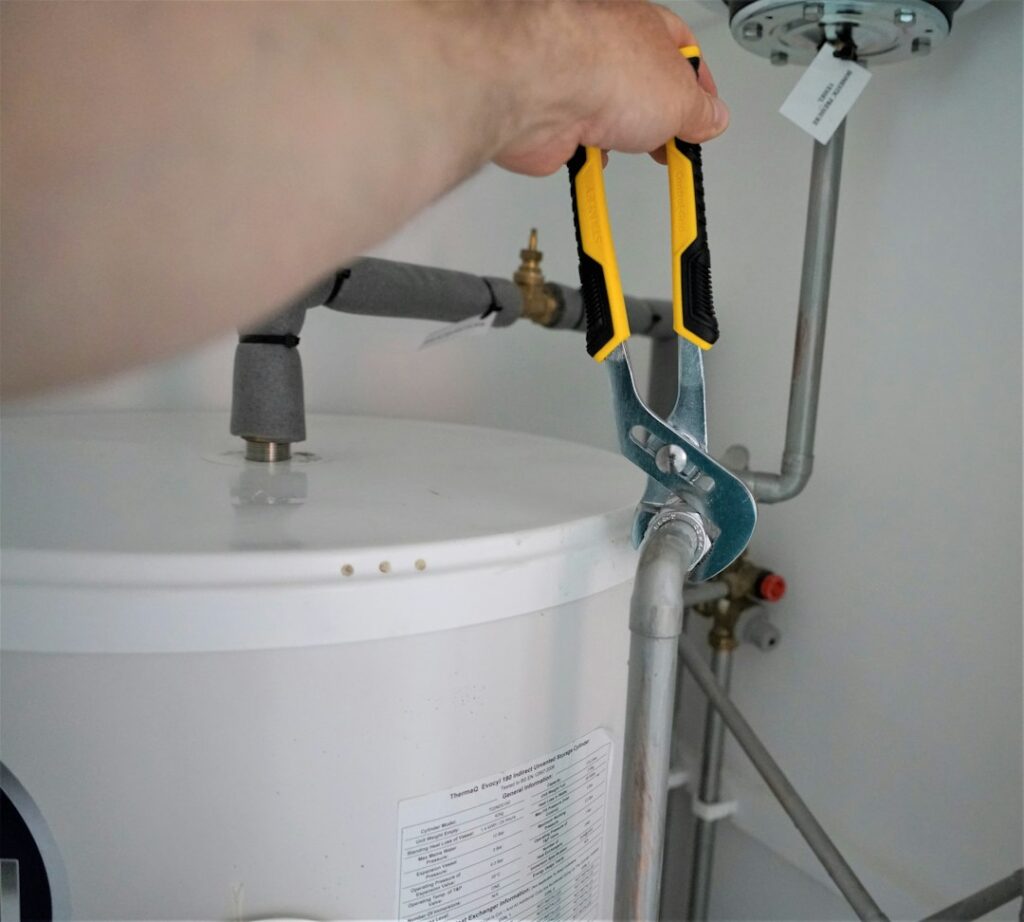
Gas water heaters need two things to burn safely: a supply of air for combustion and a path for exhaust to leave the house. Older tank heaters take that air from the room and send exhaust up a chimney by natural draft. A direct vent water heater takes a different approach. It seals the burner off from the living space, pulls combustion air from outdoors through one pipe or one ring of a concentric pipe, and sends exhaust back outside through the other, usually through a side wall. This guide explains how the design works, how it compares with atmospheric and power-vent units, where it fits best, which clearances and snow issues matter in Colorado, what an inspector looks at, and roughly what installation costs. It is written for Front Range homeowners and buyers weighing a replacement or reviewing an inspection report.
Part of our Plumbing & Water guide — start there for the full picture →
Plumbing problem? Talk to a local plumber now.
📞 Call (877) 637-1527What a Direct Vent Water Heater Is
A direct vent water heater is a gas-fired heater, most often a storage tank, with a sealed combustion system. The burner chamber is closed to the room. Combustion air enters from outside through a dedicated intake, and flue gases leave through a dedicated exhaust, with both pipes typically terminating on an exterior wall close to the heater.
Two vent arrangements are common:
- Concentric (coaxial) vent: one pipe inside another. Exhaust travels out through the inner pipe while fresh air comes in through the space between the inner and outer pipes. Only one wall penetration is needed, and the incoming air helps keep the outer pipe cool.
- Two-pipe vent: separate intake and exhaust pipes, each with its own termination. This layout allows longer runs in some models and more flexibility in routing.
Many traditional direct vent tank models rely on natural convection through a short horizontal vent, without a fan, which is why their vent runs are usually short and the heater must sit close to an outside wall. Other sealed-combustion heaters add a blower, and some manufacturers market these as power direct vent units. The details vary by model, so the installation manual is the reference for vent length, pipe material and termination kit.
Direct Vent vs. Atmospheric vs. Power Vent
Gas water heaters fall into a few broad venting families. Understanding the differences explains why one model suits a given house better than another.
Atmospheric (natural draft) water heaters
The most common traditional design. The burner draws air from the surrounding room, and hot exhaust rises through a draft hood into a vertical metal vent that runs up through the roof or into a chimney. It is simple and needs no electricity for venting, but it depends on the room having enough combustion air and on the vent drawing properly. Strong exhaust fans, a tight building envelope or a blocked chimney can cause exhaust to spill back into the room. The gas water heater guide covers this standard design, and the water heater vent pipe guide explains slope, connections and clearances for these vents.
Power-vent water heaters
A power-vent heater uses an electric blower to push exhaust out, often through plastic pipe and a side wall. That allows longer, more flexible vent runs. However, many power-vent models still draw combustion air from the room, so they are not sealed combustion. They also need an electrical outlet, and the fan adds noise and a component that can fail. The power vent water heater guide covers them in detail.
Direct vent water heaters
Direct vent units isolate combustion entirely from indoor air. Traditional models need no electricity for venting, which means hot water can continue during a power outage in many cases. The trade-off is placement: because many rely on natural convection through a short horizontal vent, the heater usually must sit within a few feet of an exterior wall, and the vent length limits are strict.
A quick comparison:
- Air source: atmospheric and most power-vent units use room air; direct vent uses outdoor air.
- Exhaust path: atmospheric goes up a vertical vent; power vent and direct vent usually go out a side wall.
- Electricity: needed for power vent; often not needed for traditional direct vent.
- Placement flexibility: power vent is the most flexible; direct vent is typically the least.
Best Water Heaters: our top 3 picks
| Product | Best for | Key features | Price | Buy |
|---|---|---|---|---|
| Rheem PROE50 M2 RH95 | Best overall whole-house tank |
| $891.99as of Nov 15, 2026 3:42 am GMT+0000 | Buy now →Check current price |
| Rheem RTG 7.0 Indoor | Indoor gas tankless upgrade |
| $653.00as of Nov 15, 2026 6:18 am GMT+0000 | Buy now →Check current price |
| Rheem RTEX-24 | All-electric home, no venting |
| $545.71as of Nov 15, 2026 6:18 am GMT+0000 | Buy now →Check current price |


Prices are Amazon’s listed prices as of the time shown and change often; check Amazon for today’s price. As an Amazon Associate we earn from qualifying purchases.
Benefits of Sealed Combustion
Lower risk of backdrafting into living space
Carbon monoxide is the central safety concern with any fuel-burning appliance. The U.S. Environmental Protection Agency lists back-drafting from gas water heaters, furnaces, wood stoves and fireplaces among indoor sources of CO, along with flues that are improperly sized, blocked or disconnected. Because a direct vent heater draws its air from outdoors and has a sealed vent path, it is not competing with kitchen fans, bath fans or clothes dryers for room air, which reduces one of the common causes of spillage. Sealed combustion does not eliminate CO risk; a damaged vent, a failed seal or a blocked termination can still cause problems.
A good fit for tight homes and small spaces
Newer and recently weatherized homes along the Front Range can be tight enough that an atmospheric heater in a closet struggles to get combustion air. Direct vent units suit closets, finished basements and utility rooms where adding combustion-air openings would be awkward. They can also make sense where an old chimney is being abandoned or relined, since the heater no longer needs it.
No dependence on an existing chimney
When a furnace is replaced with a high-efficiency model vented in plastic pipe, an atmospheric water heater can be left alone on a chimney that is now oversized for it. That situation can cause poor draft and condensation. Switching the water heater to direct vent is one of several options a contractor might suggest.
Installation Clearances and Colorado Snow
Termination clearances from openings
Because the vent terminates on a side wall at or near grade, building codes and manufacturer instructions set minimum distances from doors, operable windows, air intakes, gas meters, corners and walkways. The exact numbers depend on the heater’s input rating, the vent type, the adopted code edition and the manufacturer’s listing, so they are not repeated here. Treat the installation manual and the local building department as the authority, and confirm locally before a vent location is finalized. Exhaust that terminates too close to a window or a fresh-air intake can be drawn back inside, which defeats the purpose of sealed combustion.
Snow-drift clearance in Colorado winters
Low side-wall terminations face a hazard that roof vents do not: snow. Drifts against the north or east side of a house, snow sliding off a roof, or plowed snow piled against a wall can bury a vent. A blocked intake can starve the burner, and a blocked exhaust can send combustion gases back toward the appliance. Manufacturers and many local codes call for the termination to sit some distance above the expected snow level or above grade, and some jurisdictions in snowy areas set their own minimums. Requirements vary, so confirm locally.
Practical steps many homeowners in Denver, the foothills and higher-elevation towns follow include:
- Keeping vent terminations clear after every significant snow.
- Avoiding shoveling or plowing snow against the wall where the vent exits.
- Watching for ice buildup from condensing exhaust on very cold days.
- Placing new terminations away from roof valleys and drip lines where possible.
Altitude
Gas appliances along the Front Range operate at elevations where the air is thinner. Many manufacturers specify derating or high-altitude configurations above a certain elevation. A qualified installer should confirm the heater is set up for the home’s altitude.
Direct Vent Tank vs. Tankless
Homeowners replacing a heater often weigh a direct vent tank against a tankless unit. Many gas tankless heaters also use sealed combustion with a direct vent, so both can avoid using room air. The differences lie elsewhere:
- Hot water delivery: a tank stores heated water and can run out during heavy use; a tankless heater heats on demand but has a flow-rate limit.
- Gas supply: tankless units often need a much larger gas input, which may require upsizing the gas line or meter.
- Electricity: tankless units need power for controls and fans.
- Efficiency: the ENERGY STAR program sets a higher Uniform Energy Factor threshold for certified gas instantaneous heaters than for certified gas storage heaters, and its criteria also cover first-hour rating and warranty length.
- Maintenance: tankless units in hard-water areas typically need periodic descaling.
The tankless water heater guide compares sizing, venting and upkeep in more detail. ENERGY STAR describes the Uniform Energy Factor as the newest measure of water heater efficiency, with higher values meaning more efficient units, which makes it a practical number to compare on spec sheets for either type.
What an Inspector Checks on a Direct Vent Heater
The ASHI Standard of Practice lists water heating equipment and vent systems among the plumbing items an inspector inspects, and calls for describing the water heater’s energy source and the location of main water and fuel shut-off valves. The standard also says inspectors are not required to inspect the interiors of vent systems that are not readily accessible, or to determine the adequacy of combustion air components.
Within that scope, common observations on direct vent units include:
- Termination condition: the vent cap should be intact, free of nests and debris, properly sealed at the wall, and not damaged by lawn equipment or snow removal.
- Location: obvious proximity to windows, doors, decks or meters that may warrant a closer look by a licensed contractor.
- Sooting or scorching around the termination or at the burner access, which can indicate poor combustion.
- Vent connections visible at the heater: secure, sealed and supported.
- Temperature and pressure relief valve and its discharge pipe.
- Gas shutoff and sediment trap near the appliance.
- Age and data plate, including whether the unit appears to be set up for high altitude where that applies.
Carbon monoxide alarms
The U.S. Consumer Product Safety Commission recommends battery-operated CO alarms, or alarms with battery backup, on every level of the home and outside sleeping areas, and notes that interconnected alarms are best. CPSC also advises against installing CO alarms in kitchens or above fuel-burning appliances, and recommends having heating systems professionally inspected and serviced annually, including chimneys and flues. Its guidance describes early CO poisoning symptoms as flu-like without fever, including headache, fatigue, shortness of breath, nausea and dizziness. Many states and localities require CO alarms in residences, so check local requirements with the building official.
Warning Signs a Direct Vent Heater Needs Service
Sealed combustion makes problems less likely to reach the living space, but the heater still needs attention when something changes. Signs worth a call to a licensed plumber or gas technician include:
- Pilot or burner that will not stay lit, especially on windy days or after a snowstorm. Wind blowing directly across a termination, or a partly blocked intake, can disrupt combustion in some models.
- Soot, black streaks or melted plastic around the outside termination or the burner access door.
- A yellow, lazy or noisy flame instead of a steady blue one, where a sight glass makes the flame visible.
- Rust or water at the vent connection on the heater, which can point to condensation or a leaking seal.
- A cracked, crushed or loose termination cap, often from a lawn mower, a snow shovel or settling of the wall.
- Any CO alarm activation. CPSC advises moving everyone outside to fresh air immediately rather than looking for the source, then calling emergency services, and not operating a suspect appliance again until trained personnel have serviced it.
Homeowners should not try to open the sealed combustion chamber, adjust the gas valve or modify the vent. CPSC guidance warns against servicing fuel-burning appliances without proper knowledge, skill and tools, and most manufacturers void warranties for unauthorized repairs.
Choosing a location for a new direct vent heater
For a buyer planning a replacement, location drives most of the cost. A heater already sitting against an exterior wall, with a clear outdoor spot well away from windows, doors, decks and the gas meter, is the simplest case. A heater in the middle of a basement may need to be relocated, which can mean extending water lines, the gas line and the drain for the relief valve. In that case, a power-vent or power direct vent model with a longer allowable vent run may be the more practical choice, and a contractor can lay out the options side by side.
What a Direct Vent Water Heater Costs
Prices depend on capacity, efficiency, brand tier, venting complexity and local labor rates. The figures below are rough planning ranges, not quotes:
- Equipment: direct vent tank heaters generally cost more than comparable atmospheric models, often by several hundred dollars, because of the sealed combustion system and vent kit.
- Straight replacement: swapping an existing direct vent heater for a similar unit in the same location may run in the low thousands of dollars installed, depending on capacity and access.
- Conversion from atmospheric: moving to direct vent may involve a new wall penetration, relocating the heater closer to an outside wall, gas line changes and patching the old vent opening, which can add significantly to the total.
- Permits: many Front Range jurisdictions require a permit and inspection for water heater replacement. Permit fees vary by city and county.
- Annual service: a service visit to check the burner, vent and relief valve typically costs a modest fee, often less than a hundred to a couple hundred dollars.
Get at least two written quotes and ask each contractor to confirm the vent route, termination location, snow clearance plan, altitude setup and permit responsibility. The hiring process section and the plumbing and water hub cover how to compare plumbers and what to ask before signing.
Maintenance Tips for Direct Vent Units
- Check the outside termination a few times a year and after storms.
- Keep shrubs, firewood and stored items away from the vent.
- Flush sediment from the tank according to the manufacturer’s schedule.
- Test the temperature and pressure relief valve as the manual recommends.
- Look through the burner sight glass, if present, for a steady blue flame.
- Replace CO alarms at the age the manufacturer recommends.
More Questions About Direct Vent Water Heaters
How long does a direct vent water heater last?
A direct vent tank water heater typically lasts about 8 to 12 years, similar to other gas tank water heaters, according to industry estimates. Water quality, maintenance and installation conditions affect lifespan.
Flushing sediment, checking the anode rod and having the burner and venting inspected can help extend service life. Signs that replacement may be near include rust-colored water, leaks at the tank, rumbling noises and reduced hot water supply. Tankless direct vent units usually last longer than tanks with proper maintenance.
Why does the pilot keep going out on a direct vent water heater?
A pilot that keeps going out on a direct vent water heater is often caused by a dirty or failing thermocouple or flame sensor, a blocked or damaged vent, or wind or debris affecting the combustion air intake. Gas supply problems can also cause outages.
Check that the exterior vent termination is clear of snow, leaves and nests. Repeated pilot outages should be evaluated by a qualified technician because they may indicate combustion or venting problems. Never bypass safety devices to keep the pilot lit.
Can a direct vent water heater be converted from natural gas to propane?
Some direct vent water heaters can be converted between natural gas and propane using a manufacturer-approved conversion kit, but not all models allow conversion. The conversion involves changing orifices and gas valve settings.
Conversion should be done only by a qualified technician following the manufacturer’s instructions, because incorrect setup can cause unsafe combustion or carbon monoxide. Check the rating plate and manual to confirm whether a conversion kit exists for the specific model.
Does a direct vent water heater need an expansion tank?
A direct vent water heater may need a thermal expansion tank if the plumbing system is closed, such as when a check valve or pressure-reducing valve prevents water from expanding back into the main supply. Many local codes require one in these situations.
Thermal expansion can raise pressure and cause the relief valve to drip. A plumber can check system pressure and local requirements. The temperature and pressure relief valve must remain functional and properly piped regardless of whether an expansion tank is installed.
References
- Carbon Monoxide Questions and Answers — U.S. Consumer Product Safety Commission
- Carbon Monoxide’s Impact on Indoor Air Quality — U.S. Environmental Protection Agency
- Water Heater Key Product Criteria — ENERGY STAR
- ASHI Standard of Practice for Home Inspection — American Society of Home Inspectors
Frequently asked questions
What is the difference between direct vent and power vent water heaters?
A direct vent heater draws combustion air from outdoors and exhausts outdoors through a sealed system. Many power-vent heaters use a fan to push exhaust out but still take combustion air from the room and need electricity.
Does a direct vent water heater need electricity?
Many traditional direct vent tank models do not need electricity for venting, so they may keep working during an outage. Fan-assisted sealed-combustion models do need power, so check the specific model.
How far does a direct vent termination need to be from a window?
The required distance depends on the heater's input rating, the vent type, the manufacturer's instructions and the local code. Confirm the exact clearance with the installation manual and the local building department.
What should be done if snow covers the water heater vent?
Clear the snow from the termination carefully and keep the area free of drifts and plowed snow. If the heater has shut down or a CO alarm sounds, leave the home and call the gas utility or a qualified technician.
Is a direct vent water heater safer than an atmospheric one?
Sealed combustion reduces the chance of exhaust spilling into the living space because the heater does not rely on room air or natural chimney draft. It still needs proper installation, intact vent pipes and working CO alarms.
Can wind affect a direct vent water heater?
Strong wind can affect a direct vent water heater if the termination is poorly located or damaged, potentially causing pilot outages or combustion issues. Proper termination placement and approved vent caps reduce wind effects. Repeated issues should be checked by a technician.
Can a direct vent water heater vent through the roof?
Many direct vent water heaters vent through a sidewall, but some models allow vertical venting through the roof. Vent length, elbows and termination must follow the manufacturer's installation instructions. A qualified installer can confirm options for the specific unit.
What temperature should a direct vent water heater be set to?
A water heater thermostat is commonly set around 120°F to reduce scald risk and save energy, while some households choose higher settings for specific needs. Mixing valves can provide hotter stored water while delivering safer temperatures at fixtures.
Reviewing an inspection report that flags a water heater vent, or planning a switch to sealed combustion in a Front Range home? Get in touch and we can point you toward an inspector who checks fuel-burning appliances and their venting closely.