Gas Water Heaters: Venting, Combustion Air and Lifespan
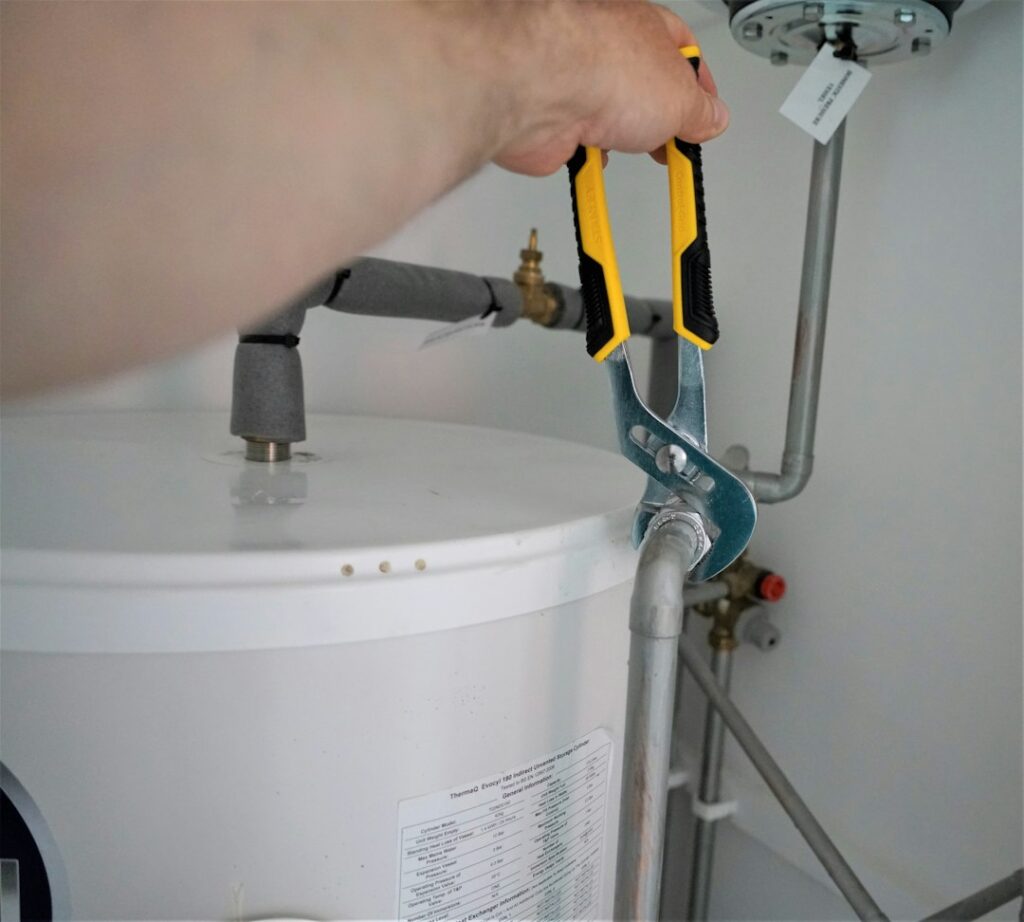
A gas water heater is one of the few appliances in a house that burns fuel inside the living space, around the clock, usually in a basement utility room or garage that nobody visits until something goes wrong. When it is installed and vented correctly, it is a simple, durable machine. When the vent is loose, the flue is undersized, the room is starved for combustion air or the relief valve has no proper discharge pipe, it becomes a carbon monoxide, fire and flooding risk. This guide explains the main types of gas water heaters, how venting and combustion air work, which safety components matter most, what changes at Front Range altitudes, how efficiency is rated, how long tanks tend to last and what replacement typically costs. It summarizes CDC and ENERGY STAR guidance current as of 2026. Gas piping, venting and appliance installation should be handled by a licensed plumber or gas fitter, and most Colorado jurisdictions require a permit to replace a water heater.
Part of our Plumbing & Water guide — start there for the full picture →
Plumbing problem? Talk to a local plumber now.
📞 Call (877) 637-1527How a Gas Water Heater Works
A standard tank-type gas water heater is a steel tank, usually glass-lined, with a burner underneath. ENERGY STAR describes the basic design the same way: a glass-lined steel tank heated by a burner located at the bottom of the tank. Combustion gases rise through a flue tube that runs up the center of the tank, transferring heat to the water before leaving through the vent. A thermostat and gas control valve on the front of the tank turn the burner on and off, and a thermocouple or flame sensor shuts off gas if the flame goes out. Cold water enters through a dip tube that delivers it near the bottom, and hot water leaves from the top.
Inside, a sacrificial anode rod corrodes in place of the tank steel. Sediment from minerals in the water settles on the tank bottom, right on top of the burner’s heat. Both of those details shape how long the tank lasts, which is covered further down.
Atmospheric, Power-Vent and Direct-Vent Types
Gas water heaters are largely distinguished by how they get combustion air in and exhaust out. That choice determines where the heater can go, how it vents and how sensitive it is to the house around it.
Atmospheric (natural-draft) units
The most common type in older Front Range homes. The heater draws combustion air from the room, and hot flue gases rise by buoyancy through a draft hood on top of the tank, into a metal vent connector and up a chimney or B-vent to the roof. There is no fan. Natural draft depends on a warm, properly sized, continuous vent with enough upward slope and rise, so these units are the most vulnerable to backdrafting when anything in the house competes for air.
Power-vent units
A fan on top of the heater pushes exhaust through plastic or metal pipe, often out a sidewall. Power venting gives more flexibility in placement because it does not need a chimney. These units still usually draw combustion air from the room, need a nearby electrical outlet, and stop working during a power outage. Fan noise is a common complaint.
Direct-vent and sealed-combustion units
Direct-vent heaters pull combustion air from outdoors through one pipe and exhaust through another, often a concentric pipe through an exterior wall. Because combustion is sealed from the room, they are much less prone to backdrafting and do not depend on indoor air. Some power-direct-vent models use a fan for both.
Condensing gas storage units
At the top of the efficiency range, ENERGY STAR explains that some very high efficiency models use a secondary heat exchanger that extracts more heat from the combustion gas, cooling it to the point where condensation forms. ENERGY STAR notes that these gas condensing water heaters require venting through a vertical PVC pipe and a condensate drain. That makes them a bigger installation change than swapping one atmospheric tank for another. For homes that want endless hot water instead of storage, our tankless water heater guide compares gas tankless options.
Best Gas Water Heaters: our top 3 picks
| Product | Best for | Key features | Price | Buy |
|---|---|---|---|---|
| GE RealMAX Choice 40 Gal | Like-for-like gas tank swap |
| $1,097.49as of Oct 28, 2026 1:36 pm GMT+0000 | Buy now →Check current price |
| Rinnai RX199iN | Highest efficiency and flow |
| $1,532.79as of Oct 28, 2026 1:20 pm GMT+0000 | Buy now →Check current price |
| Rheem RTG 7.0 Outdoor | Outdoor mount, no indoor vent |
| $837.59as of Oct 28, 2026 5:48 am GMT+0000 | Buy now →Check current price |


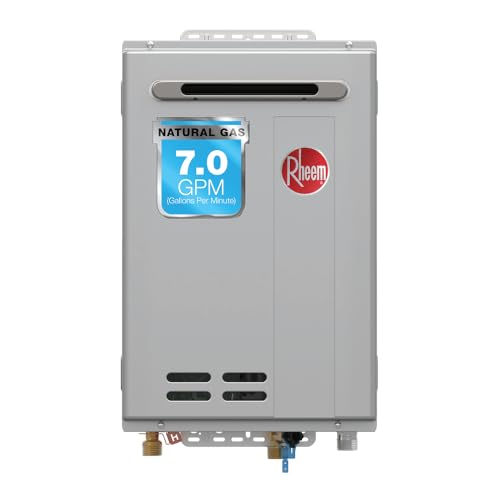
Prices are Amazon’s listed prices as of the time shown and change often; check Amazon for today’s price. As an Amazon Associate we earn from qualifying purchases.
Venting, Backdrafting and Carbon Monoxide
Backdrafting happens when exhaust gases spill back into the house instead of going up the vent. In an atmospheric heater, the draft hood can spill flue gas into the room if the vent is blocked, disconnected, too small, too cold, or if the house is depressurized by exhaust fans, a clothes dryer, a fireplace or a tight building envelope. Spillage can carry carbon monoxide.
CDC describes carbon monoxide as an odorless, colorless gas that can cause sudden illness and death, and lists gas- and oil-burning furnaces among household sources. CDC reports that each year more than 400 Americans die from unintentional CO poisoning not linked to fires, more than 100,000 visit an emergency department and more than 14,000 are hospitalized. CDC advises having water heaters and other gas, oil or coal burning appliances serviced by a qualified technician every year, making sure gas appliances are vented properly, and notes that horizontal vent pipes for appliances such as water heaters should go up slightly as they go toward the outdoors to keep CO from leaking at poorly fitted joints. CDC also recommends battery-operated or battery-backup CO detectors near every sleeping area.
Our guide to carbon monoxide detector installation covers where alarms go and how long they last.
Vent defects inspectors commonly find
- A vent connector that is disconnected, loosely seated on the draft hood or missing screws at joints.
- Connectors that slope downward toward the chimney instead of rising.
- Rusted, corroded or crushed vent pipe, or single-wall pipe too close to combustibles.
- A water heater sharing an oversized masonry chimney alone after a furnace was upgraded to a high-efficiency unit with its own PVC vent, which can leave the old chimney too large and cold for one small appliance to draft well.
- Scorch marks, melted plastic or soot at the draft hood, which suggest spillage or flame roll-out.
- Exhaust pipes on power-vent or direct-vent units terminating too close to windows, doors, decks or grade, or blocked by snow drifts.
A simple check on an atmospheric heater is to hold a smoke source near the draft hood a minute or two after the burner fires. Smoke should be drawn upward. If it pushes out into the room, especially with bath fans or the dryer running, the venting needs professional evaluation.
Combustion Air and Placement
A fuel-burning appliance needs a steady supply of air to burn cleanly. Atmospheric and power-vent units take that air from the space they sit in. A heater squeezed into a small closet with a solid door, or a basement mechanical room sealed off during a finishing project, can run short of air and burn poorly. Codes address this with requirements for room volume or dedicated combustion air openings to other spaces or outdoors, and installation manuals list clearances that must be maintained.
The ASHI Standard of Practice notes that home inspectors are not required to determine the adequacy of combustion air components, so a general home inspection may flag an obviously tight closet or blocked louver without calculating whether air supply is sufficient. If a basement has been finished around the utility room, a gas fitter or HVAC technician can do that analysis.
Garages, flammable vapors and elevation
Many Front Range water heaters sit in attached garages. Gasoline vapors are heavier than air, and many codes call for the ignition source of a gas water heater in a garage to be elevated, commonly at least 18 inches above the floor, unless the unit is listed as flammable-vapor ignition resistant. Most newer gas storage models carry that listing, but the heater should still be protected from vehicle impact with a bollard or by location. Storing gasoline cans, solvents or paint thinner next to any gas appliance is a bad idea regardless of listing.
Seismic strapping
Water heater strapping is required in high seismic areas and in some local codes. Colorado’s Front Range is generally a lower seismic hazard region than the West Coast, so requirements vary by jurisdiction. Many installers and inspectors still prefer to see strapping, because a full tank weighs several hundred pounds and a tipped heater can break its gas connection. Checking with the local building department settles whether it is required.
Safety Valves, Tank Care and Expansion
Temperature and pressure relief valve
Every tank water heater needs a temperature and pressure (T&P) relief valve that opens if the water gets too hot or pressure climbs too high. Just as important is the discharge pipe: it should be the full size of the valve outlet, run downward without traps or threaded caps, and terminate close to the floor or another safe location where discharge is visible and will not scald anyone. Plastic pipe that is not rated for the temperature, a capped end, or a discharge pipe that runs uphill are common defects. Our water heater pressure relief valve guide explains how the valve works and what dripping means.
Sediment and the anode rod
Front Range water is moderately hard in many areas, and minerals settle on the tank bottom. In a gas heater, that layer sits between the burner flame and the water, which can cause rumbling or popping and overheat the tank bottom. Periodic flushing according to the manufacturer’s instructions helps. The anode rod gradually dissolves as it protects the tank, and replacing a depleted rod can extend tank life. See the water heater anode rod guide for inspection and replacement basics.
Thermal expansion
Water expands as it heats. In homes with a check valve or pressure-reducing valve on the main, that expanded water has nowhere to go, so pressure spikes in the system on every heating cycle. An expansion tank on the cold supply absorbs it. The water heater expansion tank guide covers sizing and testing.
Gas connection
The gas supply should include an accessible shutoff valve near the appliance, an approved flexible connector or rigid piping, and a sediment trap (drip leg) where required by the manufacturer or code. New gas piping work is commonly tested for leaks before the system is put into service; our gas line pressure test guide explains that process.
Altitude and Front Range Considerations
Air at Front Range elevations holds less oxygen per cubic foot than at sea level. Gas appliances that are not configured for altitude may burn rich, produce more carbon monoxide and soot, or have trouble staying lit. Gas codes and manufacturers address this through derating, meaning the appliance’s input is reduced as elevation increases, and some appliances need a different burner orifice or a high-altitude model. A commonly cited approach is roughly a 4% input reduction for each 1,000 feet above 2,000 feet, but that is only a rule of thumb: many current water heaters are certified to operate unchanged up to a stated altitude, while others need adjustment. The manufacturer’s installation manual and the local gas utility are the authorities for any specific model in Denver, Castle Rock, Colorado Springs or the foothills.
Altitude also affects condensing and power-vent equipment, which sometimes carry their own high-altitude settings. When a replacement unit is quoted, it is reasonable to ask the installer to confirm that the model is approved for the home’s elevation.
Efficiency Ratings and ENERGY STAR
Water heater efficiency is now expressed as Uniform Energy Factor (UEF). ENERGY STAR describes UEF as the newest measure of water heater overall efficiency, with higher values meaning more efficient units, and notes it is determined by the Department of Energy’s test method. Under ENERGY STAR’s current key product criteria, certified gas storage water heaters with tank volume above 20 gallons and up to 55 gallons need a UEF of at least 0.81 for the medium draw pattern or 0.86 for the high draw pattern, along with a first hour rating of at least 51 gallons per hour and a warranty of at least six years. ENERGY STAR also notes that many certified gas storage models achieve savings through better insulation, heat traps and more efficient burners.
Capacity and first hour rating are covered in detail in our guide to water heater size.
Lifespan, Warning Signs and Replacement
ENERGY STAR suggests that if a water heater is more than 10 years old, it is time to consider replacing it before an emergency forces the decision. ENERGY STAR lists visible corrosion, leaks from joints or seams, rusty water, reduced hot water and rumbling noises from sediment as red flags for possible failure. The manufacture date is often encoded in the serial number on the rating plate. Our water heater lifespan guide explains what shortens or extends tank life.
What a home inspector checks
The ASHI Standard of Practice directs inspectors to inspect water heating equipment and hot water supply systems along with vent systems, flues and chimneys, and to describe the water heating equipment, including its energy source. A typical inspection notes the type, fuel, capacity and approximate age; looks at the vent connector, draft hood and chimney connection; checks for the T&P valve and discharge pipe; notes gas shutoff, connector and sediment trap; observes rust, leaks or scorching; and operates the heater with normal controls when it is safe to do so. Defects usually lead to a recommendation for a licensed plumber. The plumbing and water inspections section covers the rest of the plumbing walk-through, and the main guide to hiring a home inspector explains how to choose an inspector.
Typical replacement costs
As rough 2026 Front Range ranges, which vary with brand, capacity, access and code updates:
- Like-for-like replacement of a 40- or 50-gallon atmospheric gas tank: often in the low thousands of dollars installed, including permit and haul-away.
- Power-vent or direct-vent tank: commonly several hundred to a thousand dollars or more above an atmospheric unit, plus any new venting or electrical work.
- Condensing gas storage or a gas tankless conversion: generally higher again, because of PVC venting, condensate drainage and sometimes gas line upsizing.
- Venting corrections, chimney liners, expansion tanks or code updates: added as needed, sometimes discovered only when the old heater comes out.
Written quotes should spell out the model, permit, venting changes, expansion tank, haul-away and warranty terms.
References
- Carbon Monoxide Poisoning Basics — Centers for Disease Control and Prevention
- How It Works: High-Efficiency Gas Storage Water Heaters — ENERGY STAR
- Water Heater Key Product Criteria — ENERGY STAR
- When Should You Replace Your Water Heater? — ENERGY STAR
- ASHI Standard of Practice for Home Inspections — American Society of Home Inspectors
Frequently asked questions
What is the difference between power-vent and direct-vent gas water heaters?
A power-vent heater uses a fan to push exhaust out, often through a sidewall, but usually still takes combustion air from the room. A direct-vent heater draws combustion air from outdoors and exhausts outdoors through sealed piping, so it is much less prone to backdrafting.
How can I tell if my gas water heater is backdrafting?
Warning signs include scorch marks or soot at the draft hood, a disconnected or downward-sloping vent, and smoke pushed into the room when held near the draft hood after the burner fires. Install CO alarms and have a qualified technician evaluate the venting.
Does a gas water heater need adjustment for Colorado altitude?
Possibly. Gas appliances are derated at higher elevations, and some models need a different orifice or a high-altitude version, while others are certified to run unchanged up to a stated altitude. Follow the manufacturer's installation manual and confirm with the installer.
How long does a gas water heater last?
Many tank heaters last around a decade, and ENERGY STAR suggests considering replacement once a unit is more than 10 years old. Corrosion, leaks, rusty water and rumbling from sediment are warning signs.
How much does it cost to replace a gas water heater?
A like-for-like 40- or 50-gallon atmospheric replacement often runs in the low thousands of dollars installed. Power-vent, direct-vent, condensing and tankless options cost more, especially when venting changes. These are general 2026 ranges.
Not sure whether the water heater in a home you are buying is venting safely? Reach out to us to schedule a Front Range inspector who checks venting, relief valves and gas connections.