Tankless Water Heater: Pros, Cons, Sizing and Costs
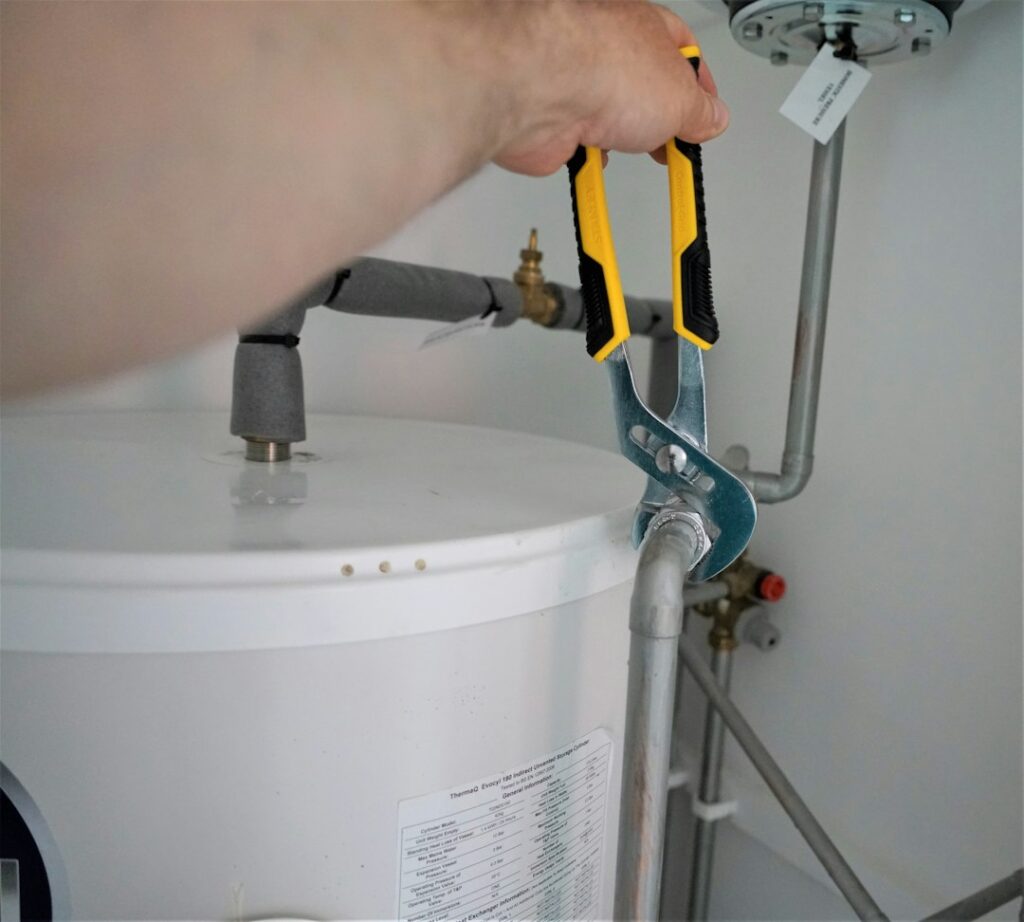
A tank-style water heater keeps 40 or 50 gallons hot around the clock, whether anyone is using it or not. A tankless water heater takes the opposite approach: it heats water only when a tap opens, then shuts off. The idea is appealing, and on-demand units have become a common upgrade in Front Range remodels and new construction. But tankless performance depends heavily on getting the sizing, fuel supply, venting and installation right, and Colorado adds two complications many national buying guides skip: cold incoming water in winter and the reduced oxygen available to gas burners at altitude. This guide explains how tankless units work, compares gas and electric models, walks through sizing, and covers pros, cons, maintenance and typical costs. Costs are general 2026 ranges that vary with the home, equipment and contractor.
Part of our Plumbing & Water guide — start there for the full picture →
How a Tankless Water Heater Works
When a hot water tap opens, cold water flows into the unit and a flow sensor detects it. If the flow exceeds the unit’s minimum activation rate, a gas burner fires or electric heating elements energize, and the water is heated as it passes through a heat exchanger. A controller modulates the burner or elements to hit the set temperature. When the tap closes, the heat shuts off. There is no storage tank to keep hot, which is where the efficiency gain comes from: ENERGY STAR notes that certified gas tankless models cut water heating expenses by heating water only when needed while providing continuous hot water delivery.
The trade-off is that a tankless unit is limited by its heating capacity at any moment rather than by a tank volume. It will not “run out” the way a tank does, but if household demand exceeds what the unit can heat for the incoming water temperature, the flow gets cooler or the unit restricts flow to maintain temperature. That is why sizing matters more than with a tank.
Whole-House vs Point-of-Use
Whole-house units serve every fixture from one location, usually where the old tank sat. Point-of-use units are small, typically electric, and serve one sink or bathroom, often to cut the wait for hot water at a fixture far from the main heater. Some homes combine a central tank or tankless unit with a point-of-use heater at a distant bathroom.
Condensing vs Non-Condensing Gas Units
Non-condensing gas units send hot exhaust out through stainless steel or special category venting. Condensing units add a second heat exchanger that extracts more heat from the exhaust, which cools it enough to use plastic (PVC, CPVC or polypropylene, per the manufacturer) venting. Condensing units produce acidic condensate that needs a drain and often a neutralizer. They generally cost more up front but are more efficient.
Gas vs Electric Tankless Water Heaters
Fuel choice is usually decided by what the house already has and by the capacity of its gas line and electrical service.
Gas (Natural Gas or Propane)
- Capacity: Gas units commonly range from roughly 120,000 to 199,000 BTU per hour for whole-house models, enough to supply several fixtures at once in many homes.
- Gas line: A tankless unit draws far more gas at full fire than a typical 40,000 BTU tank. The existing gas line and meter may be too small, and an upsized line is a frequent hidden cost. ENERGY STAR’s buying guidance says the installer should determine whether the existing natural gas line is sufficient.
- Venting: Gas units must be vented to the outdoors (see venting below), and most need a 120-volt outlet for controls and the draft fan.
- Combustion safety: Like any fuel-burning appliance, a gas tankless unit can produce carbon monoxide if venting or combustion is faulty. NFPA’s safety tips call for CO alarms outside each sleeping area and on every level of the home; the site’s CO and gas detector category lists common options.
Electric
- No venting or gas line, and electric units are generally smaller and simpler to place.
- Large electrical demand: Whole-house electric tankless units can draw very high current, often requiring multiple dedicated 240-volt circuits. Depending on the model and the home’s other loads, they can push a home toward a 200-amp service or beyond, and a service upgrade can cost thousands of dollars. An electrician should perform a load calculation before purchase.
- Cold-climate limits: Because the needed temperature rise is larger in a Colorado winter, an electric unit that performs well in a warm southern state may deliver noticeably less flow here.
For many Front Range homes with existing natural gas service, gas tankless or a high-efficiency tank is the more practical path; for all-electric homes, many homeowners compare electric tankless against a heat pump water heater, which the guide to water heater replacement cost discusses alongside other options.
Sizing a Tankless Unit: Flow Rate and Temperature Rise
Tankless units are rated by how many gallons per minute (GPM) of hot water they produce at a given temperature rise, not by tank capacity. Sizing is a two-step estimate.
Step 1: Estimate Peak Flow
Add up the fixtures likely to run at the same time. ENERGY STAR’s tankless buying guidance lists average figures of about 2.5 GPM for a shower or bathtub, 3.3 GPM for a clothes washer, 2.2 GPM for kitchen and bathroom sinks, and 1.3 GPM for a dishwasher. Actual fixtures vary; many newer showerheads use less, and a shower draws a mix of hot and cold water. For a household that commonly runs two showers and a dishwasher at the same time, peak hot water demand could be in the range of roughly 5 to 6 GPM.
Step 2: Determine the Temperature Rise
Temperature rise is the difference between incoming water temperature and the setpoint. If the house wants 120°F water and the incoming water is 60°F, the rise is 60 degrees. If incoming water is 45°F, the rise is 75 degrees, and the same unit produces less flow.
This is where Colorado matters. Front Range water supplies draw heavily on mountain snowmelt and reservoirs, and incoming water temperatures can fall substantially in winter, sometimes into the 40s °F or lower. A unit sized on a summer test, or on a national average incoming temperature, can feel undersized in January. Manufacturers publish flow charts showing GPM at various temperature rises; look at the winter rise, not the best case.
Altitude Derating for Gas Units
Gas burners need oxygen, and air at Front Range elevations holds less of it per cubic foot than air at sea level. Many manufacturers specify that gas appliances lose capacity with altitude, or require a high-altitude setting, adjustment or specific model above certain elevations. Denver sits around 5,280 feet, and many foothills and mountain communities are much higher. The specific derate and approved settings vary by manufacturer and model, so the installation manual is the authority. A unit that appears adequate on a sea-level rating can come up short at elevation, especially on a cold winter morning.
A qualified local installer should run the sizing calculation with winter water temperatures and the home’s elevation, then confirm the manufacturer’s high-altitude requirements.
Venting and Installation Requirements
Most installation problems with gas tankless units involve gas supply, venting or condensate drainage.
- Vent type. Non-condensing units generally require manufacturer-approved stainless steel or category-rated venting; condensing units typically use approved plastic. Reusing an old B-vent from a tank water heater is generally not permitted for tankless units unless the manufacturer specifically allows it.
- Terminations. Direct-vent units pull combustion air from outdoors and exhaust through a sidewall or roof. Termination clearances from windows, doors, grade and air intakes are set by the manufacturer and code. In snowy areas, sidewall terminations need clearance above expected snow depth.
- Condensate. Condensing models need a drain and often a neutralizer kit.
- Service valves. Isolation valves on the water lines make descaling much easier and are worth requesting.
- Permits. Water heater replacement typically requires a permit in Front Range jurisdictions; ENERGY STAR also suggests asking whether the installer will obtain a local permit if required and understands local codes.
Because a tankless conversion changes gas sizing, venting and sometimes electrical service, it is one of the water heater jobs where a permit and inspection are most valuable. For buyers, a recently installed tankless unit is worth asking about: who installed it, whether it was permitted, and whether service records exist. The water heater inspection guide explains what home inspectors typically look at.
Pros and Cons of a Tankless Water Heater
Advantages
- Continuous hot water within the unit’s capacity, useful for back-to-back showers and filling large tubs.
- Lower standby losses since no tank is kept hot, which is the main source of efficiency gains.
- Space savings. Wall-mounted units free up floor space in a utility room or basement.
- Longer expected life. Manufacturers commonly cite service lives of around 20 years for well-maintained units, versus roughly 8 to 12 years for many tanks, although actual life depends heavily on water quality and maintenance.
- No tank to rupture, which reduces one type of catastrophic leak.
Disadvantages
- Higher upfront cost, particularly when gas line, venting or electrical upgrades are needed.
- Cold-water sandwich. When a tap is turned off and on again quickly, a slug of cold water can pass through before the burner restarts and catches up. Some models include small buffer tanks to reduce this.
- Minimum flow rate. Units need a minimum flow to fire, often somewhere around 0.4 to 0.5 GPM. A trickle of hot water at a low-flow faucet may not activate the heater.
- Wait times are not shorter. Hot water still has to travel through the pipes, and the unit needs a few seconds to fire. Recirculation systems can help but add cost and energy use.
- Power dependence. Gas tankless units need electricity to run, so a power outage typically means no hot water, while some gas tanks with standing pilots keep working.
- Maintenance sensitivity. Scale buildup in the heat exchanger can reduce performance and trigger error codes.
Maintenance: Descaling and Hard Water
Many Front Range communities have moderately hard to hard water, and minerals precipitate when water is heated. In a tankless unit, that scale coats the small passages of the heat exchanger. Manufacturers generally recommend periodic descaling, often once a year, and more often with hard water. The typical process uses the isolation valves, a small pump and a bucket of descaling solution (often white vinegar or a manufacturer-approved product) circulated through the unit for a set time, followed by a flush. Other routine tasks include cleaning the inlet water filter screen, checking the vent and air intake for blockages, and inspecting for error codes or leaks.
A water softener or scale-reduction system can extend the time between descaling and protect the heat exchanger, though some manufacturers have specific guidance on softened water. The guide to water softeners explains how they work and what they cost. Many manufacturer warranties exclude damage from scale when maintenance has been skipped, so keep records.
Tankless Water Heater Costs
Total installed cost varies widely, mostly depending on how much the existing gas, venting and electrical systems need to change. As rough 2026 ranges:
- Gas tankless unit (equipment only): often about $1,000 to $3,000, with condensing and higher-capacity models at the upper end.
- Installed gas tankless replacing a gas tank: commonly about $3,000 to $6,500, and higher when the gas line must be upsized, venting rerouted or a condensate drain added.
- Electric whole-house tankless (equipment only): often about $600 to $1,800.
- Installed electric tankless: commonly about $1,800 to $4,000 when the panel can handle it; a service or panel upgrade can add several thousand dollars more.
- Point-of-use electric units: often a few hundred dollars plus installation.
- Annual descaling by a plumber: often around $150 to $300.
Rebates from utilities and local programs come and go. ENERGY STAR certified gas tankless models are listed on the ENERGY STAR product finder, and its rebate finder can help locate current offers by ZIP code. Get at least two written quotes that spell out gas line work, venting, condensate handling, permits and disposal of the old tank.
Tankless vs Tank Water Heater: Side-by-Side
For most households, the real decision is not whether tankless is “better” but whether its strengths match how the home uses hot water. A quick comparison of the main trade-offs:
- Hot water supply. A tank delivers a fixed volume and then needs recovery time; a properly sized tankless unit keeps going but is capped by its flow rate at the current temperature rise.
- Simultaneous use. A tank handles several fixtures at once until its stored volume runs low. A tankless unit handles simultaneous use only up to its rated GPM, which drops as incoming water gets colder.
- Efficiency. Tankless units avoid standby heat loss. High-efficiency gas tanks and heat pump water heaters narrow the gap and in some cases surpass it, so compare rated efficiency on specific models.
- Installation complexity. Replacing a tank with a similar tank is usually straightforward. Converting to tankless often involves new venting, gas line work, a condensate drain or electrical upgrades.
- Maintenance. Tanks benefit from periodic flushing and anode rod checks. Tankless units need descaling and inlet screen cleaning, and they are less forgiving when it is skipped.
- Failure mode. An aging tank can leak or rupture. A tankless unit is more likely to show an error code or reduced output.
Is a Tankless Water Heater Worth It?
A tankless unit tends to make the most sense for households that use a lot of hot water in long bursts, have adequate gas supply or electrical capacity, plan to stay in the home long enough to recover the higher upfront cost, and are willing to keep up with descaling. It makes less sense when the installation requires expensive gas or electrical upgrades, when a family rarely runs out of hot water with a tank, or when nobody will maintain it. For buyers evaluating a home with an existing tankless unit, ask for the installation date, permit history and maintenance records, and confirm that the unit has been sized for winter conditions. The guide to hiring a home inspector covers how to set expectations for what an inspection will report on water heating equipment.
References
- Whole Home Tankless Gas Water Heaters: Buying Guidance — ENERGY STAR
- ENERGY STAR Product Categories, Including Water Heaters — ENERGY STAR
- Carbon Monoxide Safety — National Fire Protection Association
- ASHI Standard of Practice for Home Inspections — American Society of Home Inspectors
Frequently asked questions
How do I size a tankless water heater?
Add up the flow rates of fixtures likely to run at once, then check the manufacturer's chart for that GPM at your winter temperature rise. In Colorado, use cold winter incoming water and confirm high-altitude requirements for gas units. A plumber should verify the calculation.
Does altitude affect a gas tankless water heater?
Yes. Thinner air at Front Range elevations means less oxygen for combustion, and many manufacturers specify a capacity derate or high-altitude setting above certain elevations. The exact requirement varies by model, so follow the installation manual.
How much does a tankless water heater cost to install?
As a rough 2026 range, a gas tankless installation replacing a tank often runs about $3,000 to $6,500, more if the gas line or venting must be upgraded. Electric whole-house units can be cheaper to buy but may require costly electrical service upgrades.
How often should a tankless water heater be descaled?
Many manufacturers recommend descaling about once a year, and more often in hard water areas. A water softener or scale-reduction system can extend the interval. Follow the manufacturer's maintenance schedule to protect the warranty.
What is the cold water sandwich?
It is a brief burst of cold water that occurs when hot water is turned off and back on quickly. Water left in the pipes is hot, but the heater needs a few seconds to refire, so cooler water passes through in between.
Looking at a Front Range home with a tankless system or planning a conversion before you buy? Reach out to us and we can help match you with a local inspector who can look over the installation.