Electric vs Gas Water Heater: Costs, Recovery and Verdict
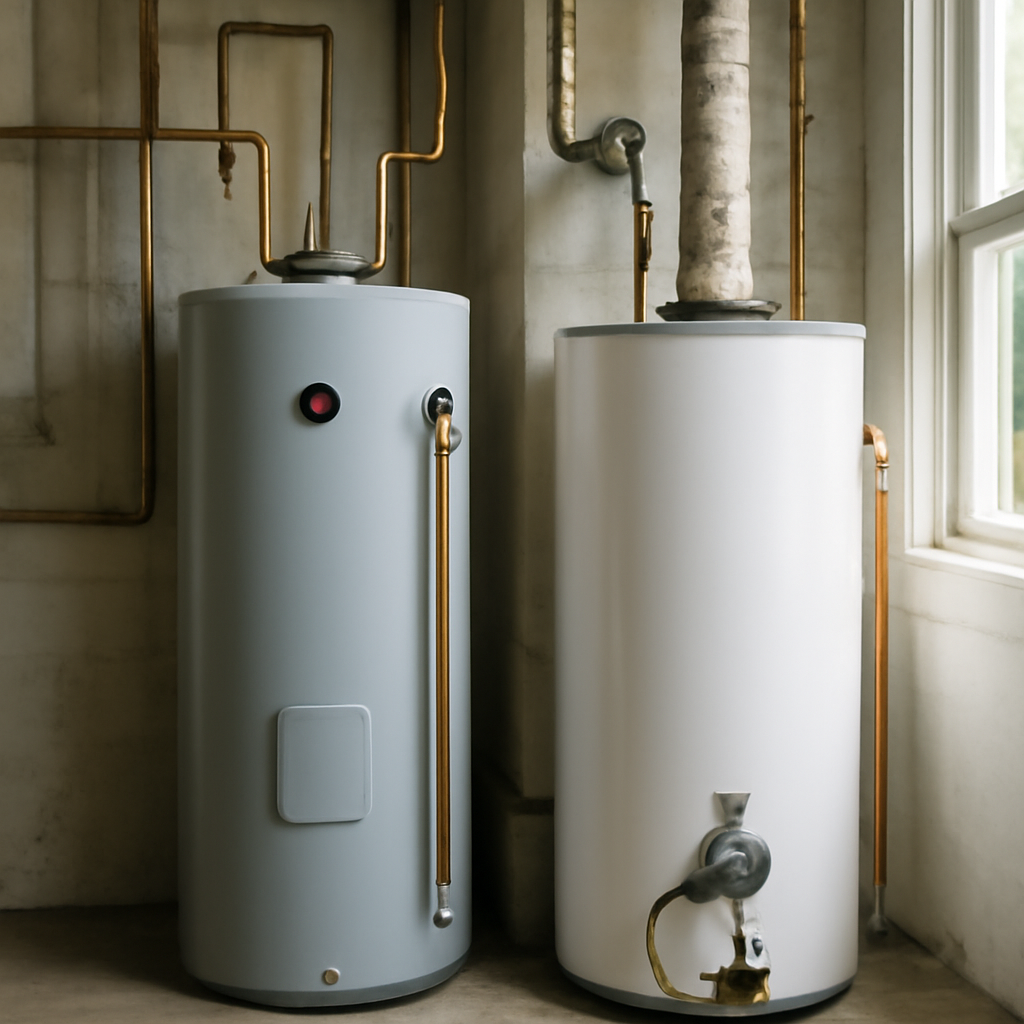
The short answer on electric vs gas water heater: if your home already has a gas line and a proper vent, a gas tank usually costs less to run and refills with hot water faster, which suits larger households. If you do not have gas at the water heater location, a standard electric tank is the cheapest and simplest to install, and an electric heat pump water heater is the most efficient option of all, at a higher upfront price. Electric models produce no combustion gases and need no flue, which removes carbon monoxide and venting concerns at the appliance. Gas models keep working during a power outage if they have a standing pilot and no electric fan. For most replacements, the best answer is “same fuel as the old one” unless you have a clear reason to switch, because changing fuels adds wiring, gas piping or venting work. This guide compares the two on cost, efficiency ratings, recovery, safety, lifespan and installation, adds the Front Range factors that change the math (altitude, hard water and cold incoming water), and explains how a home inspector evaluates each. Costs and lifespans are typical national ranges, not quotes.
Part of our Plumbing & Water guide — start there for the full picture →
Electrical problem? Talk to a licensed electrician.
📞 Call (877) 560-2714Electric vs Gas Water Heater at a Glance
The table compares standard tank-type models in the common 40- to 50-gallon range, with heat pump water heaters shown separately because they behave so differently from standard electric tanks.
| Factor | Gas tank | Standard electric tank | Heat pump (hybrid electric) |
|---|---|---|---|
| Typical installed cost (national range, 2026, like-for-like swap) | Roughly $1,600–$3,500 | Roughly $1,200–$2,800 | Roughly $2,800–$6,000 |
| Operating cost | Usually lower than standard electric where gas is inexpensive | Usually the highest of the three | Usually the lowest of the three |
| Efficiency rating (UEF) | Standard models well below 1.0; ENERGY STAR models higher | Close to 1.0, but electricity costs more per unit of heat | Several times higher; ENERGY STAR integrated models at 3.30 or above |
| Recovery speed | Fast | Slower | Slowest in heat pump mode; backup elements help |
| Typical lifespan | Often 8–12 years | Often 10–15 years | Often 10–15 years |
| Venting and safety | Needs a flue or power vent, combustion air and a gas shutoff; carbon monoxide risk if venting fails | No venting; needs a dedicated 240-volt circuit | No flue; needs air space, a condensate drain and usually a 240-volt circuit |
| Works in a power outage | Yes, for standing-pilot models without a fan | No | No |
| Best for | Homes with gas service, large families, high demand | Homes without gas, tight budgets, small households | Homes without gas or seeking lowest running cost; space of adequate size |
Our guide to the gas water heater explains how burners, thermocouples and flues work, and our heat pump water heater guide covers the hybrid electric option in depth. Tankless units are a separate decision; see tankless vs tank water heaters.
How Each Type Heats Water
A gas tank water heater has a burner under the tank. Combustion gases rise through a flue pipe running up the center of the tank, giving off heat to the water as they go, and then exit through a vent connector to a chimney or vent. Because some heat goes up the flue and some is lost from the tank between uses, standard gas models are well under 100 percent efficient.
A standard electric tank has two resistance heating elements, upper and lower, controlled by thermostats. Nearly all the electricity becomes heat in the water, so the efficiency rating looks high. The catch is that electricity usually costs more than gas for the same amount of heat, so a high rating does not automatically mean a lower bill.
A heat pump water heater, which ENERGY STAR notes is also called a hybrid electric water heater, uses a small compressor to pull heat from the surrounding air and move it into the tank, with resistance elements as backup. Moving heat takes much less electricity than creating it, which is why heat pump models carry efficiency ratings several times higher than standard electric tanks.
Best Gas Water Heaters: our top 3 picks
| Product | Best for | Key features | Price | Buy |
|---|---|---|---|---|
| GE RealMAX Choice 40 Gal | Like-for-like gas tank swap |
| $1,031.43as of October 18, 2026 | Buy now →Check current price |
| Rinnai RX199iN | Highest efficiency and flow |
| $1,532.79as of October 18, 2026 | Buy now →Check current price |
| Rheem RTG 7.0 Outdoor | Outdoor mount, no indoor vent |
| $829.96as of October 18, 2026 | Buy now →Check current price |


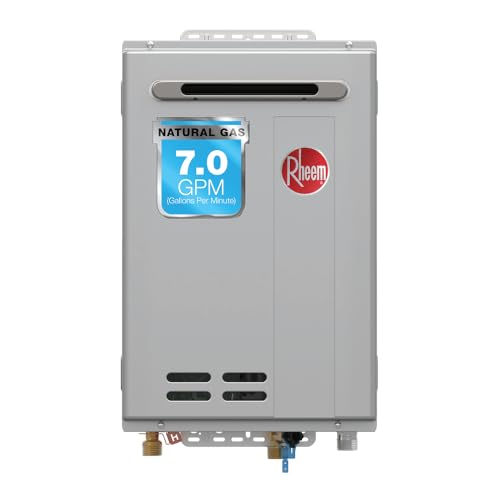
Prices are Amazon’s listed prices as of the time shown and change often; check Amazon for today’s price. As an Amazon Associate we earn from qualifying purchases.
Upfront Cost and What Drives It
For a like-for-like replacement, standard electric tanks are usually the least expensive to buy and install, gas tanks cost somewhat more, and heat pump models cost the most. The installation details often matter more than the tank price:
- Venting. Gas units need a correctly sized, sloped and connected vent. Replacing a damaged or undersized vent connector, relining a chimney, or switching to a power-vent or direct-vent model adds cost.
- Fuel switching. Going from electric to gas requires gas piping to the location and a vent route. Going from gas to electric requires a 240-volt circuit and sometimes a panel upgrade if capacity is tight.
- Code updates. Replacements often bring the installation up to current requirements: expansion tank on closed systems, temperature and pressure relief valve discharge piping, drain pan where required, sediment trap on gas lines, and seismic or stability strapping where the local code calls for it.
- Location and access. Attic, crawlspace and tight closet installs take longer. Heat pump models need enough surrounding air volume and a place to drain condensate.
- Size and features. Larger tanks, higher first-hour ratings, longer warranties and Wi-Fi controls add cost.
- Permit and haul-away. Most jurisdictions require a permit for water heater replacement; check with your city or county building department.
Get two or three written quotes that list the exact model, tank size, first-hour rating, venting work, code-required parts, permit and haul-away of the old unit.
Operating Cost and Efficiency Ratings
Water heater efficiency is rated by the Uniform Energy Factor (UEF), shown on the yellow EnergyGuide label. ENERGY STAR’s key product criteria illustrate how wide the gap is between technologies. For gas storage water heaters between 20 and 55 gallons, ENERGY STAR requires a UEF of at least 0.81 for a medium draw pattern and 0.86 for a high draw pattern. For integrated heat pump water heaters, the requirement is a UEF of at least 3.30. Standard gas tanks sold today typically fall noticeably below the ENERGY STAR gas threshold, and standard electric tanks sit just under 1.0.
UEF compares how much energy goes in with how much hot water energy comes out; it does not account for fuel price. To compare running costs, you need your local rates:
- Find your electric rate per kilowatt-hour and your gas rate per therm on recent bills.
- Check the estimated yearly operating cost on the EnergyGuide label of each model you are considering; it uses national average rates, so adjust in proportion to your own.
- Compare like with like: same tank size, similar first-hour rating.
Where natural gas is relatively inexpensive, as it has been in much of the Denver metro, a standard gas tank usually costs less to run than a standard electric tank. A heat pump water heater can beat both, depending on where it sits and how cold the surrounding space gets.
Recovery, Capacity and Household Size
Gas burners put heat into water faster than typical electric elements, so a gas tank recovers more quickly after a long shower or a load of laundry. That is reflected in the first-hour rating (FHR), the amount of hot water the heater can deliver in a busy hour under test conditions. ENERGY STAR notes that if a current water heater meets your needs most of the time, replacing it with the same size is usually reasonable, but that the first-hour rating of a new model can deliver better hot water performance without a larger tank.
Rules of thumb, which are not substitutes for a sizing calculation:
- One to two people: a 30- to 40-gallon tank of either fuel is often enough.
- Three to four people: a 40- to 50-gallon gas tank or a 50-gallon electric tank is common.
- Five or more, or a large soaking tub: consider a gas tank with a high FHR, a larger electric or heat pump tank, or a different approach altogether.
Electric tanks of the same size run out sooner under back-to-back demand, which is why households switching from gas to electric often move up one tank size. Heat pump models recover slowly in efficiency mode; most have a hybrid or high-demand mode that uses the elements when needed.
Safety: Venting, Carbon Monoxide and Scalding
A gas water heater is a combustion appliance. If the vent is disconnected, blocked, improperly sloped or backdrafting, combustion gases including carbon monoxide can spill into the home. CDC describes carbon monoxide as an odorless, colorless gas that can cause sudden illness and death and lists gas-burning appliances among common household sources. CDC recommends battery-operated or battery-backup CO detectors near every sleeping area. Any home with a gas water heater should have working CO alarms, and the vent should be inspected whenever the heater is replaced.
Gas water heaters also need adequate combustion air and should not be placed where flammable vapors collect, such as near gasoline storage in a garage, unless designed and installed for that. Signs of a venting problem include rust or scorch marks around the draft hood on top of the tank, a vent connector that slopes downhill toward the chimney, loose or unscrewed joints, and condensation or soot on nearby surfaces. Any of these warrants a call to a qualified gas plumber or HVAC technician.
Electric water heaters remove combustion risk at the appliance, but they draw substantial current on a 240-volt circuit, and the access panels over the elements cover live wiring. Element replacement and thermostat adjustment should start with the breaker turned off.
Both types need a working temperature and pressure relief valve with a discharge pipe routed to a safe location. Both can scald. CPSC urges lowering water heater settings to 120°F and notes that this setting may be necessary to reduce or eliminate the risk of most tap water scald injuries, with children under five and older adults at greatest risk.
Lifespan and Maintenance
Tank water heaters of both fuels usually fail when the steel tank corrodes and leaks. Typical service lives run roughly 8 to 12 years for gas tanks and somewhat longer for electric tanks, with water quality and maintenance making a large difference. ENERGY STAR advises considering replacement once a water heater is more than 10 years old, before an emergency forces a rushed decision, and lists warning signs such as visible corrosion, leaks at joints or seams, rusty water, reduced hot water and rumbling noises from sediment.
Maintenance overlaps for both fuels:
- Flush sediment from the tank periodically, following the manufacturer’s instructions.
- Check the anode rod every few years; it corrodes in place of the tank.
- Test the relief valve per the manufacturer’s guidance and watch for drips.
- Gas only: keep the burner area clean, confirm the vent is attached and drafting, and check for a steady blue flame.
- Electric only: sediment can bury and burn out the lower element.
- Heat pump only: ENERGY STAR notes these may need annual maintenance, including cleaning or changing an air filter, plus keeping the condensate drain clear.
Our guide to water heater lifespan explains how to read the serial number to find a tank’s age.
Front Range Factors: Altitude, Hard Water and Cold Spaces
Altitude and gas appliances
Gas burners lose output at elevation because thinner air contains less oxygen. Many gas water heaters are approved only up to a certain altitude unless they are a high-altitude model or are set up according to the manufacturer’s high-altitude instructions. Much of the Front Range sits around a mile high, and foothill homes are higher still, so the installation manual and data plate should be checked against your elevation. Electric water heaters are not affected by altitude in this way.
Hard water and sediment
Water hardness varies across the Front Range by supplier and well. Harder water leaves more mineral sediment, which makes gas tanks rumble and reduces efficiency by insulating the water from the burner, and which can bury and burn out lower electric elements. Regular flushing and anode checks matter more in harder-water areas, regardless of fuel.
Cold incoming water and cold rooms
Winter groundwater is cold, so every tank works harder in January. That favors gas’s faster recovery for large households. For heat pump models, location is critical: ENERGY STAR recommends installation in interior spaces that stay between 40°F and 90°F year-round with about 1,000 cubic feet of air space, and notes that heat pump units may switch to backup electric mode more often in colder environments with lower incoming water temperatures. A conditioned basement or a utility room near the furnace usually works; an unheated garage in a Colorado winter usually does not.
Which Should You Choose?
- You have gas and a good vent now: a gas tank is usually the lowest-cost replacement and keeps fast recovery. Consider an ENERGY STAR model for lower gas use.
- You have electric now and no gas at the location: a standard electric tank is cheapest upfront; a heat pump model costs more but usually pays back through lower bills if the space suits it.
- Your gas vent is problematic (shared with an abandoned furnace flue, an unlined masonry chimney, or a poor route): pricing a heat pump water heater alongside venting repairs is worthwhile.
- Large household with heavy simultaneous use: gas with a high first-hour rating, or a larger electric or heat pump tank.
- Small household, small budget: standard electric, sized modestly.
- Frequent outages matter to you: a standing-pilot gas tank without a power vent keeps working when the power is out.
When you are ready to compare models, see our roundups of the best gas water heaters and best electric water heaters.
How a Home Inspector Evaluates Each Type
During a home inspection, the water heater is checked as part of the plumbing system. Inspectors typically note fuel type, capacity, approximate age from the data plate, and visible condition, then look for problems that apply to both types: corrosion or leaks at the tank and fittings, a missing or improperly routed relief valve discharge pipe, missing expansion tank or drain pan where expected, and inadequate clearance or access.
On gas units, the inspector also looks at the vent connector for proper slope, secure joints and clearance from combustibles, checks for signs of backdrafting such as scorching or rust at the draft hood, confirms a gas shutoff and sediment trap, and notes combustion air and garage installation height or protection. Many inspectors also recommend CO alarms where gas appliances are present.
On electric units, the focus is on the dedicated circuit, a proper cover over the wiring compartment, and signs of element or thermostat trouble. Heat pump units add checks for a condensate drain and adequate surrounding air volume.
An inspection is visual and does not include draining the tank or testing efficiency. A water heater past about 10 years old, signs of leaks, or any venting defect usually leads to a recommendation for evaluation by a licensed plumber. Our plumbing and water hub collects related water heater guides.
References
- Water Heater Key Product Criteria — ENERGY STAR
- Heat Pump Water Heaters — ENERGY STAR
- High Efficiency Gas Storage Water Heaters — ENERGY STAR
- When Should You Replace Your Water Heater? — ENERGY STAR
- Carbon Monoxide Poisoning Basics — Centers for Disease Control and Prevention
- Avoiding Tap Water Scalds — U.S. Consumer Product Safety Commission
Frequently asked questions
Is a gas or electric water heater cheaper to run?
Where natural gas is relatively inexpensive, a standard gas tank usually costs less to run than a standard electric tank. An electric heat pump water heater is usually the cheapest to operate of all, if it is installed in a suitable space.
Which heats water faster, gas or electric?
Gas water heaters generally recover faster because the burner delivers heat more quickly than typical electric elements. Compare first-hour ratings on the EnergyGuide label to see how much hot water each model delivers in a busy hour.
Is it expensive to switch from gas to electric water heating?
It depends on your electrical panel. Switching usually needs a dedicated 240-volt circuit, and an older or full panel may need an upgrade. The old gas line is capped and the vent may be removed or left for other appliances.
Do gas water heaters need adjustment at high altitude?
Many do. Gas burners lose output in thinner air, and many models are approved only up to a set elevation unless they are high-altitude versions or are set up per the manufacturer's instructions. Check the data plate and manual against your home's elevation.
How long do electric and gas water heaters last?
As typical ranges, gas tanks often last about 8 to 12 years and electric tanks somewhat longer. ENERGY STAR suggests planning a replacement once a unit passes about 10 years old rather than waiting for a failure.
Buying a Front Range home with an older water heater or a questionable vent? Contact us here to connect with a vetted local inspector.