Water Heater Thermostat: Settings, Testing and Scald Safety
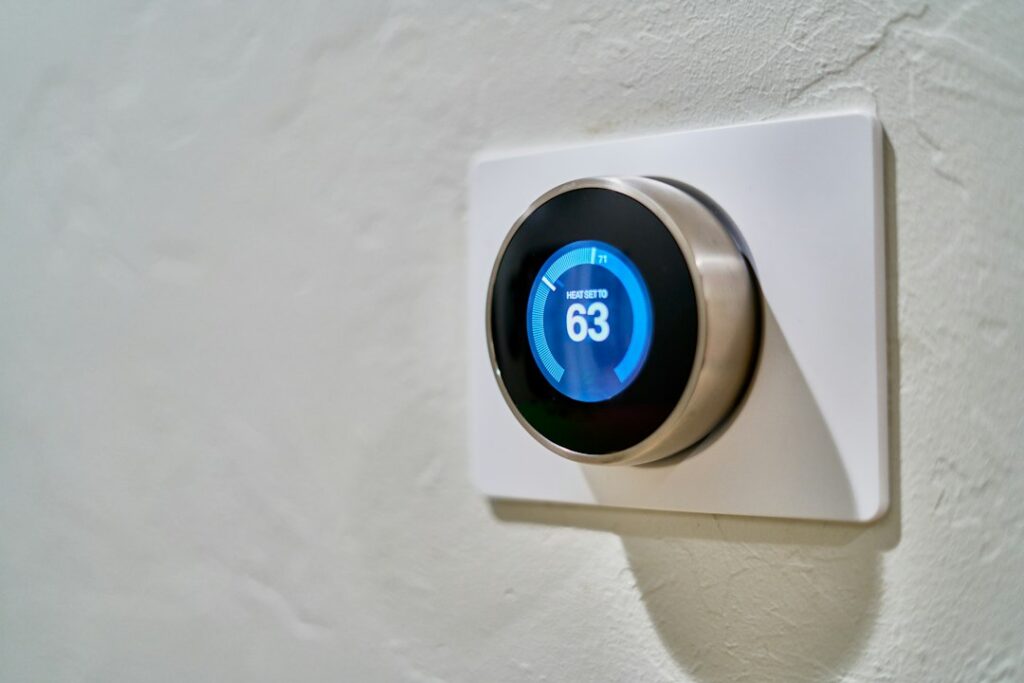
A water heater thermostat is a small part with a big job. It decides how hot the water in the tank gets, and it is the first thing to suspect when showers run lukewarm, water comes out scalding, or the heater keeps shutting itself off. On an electric tank, a water heater thermostat replacement is usually a modest repair involving a part that costs far less than a new heater. On a gas tank, the “thermostat” is built into the gas control valve, and replacing it is a different kind of job with gas-safety stakes. This guide explains how both systems work, what temperature federal safety agencies point to, why a tripped high-limit reset is a warning sign rather than a nuisance, how professionals test thermostats, and when it makes more sense to replace the whole heater. Electrical and gas work should be left to a licensed plumber or electrician.
Part of our Plumbing & Water guide — start there for the full picture →
Heating or cooling trouble? Talk to a local HVAC technician.
📞 Call (833) 491-1876What a Water Heater Thermostat Does and When It Fails
A thermostat senses tank temperature and switches the heat source on when the water cools below the set point and off when it reaches it. When it fails, the symptoms tend to fall into a few patterns:
- No hot water at all. The thermostat may not be calling for heat, or a safety cutoff has tripped. The broader checklist in our guide to no hot water covers breakers, pilots and other causes worth ruling out first.
- Hot water that runs out quickly. On electric tanks, this often points to the lower thermostat or lower element, since the bottom of the tank does most of the heating.
- Water that is too hot. A thermostat stuck closed keeps heating past the set point until the high-limit cutoff trips. This is the most dangerous failure mode because it raises scald risk and pressure inside the tank.
- Temperature swings. Water that alternates between hot and tepid can come from a thermostat that is loose against the tank, badly calibrated or wearing out.
Many of these symptoms overlap with failed heating elements, sediment buildup and dip tube problems. That overlap is the main reason a thermostat should be tested before it is replaced, rather than swapped on a hunch.
Electric Water Heaters: The Dual-Thermostat Setup
Most residential electric tank water heaters use two heating elements and two thermostats, one near the top of the tank and one near the bottom. Each thermostat sits behind its own access panel, under a layer of insulation and a plastic safety cover, clamped flat against the steel tank so it can read temperature through the wall.
The two thermostats do not normally heat at the same time. The upper thermostat is in charge first. When the tank is cold, it powers the upper element to heat the top section, which is where hot water is drawn from. Once the top reaches its set point, the upper thermostat hands power down to the lower thermostat, which then runs the lower element to heat the rest of the tank.
That sequence explains some classic symptoms. If the upper thermostat fails, there may be no hot water at all, because power never reaches the lower circuit. If the lower thermostat or element fails, the top of the tank still heats, so there is a small amount of hot water that runs out fast.
The high-limit cutoff (the red reset button)
The upper thermostat on most electric heaters includes a high-limit switch, sometimes called the energy cutoff or ECO, with a red reset button. It is a safety device that cuts power to both elements if water near the top of the tank gets dangerously hot. Once it trips, it stays off until someone presses the reset.
A single trip after a power surge can happen. Repeated trips are different. They usually mean something is overheating the water, such as a thermostat stuck in the closed position, a thermostat that has pulled away from the tank wall and cannot sense temperature correctly, or an element that has shorted to the tank. In every case, pressing the button again and again treats the alarm instead of the cause. The same faults that trip the reset can also trip the circuit breaker, which is covered in our guide to a water heater tripping the breaker.
Matching the two set points
The upper and lower thermostats each have their own adjustment screw. The CPSC tap-water scald fact sheet notes that most electric water heaters have two thermostats, both of which must be set to a common temperature for proper operation. A mismatch can cause odd behavior, such as the top of the tank running hotter than the bottom or hot water running out sooner than expected.
Best Water Heaters: our top 3 picks
| Product | Best for | Key features | Price | Buy |
|---|---|---|---|---|
| Rheem PROE50 M2 RH95 | Best overall whole-house tank |
| $771.99as of Oct 28, 2026 8:46 am GMT+0000 | Buy now →Check current price |
| Rheem RTG 7.0 Indoor | Indoor gas tankless upgrade |
| $653.77as of Oct 28, 2026 9:10 am GMT+0000 | Buy now →Check current price |
| Rheem RTEX-24 | All-electric home, no venting |
| $549.00as of Oct 28, 2026 9:14 am GMT+0000 | Buy now →Check current price |


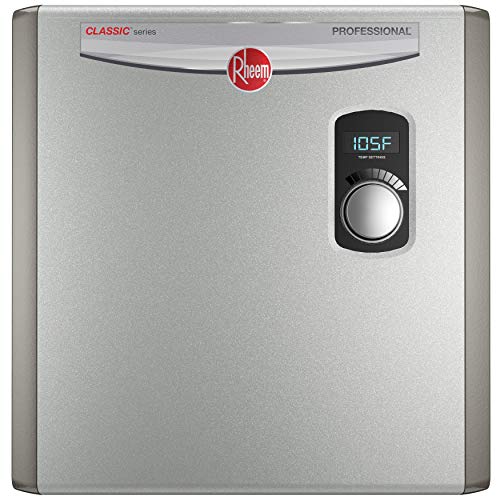
Prices are Amazon’s listed prices as of the time shown and change often; check Amazon for today’s price. As an Amazon Associate we earn from qualifying purchases.
Gas Water Heaters: The Thermostat Lives in the Gas Valve
A gas tank water heater does not have a separate thermostat behind a panel. Temperature control is built into the gas control valve, the box on the front of the tank near the bottom with a temperature dial. A probe from the valve extends into the water and tells it when to open the main burner. On older models, a thermocouple in the pilot flame tells the valve the pilot is lit; on newer models, a thermopile or electronic ignition may be used, and some valves have a status light that blinks diagnostic codes.
Because the thermostat and gas valve are one assembly, a “gas water heater thermostat replacement” usually means replacing the whole control valve. That involves disconnecting and reconnecting gas piping, testing joints for leaks, and confirming proper burner operation and venting afterward. It is not a casual homeowner task, and in many jurisdictions it falls under gas-fitting rules that call for a licensed professional and sometimes a permit.
Plenty of gas-heater temperature complaints have nothing to do with the thermostat portion of the valve. A pilot that will not stay lit, a weak thermocouple or a dirty burner can all mimic a thermostat failure. Our guide to the water heater pilot light walks through those causes. Power vent models add another layer, because the burner will not fire unless the blower and pressure switch confirm the vent is clear; see our explainer on the power vent water heater for how that circuit can look like a temperature problem.
If anyone smells gas near the heater, the right move is to leave the house and call the gas utility or 911 from outside, not to adjust the dial.
What Temperature Should a Water Heater Be Set To?
The U.S. Consumer Product Safety Commission urges users to lower their water heaters to 120 degrees Fahrenheit. Its fact sheet, “Avoiding Tap Water Scalds,” says the majority of tap-water scald injuries and deaths involve the elderly and children under five, and adds that lowering the temperature also conserves energy and saves money.
The same CPSC document gives a sense of how fast hot water burns. It states that most adults will suffer third-degree burns from 150-degree water in two seconds, from 140-degree water in six seconds and from 130-degree water in thirty seconds. Even at 120 degrees, it says, a five-minute exposure could result in third-degree burns. Those numbers explain why a thermostat stuck in the “on” position is more than an inconvenience.
The Legionella tradeoff
Temperature is a balancing act. The CDC’s guidance on preventing waterborne germs at home says that keeping a water heater between 130°F and 140°F can kill germs like Legionella in water but also increases the risk of burns. It recommends that households setting the heater above 120°F use thermostatic mixing valves at the tap, especially where young children, older adults or others at higher burn risk live, and it suggests people ask a healthcare provider whether a 130°F or higher setting is right for them.
There is no single answer that fits every home. A household with an infant and an older relative may weigh scald risk most heavily. A household with someone at higher risk of Legionella infection might talk with a doctor about a higher setting paired with mixing valves. Either way, the dial markings on many heaters (“hot,” “A,” “B,” “very hot”) are not precise. The CPSC suggests checking the actual temperature at a faucet with a cooking thermometer, ideally first thing in the morning or at least two hours after hot water use, and then adjusting and rechecking.
Front Range notes
Incoming water temperature changes with the seasons in Colorado. Cold groundwater and municipal supply in winter mean the heater works harder and recovery takes longer, which can make a healthy thermostat seem weak in January. That seasonal shift is worth ruling out before blaming the controls. Hard water in parts of the Front Range also speeds sediment buildup, which can insulate the lower element and make an electric heater behave as though the lower thermostat is failing.
How Professionals Test a Water Heater Thermostat
Testing a thermostat involves exposed wiring at 240 volts on most electric tanks, so the details belong with a qualified technician. It still helps to understand the concepts so an estimate makes sense.
- Power off and verified off. The CPSC fact sheet describes shutting off power at the circuit breaker or fuse before removing the access panels on an electric heater. A careful technician also confirms the circuit is dead with a tester, because some heaters are fed by mislabeled breakers or more than one circuit.
- Visual check. With the panels and insulation pulled back, the technician looks for scorched wires, melted terminals, loose connections and a thermostat that is not seated flat against the tank.
- Continuity and element checks. With power off, a multimeter can check whether the thermostat contacts open and close as expected and whether each element has normal resistance and is not shorted to the tank. A shorted element can cause the same symptoms as a bad thermostat.
- Live voltage tests. Some diagnostic steps require measuring voltage at the thermostat terminals with power on. That is where the shock risk is highest, and it is the step homeowners should leave to professionals.
On gas heaters, testing focuses on the pilot, thermocouple or thermopile output, ignition sequence, the valve’s diagnostic codes and burner performance. A technician should also check venting and draft, because a gas valve problem and a venting problem can overlap.
Home inspectors work at a different level. The ASHI Standard of Practice directs inspectors to inspect water heating equipment and hot water supply systems and to describe the equipment, including its energy source, but it does not call for disassembling the heater or testing internal controls. An inspection may flag water that tests very hot at a faucet, a missing or improperly piped relief valve, or signs of overheating, and then recommend evaluation by a plumber.
Thermostat Replacement vs a New Water Heater
The age and condition of the tank usually decide this question more than the cost of the part.
When a thermostat replacement makes sense
- The tank is relatively young, with no rust at the base, no leaks and no heavy sediment rumble.
- Testing confirms the thermostat itself failed, rather than an element, wiring or the tank.
- The rest of the system, including the temperature and pressure relief valve and the water heater expansion tank where one is installed, is in reasonable shape.
On electric tanks, many technicians replace thermostats with the same type and rating specified by the manufacturer, and some replace the elements at the same visit if they are near the end of their life. Using a generic part that does not match the original rating can affect safety and warranty coverage.
When a new heater is the better bet
- The tank is near or past its expected service life, or shows corrosion or seepage. Our guide to water heater lifespan covers typical ranges and warning signs.
- The heater is gas and needs a new control valve, which can cost a meaningful share of a new unit’s price on an older tank.
- Overheating has happened repeatedly and may have stressed the tank and relief valve.
- The household wants better efficiency or capacity anyway.
For buyers weighing an upgrade, ENERGY STAR’s water heater criteria certify non-solar models by Uniform Energy Factor (UEF). The eligible categories listed include gas storage heaters, electric heat pump water heaters, gas instantaneous (tankless) heaters and solar systems, so a standard electric-resistance tank is not on the list. Comparing a heat pump or high-efficiency gas model against a like-for-like replacement can be worth the extra quote, as can looking at a tankless water heater where gas supply and venting allow.
Typical Costs for Thermostat Repairs
Prices vary widely by region, brand, access and whether the job is bundled with other work, so these figures are rough planning ranges, not quotes.
- Electric thermostat part: often in the range of about $20 to $60 per thermostat, sometimes more for specific OEM parts.
- Electric thermostat replacement, installed: commonly in the low to mid hundreds of dollars once a service call and labor are included. Replacing both thermostats and both elements at once usually costs more but avoids a second trip.
- Gas control valve replacement: often several hundred dollars or more installed, depending on the valve type, whether it is a standard, power vent or electronic model, and local labor rates.
- Diagnostic visit: many plumbers charge a trip or diagnostic fee that may or may not be credited toward the repair.
What Homeowners Can Safely Do
Some steps are low-risk and useful before calling a pro:
- Check the faucet temperature with a cooking thermometer, as the CPSC suggests, and note the reading.
- Confirm the breaker is on (for electric) or the pilot or ignition status light is normal (for gas).
- Note whether the problem is no hot water, too little, too hot or fluctuating, and when it started.
- Look for water at the base of the tank, a dripping relief valve discharge pipe or scorch marks near access panels, and report them.
Pressing a red reset button once after a known power event is generally described in manufacturer manuals as acceptable. If it trips again, it is time for a technician.
When to Call a Professional
Call a licensed plumber or electrician when water is scalding hot, when the high-limit reset trips more than once, when there is any burning smell, scorch mark or melted wire, when a gas heater’s pilot or burner behaves oddly, or when there is any hint of a gas odor. For buyers, a water heater that shows signs of overheating or an undocumented thermostat or valve replacement is worth a closer look by a plumber during the inspection contingency. Our plumbing and water hiring guide outlines which specialists to contact, and the broader guide to hiring a home inspector explains what a general inspection does and does not cover.
References
- Avoiding Tap Water Scalds (Pub. 5098) — U.S. Consumer Product Safety Commission
- Preventing Waterborne Germs at Home — Centers for Disease Control and Prevention
- Water Heater Key Product Criteria — ENERGY STAR
- ASHI Standard of Practice for Home Inspections — American Society of Home Inspectors
Frequently asked questions
How do I know if my water heater thermostat is bad?
Common signs include no hot water, hot water that runs out quickly, water that is far too hot, and a high-limit reset that keeps tripping. Failed elements and sediment can cause similar symptoms, so a technician should test the thermostat with power off before replacing it.
What temperature should a water heater thermostat be set to?
The CPSC urges lowering water heaters to 120°F to reduce scald risk. The CDC notes that 130°F to 140°F can kill Legionella but raises burn risk, and recommends thermostatic mixing valves if the heater is set above 120°F.
Why does my water heater reset button keep tripping?
The high-limit switch trips when water near the top of the tank gets too hot. Repeated trips usually point to a thermostat stuck on, a thermostat not touching the tank, a shorted element or a failing switch, so it needs professional diagnosis.
Can I replace a gas water heater thermostat myself?
On a gas heater the thermostat is part of the gas control valve, so replacing it means disconnecting gas piping and leak-testing afterward. That work is best left to a licensed plumber or gas fitter and may require a permit.
Is it worth replacing a thermostat on an old water heater?
On a younger tank in good condition, a thermostat replacement is usually a sensible repair. On a tank near the end of its service life, with rust, leaks or repeated overheating, putting the money toward a new heater is often the better choice.
Buying a home and not sure the water heater is safe and set correctly? Contact us and we can point you toward a Front Range inspector who checks water heating equipment carefully.