Baseboard Heater Thermostats: Line-Voltage Types and Safety
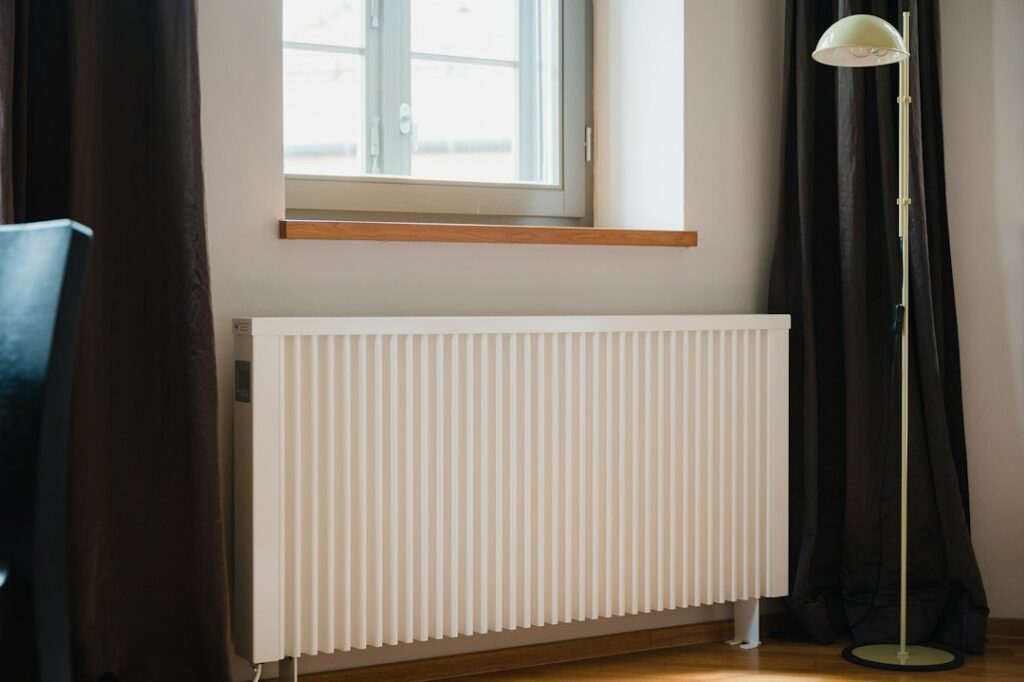
Electric baseboard heaters are common in Front Range basements, additions, older condos and mountain cabins. They are simple, quiet and room-by-room, but their comfort and cost depend heavily on the control that runs them. A worn or mismatched baseboard heater thermostat can leave a room too cold, waste electricity, click constantly or, in rare cases, overheat. Replacing one looks like a quick swap, yet it involves full household voltage and a type of thermostat that differs from the low-voltage units used with furnaces. This guide explains line-voltage and low-voltage controls, built-in and wall-mounted options, single- and double-pole designs, programmable models, safe replacement practices, clearances around heaters, energy savings from setbacks, what an inspector looks at, and typical costs.
Part of our Heating, Cooling & Ventilation guide — start there for the full picture →
How Baseboard Heater Thermostats Differ From Furnace Thermostats
Most central heating systems, such as gas furnaces and heat pumps, use low-voltage thermostats. They run on roughly 24 volts supplied by a transformer in the equipment, and they send small signals telling the furnace or air handler to start or stop. The heavy electrical load is switched inside the equipment itself.
Electric baseboard heaters usually work differently. In most installations, the thermostat directly switches the full current that flows through the heating element. That is why these are called line-voltage thermostats. Depending on the heater, the circuit is commonly 240 volts, though some smaller heaters run on 120 volts.
The practical difference is large:
- A standard furnace thermostat generally cannot be wired to a baseboard heater. Its contacts are designed for low-voltage control signals, not for switching thousands of watts at 240 volts. Connecting one directly to line voltage is likely to destroy it and could create a fire or shock hazard.
- Line-voltage thermostats are larger and heavier. They need to carry and switch real current, and they often fit in a standard electrical box.
- Ratings matter. Every line-voltage thermostat has a maximum current or wattage rating, and the heaters it controls must stay within it.
Some systems do use low-voltage control of baseboard heat, typically through a relay or a power module. In that setup, a low-voltage thermostat signals the relay, and the relay switches the heater. This approach can allow a smart or conventional low-voltage thermostat to control electric heat, but it adds components and is generally installed by an electrician. The thermostat C-wire guide explains the common wire that many low-voltage smart thermostats need.
Types of Line-Voltage Thermostats
Built-in thermostats
Many baseboard heaters have a thermostat knob built into one end of the heater. These are inexpensive and need no separate wall box. The trade-off is accuracy: because the sensor sits near the heater, close to the floor, it may read the warm air near the unit rather than the room temperature where people sit. That can lead to rooms that feel uneven or heaters that cycle more often. Many built-in controls are marked with numbers or ranges rather than actual degrees.
Wall-mounted thermostats
A wall-mounted line-voltage thermostat sits on an interior wall, usually at roughly the same height as other controls, and senses room air more representatively. One wall thermostat can control one heater or several heaters on the same circuit, as long as the combined load stays within its rating. Wall units range from simple mechanical dials to digital and programmable models.
Mechanical versus electronic
Older and basic thermostats use a bimetallic strip or a gas-filled bulb that bends or expands with temperature, opening and closing contacts. They are durable and inexpensive, but they often allow the room to swing a few degrees above and below the setting before switching. Electronic line-voltage thermostats use a sensor and a relay or solid-state switch, and many can hold the temperature in a tighter band. Some electronic models are silent, while mechanical ones often click.
Single-Pole Versus Double-Pole
Line-voltage thermostats are commonly sold as single-pole or double-pole. The difference matters for safety and for how the off setting behaves.
- Single-pole thermostats interrupt only one of the two conductors. On a 240-volt circuit, both conductors are energized, so even when a single-pole thermostat is turned all the way down, one leg can still be live at the heater. Many single-pole models do not have a true off position; the lowest setting simply calls for heat only when the room gets very cold.
- Double-pole thermostats interrupt both conductors. Many have a true off position that disconnects both legs from the heater when selected. That generally makes them preferable on 240-volt circuits, although the breaker should still be the shutoff for any service work.
Matching the replacement to the existing wiring is important. A double-pole unit usually has four leads, two for the supply and two for the heater. A single-pole unit usually has two. If the existing setup is unclear, or the wire colors do not follow the usual pattern, an electrician should sort it out before power is restored.
Programmable Line-Voltage Thermostats
Programmable thermostats designed for line voltage let homeowners schedule lower temperatures for sleep or time away and warmer temperatures for when rooms are in use. They are useful for baseboard heat because each room or zone often has its own thermostat, so schedules can match how each space is used. A spare bedroom or basement office might be kept cool most of the day and warmed only when needed.
Some line-voltage programmable and Wi-Fi models also exist. They are usually sold specifically for electric baseboard or convector heat and carry clear voltage and wattage ratings. As with any line-voltage device, checking the rating against the actual heater load is essential. The programmable thermostat guide covers scheduling basics, and the smart thermostat guide covers connected models, most of which are low-voltage and need a relay for baseboard use.
Energy savings from setbacks
ENERGY STAR notes that for the average American household, almost half the annual energy bill goes to heating and cooling. Its heating and cooling guidance says an ENERGY STAR certified smart thermostat offers more convenience, energy savings and control than manual or programmable thermostats, and that homes with high heating and cooling bills, or homes that are unoccupied for much of the day, can save approximately $100 a year with one. That figure is framed around certified smart thermostats and typical whole-home systems, so it should not be taken as a guaranteed number for a single baseboard zone. Even so, the principle of lowering the setting when rooms are empty or occupants are asleep applies to electric resistance heat, which can be costly to run in Colorado winters.
Safety When Replacing a Baseboard Thermostat
Line-voltage thermostat work involves full household voltage. Many homeowners do this job themselves, and many hire an electrician. Local rules about who may do electrical work and when a permit is needed vary, so checking with the local building department is worthwhile.
Shut off and verify
- Turn off the breaker. Baseboard heaters on 240 volts typically use a double-pole breaker. Turning the thermostat down is not the same as turning off power, especially with single-pole units.
- Test before touching. A non-contact voltage tester can confirm that the wires in the box are not live. Testing the tester on a known live circuit first helps confirm it works. The outlet tester guide explains common testers and their limits.
- Label the wires. Before disconnecting the old thermostat, note which wires are line (supply) and which are load (to the heater).
- Use the right connectors. Use connectors sized for the wire gauge, and confirm aluminum or copper compatibility in older homes.
Respect load ratings
Each thermostat has a maximum load rating, often listed in amps or watts at a given voltage. Adding a new heater to an existing thermostat, or replacing a heater with a larger one, can push the load past that rating. Overloaded contacts can overheat. When the total load is too high, a second thermostat or a relay is often needed. Circuit capacity and breaker size also matter, and those are questions for an electrician.
Warning signs
The U.S. Consumer Product Safety Commission’s electrical safety flyer lists warning signs of electrical system hazards, including dimming or flickering lights, sizzle or buzzing sounds, the odor of overheated plastic, flashes or showers of sparks, hot switch plates and outlet covers, and fuses that burn out or circuit breakers that need resetting frequently. A thermostat cover that is hot to the touch, discolored, buzzing loudly or smelling of hot plastic deserves attention. The same flyer suggests having a licensed electrician check a home’s electrical system if it has been more than ten years since the last inspection or if those signs appear. If a baseboard circuit trips repeatedly, the breaker itself may also be worth checking; the dual-function breaker guide covers combination protection used on some circuits.
Clearances Around Baseboard Heaters
The thermostat controls when the heater runs, but what sits near the heater often determines the fire risk. The U.S. Fire Administration advises keeping anything that can burn at least 3 feet from all heat sources, including fireplaces, wood stoves, radiators, space heaters and candles. Baseboard heater makers typically list their own minimum clearances for drapes, furniture and other materials, and those instructions should be followed.
- Drapes and curtains: long drapes that hang into or over a heater are a common problem.
- Furniture: beds, sofas and shelves pushed tight against heaters block airflow and can overheat materials.
- Stored items: boxes, toys, laundry and paper should be kept away from heaters, especially in basements and storage rooms.
- Covers and fins: bent fins and dust buildup reduce output; damaged covers can expose hot elements.
The baseboard heater guide covers how these units work and common problems, and the baseboard heater covers guide covers replacement covers. USFA’s heating guidance also notes that portable heaters are a small share of home heating fires but a large share of fatal heating fires, and advises turning space heaters off when leaving the room or going to bed. Rooms that are cold enough to need a plug-in heater may be better served by fixing the baseboard thermostat; see the space heater guide for portable unit safety.
Choosing and Placing a Replacement
Picking a replacement is mostly a matter of matching the existing setup and then deciding which features are worth paying for.
- Confirm the voltage. Check the heater’s label or the existing thermostat for 120 or 240 volts. A thermostat rated for one voltage should not be used on the other unless the maker lists it for both.
- Add up the load. Total the wattage of every heater the thermostat will control and compare it with the thermostat’s rating, leaving some margin.
- Match the pole type. Replacing a double-pole unit with another double-pole unit keeps the true off function. Switching from single-pole to double-pole may be possible, but the wiring should be confirmed first.
- Check the box. Digital and programmable units can be deeper than old mechanical ones, and a crowded box makes safe connections harder.
- Pick features. A backlit display, a schedule, an adaptive start or a remote app are conveniences; tight temperature control is often the feature that improves comfort most.
Placement also affects how well any thermostat works. A wall unit placed on an exterior wall, beside a drafty window or above another heat source will read the wrong temperature. Interior walls away from direct sun, doors and the heater itself usually give better readings. In Colorado, strong winter sun through south-facing windows can warm a thermostat enough to shut off heat while the rest of the room stays cool, so sun exposure is worth considering when relocating a control. Moving a wall thermostat means running new cable, which is a job for an electrician in most homes.
Troubleshooting a Baseboard Thermostat
Common symptoms and their usual causes include:
- Heater never turns on: a tripped breaker, a failed thermostat, a loose connection, or a tripped high-limit switch inside the heater.
- Heater never turns off: a thermostat with welded or stuck contacts, which is a reason to replace it promptly and keep the breaker off until it is fixed.
- Room overshoots or undershoots: a built-in sensor reading air near the heater, a mechanical thermostat with a wide swing, or a wall thermostat placed in a draft or near another heat source.
- Loud clicking: normal for many mechanical units, though excessive cycling may point to placement or sizing issues.
For other electric heat types, such as recessed fan-forced units, the wall heater guide covers controls and safety.
What a Home Inspector Checks
The ASHI Standard of Practice requires inspectors to inspect installed heating equipment and distribution systems and to describe energy sources and heating systems. It defines normal operating controls as devices such as thermostats, switches and valves intended to be operated by the homeowner, and inspection includes operating those controls. In practice, an inspector may turn up a baseboard thermostat to confirm the heater warms, note missing or damaged covers, and flag obvious clearance problems such as furniture or drapes against heaters. The standard states that inspectors are not required to determine heat supply adequacy and distribution balance, so a room that feels cool, or a thermostat that seems to read several degrees off, may need follow-up by an electrician or HVAC contractor.
The heating and cooling hub covers specialists for heating systems, and the hiring process section explains how to plan inspections and follow-ups.
Typical Costs
Prices vary by model, region and labor. These rough ranges are for planning only:
- Basic mechanical line-voltage thermostat: often in the range of roughly twenty to fifty dollars.
- Digital non-programmable line-voltage thermostat: commonly roughly thirty to seventy dollars.
- Programmable or Wi-Fi line-voltage thermostat: often roughly fifty to two hundred dollars, depending on features.
- Relay or power module for low-voltage control: adds parts and labor, often a few hundred dollars installed.
- Electrician labor: replacing a single thermostat is usually a short job, but service call minimums commonly put it in the range of roughly one hundred to a few hundred dollars.
For homes with several baseboard zones, replacing old mechanical units with programmable models is often done room by room as budget allows.
References
- Electrical Safety (National Electrical Safety Month flyer) — U.S. Consumer Product Safety Commission
- Heating Fire Safety — U.S. Fire Administration
- Heating and Cooling — ENERGY STAR (U.S. EPA)
- ASHI Standard of Practice for Home Inspection — American Society of Home Inspectors
Frequently asked questions
Can a regular furnace thermostat run a baseboard heater?
Generally not directly. Furnace thermostats are low-voltage, while most baseboard heaters need a line-voltage thermostat. A relay can allow low-voltage control, but it should be installed by an electrician.
What is the difference between single-pole and double-pole baseboard thermostats?
A single-pole unit breaks one conductor, so one leg can stay live at the heater. A double-pole unit breaks both and often has a true off position. The breaker should still be used for service work.
Do programmable baseboard thermostats save money?
They can, by lowering heat in empty or sleeping rooms. Savings depend on habits, insulation and electricity rates, so results vary from home to home.
Why does a baseboard thermostat click so much?
Mechanical thermostats click as their contacts open and close. Frequent cycling can also point to a sensor reading warm air near the heater or a thermostat placed in a draft.
How far should furniture be from a baseboard heater?
Follow the heater maker's listed clearances. USFA advises keeping anything that can burn at least 3 feet from heat sources such as space heaters and radiators.
Have cold rooms, buzzing thermostats or scorched covers in a home you are buying? Reach out and we can help you find a Front Range inspector or electrician to take a closer look.