Programmable Thermostats: Schedules, Setbacks, and Wiring
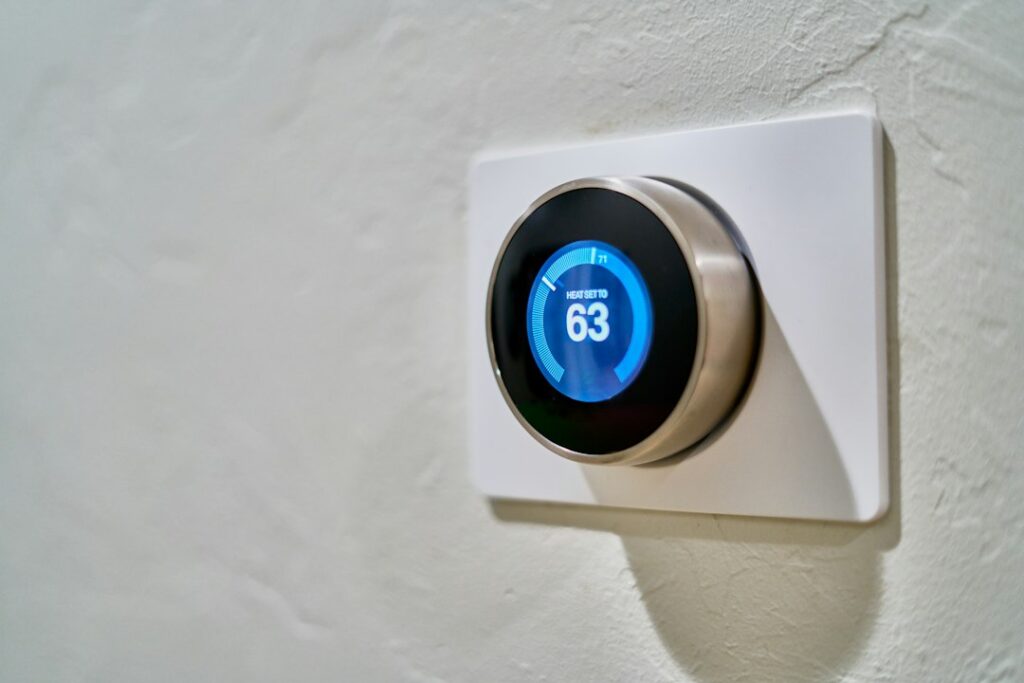
A programmable thermostat is one of the cheapest controls in a house, yet it decides how hard the furnace, boiler, heat pump or air conditioner works every hour of the day. Many homes on the Colorado Front Range still have one on the hallway wall, often set to a schedule nobody remembers creating, or overridden into permanent hold. This guide explains how these thermostats work, which schedule formats exist, how setbacks interact with different heating systems, what the C-wire question is about, how they compare with smart models, and what buyers and home inspectors typically notice. It also covers disposal of old mercury units and rough costs for replacement.
Part of our Heating, Cooling & Ventilation guide — start there for the full picture →
Heating or cooling trouble? Talk to a local HVAC technician.
📞 Call (833) 491-1876What a Programmable Thermostat Does
A programmable thermostat stores a set of time-and-temperature instructions and switches heating or cooling equipment on and off to follow them. Instead of one fixed setpoint, the homeowner enters periods such as Wake, Leave, Return and Sleep, each with its own temperature. The thermostat then calls for heat or cooling only when the room temperature drifts outside the band around the current setpoint.
Most units work on low-voltage control circuits, typically 24 volts supplied by a transformer in the furnace or air handler. The thermostat itself is a switch: it connects the power wire to the heat, cooling or fan terminals, and the equipment does the rest. Line-voltage thermostats for electric baseboard heaters are a separate category that switches 120 or 240 volts directly, and they must never be swapped for a standard low-voltage model.
The appeal is simple. Heating or cooling an empty house, or a house full of sleeping people under heavy blankets, uses energy that delivers little comfort. A schedule automates the adjustment that most people forget to make by hand.
Hold, temporary override and vacation modes
Nearly every programmable model has three ways to leave the schedule. A temporary override changes the setpoint until the next scheduled period starts. A permanent hold freezes one temperature until someone cancels it, which is the most common reason a “programmed” home is not following any program at all. Vacation mode sets a fixed temperature for a defined number of days and then resumes the schedule. When a schedule seems to be ignored, checking the display for a HOLD indicator is the first step.
Schedule Formats: 7-Day, 5-2 and 5-1-1
Manufacturers describe schedule flexibility by how many distinct day patterns the thermostat can store. The format matters because a household whose weekdays all look alike needs far less programming than one with rotating shifts.
7-day programmable
Each day of the week gets its own schedule. This suits shift workers, households with split custody, part-time remote work, or anyone whose Tuesday looks nothing like their Thursday. The trade-off is setup time: entering four periods for seven days means up to 28 entries, although most models let you copy one day to others.
5-2 programmable
One schedule covers Monday through Friday and a second covers Saturday and Sunday together. This is the classic office-worker pattern and the easiest to set up correctly. If the household’s weekdays are consistent, a 5-2 model does everything a 7-day model would.
5-1-1 programmable
Weekdays share one schedule, while Saturday and Sunday each get their own. This is useful when Saturdays involve early errands but Sundays are slow, or when one weekend day is a regular workday for someone in the house.
Choosing a format
The right choice is the simplest one that matches real life. A complicated 7-day schedule that drifts out of date can perform worse than a simple 5-2 schedule that stays accurate.
Best Programmable Thermostats: our top 3 picks
| Product | Best for | Key features | Price | Buy |
|---|---|---|---|---|
| Honeywell Home X2P RTH21B | Best overall programmable |
| $49.98as of Nov 19, 2026 9:45 am GMT+0000 | Buy now →Check current price |
| Suuwer S705 | Most adjustable settings |
| $14.00as of Nov 19, 2026 9:45 am GMT+0000 | Buy now →Check current price |
| Riseem STN605 | Widest system list |
| $23.99as of Nov 19, 2026 9:45 am GMT+0000 | Buy now →Check current price |


Prices are Amazon’s listed prices as of the time shown and change often; check Amazon for today’s price. As an Amazon Associate we earn from qualifying purchases.
Setback Strategy for Heating and Cooling
A setback is a scheduled period at a less demanding temperature: lower in winter, higher in summer. The idea is that a home loses heat to the outdoors (or gains it in summer) at a rate that depends on the indoor-outdoor temperature difference. Holding a smaller difference for several hours reduces how much the equipment has to run.
Winter setbacks
Typical winter programs drop the temperature overnight and while the house is empty, then bring it back up shortly before people wake or return. Some models offer adaptive or smart recovery, which starts heating early so the target is reached at the scheduled time. Front Range winters bring cold nights with relatively sunny days, so many homes see a natural midday boost from solar gain through south-facing windows, which can make a daytime setback easier to recover from.
Comfort and safety still matter. Very deep setbacks in a house with plumbing in exterior walls or an unheated crawl space can raise freeze risk during a cold snap, and households with infants, elderly occupants or people with health conditions may need steadier temperatures. A setback is a convenience setting, not a requirement.
Summer setups
Cooling setbacks work the same way in reverse: a higher temperature while the house is empty, then cooling resumes before people return. Along the Front Range, low humidity and cool nights mean many homes run air conditioning less than in humid regions, and some households open windows at night instead. Where central air is used, a setup during the hottest, emptiest part of the day is the typical approach.
What ENERGY STAR says, and what it does not
Savings claims for thermostats vary widely, and many published figures are old or marketing-driven. The ENERGY STAR smart thermostat page states that “for the average American household, almost half the annual energy bill goes to heating and cooling – more than $900 a year.” It does not translate that into a guaranteed savings figure for any particular thermostat. Real savings depend on climate, how much of the day the setback lasts, how well the house is insulated and sealed, and whether anyone actually keeps the schedule. It is reasonable to treat a programmable thermostat as a tool that can reduce heating and cooling use when it is set up and left in place, not as a fixed percentage off the bill.
Heat Pumps, Auxiliary Heat and Recovery
Heat pumps need extra care. Many air-source heat pumps have a backup or auxiliary heat source, often electric resistance strips in the air handler, which the thermostat can call on when the heat pump cannot keep up or when the temperature needs to rise quickly. Electric resistance heat is generally much more expensive to run than the heat pump itself.
A deep overnight setback followed by a sharp morning recovery may trigger auxiliary heat on some systems, which can erase much of the benefit. Thermostats designed for heat pumps often include smart recovery logic or settings that lock out auxiliary heat above a set outdoor temperature. The details depend on the specific equipment and thermostat, so the safest route is to follow both manufacturers’ installation instructions and ask the HVAC installer how the system was configured. A modest setback, or none at all, may be the better choice for some heat pump installations, particularly in a cold snap.
Heat pumps also need a thermostat that supports them. They typically use a reversing valve wire (often labeled O or B) and may have separate terminals for auxiliary and emergency heat. A thermostat sold for “gas furnace and central air” may not support those functions. Two-stage and variable-speed equipment adds further terminals, and the thermostat has to be configured to match.
Power, the C-Wire and Battery Models
A thermostat with a display and memory needs a small amount of steady power. There are three common ways to supply it.
- Batteries only. Many basic programmable models run on AA or AAA batteries. The schedule is often kept in memory when batteries are replaced, though some models lose the clock. Weak batteries can cause a blank screen, erratic operation or a system that will not start. Our guide to thermostat batteries covers which types to use and the low-battery warning signs.
- Common wire (C-wire). A dedicated conductor from the transformer gives the thermostat continuous 24-volt power. Many models that support Wi-Fi or backlit touchscreens need it, or work far more reliably with it.
- Power stealing. Some thermostats draw a trickle of current through the heating or cooling circuit when it is idle. This can work, but on some equipment it causes clicking, short-cycling or a fan or furnace that behaves oddly. Manufacturers usually list which systems are compatible.
If there is no C-wire at the wall, options include using a spare conductor already in the cable, adding a manufacturer-supplied power adapter at the furnace, or pulling a new cable. Any work inside the furnace or air handler should follow its manual with power shut off at the equipment switch or breaker, and many homeowners hand this part to an HVAC technician.
Swapping a Thermostat: Labels, Compatibility and Troubleshooting
Replacing a programmable thermostat looks like a 20-minute job, and often it is. The mistakes that cause problems are usually avoidable.
- Confirm the system type. Gas or electric furnace, heat pump with or without auxiliary heat, boiler, single- or multi-stage, and whether there is cooling. Check the new thermostat’s compatibility list before buying.
- Turn off power at the furnace or air handler switch or breaker.
- Photograph and label every wire before disconnecting it, using the letters printed on the old terminals (R, Rc, Rh, W, W2, Y, Y2, G, C, O/B, E and so on). Wire color is not reliable; previous installers do not always follow conventions. Our guide to thermostat wiring explains what each terminal does.
- Keep wires from falling back into the wall, then mount the new base, connect conductors to matching terminals, and set the configuration menu for the actual equipment.
- Test each mode: heat, cool, fan, and auxiliary or emergency heat where present.
If the system does not respond afterward, common causes include a missed configuration step, a loose conductor, a tripped breaker, a door safety switch on the furnace, or a blown low-voltage fuse on the control board. Our guide to a thermostat not working walks through those checks in order.
Mercury in older thermostats
Older round dial and lever thermostats often contain a small glass bulb of mercury that tilts to make or break the circuit. If one is being replaced, it should not go in household trash. EPA notes that many states and local agencies have collection or exchange programs for mercury-containing devices such as thermostats, and that some counties and cities run household hazardous waste collection programs. Handle the unit gently so the bulb does not break, and check with local officials or a household hazardous waste program for drop-off options in your county.
Programmable vs Smart Thermostats
A programmable thermostat follows the schedule it is given. A smart thermostat adds Wi-Fi control, and many models add learning, occupancy sensing or geofencing based on a phone’s location. ENERGY STAR describes certified smart thermostats as “independently certified, based on actual field data, to deliver energy savings,” and lists features such as learning temperature preferences, geofencing and over-the-air software updates. Its buying guidance also stresses checking that the thermostat is compatible with the heating and cooling system.
For a household with predictable routines that will keep the schedule current, a well-set programmable model may do most of what is needed. For irregular schedules, remote control while travelling, or households that never reprogram anything, a smart model’s automation can be the difference between a schedule that works and one that sits on permanent hold. Our smart thermostat guide compares the features in more detail, including the C-wire requirement many of them have.
Zoned systems and rentals
Homes with more than one zone usually have a thermostat per zone wired to a zone control panel that opens and closes dampers or valves. Each zone’s thermostat can carry its own schedule, which is useful for a split-level where the lower floor stays cool and the upstairs bedrooms overheat. See our guide to HVAC zoning for how those systems are set up. In rentals and commercial spaces, landlords sometimes fit a thermostat lock box to keep settings within a range; the lock box needs ventilation slots so the thermostat still reads room air correctly.
Placement and Accuracy
A thermostat can only control what it senses. One mounted on an exterior wall, near a supply register, in direct afternoon sun, above a lamp or television, or next to a drafty door may read several degrees off the rest of the house. That makes the schedule look wrong even when it is working. Interior walls in a central area, away from heat sources and drafts, give the most representative reading. Gaps behind the thermostat base where cold air drifts out of the wall cavity can also throw readings off; sealing that hole with a small amount of insulation or putty is a common fix.
What Home Inspectors Check
The ASHI Standard of Practice directs inspectors to inspect installed heating equipment and distribution systems and to describe the energy source and heating system type, and it directs a similar scope for central cooling equipment. In practice, inspectors normally use the thermostat as the normal operating control to start heating and cooling, which tests the thermostat at the same time. Calibration of schedules and every programmed feature is generally outside a standard inspection.
Common observations include a thermostat that does not bring on heat or cooling, a missing cover, loose mounting, an old mercury unit, or wiring that appears to be patched or loose. Inspectors may also note a heat pump thermostat showing emergency heat engaged during mild weather, which can point to a configuration or equipment problem worth having an HVAC technician review. ENERGY STAR’s maintenance checklist lists checking thermostat settings as part of a typical seasonal HVAC check-up, so a service visit is a sensible follow-up if anything looks off. For the broader HVAC picture, our heating and cooling inspections section explains what else is evaluated, and the main home inspector hiring guide covers how to choose and work with an inspector.
Costs
Prices change often and vary by brand and region, so treat these as rough 2026 ranges rather than quotes.
- Basic non-programmable or 5-2 programmable thermostat: commonly a few tens of dollars at a home improvement store.
- 7-day programmable with backlit display: often somewhat more, usually still well under the price of most smart models.
- Smart thermostat: typically higher again, and some utilities offer rebates on ENERGY STAR certified models.
- Professional installation: often a modest service-call charge for a straightforward swap, rising if a C-wire must be run, an adapter installed, or a heat pump or multi-stage system configured.
A thermostat that stops working is rarely an expensive problem by itself, but a system that has been short-cycling or running on auxiliary heat for months may need a technician’s look beyond the wall control.
More Questions About Programmable Thermostats
Can a programmable thermostat control electric baseboard heaters?
A programmable thermostat can control electric baseboard heaters only if it is a line-voltage model rated for 120 or 240 volts. Standard programmable thermostats for furnaces and heat pumps run on low-voltage 24-volt control wiring and can be damaged, or create a shock hazard, if wired to baseboard heat.
Line-voltage programmable models are sold specifically for baseboards and wall heaters, usually one per zone. Turn off the breaker before replacing one, and check the heater’s wattage against the thermostat’s maximum load rating.
Can a programmable thermostat work with a boiler or radiant floor heat?
Yes, a programmable thermostat can work with most boilers and hydronic systems using two-wire low-voltage control. Radiant floor heat, however, responds slowly, so deep setbacks often save little and leave rooms cold when the schedule changes.
For radiant floors, modest setbacks or none at all are often recommended, and some thermostats include a floor sensor or adaptive recovery to start heating early. Check the thermostat’s compatibility list for hydronic and millivolt systems, which use different wiring.
Why does a programmable thermostat keep losing its schedule?
A programmable thermostat that keeps losing its schedule usually has weak backup batteries, a loose power connection, or brief power interruptions that reset older models. Replacing the batteries is the first fix to try.
Thermostats without a C-wire that draw power through the heating or cooling circuit may reset when the system cycles. Programs can also appear lost if the unit was left in hold mode. If problems persist after new batteries, the thermostat may be failing and worth replacing.
Can a programmable thermostat control humidity?
Most basic programmable thermostats cannot control humidity directly, but some models include humidity sensing and can run a whole-house humidifier or dehumidifier through extra wiring. Others offer a cooling-based dehumidify mode that runs the air conditioner longer at lower fan speed.
Keeping indoor humidity roughly between 30 and 50 percent helps limit mold, dust mites and condensation. A separate humidistat or a portable dehumidifier may be simpler for homes without whole-house humidity equipment.
References
- Smart Thermostats — ENERGY STAR
- Maintenance Checklist — ENERGY STAR
- Storing, Transporting and Disposing of Mercury — U.S. Environmental Protection Agency
- ASHI Standard of Practice for Home Inspections — American Society of Home Inspectors
Frequently asked questions
What is the difference between a 5-2 and a 7-day programmable thermostat?
A 5-2 model stores one schedule for weekdays and one for the weekend. A 7-day model lets every day have its own schedule, which suits shift work or irregular routines but takes longer to program.
Should a heat pump use a deep overnight setback?
Often not. A large morning recovery can bring on electric auxiliary heat on some systems, which costs more to run. Follow the heat pump and thermostat instructions, and ask the installer how recovery and auxiliary heat lockouts are configured.
Does a programmable thermostat need a C-wire?
Many battery-powered programmable models do not. Wi-Fi and touchscreen models often need a C-wire or a manufacturer adapter for steady power, and power-stealing designs can misbehave on some equipment.
How should an old mercury thermostat be disposed of?
Keep it out of household trash. EPA notes that many state and local agencies run collection programs for mercury-containing devices such as thermostats, and some counties and cities hold household hazardous waste collections.
Will a home inspector test the thermostat schedule?
Inspectors generally use the thermostat to operate heating and cooling, which tests its basic function. Checking every programmed period and feature is usually outside a standard home inspection.
Do utilities offer rebates for programmable thermostats?
Some utilities offer rebates for programmable or smart thermostats, though many programs now favor connected smart models. Check the local electric and gas utility websites. The federal energy-efficient home improvement credit ended for work completed after December 31, 2025, so utility and state programs are the main incentive.
Can a programmable thermostat cause short cycling?
A programmable thermostat can contribute to short cycling if its cycle rate setting is wrong for the system type or it is placed near a heat source or drafty spot. Adjusting the cycles-per-hour setting or relocating the thermostat often fixes the problem.
What temperature should a programmable thermostat be set to at night?
Many people set a programmable thermostat a few degrees lower at night in winter, often around 60 to 67 degrees Fahrenheit, depending on comfort and health needs. Older adults, infants and people with medical conditions may need warmer settings, so adjust for the household.
Buying a home with an unfamiliar heat pump or zoned system? Get in touch and we can connect you with a Front Range inspector who will run the heating and cooling through their normal controls.