Best Programmable Thermostats (2026): 6 Picks by Schedule
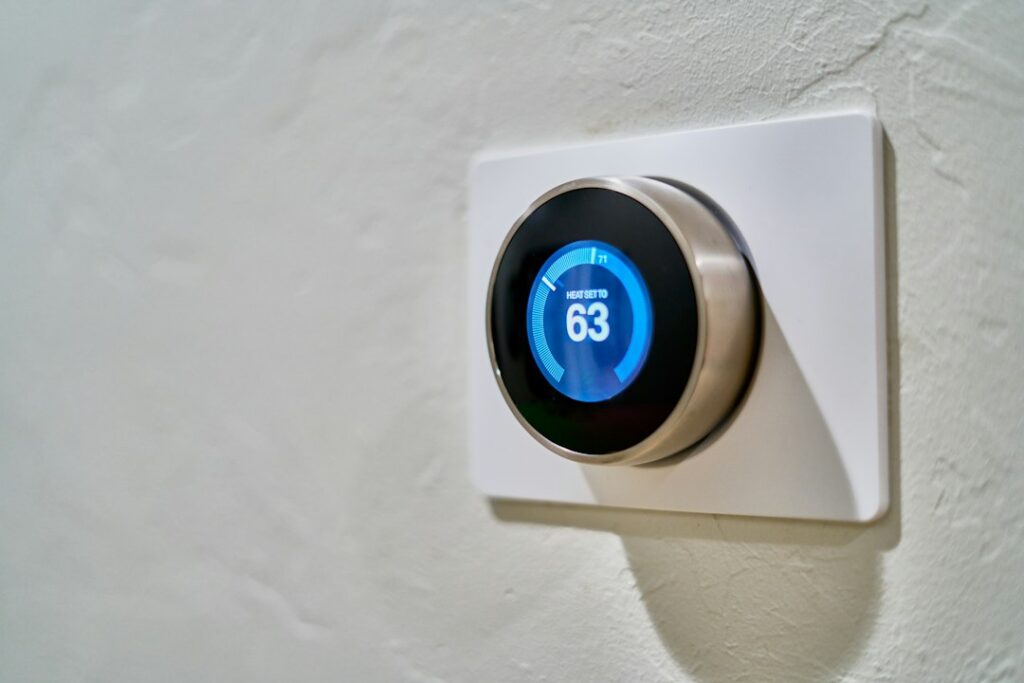
The best programmable thermostat is still the right answer for plenty of Front Range homes. Not every household wants an app, a Wi-Fi account or a thermostat that learns. A plain programmable unit that drops the heat at night and while everyone is at work, runs on two AA batteries and never needs a software update can do most of the saving with none of the setup. The trick is matching the schedule format, power source and system type to your house. This guide compares the non-connected programmables on the shelf against two Wi-Fi models that also schedule, and explains which systems each one can and cannot control.
Part of our Heating, Cooling & Ventilation guide — start there for the full picture →
As an Amazon Associate we earn from qualifying purchases.
How we compared: we compared all 7 current Amazon listings returned for programmable thermostats on what each listing states: scheduling formats, power source and C-wire needs, compatible and incompatible systems, display, reminders and warranty. Four are traditional non-connected programmables and three are Wi-Fi models that also run schedules. We did not lab-test or install any of these thermostats. Prices and availability change often, so check the current listing before buying.
Quick picks: the best programmable thermostats by need
| Product | Best for | Key features | Price | Buy |
|---|---|---|---|---|
| Honeywell Home X2P RTH21B | Best overall programmable |
| $49.98as of Oct 22, 2026 1:05 pm GMT+0000 | Buy now →Check current price |
| Suuwer S705 | Most adjustable settings |
| $27.99as of Oct 22, 2026 1:05 pm GMT+0000 | Buy now →Check current price |
| Riseem STN605 | Widest system list |
| $20.99as of Oct 22, 2026 1:05 pm GMT+0000 | Buy now →Check current price |
| Honeywell Home X2P RTH20B | Simple 5-2 weekday schedule |
| $36.49as of Oct 22, 2026 1:05 pm GMT+0000 | Buy now →Check current price |
| Sensi ST55 | Wi-Fi with a classic layout |
| $98.00as of Oct 22, 2026 1:05 pm GMT+0000 | Buy now →Check current price |
| Amazon Smart Thermostat | Voice-controlled schedules |
| $79.99as of Oct 22, 2026 9:50 am GMT+0000 | Buy now →Check current price |
Prices are Amazon’s listed prices as of the time shown and change often; check Amazon for today’s price. As an Amazon Associate we earn from qualifying purchases.
The six picks, compared listing by listing
1. Honeywell Home X2P RTH21B — Best Overall Programmable Thermostat

Battery-powered single-stage programmable with 7-day, 5-1-1, 5-2 or 1-week schedules and a backlit display.
Check price on Amazon$49.98 as of Oct 22, 2026 1:05 pm GMT+0000 — prices change; see Amazon for current price.Why we like it
- Four schedule formats plus a hold-only mode
- No C-wire needed; runs on 2 AA
- Works with 750 mV and hot water heat
- Replaces older Honeywell RTH2510 and RTH2410
| Specification | Details |
|---|---|
| Scheduling | 7-day, 5-1-1, 5-2 or 1-week; non-programmable option |
| Compatibility | 1 heat / 1 cool; 750 mV; hot water; forced air gas, oil or electric |
| Not compatible | Electric baseboard heat (120 to 240 V) |
| Power | 2 AA batteries, not included |
| Features | Backlit display, filter reminder, extended 32°F low-heat setpoint, UWP wall plate |
| Model / warranty | RTH21B; 1-year warranty |
Honeywell X2P RTH21B — 7-day/5-1-1/5-2/1-week, 1H/1C + 750 mV, 2 AA, backlit, filter reminder, 1-yr
The Only Listing That Offers Every Common Schedule Format
Schedule format is the feature that makes or breaks a programmable thermostat. A 5-2 schedule gives weekdays one program and weekends another. A 5-1-1 splits Saturday and Sunday. A 7-day format lets every day differ, which suits shift workers and households with a different routine each day. The RTH21B is the only one of the 7 listings that offers all of those, plus a 1-week option and a non-programmable mode.
It also covers the widest set of simple systems among the Honeywell pair: single-stage forced air, hot water heat and 750 millivolt systems, the self-powered gas valves found on some wall furnaces and older heaters. Battery power means no C-wire is needed, so it fits the two-wire bundles common in older Front Range homes.
The limits are stage count and warranty. It is 1 heat / 1 cool only, and the listing does not mention heat pump support. The 1-year warranty is the shortest stated term among the four traditional programmables.
Pros
- Most flexible scheduling on the shelf
- Battery power, no C-wire
- Millivolt and hot water compatible
Cons
- Single-stage only; no heat pump listed
- Batteries not included
- 1-year warranty
Check Honeywell Home X2P RTH21B price on Amazon
2. Suuwer S705 — Best for Adjustable Settings

5-1-1 programmable with 4 periods a day, adjustable swing, compressor delay and battery and filter reminders.
Check price on Amazon$27.99 as of Oct 22, 2026 1:05 pm GMT+0000 — prices change; see Amazon for current price.Why we like it
- Separate heat and cool swing settings
- Selectable 5-minute compressor delay
- Filter reminder interval you can set
- 2-year warranty, longest among non-Wi-Fi picks
| Specification | Details |
|---|---|
| Scheduling | 5-1-1 with 4 periods per day (wake, leave, return, sleep) |
| Compatibility | 1H/1C conventional; heat-only furnaces and boilers; gas fireplace (24 V); 1H/1C heat pump without aux |
| Not compatible | Multistage, heat pumps with backup, 3-wire hydronic, dual fuel, line voltage, mini-splits |
| Control | Swing 0.2 to 2°F; plus or minus 1°F accuracy; control range 44 to 90°F |
| Power | 24 VAC or 2 AAA; C-wire needed only on heat-only and cool-only systems |
| Model / warranty | S705; 2-year warranty |
Suuwer S705 — 5-1-1, 4 periods/day, swing 0.2–2°F, compressor delay, 24 VAC or 2 AAA, 2-yr warranty
The Most Detailed Control Settings Among the Traditional Units
Swing, sometimes called differential, sets how far the temperature can drift from the setpoint before the system turns on. A tight swing holds a steadier temperature but cycles the furnace more often; a wider one means longer, fewer cycles. The Suuwer lets you set heating and cooling swing separately between 0.2 and 2°F, and it adds a selectable 5-minute compressor delay that protects an air conditioner from rapid restarts. The Riseem also mentions swing and compressor delay, but the Suuwer gives the actual numbers.
Its listing is unusually blunt about incompatibility, listing multistage systems, heat pumps with backup heat, 3-wire hydronic zone valves, dual fuel and line-voltage baseboard among the systems it will not run. It does allow a simple 1-heat/1-cool heat pump without auxiliary heat, a setup that leaves no backup heat for the coldest nights.
The listing urges buyers to check the wiring photos before ordering and says only 2 to 5 wires are supported. Its 41 to 95°F display range means a very cold vacant cabin will read off the scale.
Pros
- Adjustable swing and compressor delay
- Dual power, C-wire rarely needed
- 2-year warranty
Cons
- 5-1-1 only, no 7-day option
- No heat pump with backup heat
- Control range bottoms out at 44°F
Check Suuwer S705 price on Amazon
3. Riseem STN605 — Best for Unusual Single-Stage Systems

5-1-1 programmable listing millivolt, gas fireplace, wall furnace, gravity hot water and heat pump without aux support.
Check price on Amazon$20.99 as of Oct 22, 2026 1:05 pm GMT+0000 — prices change; see Amazon for current price.Why we like it
- Longest list of supported system types
- Covers millivolt and gas fireplace controls
- Temperature display calibration
- 24 VAC or 2 AAA power
| Specification | Details |
|---|---|
| Scheduling | 5-1-1 with factory preset energy program |
| Compatibility | Forced air, electric furnace, hot water steam or gravity, heat only, cool only, millivolt, 24 V gas fireplaces, floor or wall furnaces, heat pump without aux |
| Not compatible | Heat pump with aux or emergency heat, dual fuel, electric baseboard, radiant ceiling, mini-splits |
| Control | Adjustable swing; display calibration; selectable compressor delay |
| Power | 24 VAC or 2 AAA; C-wire only on heat-only and cool-only systems |
| Model / warranty | STN605; warranty not stated |
Riseem STN605 — 5-1-1, millivolt / fireplace / wall furnace / gravity, calibration, swing, 24 VAC or 2 AAA
The Only Listing Naming Wall Furnaces and Gravity Heat
Older Front Range bungalows and cabins often have heating that modern thermostats ignore: a floor or wall furnace, a gas fireplace on a 24-volt control or gravity hot water. The Riseem is the only listing that names floor and wall furnaces and gravity hot water, and one of two (with the Suuwer) to name 24-volt gas fireplaces. It is one of three listings that covers millivolt systems, alongside the two Honeywell X2P models.
It adds display calibration, a feature only the Riseem and Suuwer mention, which lets you correct a reading that is consistently a degree or two off from a trusted thermometer. Large terminal blocks and a universal sub-base are aimed at a quick DIY swap, and the listing claims installation within 30 minutes.
The listing does not state a warranty, and like the Suuwer it excludes heat pumps with auxiliary heat. Its schedule format is 5-1-1 only.
Pros
- Broadest list of simple system types
- Display calibration and swing
- Dual power
Cons
- Warranty not stated
- No heat pump with backup heat
- 5-1-1 schedule only
Check Riseem STN605 price on Amazon
4. Honeywell Home X2P RTH20B — Best Simple 5-2 Schedule

Battery-powered single-stage thermostat with 5-2 scheduling or a non-programmable mode, backlit display and no C-wire.
Check price on Amazon$36.49 as of Oct 22, 2026 1:05 pm GMT+0000 — prices change; see Amazon for current price.Why we like it
- Two-program weekday and weekend schedule
- No C-wire needed; 2 AA batteries
- Large screen with clear font
- Direct replacement for Honeywell RTH2300
| Specification | Details |
|---|---|
| Scheduling | 5-2 day; non-programmable option |
| Compatibility | 1 heat / 1 cool; 750 mV; hot water; forced air gas, oil or electric |
| Not compatible | Electric baseboard heat (120 to 240 V) |
| Power | 2 AA batteries, not included; no C-wire required |
| Features | Backlit display, filter reminder, extended 32°F low-heat setpoint, UWP wall plate |
| Model / warranty | RTH20B; 1-year warranty |
Honeywell X2P RTH20B — 5-2 schedule, 1H/1C + 750 mV, 2 AA, no C-wire, backlit, filter reminder, 1-yr
The Simplest Schedule on the Shelf for Simple Routines
The RTH20B shares its hardware platform, compatibility list and 1-year warranty with the RTH21B but limits programming to 5-2 days. That sounds like a downgrade, and for some homes it is. For a retired couple or a household with predictable weekdays, two programs are easier to set correctly, and a thermostat programmed correctly beats a flexible one left on hold.
Both X2P listings mention the UWP wall plate, which Honeywell says simplifies future device upgrades, and both include an extended 32°F low-heat setpoint. Use that setting with caution. A thermostat holding 32°F in a vacant house leaves no margin for pipes in exterior walls, crawlspaces or under-insulated kitchens when Front Range temperatures drop below zero.
The listing does not mention heat pump support, and batteries are not included.
Pros
- Easy two-program schedule
- Battery power, no C-wire
- Large backlit screen
Cons
- 5-2 schedule only
- Single-stage, no heat pump listed
- 1-year warranty
Check Honeywell Home X2P RTH20B price on Amazon
5. Sensi ST55 — Best Wi-Fi Programmable With a Classic Layout

ENERGY STAR Wi-Fi thermostat with physical buttons, flexible scheduling, equipment alerts and a 3-year warranty.
Check price on Amazon$98.00 as of Oct 22, 2026 1:05 pm GMT+0000 — prices change; see Amazon for current price.Why we like it
- Buttons and familiar thermostat shape
- Fits the old footprint, no wall patching
- Equipment alerts and filter reminders
- 3-year warranty, longest on the shelf
| Specification | Details |
|---|---|
| Type | Wi-Fi smart thermostat with app and physical buttons |
| Scheduling | Flexible scheduling plus remote access |
| Power | C-wire not required in most applications |
| Maintenance | Usage reports, equipment alerts, filter replacement reminders |
| Certification / privacy | ENERGY STAR certified; personal information not sold per listing |
| Model / warranty | ST55; 3-year warranty |
Sensi ST55 — Wi-Fi, buttons, flexible schedule, no C-wire in most homes, alerts, ENERGY STAR, 3-yr
The Longest Warranty, With Buttons Instead of a Touchscreen
For buyers who want app scheduling but do not want a glossy touchscreen, the ST55 is the bridge. Its listing says it looks and feels like a traditional thermostat, uses buttons and fits the same wall space as the unit it replaces, so there is no ring of unpainted drywall when the old one comes off. That matters to anyone who has pulled an old mercury-era thermostat and found a rectangle of 1980s paint behind it.
Its 3-year warranty is the longest stated on this shelf, and it is one of two ENERGY STAR certified listings here, with the Google Nest. ENERGY STAR certification requires a smart thermostat to keep working as a basic thermostat without internet, so a Wi-Fi outage does not stop its schedule.
The listing does not detail system compatibility or heat pump staging beyond saying it works with HVAC equipment found in most homes. Check the manufacturer’s compatibility tool first.
Pros
- 3-year warranty
- Buttons and classic footprint
- ENERGY STAR certified
Cons
- Needs Wi-Fi and an app account for full features
- Compatibility detail not in listing
- No remote sensors
Check Sensi ST55 price on Amazon
6. Amazon Smart Thermostat — Best for Voice-Controlled Schedules

Alexa-controlled thermostat with home, away and sleep schedules and app-guided DIY install, built with Honeywell tech.
Check price on Amazon$79.99 as of Oct 22, 2026 9:50 am GMT+0000 — prices change; see Amazon for current price.Why we like it
- Home, away and sleep schedules in the app
- Voice changes without touching the wall
- Alexa app walks through installation
- Honeywell Home technology inside
| Specification | Details |
|---|---|
| Type | Wi-Fi thermostat controlled through Alexa |
| Scheduling | Custom home, away and sleep schedules, or automatic Alexa control |
| Sensing | Comfort zones using select Alexa devices |
| Power / C-wire | Not stated in listing |
| Compatibility | Not stated in listing |
| Model / warranty | S6ED3R; warranty not stated |
Amazon Smart Thermostat — Alexa control, home/away/sleep schedules, Alexa comfort zones, Honeywell tech
The Schedule You Can Change by Asking
The most common reason a programmable thermostat stops saving energy is that someone overrides it and leaves it on hold. Voice control does not fix that by itself, but it does make adjusting the schedule as easy as overriding it. The Amazon thermostat is the only listing on the shelf built entirely around Alexa, with home, away and sleep schedules plus optional automatic control.
The listing quotes EPA estimates for savings from ENERGY STAR certified thermostats but does not, in that line, say it is certified itself. It also leaves out C-wire needs, compatibility and warranty, which is a lot of missing detail for a device you are wiring into the furnace.
It does promise an email after purchase with any utility rebates available in your area, which is worth watching for.
Pros
- Voice and app scheduling
- Guided DIY install
- Rebate information after purchase
Cons
- Compatibility and C-wire not stated
- Warranty not stated
- Requires the Alexa ecosystem
Check Amazon Smart Thermostat price on Amazon
Schedule formats explained: 7-day, 5-1-1 and 5-2
Every programmable thermostat on this shelf uses one of three schedule structures, each with time periods inside each day:
- 7-day: each day of the week gets its own program. Best for shift work, split custody or anyone whose Tuesday looks nothing like their Thursday. Only the RTH21B offers it among the traditional units.
- 5-1-1: one weekday program, a Saturday program and a Sunday program. The Suuwer and Riseem use it, and the RTH21B can.
- 5-2: one weekday program and one weekend program. The RTH20B uses it, and the RTH21B can.
Within each day, most units offer four periods, typically wake, leave, return and sleep. A practical Front Range winter schedule lowers the setpoint a few degrees overnight and while the house is empty, then recovers before people wake or return. ENERGY STAR’s maintenance checklist recommends checking that thermostat settings keep the house comfortable while you are home and save energy while you are away. Our guide to the programmable thermostat walks through setting one up.
Power, batteries and the C-wire question
The traditional programmables here split into two groups. The two Honeywell X2P models run only on 2 AA batteries and need no C-wire at all. The Suuwer and Riseem can run on 24 VAC from the system or on 2 AAA batteries, and both say a C-wire is only needed on heat-only and cool-only systems.
Battery-powered thermostats are simple, but dead batteries are a common reason a thermostat stops calling for heat. Replace them every heating season, and do not ignore a low-battery icon in November. Our guide to thermostat batteries covers which units need them and how often. If you are moving to a Wi-Fi model later, check for a C-wire now with our thermostat C-wire guide.
Compatibility: what these thermostats cannot run
All four traditional programmables here are single-stage 1-heat/1-cool controls. That covers a typical gas furnace with central air, a boiler or a wall furnace, but not:
- Heat pumps with auxiliary or emergency heat. The Suuwer and Riseem both exclude these explicitly; the Honeywell X2P listings do not list heat pump support. ENERGY STAR notes air-source heat pumps move heat rather than burning fuel, and controlling their backup heat well takes a thermostat built for it.
- Two-stage furnaces or air conditioners. Excluded by the Suuwer and not supported by the 1H/1C-only units.
- Line-voltage electric baseboard heat. Every traditional listing here excludes it. Baseboard heaters need a line-voltage thermostat; see our baseboard heater thermostat guide.
- Ductless mini-splits. These use their own remotes or proprietary controllers.
If you see more than five wires behind your current thermostat or terminals labeled O/B, W2, Y2 or AUX, you likely need a multi-stage or heat pump thermostat. Our thermostat wiring guide decodes the letters.
Programmable vs smart: which saves more?
A programmable thermostat saves only when its program reflects how the house is actually used. ENERGY STAR’s smart thermostat criteria are a useful contrast: certified smart models must show measured reductions in heating and cooling run time across a year of real-home data, give feedback on how your settings affect energy use and work as a basic thermostat if the internet drops. Programmable units make no such promise; the savings depend on you.
That does not make programmables a bad buy. For a stable household, a vacation home with a simple setback schedule or a rental where the landlord wants predictable settings, a programmable is cheaper, simpler and has nothing to hack. For irregular schedules or heat pump systems, our roundup of smart options and the smart thermostat guide are the better starting points.
Rentals, second homes and freeze protection
Programmables are popular with Front Range landlords and owners of mountain cabins. A few cautions:
- Keep a reasonable minimum heat setting in vacant homes. The low-heat setpoints these listings advertise, as low as 32°F on the Honeywell X2P models, leave no margin for pipes in exterior walls and crawlspaces.
- Battery-only thermostats in a vacant home can quietly die. Replace batteries before winter and consider a temperature alarm.
- For tenant-occupied units, a locking cover prevents setpoint wars; see our thermostat lock box guide.
Installation and when to call a pro
Swapping a single-stage thermostat is a common DIY job: shut off power at the furnace, photograph and label the wires, move them to matching terminals and confirm heat and cooling each start. Stop and call an HVAC technician if the old thermostat is line voltage, if wire colors do not match the terminal letters, if a heat pump or two-stage system is involved, or if the system will not run after the swap.
A thermostat that suddenly stops calling for heat is often batteries, a tripped furnace switch or a loose wire, not a bad furnace. If basic checks do not fix it, our heating and cooling hub explains what to look at next. Buyers and homeowners who want the furnace, controls and wiring checked as part of a broader inspection can get in touch through our contact page to connect with a vetted Front Range inspector.
Frequently asked questions
What is the best programmable thermostat schedule type?
It depends on your routine. A 7-day schedule suits households where every day differs, 5-1-1 separates Saturday and Sunday, and 5-2 uses one weekday and one weekend program. A simpler schedule that is set correctly saves more than a flexible one that is left on hold.
Do programmable thermostats need a C-wire?
Most traditional programmables do not. On this shelf, the two Honeywell X2P models run on AA batteries with no C-wire, and the Suuwer and Riseem can use either 24 VAC or AAA batteries, needing a C-wire only on heat-only or cool-only systems.
Can a programmable thermostat work with a heat pump?
Only some can, and the four traditional units here are limited. The Suuwer and Riseem support a simple heat pump without auxiliary heat and exclude heat pumps with backup heat, a common configuration. Heat pumps with aux heat need a thermostat that lists that staging.
Are programmable thermostats still worth buying over smart thermostats?
They can be for stable routines, rentals and simple single-stage systems, since they are cheaper and need no Wi-Fi or app. Smart thermostats certified by ENERGY STAR must show measured run-time savings, while a programmable thermostat saves only if its schedule matches how the home is used.
How often should programmable thermostat batteries be changed?
Replace them at least once a year, ideally before heating season starts. A dead battery is a common reason a battery-powered thermostat stops calling for heat. Watch for the low-battery indicator and keep spares on hand, especially in a vacant home or cabin.
References
- Smart Thermostats Key Product Criteria — ENERGY STAR
- Smart Thermostats — ENERGY STAR
- Maintenance Checklist — ENERGY STAR
- Air-Source Heat Pumps — ENERGY STAR