Signs of a Bad Thermostat and How to Tell It From HVAC Trouble
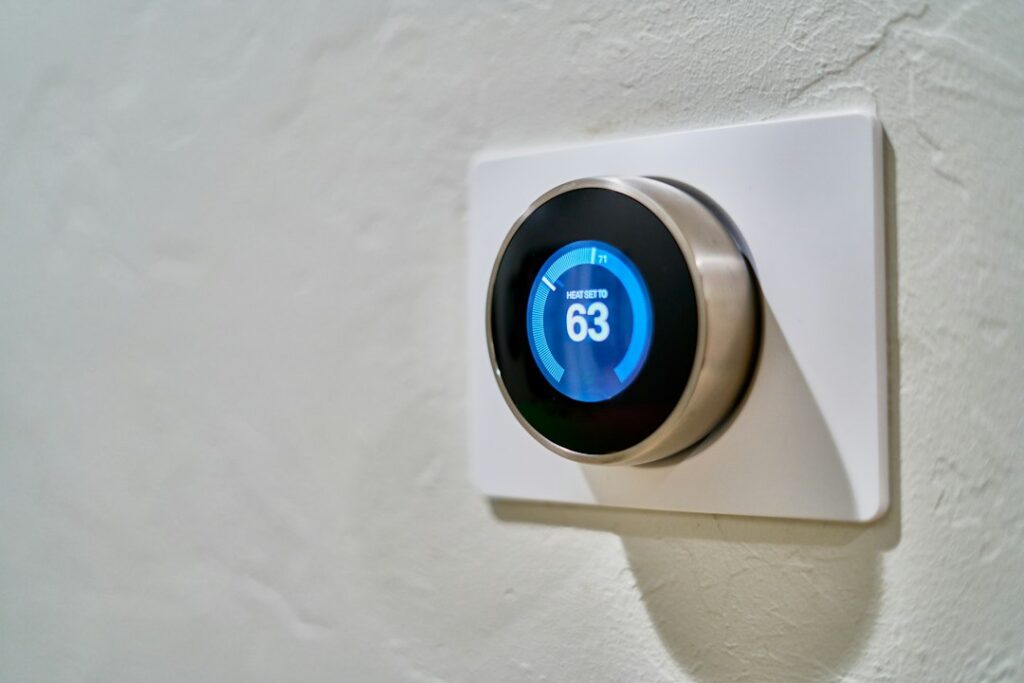
The most common signs of a bad thermostat are a blank or frozen display, a heating or cooling system that will not turn on or will not shut off, short cycling, a temperature reading that does not match the room, and settings or schedules that keep resetting. Many of those symptoms can also come from the furnace, air conditioner, wiring or a simple dead battery, so the useful skill is telling a failing thermostat apart from problems elsewhere in the system. This guide starts with a quick checklist, then covers each sign in turn: what it looks like, where to check, which look-alike causes to rule out, how serious it is and what to do next. It also explains what a home inspector looks at and when an HVAC technician is the better call. It reflects general ENERGY STAR and industry guidance as of 2026; the thermostat and equipment manuals take priority for any specific model.
Part of our Heating, Cooling & Ventilation guide — start there for the full picture →
Heating or cooling trouble? Talk to a local HVAC technician.
📞 Call (833) 491-1876Quick Checklist: Signs Your Thermostat May Be Failing
- Blank, dim or flickering screen even after fresh batteries
- System will not turn on when the setting calls for heat or cooling
- System will not turn off and runs past the set temperature
- Short cycling, with the furnace or air conditioner starting and stopping every few minutes
- Displayed temperature does not match a reliable thermometer in the same room
- Settings, schedules or Wi-Fi connection reset on their own
- Buttons or touchscreen unresponsive, or changes take a long time to register
- Wrong mode behavior, such as heat coming on when cooling is selected
- Clicking from the thermostat with no response from the equipment
- Rising energy bills without a change in habits or weather
One symptom alone does not condemn the thermostat. Several together, especially when the furnace or air conditioner checks out, make it a likely culprit. If the system is entirely dead, our guide to a thermostat not working walks through power and wiring checks in order.
How a Thermostat Controls the System
Understanding the basic job makes the signs easier to read. A typical central HVAC thermostat is a low-voltage switch. The furnace or air handler supplies about 24 volts through a small transformer. When the thermostat senses that the room is below the heating setting or above the cooling setting, it closes a circuit between the power wire and a control wire, usually labeled W for heat, Y for cooling and G for the blower fan. The equipment’s control board responds by starting the burner, compressor or fan. When the room reaches the setting, the thermostat opens the circuit and the equipment shuts down.
Older mechanical thermostats use a bimetal coil and, in many cases, a small glass vial of mercury as the switch. Digital, programmable and smart models use an electronic sensor and relays. Smart models also need steady power for their Wi-Fi radio, which is why many of them rely on a common wire, the C wire. The guide to the thermostat C wire explains why a missing C wire is behind many smart-thermostat glitches.
Each Sign in Detail
1. Blank, dim or flickering display
What it looks like: No numbers, a faint screen, or a display that comes and goes. Where to check: Battery compartment, the breaker or switch serving the furnace, and the furnace door. Look-alikes: Dead batteries are the most common cause, followed by a tripped breaker, a furnace service switch left off or a blown low-voltage fuse on the control board. Many furnaces also cut power when the blower door is not seated, which takes the thermostat down with it. A clogged condensate drain can trip a safety float switch that shuts off power to the thermostat on some systems.
How serious: Usually minor. If fresh batteries and restored power do not bring the screen back, the thermostat or the wiring is likely at fault.
2. The heating or cooling will not turn on
What it looks like: The screen shows a call for heat or cooling, sometimes with a “heat on” or flame icon, but nothing happens at the furnace or outdoor unit. Look-alikes: A failed igniter, a tripped high-limit switch, a clogged filter causing a safety shutdown, an outdoor disconnect switched off, or a delay built into the thermostat to protect the compressor, which can last several minutes. Where to check: Confirm the mode is set to heat or cool rather than off, raise or lower the setting well past the room temperature and wait at least five minutes. Then look for error codes or a blinking light on the furnace control board. Our guide on why a furnace is not turning on covers the equipment side.
How serious: Depends on the season. A cold house in a Colorado January is urgent; a lagging air conditioner in May is not.
3. The system will not shut off
What it looks like: The furnace or air conditioner keeps running after the room reaches or passes the setting. Look-alikes: A fan set to “on” instead of “auto” will run the blower nonstop, which is normal behavior, not a fault. An undersized or struggling system may also run long cycles trying to reach the setting on a very cold or hot day. A shorted thermostat wire, a stuck relay on the control board, or a thermostat with a failed relay can all keep the equipment running. How serious: Moderate. Constant operation wastes energy and wears components. If the equipment runs even with the thermostat set to off, the problem is likely in the wiring or control board rather than the thermostat.
4. Short cycling
What it looks like: The system starts, runs a few minutes and shuts off, over and over. Look-alikes: A dirty filter, an oversized furnace or air conditioner, an overheating furnace tripping its limit switch, low refrigerant, or a frozen evaporator coil. Thermostat causes: The thermostat is mounted near a supply register, lamp or sunny window, so it reaches the setting too quickly; the cycle-rate or temperature-swing setting is too tight; or an old mechanical thermostat’s heat anticipator is set wrong. How serious: Moderate. Short cycling is hard on equipment and should be diagnosed, starting with the filter and the thermostat location.
5. Temperature reading does not match the room
What it looks like: The thermostat says 70 degrees, but the room feels cold and a separate thermometer reads 66. How to check: Tape a reliable thermometer to the wall next to the thermostat for about 15 minutes, away from direct sun, and compare. A difference of a degree or so is common; a rule-of-thumb threshold for concern is a gap of about 3 degrees or more that persists. Look-alikes: Location problems are common. A thermostat on an exterior wall, above a heat source, in direct sun, in a drafty hallway or above an uninsulated wall cavity will read incorrectly even if it works perfectly. Dust inside a mechanical thermostat, or a mechanical thermostat that is no longer level, can also skew readings.
How serious: Usually minor, but it leads to discomfort and wasted energy. Many digital thermostats allow a small temperature offset to be set in the menu.
6. Settings or schedules keep resetting
What it looks like: A programmed schedule disappears, the clock resets or a smart thermostat drops offline. Look-alikes: Weak batteries, a power interruption, an unstable Wi-Fi network, or a smart thermostat without a C wire “power stealing” through the heating or cooling wires. How serious: Minor to moderate. Repeated resets in a newer unit point to a power problem; in an older unit they often mean the memory or electronics are failing.
7. Unresponsive controls or delayed response
What it looks like: Buttons do nothing, the touchscreen ignores input, or the equipment takes far longer than usual to respond. Remember that many thermostats include a built-in compressor delay of several minutes, which is intended behavior. How serious: Usually a sign the thermostat itself is wearing out, particularly in units more than about a decade old.
8. Wrong mode or reversed heating and cooling
What it looks like: The system blows warm air in cooling mode, or cold air in heating mode. This is common right after a heat pump thermostat is replaced, because heat pumps use a reversing valve wire, often labeled O or B, and the thermostat must be configured to match. Look-alikes: A furnace blowing cold air because the burner is not lighting, or an air conditioner not cooling because of a refrigerant or coil problem. The guides to thermostat wiring and to an AC not blowing cold air help separate those causes.
9. Higher bills without a clear reason
A failing thermostat that overshoots settings, ignores a schedule or reads low can quietly run the system longer. Rising bills alone are a weak signal, since weather and rates change, but combined with other signs they support replacing the thermostat.
Simple Checks Before Calling for Service
These checks are safe for most homeowners and often solve the problem outright:
- Replace the batteries, even if the screen shows no warning.
- Confirm the mode (heat, cool, auto) and that the setting is well above or below the room temperature.
- Set the fan to auto rather than on.
- Check the breaker for the furnace or air handler and the service switch near the unit.
- Make sure the furnace blower door is fully closed.
- Replace a dirty air filter.
- Remove the thermostat faceplate, if the manual allows, and look for loose or corroded wires. Turn power off at the furnace first.
- Compare the reading with a separate thermometer as described above.
- Restart a smart thermostat and check its app for error messages.
ENERGY STAR’s HVAC maintenance checklist includes checking thermostat settings to make sure the system “keeps you comfortable when you are home and saves energy while you are away,” along with tightening electrical connections, which a technician handles during a seasonal tune-up. Technicians also use tests that bypass the thermostat to see whether the equipment responds on its own, which is the fastest way to separate a thermostat fault from an equipment fault. That work involves the furnace control board and is best left to a professional.
Repair or Replace? Typical Costs and Lifespan
Thermostats are among the less expensive HVAC components, and most cannot be meaningfully repaired beyond batteries, cleaning and wiring fixes. Ranges below are typical and vary with the model, wiring and local labor rates.
| Option | Typical unit cost | Typical service life | Notes |
|---|---|---|---|
| Basic non-programmable digital | Often $20 to $60 | Commonly around 10 years or more | Simple, reliable; no scheduling |
| Programmable | Often $30 to $120 | Commonly around 10 years | Schedules save energy only if they are actually used |
| Smart (Wi-Fi) | Often $100 to $280 | Varies; software support can end before the hardware wears out | Usually needs a C wire or adapter; app control and usage reports |
| Professional installation | Often around $100 to $300 in labor | Not applicable | More for new wire runs, a C-wire adapter, or heat pump and multistage setups |
A thermostat lifespan of about ten years is a rule of thumb, not a guarantee. Units in kitchens or near heat sources can fail sooner, and simple mechanical models sometimes last for decades.
When replacing, ENERGY STAR describes a smart thermostat as “a Wi-Fi enabled device that automatically adjusts heating and cooling temperature settings in your home for optimal performance,” and notes that certified models have been independently certified, based on actual field data, to deliver energy savings. Common features it lists include learning schedules and geofencing, which adjusts the temperature when occupants are on the way home. Readers ready to shop can see our picks for the best smart thermostat.
Old mercury thermostats
Many older round or rectangular mechanical thermostats contain a small mercury switch in a sealed glass bulb. It is not a hazard while intact, but it should never go in the household trash. The EPA notes that many states and local agencies run collection or exchange programs for mercury-containing devices, including thermostats, and that some counties and cities run household hazardous waste collections. HVAC suppliers and contractors often accept old mercury thermostats as well.
Front Range Notes
A few regional patterns show up often in Colorado homes:
- Strong sun. High-altitude sunlight through south- and west-facing windows can heat a thermostat directly in the afternoon, causing it to undershoot heating or overrun cooling. Moving the thermostat or shading it is often the fix.
- Big daily temperature swings. Clear nights and warm afternoons stress setbacks and schedules. A thermostat that seems “wrong” may simply be following a schedule built for a different season.
- Heat pumps with auxiliary heat. More Front Range homes now use heat pumps, which rely on electric backup heat on the coldest days. An “aux” or “emergency heat” indicator during a cold snap is normal; aux heat running constantly in mild weather can point to a thermostat setup problem or a heat pump fault.
- Evaporative coolers. Swamp coolers are common in older Front Range homes and are often wired to a separate control. A central thermostat will not run them unless it was specifically set up to do so.
- Dry winter air. Static discharge is common in dry Colorado winters. Touching a metal object before handling a thermostat with its cover off is a sensible habit.
What a Home Inspector Checks
Under the ASHI Standard of Practice, normal operating controls are defined as devices “such as thermostats, switches, and valves intended to be operated by the homeowner.” Inspectors use those controls to operate the heating and cooling equipment, and the standard directs them to inspect installed heating equipment and central, permanently installed cooling equipment. In practice, an inspector will typically:
- Raise and lower the setting to confirm the heating and, when outdoor conditions allow, the cooling system responds
- Note a thermostat that is unresponsive, loose on the wall, missing its cover or badly located
- Point out an old mercury thermostat so buyers can plan safe disposal on replacement
- Report heating or cooling equipment that did not respond, recommending evaluation by an HVAC contractor
Inspectors do not usually calibrate thermostats, test every program setting or diagnose control boards. A cooling system also may not be run when outdoor temperatures are too low, which is common during Front Range winters. The heating and cooling section collects our related guides on furnaces, air conditioners and controls.
When to Call an HVAC Technician
After the simple checks, call a licensed HVAC technician when:
- The equipment does not respond even with fresh batteries, correct settings and power restored
- The system runs even with the thermostat set to off
- Short cycling continues with a clean filter and a well-placed thermostat
- The furnace shows error codes or a blinking status light
- A new thermostat needs a C wire, new wiring or configuration for a heat pump or multistage system
- There is any smell of gas, scorching or burning; leave the house and call the gas utility from outside if gas is suspected
A technician can confirm in minutes whether the thermostat or the equipment is at fault, which keeps a homeowner from buying a new thermostat that does not solve the real problem.
More Questions About Bad Thermostats
How much does it cost to replace a thermostat?
Replacing a thermostat typically costs from about $20 to $60 for a basic digital model installed by the homeowner to a few hundred dollars for a smart thermostat installed by an HVAC technician. Labor rises when a new common wire, called a C-wire, must be run for a smart thermostat, or when the system has heat pump, multi-stage or zoning controls. Utility rebates are sometimes available for qualifying smart thermostats, so check with the local electric or gas utility before buying.
Can a bad thermostat cause high humidity in the house?
Yes, a bad or poorly set thermostat can contribute to high indoor humidity. Fan settings left on ON instead of AUTO can blow moisture from a wet coil back into the house. A thermostat that short cycles the air conditioner also limits the run time needed to pull moisture from the air. Oversized systems cause the same problem. Indoor humidity above roughly 60 percent encourages mold and dust mites, so persistent dampness is worth checking with a hygrometer and an HVAC technician.
Can a thermostat be replaced without turning off the power?
No, power to the heating and cooling system should be turned off at the breaker or the furnace service switch before a thermostat is removed or replaced. Even low-voltage thermostat wires can short together and blow a control fuse or damage the control board if the system is energized. Line-voltage thermostats used with electric baseboard heaters carry full household voltage and are a shock hazard. Photograph the existing wiring before disconnecting anything to make reconnection easier.
Why does a thermostat run the system after reaching the set temperature?
A thermostat that keeps running the system after reaching the set temperature may have a stuck relay, a wiring short, a fan setting on ON, or a wrong system type configuration on a newer digital model. A heat pump thermostat set up for the wrong reversing valve setting can also cause odd behavior. If the system continues running with the thermostat removed from its base, the problem is likely in the control board or a relay at the equipment rather than the thermostat itself.
References
- Smart Thermostats — ENERGY STAR
- Maintain Your Equipment: A Checklist — ENERGY STAR
- Storing, Transporting and Disposing of Mercury — U.S. Environmental Protection Agency
- ASHI Standard of Practice for Home Inspection — American Society of Home Inspectors
Frequently asked questions
How can a homeowner tell whether the thermostat or the furnace is bad?
Start with batteries, settings, the breaker and the furnace door. If the thermostat calls for heat but the furnace shows an error code or blinking light, the furnace is the likely problem. A technician can bypass the thermostat to confirm which part is at fault.
Can a bad thermostat cause short cycling?
Yes. A thermostat near a register, lamp or sunny window, or one with a tight cycle setting, can turn the system on and off too often. Dirty filters, oversized equipment and overheating are also common causes, so check those too.
How long does a thermostat usually last?
About ten years is a common rule of thumb for digital and programmable thermostats. Simple mechanical models can last much longer, while smart thermostats may be limited by software support.
Why does my thermostat say the wrong temperature?
Placement is the most common reason: direct sun, a nearby heat source, drafts or an exterior wall. Compare it with a separate thermometer for about 15 minutes; a persistent gap of roughly 3 degrees or more suggests a sensor or location problem.
Is it safe to throw away an old thermostat?
Digital thermostats can usually go to electronics recycling. Older mechanical thermostats may contain a mercury switch and should go to a household hazardous waste or thermostat collection program, as the EPA recommends.
Do thermostats need batteries?
Many thermostats use batteries for power or backup, typically AA or AAA cells, while others draw power from the HVAC system through a C-wire. A blank or dim screen often means dead batteries. Replace them once a year, for example when changing clocks for daylight saving time.
Is thermostat placement important?
Yes, thermostat placement affects accuracy. A thermostat on an exterior wall, in direct sunlight, near a supply vent, lamp or kitchen, or in a drafty hallway can read the wrong temperature and run the system too much or too little. An interior wall about five feet above the floor is usually best.
Can a bad thermostat cause the furnace to blow cold air?
A bad thermostat can cause cold air from the vents if the fan is set to ON while the burner is off, or if wiring or settings call for cooling instead of heat. A furnace that blows cold air with correct settings may have an ignition, flame sensor or limit switch problem instead.
Want a Front Range inspector to run the heating, cooling and controls on a home you are buying? Get in touch and we will help you schedule an inspection.