Bathroom Heater: Fan Heaters, Heat Lamps and Safety

A bathroom heater solves a problem nearly every Front Range household knows: stepping out of a hot shower into a cold room on a January morning. Bathrooms are often the coldest rooms in a house. They sit on exterior walls, have small or no supply registers, lose heat through windows and exhaust fans, and spend hours with wet floors. The fix can be as simple as a fan-heater combo in the ceiling or as involved as an electric radiant mat under new tile. What does not belong in that list is a portable space heater sitting on the floor next to the tub. This guide compares the built-in options, explains electrical and wet-location considerations, covers how heat and ventilation work together, notes what home inspectors look at, and gives rough cost ranges so homeowners and buyers can plan.
Part of our Heating, Cooling & Ventilation guide — start there for the full picture →
Best Ways to Heat a Bathroom: The Short Answer
For most bathrooms, the safest and most practical choices are permanently installed heaters designed for that location:
- Ceiling fan-heater combos that vent moisture and add heat from one fixture.
- Heat lamps that warm people directly with infrared bulbs.
- Recessed wall heaters, usually fan-forced, mounted away from the tub and shower.
- Electric baseboard heaters on an open wall section.
- Radiant floor heating, electric or hydronic, installed under tile or other flooring.
The U.S. Consumer Product Safety Commission’s Home Electrical Safety Checklist puts it plainly for bathrooms: consider installing a fixed heating fan and avoid using portable heaters there. Each of the built-in options above has trade-offs in cost, comfort and installation complexity, covered below.
Types of Bathroom Heaters Compared
Fan-heater combos
A ceiling-mounted exhaust fan with a built-in heating element is the most common bathroom heater in newer homes. A single unit replaces a standard exhaust fan and can include a light. The heat element typically draws far more power than the fan alone, so many models call for a dedicated circuit, and manufacturer instructions usually specify the circuit size and whether the heater and fan need separate switches.
The advantage is efficiency of space and wiring. The trade-off is that warm air comes from the ceiling, so the feet stay colder than with a floor or wall unit. Combos are also only as good as their ducting; a fan that exhausts into the attic rather than outdoors leaves moisture behind. Our guide to the bathroom exhaust fan covers ducting, sizing and termination.
Heat lamps
Heat lamps use infrared bulbs, often mounted in a dedicated ceiling fixture, sometimes combined with a fan. They warm people and surfaces directly rather than the air, so the effect is immediate and focused on whoever stands beneath them. They suit short morning routines well. Downsides include bright light, hot fixtures and bulbs that need replacement. Only fixtures rated for heat lamp bulbs should be used, and the bulb wattage must match the fixture’s rating. Older heat lamp fixtures with brittle wiring or scorched trim deserve an electrician’s look.
Wall heaters
Recessed wall heaters sit between studs with a grille facing the room. Most are fan-forced, which spreads heat more quickly than natural convection. They are a common retrofit because they need only a wall cavity and a circuit. Placement matters: towels hung over the grille, a door that swings into it, or a location near the tub where water can splash are all problems. Lint and dust build up inside the grille and should be cleaned per the manufacturer. Our guide to the wall heater covers sizing, 120-volt vs 240-volt models and maintenance.
Electric baseboard heaters
Baseboard heaters work by convection, warming air that rises off the unit. They are quiet and simple, but they need open wall space, which small bathrooms often lack. Clearances to curtains, towels and cabinets matter, and a baseboard near a tub or toilet is vulnerable to splashing and cleaning chemicals. See our guide to the baseboard heater for clearance and thermostat details.
Radiant floor heating
Electric radiant mats or cables under tile turn the floor into the heat source. Hydronic radiant floors circulate warm water through tubing, usually as part of a whole-house or zoned system. Radiant floors are the most comfortable option for many people, since warmth comes from underfoot and there is no fan noise. They are also the most involved to install, since the flooring has to come up. Electric floor systems typically use a thermostat with a floor sensor, and many manufacturers require ground-fault protection for the heating circuit. Running the floor on a programmed schedule helps manage energy use.
Towel warmers as supplemental heat
A heated towel rack adds some warmth and dries towels quickly, but it is generally not sized to heat the whole room. Our guide to the towel warmer compares plug-in, hardwired and hydronic versions.
Best Bathroom Heaters: our top 3 picks
| Product | Best for | Key features | Price | Buy |
|---|---|---|---|---|
| GiveBest PWM320EW | Best overall for bathrooms |
| $71.23as of Nov 19, 2026 11:03 pm GMT+0000 | Buy now →Check current price |
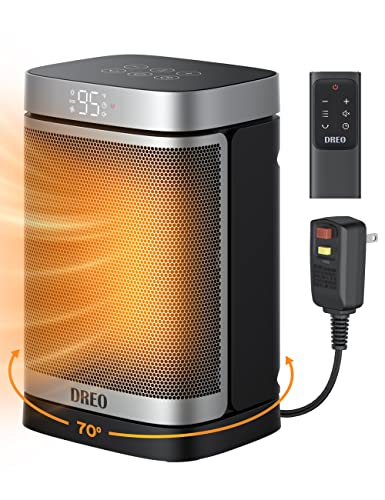
| DREO HSH004A | Best portable bathroom heater |
| $50.99as of Nov 19, 2026 11:03 pm GMT+0000 | Buy now →Check current price |
| DREO HSH017S | Best splash-rated smart wall heater |
| $89.99as of Nov 19, 2026 11:03 pm GMT+0000 | Buy now →Check current price |


Prices are Amazon’s listed prices as of the time shown and change often; check Amazon for today’s price. As an Amazon Associate we earn from qualifying purchases.
Why Portable Space Heaters Do Not Belong Near Water
A portable heater on a bathroom floor combines several hazards at once: water, wet hands, cords on the floor, towels and robes that can fall onto the unit, and limited floor space that puts the heater close to everything. The CPSC checklist recommends avoiding portable heaters in the bathroom, and adds that if one is used anyway it should be plugged into a GFCI outlet or have a GFCI plug of its own. The same checklist advises keeping heaters at least 3 feet from combustibles, placing them on a stable surface where they will not tip, and choosing heaters bearing a seal from a nationally recognized testing laboratory such as UL, ETL or CSA.
The U.S. Fire Administration notes that home portable heater fires were only 3% of home heating fires annually for 2017 to 2019 but accounted for 41% of fatal heating fires. USFA’s messages to share include keeping anything that can burn at least 3 feet from heat sources such as space heaters, and turning space heaters off when leaving the room or going to bed. In a bathroom, maintaining 3 feet from towels, bath mats, robes and curtains is rarely realistic, which is one reason a fixed heater is the better long-term answer.
Practical rules for any portable heater still in use:
- Never place it where it could fall into or be splashed by a tub, shower or sink.
- Plug it directly into a GFCI-protected wall receptacle, not an extension cord or power strip.
- Never touch it with wet hands or while standing in water.
- Unplug it after use rather than leaving it on in an empty room.
GFCI and Wet-Location Considerations
The electrical rules for bathrooms are written around one central concern: people who are wet, barefoot and close to grounded plumbing. The CPSC recommends ground-fault circuit interrupters in bathrooms and other areas where shock risk is higher, and advises testing them monthly per the manufacturer’s instructions.
For built-in bathroom heaters, a few general points apply, with the details set by the manufacturer’s instructions and the locally adopted electrical code:
- Location limits. Fixtures installed over or near tubs and showers generally need to be listed for damp or wet locations, and many heaters cannot be installed within certain zones around them. Installation instructions spell out where a given heater may go.
- Ground-fault protection. Bathroom receptacles are required to be GFCI-protected under modern codes, and some heater manufacturers specify GFCI protection for the heater circuit itself, particularly for electric radiant floors.
- Circuit capacity. Heaters draw significant current. Adding one to a circuit already serving a hair dryer and lights can cause nuisance tripping or overloaded wiring.
- Permits. Hardwired heater installations commonly require an electrical permit, and code editions adopted by Front Range jurisdictions vary.
Because bathroom electrical requirements have changed over several code cycles, a heater that was compliant when installed in an older home may not reflect current rules. An electrician can advise whether updates make sense.
Heat and Ventilation Work Together
Warm air holds more moisture, and a heated bathroom can make showers feel steamier. Heat alone does not remove that moisture; ventilation does. Without an exhaust fan ducted to the outdoors and run long enough after a shower, moisture condenses on cold exterior walls, window frames and ceilings, encouraging peeling paint and mildew.
A few points help heat and ventilation coexist:
- Run the fan through and after the shower. A timer switch makes this automatic. Our guide to the bathroom fan timer explains the options.
- Separate heat and fan controls on combos. Many homeowners prefer to run the heater before the shower and the fan afterward.
- Check where the duct ends. Exhaust should terminate outside, not in the attic or soffit space where moisture can condense on sheathing.
- Mind combustion appliances. In homes where a gas water heater or furnace shares nearby space, a strong exhaust fan can affect venting; a heating contractor can evaluate unusual setups.
Sizing and Maintaining a Bathroom Heater
Rough sizing
Many heater manufacturers use a rule of thumb of roughly 10 watts of electric heat per square foot of floor area for a room with standard ceilings and average insulation. By that estimate, a 50-square-foot bathroom would need about 500 watts, and a larger primary bath of 100 square feet about 1,000 watts. Rooms with high ceilings, several exterior walls, large windows or older, poorly insulated construction may need more. Manufacturers’ sizing charts are the better guide for a specific product, and a heating contractor can account for the room’s actual heat loss. Oversizing wastes little in a small room, but undersizing leaves the heater running constantly without ever making the room comfortable.
Routine care
Built-in heaters need little upkeep, but a few habits keep them safe and effective:
- Vacuum grilles and fan housings with the power off. Bathroom lint, hair and dust collect on heating elements and can produce a burning smell when the heater first runs each season.
- Keep the front clear. Towels, robes and laundry hampers should not block a wall or baseboard heater.
- Replace heat lamp bulbs with the type and wattage the fixture specifies.
- Test GFCIs monthly using the test and reset buttons, as the CPSC recommends.
- Watch for warning signs such as discoloration around grilles, a heater that cycles on and off erratically, or a thermostat that no longer controls the unit.
Many fan-forced heaters include a thermal cutoff that shuts the element off if it overheats. A heater that keeps shutting down on its own is often signaling a blocked grille or failing fan, and it deserves attention rather than repeated resetting.
What Home Inspectors Check
The ASHI Standard of Practice directs inspectors to inspect installed heating equipment and distribution systems, and to describe heating systems and energy sources. In the electrical section, it includes ground-fault circuit interrupters and a representative number of receptacles, switches and fixtures. The standard does not require inspectors to determine heat supply adequacy or distribution balance.
In a bathroom, an inspector typically operates installed heaters and fans with normal controls and may note:
- Heaters that do not operate, or that produce odors or unusual noise
- Wall heater grilles clogged with lint or blocked by towel bars or doors
- Heat lamp fixtures showing scorching or damaged trim
- Missing or non-functioning GFCI protection on bathroom receptacles
- Exhaust fans not operating or apparently venting into the attic
- Evidence of moisture damage, such as peeling paint or stains on the ceiling
Inspectors generally do not calculate whether a bathroom has enough heat, open walls to trace wiring or test radiant floor systems beyond what normal controls show.
Costs to Expect
Costs vary by product, installer and how much wiring work a bathroom needs, so these are rough planning ranges only:
- Fan-heater combo units: often a couple of hundred dollars and up for the fixture, with installation adding more, especially if a new circuit or larger duct is needed.
- Heat lamp fixtures: generally less expensive than fan-heater combos, with replacement bulbs a modest recurring cost.
- Recessed wall heaters: the heater itself commonly runs from roughly $100 to a few hundred dollars; installation cost depends heavily on whether a circuit exists nearby.
- Electric baseboard heaters: small units are relatively inexpensive, with labor and thermostat adding to the total.
- Electric radiant floor: material for a small bathroom can be several hundred dollars or more, and the total project cost rises considerably once tile removal and replacement are included.
- Hydronic radiant: usually only practical as part of a larger heating project, with costs to match.
Getting at least two quotes from licensed electricians or heating contractors, and asking whether a permit is included, helps keep comparisons fair.
Choosing the Right Bathroom Heater
A few questions narrow the choice:
- Is the bathroom being remodeled? If the floor is coming up anyway, radiant heat becomes much more practical.
- Is there an existing exhaust fan? Replacing it with a fan-heater combo can add heat with minimal new wiring, depending on circuit capacity.
- How much wall space is free? Small bathrooms often favor ceiling or wall-recessed units over baseboard.
- Who uses the room? Homes with young children may prefer heaters with cool-to-the-touch grilles mounted out of reach.
- How is the panel? An older or full electrical panel may need work before adding a heater circuit.
When to Call a Professional
Installing or replacing a hardwired bathroom heater generally calls for a licensed electrician, and hydronic work calls for a heating contractor. Our heating and cooling hiring guide outlines which specialists handle which systems, and the main guide to hiring a home inspector covers what a pre-purchase inspection includes. Warning signs that deserve prompt attention include a burning smell from a heater, a scorched or discolored grille or fixture, breakers that trip when the heater runs, and a GFCI that will not reset.
More Questions About Bathroom Heaters
How much does it cost to run a bathroom heater?
Running a typical electric bathroom heater costs only a few cents to about 20 cents per hour, depending on its wattage and local electricity rates. A 1,500-watt heater uses 1.5 kilowatt-hours per hour of operation, so at common residential rates, a 15-minute morning warm-up costs a few cents. Heat lamps and fan-heater combos often draw less but also heat less. Radiant floors use more energy if left on all day, so a programmable thermostat or timer keeps costs down.
Should a bathroom heater be on a timer or thermostat?
A bathroom heater is best controlled by a timer, a thermostat, or both, rather than a plain on-off switch. A countdown timer prevents fan heaters and heat lamps from running for hours after someone leaves, which saves energy and reduces overheating risk. A thermostat suits wall heaters, baseboards and radiant floors, holding a set temperature instead of running at full output. Programmable floor thermostats can warm the tile before the morning routine and shut off afterward. Confirm the control is rated for the heater’s load.
Can a bathroom heater cause mold?
A bathroom heater does not cause mold, and warm surfaces can actually reduce condensation on walls and mirrors. However, heat alone does not remove moisture from the room. Without an exhaust fan venting outdoors, warm humid air can drift into cooler parts of the house or the attic and condense there. Using the heater together with an exhaust fan that runs during and after showers gives a warm bathroom while removing the moisture that feeds mold and mildew.
How long do bathroom heaters last?
Bathroom heaters typically last about 10 to 20 years, depending on type and use. Electric baseboard and radiant floor systems often last longest because they have few moving parts. Fan-forced heaters and fan-heater combos tend to wear out sooner because the fan motor runs every time the heat does. Signs of trouble include burning smells, unusual noises, tripping breakers or uneven heat. Have a qualified electrician inspect any heater showing scorch marks or melted plastic before using it again.
References
- Home Electrical Safety Checklist — U.S. Consumer Product Safety Commission
- Heating Fire Safety — U.S. Fire Administration
- Appliance and Electrical Fire Safety — U.S. Fire Administration
- ASHI Standard of Practice for Home Inspections — American Society of Home Inspectors
Frequently asked questions
What is the safest type of bathroom heater?
Permanently installed heaters designed for bathrooms, such as fan-heater combos, recessed wall heaters and radiant floors, are generally safer than portable units. The CPSC recommends considering a fixed heating fan and avoiding portable heaters in bathrooms.
Can a space heater be used in a bathroom?
The CPSC advises avoiding portable heaters in bathrooms. If one is used, it should be plugged into a GFCI outlet or have its own GFCI plug, kept away from water and at least 3 feet from combustibles, and turned off when the room is empty.
Does a bathroom heater need a dedicated circuit?
Many fan-heater combos and wall heaters draw enough current that manufacturers call for a dedicated circuit. The installation instructions and the local electrical code determine the requirement, so an electrician should confirm before installing.
Is radiant floor heating worth it in a bathroom?
Radiant floors are often considered the most comfortable option because warmth comes from underfoot. They are most cost-effective when the floor is already being replaced during a remodel, since installation requires removing the flooring.
Should a bathroom heater be paired with an exhaust fan?
Yes. Heat does not remove moisture, so an exhaust fan ducted outdoors is still needed to control condensation and mildew. Fan-heater combos handle both jobs in one fixture.
Do bathroom wall heaters need clearance from towels?
Bathroom wall heaters need clearance from towels, curtains and other combustibles, typically as specified in the manufacturer's instructions, often around 3 feet in front of the heater. Do not hang towels over fan-forced heaters or block the grille. Heated towel racks are designed for towels and are the safer alternative.
Can a bathroom heater be installed in the ceiling?
Many bathroom heaters are designed for ceiling installation, including fan-heater combos and heat lamp fixtures. Ceiling units must be rated for ceiling mounting and wet locations if near a tub or shower. They often require a dedicated circuit, and installation by an electrician is recommended.
Are oil-filled radiators safe for bathrooms?
Oil-filled portable radiators are not designed for use near water and generally should not be used in bathrooms, especially near tubs, showers or sinks, unless the manufacturer states otherwise. Permanently installed heaters rated for bathrooms and protected by GFCI where required are safer choices.
Shopping for a home and curious whether the bathroom heaters and wiring are in good shape? Send us a message to be connected with a Front Range inspector who checks heating, ventilation and GFCI protection.