Oil-Filled vs Ceramic Heater: Efficiency, Comfort and Safety
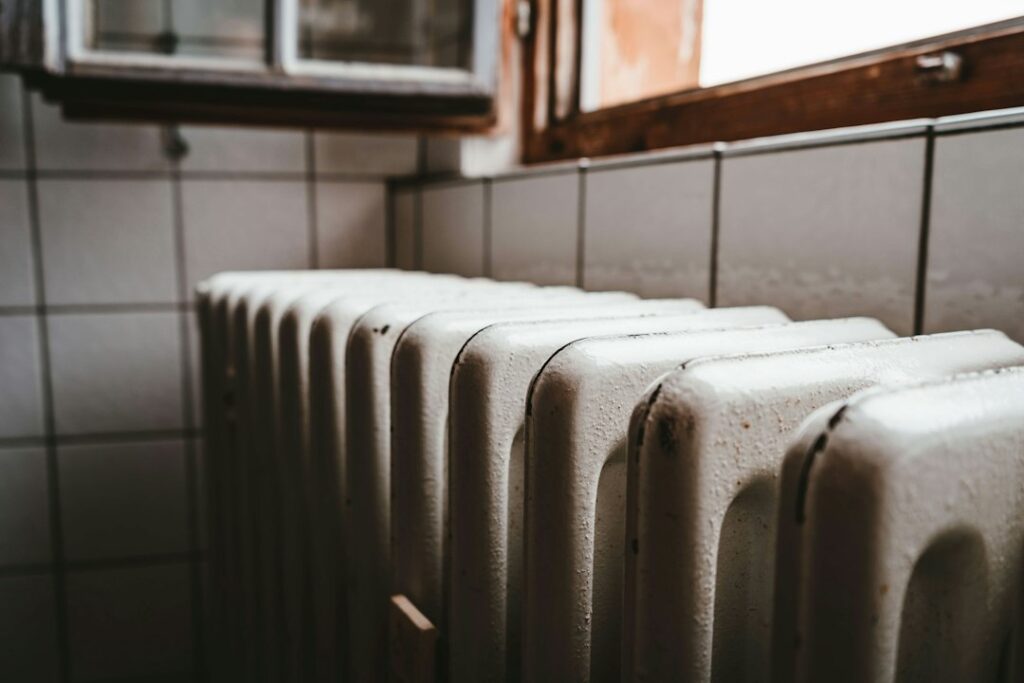
An oil-filled radiator and a ceramic space heater of the same wattage cost the same to run and put the same amount of heat into a room, because every plug-in electric resistance heater converts essentially all the electricity it uses into heat. The real differences are how that heat is delivered. Ceramic heaters blow warm air quickly and suit short bursts in a small space, while oil-filled radiators warm up slowly, run silently and hold a steady, gentle heat for hours, which suits bedrooms and all-night use. Safety features, surface temperature, weight and noise usually decide the choice. This guide compares the two side by side, explains the electrical limits that apply to both, and covers the fire-safety rules that matter more than the heater type. It reflects general guidance current as of 2026; the heater’s own manual and label take priority.
Part of our Heating, Cooling & Ventilation guide — start there for the full picture →
Quick Comparison Table
| Factor | Oil-filled radiator | Ceramic heater |
|---|---|---|
| How it heats | Electric element warms sealed oil; fins radiate and convect heat | Ceramic (often PTC) element heats air, usually pushed by a fan |
| Electrical efficiency | Essentially 100% of electricity becomes heat | Essentially 100% of electricity becomes heat |
| Typical maximum wattage | 1,500 W | 1,500 W |
| Warm-up time | Slow, often 15–30 minutes or more | Fast, usually within a minute or two |
| Heat after shutoff | Keeps radiating for a while | Stops almost immediately |
| Noise | Near silent (occasional ticks as metal expands) | Fan noise; some fanless panel models |
| Heat feel | Gentle, even, whole-room | Directional, focused near the heater |
| Size and weight | Bulky; often 15–30 lb | Compact; often under 10 lb |
| Surface temperature | Fins get hot over a large area | Housing usually stays cooler; grille and outlet air are hot |
| Best fit | Bedrooms, nurseries, home offices used for hours | Quick warm-ups, bathrooms with proper protection, under desks |
Weights, warm-up times and wattages are typical market ranges; individual models vary.
Efficiency: Why Neither One Is Cheaper to Run
Marketing for both types often claims superior efficiency. For a plug-in electric resistance heater, that claim does not hold up. A 1,500-watt oil-filled radiator and a 1,500-watt ceramic heater both draw 1,500 watts when their elements are on, and both convert that energy into roughly 5,100 BTUs of heat per hour (one watt equals about 3.41 BTU per hour). The oil does not create extra heat; it stores and releases it more slowly.
What changes the bill is how many hours the element is on, which depends on the thermostat, the room and the habits of the people in it:
- Thermostat quality. A heater with an accurate digital thermostat cycles off when the room reaches the set point. A crude dial thermostat may overshoot and waste energy.
- Use pattern. A ceramic heater run for 20 minutes to warm a person at a desk uses less energy than an oil-filled heater run all evening in the same room. An oil-filled heater left on low through the night can use less than a ceramic heater cycling on high.
- Room heat loss. A drafty room with thin insulation loses heat no matter which heater is warming it.
To estimate operating cost, multiply the heater’s wattage by hours of element-on time, divide by 1,000 to get kilowatt-hours, and multiply by the electric rate on the utility bill. For illustration only, a 1,500-watt heater running at full power for six hours uses 9 kWh, which at an assumed rate of 15 cents per kWh would be about $1.35. Actual rates vary by utility and plan, and many Front Range electric customers pay time-of-use rates that cost more in evening hours.
ENERGY STAR notes that nearly half of the energy used in a home goes to heating and cooling. Portable electric heaters are a poor way to heat a whole house; they make the most sense for warming one occupied room while the central thermostat is set lower. Our guide to space heaters covers when zone heating actually saves money.
How Each Heater Delivers Warmth
Oil-filled radiators
An oil-filled heater looks like an old steam radiator on wheels. Inside the sealed fins is a diathermic oil that an electric element heats. The oil is never consumed or refilled; it acts as a heat reservoir. Warm fins radiate heat to nearby surfaces and people, and air rising past the fins sets up a gentle convection loop that slowly warms the whole room.
The trade-offs follow from that thermal mass. It takes a while to feel warm, but once up to temperature the heater holds steady, cycles gently and keeps giving off heat after the thermostat clicks off. There is no fan, so there is no fan noise and less dust stirred up. Some models add a small fan or a timer for faster warm-up.
Ceramic heaters
Ceramic heaters use ceramic plates or honeycomb elements, frequently of a positive temperature coefficient (PTC) design whose resistance rises as it gets hot, which helps limit element temperature. A fan pushes air across the hot element and out toward the room. The result is near-instant warm air aimed where the heater points.
That speed and focus make ceramic heaters good for quick warm-ups, cold feet under a desk or a chilly bathroom before a shower, as long as the heater is rated for the location. Tower models oscillate to spread heat. The downsides are fan noise, a hot air stream that can feel drying on skin, and heat that drops off quickly when the heater stops.
Safety: Fire Risk, Surface Heat and Tip-Over
Choosing between oil-filled and ceramic is less important than using either one correctly. The U.S. Fire Administration reports that heating fires remain a leading cause of home fires and that, for 2017 to 2019, portable heater fires were only 3 percent of home heating fires but accounted for 41 percent of fatal home heating fires. Its core messages are to keep anything that can burn at least 3 feet from heat sources, including space heaters, and to turn space heaters off when leaving the room or going to bed.
Features worth requiring on either type:
- Listing by a recognized testing laboratory. Look for a UL, ETL or CSA certification mark on the heater.
- Tip-over shutoff. Common on ceramic heaters; less critical but still useful on low, wide oil-filled units.
- Overheat protection. Shuts the element off if internal temperatures climb too high.
- Cool-touch housing. Ceramic heaters often have this. Oil-filled fins get hot over a large surface, which matters around toddlers and pets.
- A real thermostat. Reduces both energy use and overheating.
Specific cautions by type:
- Oil-filled: the fins stay hot long after shutoff, so do not drape laundry over them or push them against bedding. Move them by the handle. A unit that leaks oil should be retired, not repaired.
- Ceramic: the outlet grille and air stream are hot, and a blocked intake can trigger overheating. Keep the heater on a hard, level floor rather than carpet or a bed, and away from curtains in the air path.
Electric heaters and carbon monoxide
One genuine safety advantage of both oil-filled and ceramic heaters is that they burn nothing, so they produce no carbon monoxide. That sets them apart from fuel-burning space heaters. The CDC notes that CO is found in fumes any time fuel is burned and recommends against using unvented fuel-burning appliances indoors; the CPSC urges a yearly professional inspection of all fuel-burning heating equipment. Homeowners weighing a gas or kerosene option should read our guide to ventless propane heaters before deciding, since venting, oxygen depletion and CO alarms become central concerns.
Electrical Limits Every Space Heater Shares
Most portable heaters top out at 1,500 watts because that is about what a standard 120-volt, 15-amp household circuit can safely deliver to one appliance. At 1,500 watts a heater draws about 12.5 amps, which is most of that circuit’s capacity, and electrical practice generally treats continuous loads more conservatively than short ones.
Practical consequences:
- Plug directly into a wall outlet. Heater manuals typically warn against extension cords and power strips, which can overheat at this load.
- Avoid sharing the circuit. A heater plus a hair dryer, microwave or vacuum on the same circuit often trips the breaker.
- Check the outlet and plug. A plug or outlet that feels hot, looks discolored or fits loosely is a warning sign that needs an electrician.
- Older homes. Front Range houses from the 1950s through 1970s may have limited circuits per room, and some have aluminum branch wiring from the late 1960s and early 1970s, which deserves professional evaluation before running high loads.
Two heaters on the same circuit almost always exceed it. If one room needs more than about 5,000 BTUs per hour of heat, a permanently installed solution such as a hardwired baseboard or wall heater on a dedicated circuit, controlled by a proper baseboard heater thermostat, is often safer than stacking portables.
Which One Fits Which Room
Bedrooms and nurseries
Oil-filled radiators are the common pick here because they are silent and deliver steady heat. Follow USFA guidance to turn space heaters off before sleeping, though; one approach is to warm the room before bed and use a timer so the heater shuts off. Keep it well clear of cribs and bedding because of the hot fins.
Home offices
For a few hours at a desk, a small ceramic heater aimed at the work area warms the occupant quickly. For a full workday in a cold basement office, an oil-filled unit set on a moderate setting gives more even comfort.
Bathrooms
Use only a heater whose manual allows bathroom use, plug it into a GFCI-protected outlet and keep it away from water. Many manuals prohibit bathroom use entirely, so check before buying.
Garages and workshops
Neither type is designed for dusty, flammable environments. Sawdust and solvent vapors near any heating element are a fire risk, and an unheated garage often loses heat faster than a 1,500-watt heater can supply.
Large or drafty rooms
A single 1,500-watt heater cannot make up for significant air leaks or thin insulation. Sealing drafts and improving insulation, as outlined in ENERGY STAR’s recommended R-value guidance, often does more for comfort than either heater.
Other Electric Heater Types Worth Comparing
Oil-filled and ceramic are the two most common designs, but shoppers usually run into a few others. All share the same basic efficiency rule: a plug-in resistance heater turns its watts into heat at essentially the same rate, so the comparison is again about delivery, noise and safety.
- Infrared or quartz heaters use glowing elements behind a reflector to warm people and objects directly in their line of sight. They feel warm almost instantly, which suits a person sitting in one spot, but they do little for the air in the rest of the room.
- Micathermic panel heaters use a thin element sandwiched in mica sheets. They warm up faster than oil-filled radiators, run silently and combine radiant and convective heat, though they lack the long heat retention of oil.
- Fan-forced wire-coil heaters are the older, cheaper cousin of ceramic models. They work similarly but often run hotter at the element and may lack PTC self-limiting behavior.
- Hardwired baseboard and wall heaters are permanent installations on a dedicated circuit, often 240 volts, that can supply more heat than a 1,500-watt portable without the cord and outlet risks.
None of these is more efficient than the others per watt. A ductless mini-split heat pump is the electric option that delivers more heat than the electricity it consumes, because it moves heat rather than creating it, but it is a permanent HVAC installation rather than a portable heater.
Features That Matter More Than Heater Type
Two heaters of the same type can differ more from each other than an average oil-filled unit differs from an average ceramic one. A short checklist helps:
- Certification mark from a nationally recognized testing laboratory, printed on the heater itself, not just the box.
- Digital thermostat with a temperature readout, which avoids the overshoot common with simple dials.
- Low and high settings such as 600, 900 and 1,500 watts, so the heater can run gently once the room is warm.
- Timer and auto-off functions for bedroom use.
- Tip-over and overheat protection on any heater that could be bumped by children, pets or foot traffic.
- A heavy-gauge cord and solid plug with no cracking or loose prongs.
- Stable footing: wide feet or wheels on oil-filled units, a weighted base on tower ceramic units.
Avoid secondhand heaters without a visible listing mark or manual, and check the CPSC recall database before buying used.
Lifespan, Maintenance and Storage
Oil-filled radiators have few moving parts. The sealed oil does not need topping off, and many units last for years with little more than dusting the fins and checking the cord. If oil ever leaks or the heater smells of burning oil, retire it. Ceramic heaters have a fan motor and an intake filter or grille that collects dust and pet hair; vacuuming the intake regularly keeps airflow up and reduces overheating trips. Both types should be stored in a dry place in the off-season, with the cord loosely coiled, and inspected before the first cold night of fall.
Front Range Considerations
Colorado’s dry winter air can make any heated room feel parched. Neither heater removes moisture from the air; warming air simply lowers its relative humidity. Fan-forced ceramic heaters can feel more drying on skin and eyes because they blow air across people. A hygrometer and, where needed, a humidifier kept in the 30 to 50 percent range address that separately.
Altitude does not affect electric heaters the way it affects combustion appliances, so no derating applies. Cold snaps, though, put many households on space heaters at once, which raises the stakes for electrical capacity and fire safety. Homes with basement bedrooms or finished lower levels that run cold are common candidates for supplemental heat, but chronically cold rooms can also point to duct problems, an undersized furnace or missing insulation worth investigating.
Ready to choose a model? Our roundup of the best space heaters compares current oil-filled, ceramic and other designs.
When to Call an Electrician or HVAC Pro
A space heater is a temporary fix. If a room is uncomfortable every winter, an HVAC contractor can check duct balance, register sizing, return air paths and furnace capacity, and an energy auditor can look for air leaks and insulation gaps. An electrician should evaluate any outlet that trips repeatedly, feels warm or shows scorching. Our guide to hiring heating and cooling professionals explains what to ask and what a fair scope looks like.
For buyers, a home inspection that notes cold rooms, missing heat registers or space heaters running in multiple rooms during a showing can be an early clue to a heating system that is not keeping up.
References
- Heating Fire Safety — U.S. Fire Administration
- Heat and Cool Efficiently — ENERGY STAR
- Recommended Home Insulation R-Values — ENERGY STAR
- Carbon Monoxide Poisoning Basics — Centers for Disease Control and Prevention
- Home Heating Equipment and Carbon Monoxide — U.S. Consumer Product Safety Commission
Frequently asked questions
Is an oil-filled heater cheaper to run than a ceramic heater?
Not at the same wattage. Both convert essentially all their electricity into heat, so a 1,500-watt model of either type costs the same per hour while its element is on. Differences in the bill come from thermostat quality, how long each runs and how leaky the room is.
Which is safer, an oil-filled or a ceramic heater?
Both can be safe when they carry a testing-lab listing, overheat protection and a thermostat, and when users keep them 3 feet from anything that can burn. Oil-filled fins get hot over a large area, while ceramic heaters blow hot air and are lighter and easier to tip, so most include a tip-over switch.
Can an oil-filled heater be left on overnight?
The U.S. Fire Administration advises turning space heaters off when leaving the room or going to bed. A common approach is to warm the bedroom beforehand and use a built-in timer so the heater shuts off, keeping it well away from bedding and curtains.
Do ceramic heaters dry out the air?
No heater removes moisture, but warming air lowers its relative humidity, and a fan blowing warm air across skin can feel drying. In Colorado's dry winters, a hygrometer and a humidifier kept around 30 to 50 percent relative humidity address dryness separately.
Can a space heater be plugged into an extension cord?
Most heater manuals warn against extension cords and power strips because a 1,500-watt heater draws about 12.5 amps, enough to overheat light-duty cords. Plug it directly into a wall outlet on a circuit that is not already heavily loaded.
Seeing space heaters in every room of a house you plan to buy? Get in touch with our team to connect with a Front Range inspector who can check whether the heating system is keeping up.