Power Vent Water Heater: How It Works vs Direct and Atmospheric
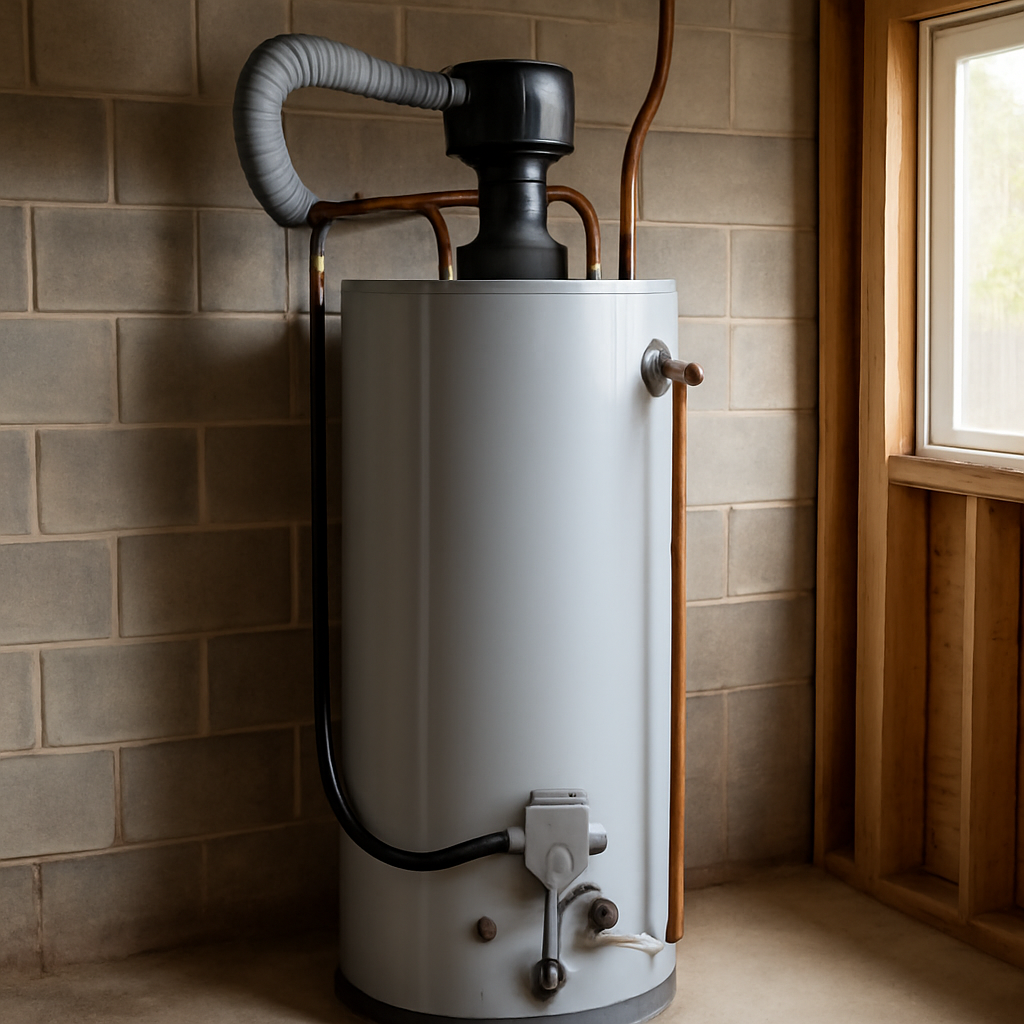
Most gas water heaters look alike from across the basement: a tall insulated tank with a burner at the bottom and a pipe coming out the top. The difference lies in how that pipe gets exhaust out of the house. A power vent water heater uses an electric fan to push combustion gases outdoors, which lets it vent through a side wall with plastic pipe instead of relying on a chimney. That flexibility comes with trade-offs, including the need for electricity, some fan noise and a higher price. This guide compares atmospheric, power vent, direct vent and power direct vent models, explains why venting matters for carbon monoxide safety, and covers costs, troubleshooting, lifespan and alternatives for Front Range homeowners. Gas connections and venting should be handled by a licensed plumber or gas fitter. If you smell gas, leave the house immediately and call the gas utility or 911 from outside.
Part of our Plumbing & Water guide — start there for the full picture →
Four Ways a Gas Water Heater Can Vent
Gas tank water heaters fall into four common venting categories. Knowing which one is in a house explains a lot about where it can sit, what it needs and what can go wrong.
Atmospheric (natural draft)
The traditional design. Room air feeds the burner, and hot exhaust rises on its own through a draft hood and a metal vent connector into a chimney or Type B vent. No electricity is needed for venting, and many atmospheric models use a standing pilot with no power at all. The drawback is that natural draft is weak. It depends on a warm, properly sized vertical vent and enough combustion air in the room, and it can be disrupted by exhaust fans, dryers, a tight house or a blocked chimney.
Power vent
A power vent water heater adds a blower, usually on top of the tank, that forces exhaust through the vent pipe. Because the fan does the work, the exhaust can be cooler and the vent can run horizontally through a wall, often in PVC, CPVC or ABS plastic pipe depending on the manufacturer’s listing. Combustion air still comes from the room around the heater.
Direct vent
A direct vent water heater has a sealed combustion chamber and a concentric or two-pipe vent. It draws outside air for combustion and expels exhaust outdoors by natural draft, without a fan. Because it does not use room air, it can sit in a tighter space, but vent length and termination position are usually limited.
Power direct vent
A power direct vent model combines both ideas: sealed combustion with outside air, plus a fan that pushes exhaust out. This allows longer vent runs and more flexible placement while keeping combustion separate from indoor air. These units tend to cost the most among standard tank types.
Why Choose a Power Vent Water Heater
The most common reason is that the existing chimney or vent no longer works for the water heater. That happens often in remodels and furnace upgrades. When an older atmospheric furnace is replaced with a high-efficiency condensing furnace that vents through PVC, the water heater may be left alone in a masonry chimney sized for two appliances. A small appliance venting into an oversized, cold chimney may not draft well and can produce condensation that damages the chimney. Relining the chimney is one fix. Switching to a power vent water heater that exits through a side wall is another.
Other reasons include:
- Location: A water heater can be placed where there is no chimney, such as a finished basement mechanical room or a new addition.
- Draft reliability: The fan establishes draft immediately, so the heater is less sensitive to cold chimneys and competing exhaust fans.
- Efficiency: Many power vent models are somewhat more efficient than basic atmospheric units because they lose less heat up an open flue between firing cycles. High-efficiency condensing tank models are typically power vented.
The Electricity Catch: No Hot Water in an Outage
A power vent water heater needs a standard 120-volt receptacle for the blower and controls. If the power goes out, the safety controls will not allow the burner to fire without the fan running, so the heater stops producing hot water. The tank keeps whatever hot water was already stored, which may last a while for light use, but it will not reheat until power returns.
That is a meaningful difference from a standing-pilot atmospheric unit, which can keep heating water through an outage. For households on the Front Range that lose power during spring snowstorms or high winds, it is worth considering. Some owners plug the heater into a properly installed generator inlet or transfer switch circuit. Never run a portable generator indoors or in an attached garage; the CDC advises operating generators outside, more than 20 feet from windows, doors and vents.
Plugging the heater into an extension cord, or into a receptacle on a circuit that trips easily, can cause nuisance outages. A dedicated or lightly loaded receptacle near the heater, installed by an electrician, avoids that problem.
PVC Venting and Termination Clearances
Because power vent exhaust is cooler and pushed by a fan, many models allow plastic vent pipe. The manufacturer specifies which plastic materials are approved, the pipe diameter, the maximum equivalent vent length, how many elbows count against that length, and the slope of horizontal runs. Exceeding the vent length or using the wrong diameter can cause the unit to shut down on a pressure switch fault or to vent poorly.
Horizontal vent sections are generally sloped so any condensate can drain as the manufacturer directs, either back toward the heater or toward the termination. The CDC’s carbon monoxide guidance makes a related point for older appliances: horizontal vent pipes for appliances such as a water heater should go up slightly as they go toward the outdoors, to keep CO from leaking if joints are not fitted tightly.
Sidewall terminations must meet clearance requirements in the installation manual and local code. Typical items include minimum distances from operable windows, doors, air intakes, gas meters and regulators, soffits, decks, inside corners and the ground or expected snow line. Front Range winters make the snow line detail especially important; a termination buried by a drift can shut the heater down or push exhaust back toward the house. Clearance numbers vary by model and code edition, so rely on the specific manual rather than a general rule.
Common venting problems inspectors and plumbers see include unsupported or sagging plastic runs, glued joints that have separated, terminations under decks or near windows, missing screens or caps, and plastic vent pipe used on an appliance not listed for it.
Backdrafting, Carbon Monoxide and Safety
Every gas water heater produces carbon monoxide in its exhaust. The question is whether that exhaust reliably leaves the house. The U.S. Environmental Protection Agency lists back-drafting from furnaces, gas water heaters, wood stoves and fireplaces among indoor sources of CO, along with leaking chimneys and flues that are improperly sized, blocked or disconnected.
Atmospheric water heaters are the most vulnerable because natural draft is easily overwhelmed. Signs of backdrafting include rust or scorch marks around the draft hood, melted plastic on nearby fittings, condensation on the vent connector, or a candle or smoke pencil plume pulled outward at the draft hood when the burner runs. A technician may perform a worst-case depressurization test with exhaust fans and the dryer running to see whether the heater spills.
A power vent or power direct vent unit greatly reduces the chance of spillage, but it is not foolproof. A cracked vent joint, a disconnected pipe or a blocked termination can still allow exhaust into the house. That is why carbon monoxide alarms belong in every home with gas appliances. The CDC recommends battery-operated or battery-backup CO detectors near every sleeping area and having water heaters and other fuel-burning appliances serviced by a qualified technician every year. Our guide to the best carbon monoxide detector options covers alarm types and features.
The U.S. Fire Administration adds two fire safety habits for basements: keep the burner access doors on gas water heaters closed to prevent flames from escaping, and keep anything that can burn at least 3 feet from water heaters and other heat-producing equipment.
Noise and Other Day-to-Day Differences
The blower on a power vent water heater makes noise each time the burner cycles: a fan start-up, a steady hum while firing and a post-purge run after the burner shuts off. In an unfinished basement, few people notice. In a utility closet next to a bedroom or home office, it can be bothersome. The exhaust noise at the sidewall termination can also be audible on a patio or near a neighbor’s window. Asking about the decibel rating and choosing the termination location with care can help.
Power vent heaters also have more parts to fail. Pressure switches, blower motors, control boards and igniters can all cause no-heat calls. A pressure switch fault often traces back to a blocked termination, a kinked pressure hose or a vent run that is too long.
Switching From Atmospheric to Power Vent: What Changes
Converting from an atmospheric water heater to a power vent model is more than a tank swap. A typical conversion involves several steps:
- Disconnecting the old metal vent connector and sealing or properly terminating the abandoned chimney opening, if no other appliance uses it.
- Choosing a sidewall location that meets termination clearances and keeps the vent within the allowed length and number of elbows.
- Cutting and sealing a wall penetration, then installing the listed termination fitting outside.
- Adding a receptacle within cord reach of the blower if one is not already present.
- Making the gas, water and relief valve connections, then checking for gas leaks and confirming proper operation.
If a furnace still shares the chimney with the water heater, removing the water heater changes how that chimney performs for the furnace. A qualified technician should confirm that the remaining appliance still vents correctly, because a chimney sized for two appliances may be oversized for one. Most jurisdictions require a permit for water heater replacement, and a vent change is a common reason the inspector will look closely.
Maintenance That Keeps a Power Vent Running
Power vent heaters benefit from the same basic care as other tank heaters, plus a few vent-specific checks. Flushing some water from the drain valve periodically helps control sediment, especially in areas with hard water. Testing the temperature and pressure relief valve as the manufacturer recommends, and confirming its discharge pipe runs to a safe location, is part of routine upkeep. Outside, keep the termination clear of snow, leaves, wasp nests and landscaping. Inside, look for sagging vent runs or separated joints, and keep the area around the blower free of lint and dust so the fan can breathe.
Costs, Efficiency and ENERGY STAR
Power vent water heaters generally cost more than comparable atmospheric models, both for the unit and for installation. As hedged, planning-level figures, a power vent tank is often several hundred to more than a thousand dollars more than an atmospheric unit of the same size, before installation. Installation costs rise when new venting, a new receptacle or relocation is needed, and fall when the job is a like-for-like swap with existing PVC venting. Power direct vent and condensing models sit at the top of the range. Our guide to water heater replacement cost covers the factors that drive pricing.
ENERGY STAR certifies gas storage water heaters based on Uniform Energy Factor. Its key product criteria for gas-fired storage models between 20 and 55 gallons call for a UEF of at least 0.81 for a medium draw pattern or 0.86 for a high draw pattern, along with a first hour rating of at least 51 gallons per hour and a warranty of at least six years. Not every power vent model meets that bar, so check the certification if efficiency is a priority.
Alternatives Worth Comparing
Replacing a water heater is a good time to compare options instead of buying the same type again:
- Tankless gas: Heats water on demand and also needs electricity and dedicated venting. It may need a larger gas line. See our tankless water heater guide.
- Heat pump water heater: An electric unit that moves heat from the surrounding air into the tank. ENERGY STAR’s criteria for integrated heat pump models call for a UEF of at least 3.30. They need space, airflow and a condensate drain; our heat pump water heater guide explains the fit.
- Relining the chimney for an atmospheric unit, when the chimney itself is sound.
Troubleshooting and Lifespan
When a power vent water heater stops making hot water, start with the basics: power to the receptacle, a tripped breaker or GFCI, the gas valve position and a blocked termination outside. Many units flash a diagnostic code on the control. Beyond that, call a qualified technician. Our no hot water troubleshooting guide walks through common causes, and the water heater pilot light guide explains ignition systems on standing-pilot models.
Tank water heaters typically last around a decade, with wide variation based on water quality, maintenance and installation. Rust at the base, leaks, rumbling from sediment and rusty hot water are signs a tank is nearing the end. See our guide to water heater lifespan for more on age and warning signs.
What a Home Inspector Checks
The ASHI Standard of Practice calls for inspectors to inspect water heating equipment and vent systems, flues and chimneys, and to describe the water heating equipment, including the energy source. It also states that inspectors are not required to determine the adequacy of combustion air components. In practice, an inspector will typically note the heater’s type and approximate age, visible vent defects, missing or improper relief valve discharge piping, signs of backdrafting or leaks, and termination problems, and may recommend evaluation by a plumber. Our guide to hiring a home inspector covers what to expect, and the plumbing and water hub collects related water heater and piping topics.
References
- Carbon Monoxide’s Impact on Indoor Air Quality — U.S. Environmental Protection Agency
- Carbon Monoxide Poisoning Basics — Centers for Disease Control and Prevention
- Water Heater Key Product Criteria — ENERGY STAR
- Basement and Garage Fire Safety — U.S. Fire Administration
- ASHI Standard of Practice for Home Inspections — American Society of Home Inspectors
Frequently asked questions
What is the difference between a power vent and a direct vent water heater?
A power vent water heater uses a fan to push exhaust outdoors but takes combustion air from the room. A direct vent heater has a sealed combustion chamber that draws outside air and vents by natural draft. Power direct vent models combine sealed combustion with a fan.
Does a power vent water heater work without electricity?
No. The blower and controls need power, and the burner will not fire without the fan, so the heater stops reheating during an outage. Stored hot water in the tank remains available until it is used up or cools.
Can a power vent water heater use PVC pipe?
Many models allow PVC, CPVC or ABS vent pipe, but only the materials, diameters and lengths listed in the manufacturer's installation manual. Terminations must also meet the manual's clearances from windows, doors, intakes and snow lines.
Are power vent water heaters safer than atmospheric models?
They are much less prone to backdrafting because the fan establishes draft, but a cracked joint or blocked termination can still cause problems. Every home with gas appliances should have working carbon monoxide alarms and annual appliance service.
Why are power vent water heaters noisy?
The blower runs whenever the burner fires and briefly afterward, producing a hum indoors and exhaust noise at the sidewall termination. Placement of the heater and termination can reduce how noticeable it is.
Unsure whether the water heater in a home you are buying is venting safely? Get in touch and we can help you connect with a Front Range inspector who looks carefully at gas appliances and vents.