Water Heater Maintenance: Annual Steps, Schedule and Costs
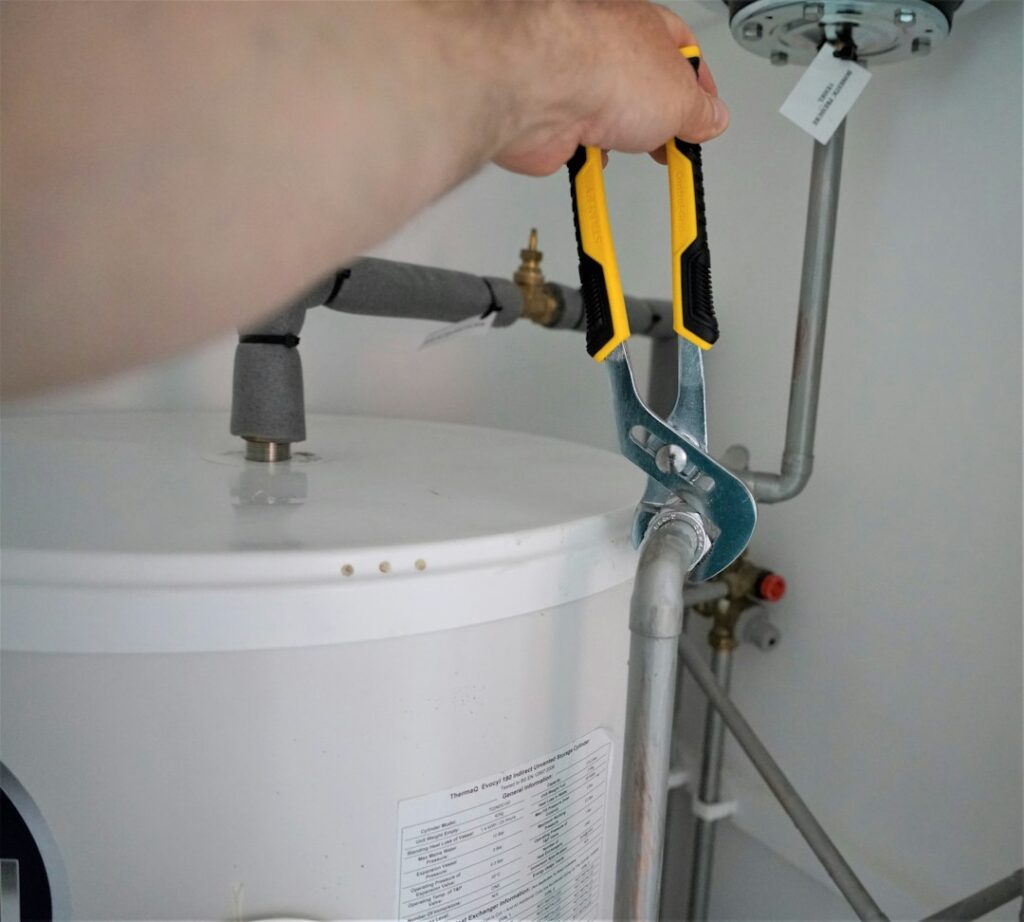
Water heater maintenance comes down to a short list of jobs: test the temperature and pressure relief valve, drain or flush sediment, check the anode rod every few years, confirm the temperature setting, and, on gas units, make sure the burner and venting are working safely. Most of it takes an hour or two a year, and a plumber’s annual service visit typically runs in the low hundreds of dollars nationally. This guide lays out a practical schedule, walks through each task step by step for tank, tankless and heat pump models, explains what a professional tune-up should include, and shows what a home inspector looks at so you can tell when maintenance is no longer enough. It summarizes general guidance as of 2026; your unit’s manual and local code always take priority, and anything involving gas, venting or electrical panels belongs with a qualified technician.
Part of our Plumbing & Water guide — start there for the full picture →
Plumbing problem? Talk to a local plumber now.
📞 Call (877) 637-1527Water Heater Maintenance at a Glance
If you only remember one thing, remember that a storage tank water heater fails slowly from the inside. Minerals settle to the bottom, the sacrificial anode rod is consumed, and corrosion eventually reaches the steel tank. Maintenance slows each of those processes. The table below is a rule-of-thumb schedule for a typical household; adjust it for your water hardness, usage and the manufacturer’s instructions.
| Task | How often (rule of thumb) | DIY or pro | Typical pro cost, national range 2026 — get local quotes |
|---|---|---|---|
| Look for leaks, rust, scorching and water in the pan | Monthly glance; full check twice a year | DIY | Included in any service call |
| Test the T&P relief valve | Once a year | DIY with care | Included in a tune-up; valve replacement often $150–$350 installed |
| Drain or flush sediment (tank) | Once a year; every 6 months with hard water | DIY or pro | Often $100–$250 as a stand-alone visit |
| Inspect the anode rod (tank) | Every 2–3 years, then yearly once worn | Usually pro | Often $200–$450 to replace, parts and labor |
| Descale a tankless heater | Once a year; more often with hard water | DIY with a kit or pro | Often $150–$350 |
| Clean heat pump water heater air filter | Per manual, often every few months | DIY | Minimal; part of an annual service |
| Gas burner, flue and draft check | Once a year | Pro | Typically $100–$300 as part of an annual tune-up |
These dollar figures are typical national ranges, not quotes. The main drivers are your local labor rate, whether the visit is bundled with other plumbing work, the type of heater, how hard it is to reach, and whether parts such as a valve, anode or thermocouple are needed.
Why Maintenance Matters (and What It Cannot Fix)
ENERGY STAR’s guidance on when to replace a water heater lists the common red flags of a unit in trouble: visible corrosion, water leaking from joints or seams, rust in the hot water, a lack of available hot water, and rumbling noises. It notes that aging and poor maintenance can cause sediment to build up inside the tank in a way that reduces capacity, and that rumbling is very often caused by sediment on the bottom of the tank. Those are exactly the problems routine maintenance targets.
Maintenance has limits, though. It does not reverse corrosion that has already perforated the tank, and it will not make a 14-year-old heater young again. The same ENERGY STAR page suggests that if your water heater is more than 10 years old, it is time to consider replacing it before you face an emergency decision. Think of maintenance as a way to reach the end of a normal service life without a flood, not as a way to extend it indefinitely. Our guide to water heater lifespan covers how long each type typically lasts and how to read the serial number to find the age.
The benefits you can realistically expect from regular care are:
- Fewer surprises. A yearly look catches a weeping fitting or a corroded relief valve before it becomes a ceiling stain downstairs.
- Quieter operation. Sediment that traps water and flashes to steam is the usual source of popping and rumbling. Our guide on why a water heater makes noise explains the other causes too.
- Safety. A working relief valve, proper venting and a sensible temperature setting reduce the risk of scalds, carbon monoxide and tank failure.
Best Water Heaters: our top 3 picks
| Product | Best for | Key features | Price | Buy |
|---|---|---|---|---|
| Rheem PROE50 M2 RH95 | Best overall whole-house tank |
| $891.99as of Nov 15, 2026 3:42 am GMT+0000 | Buy now →Check current price |
| Rheem RTG 7.0 Indoor | Indoor gas tankless upgrade |
| $653.00as of Nov 15, 2026 6:18 am GMT+0000 | Buy now →Check current price |
| Rheem RTEX-24 | All-electric home, no venting |
| $545.71as of Nov 15, 2026 6:18 am GMT+0000 | Buy now →Check current price |


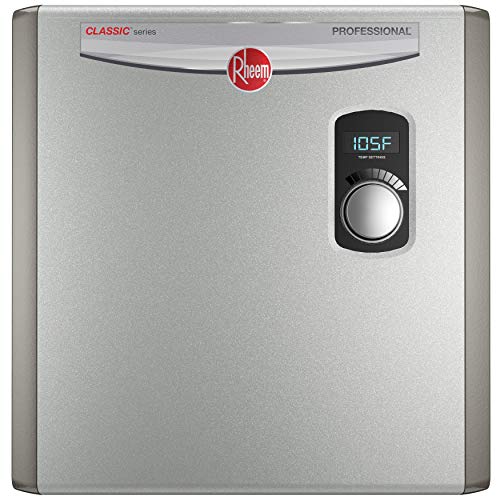
Prices are Amazon’s listed prices as of the time shown and change often; check Amazon for today’s price. As an Amazon Associate we earn from qualifying purchases.
Safety First Before You Touch Anything
Water heaters combine three hazards: very hot water under pressure, high-voltage electricity or gas combustion, and heavy steel tanks. Before any DIY task, work through this checklist:
- Turn off the energy source. For an electric heater, switch off the dedicated breaker. For a gas heater, set the control to “pilot” or “vacation” as the manual directs, or turn the gas control off if you are draining the tank fully.
- Wear eye protection and gloves. The relief valve and drain valve both discharge hot water.
- Never energize an empty tank. Turning an electric heater back on before the tank is full can burn out the upper element almost instantly.
- Leave gas work to a pro. Gas connections, burner assemblies, gas valves and venting should be serviced by a qualified technician.
The temperature setting is part of safety too. The U.S. Consumer Product Safety Commission’s guidance on avoiding tap water scalds recommends lowering water heater thermostats to 120 degrees Fahrenheit and notes that most adults will suffer third-degree burns if exposed to 150-degree water for two seconds. If you have small children or older adults in the home, checking that setting is the easiest maintenance task on this list. Hold a cooking thermometer under the hot tap closest to the heater after the water has run for a minute or two, then adjust the dial following the manual.
Step-by-Step Maintenance for a Tank Water Heater
Most homes on the Front Range still have a gas or electric storage tank, usually in the basement, a utility closet or the garage. The steps below are the core annual routine. If your unit is in a tight closet or attic, or if any valve looks corroded or fragile, stop and call a plumber rather than forcing it.
1. Do a visual inspection
Start with your eyes and a flashlight. Look at the top of the tank where the cold inlet and hot outlet connect, at the relief valve and its discharge pipe, at the drain valve near the bottom, and at the floor or pan underneath. White crust, green or rust-colored staining, damp insulation or water in the drain pan all point to a slow leak. On a gas unit, look for scorch marks or melted plastic near the burner access cover, which can indicate flame rollout or poor drafting.
2. Test the temperature and pressure relief valve
The T&P valve is the safety device that opens if the tank overheats or overpressurizes. Place a bucket under the discharge pipe, then lift the test lever briefly and let it snap back. You should hear a rush of water and see it flow from the pipe, then stop when the lever closes. If nothing comes out, or the valve keeps dripping afterward, it needs replacement by a plumber. A long-untested valve may stick or keep leaking, so be ready to shut off the cold supply.
While you are there, confirm the discharge pipe runs down to within a few inches of the floor or to an approved drain point, is the same size as the valve outlet, has no threaded cap on the end and does not run uphill. A capped or missing discharge pipe is one of the most common water heater defects inspectors write up.
3. Drain or flush the sediment
Draining removes the loose sediment that collects on the bottom of the tank. The short version:
- Turn off power or set the gas control as described above.
- Close the cold water supply valve at the top of the heater.
- Attach a garden hose to the drain valve and run it to a floor drain, utility sink or outdoors, below the level of the valve.
- Open a hot water faucet somewhere in the house to let air in.
- Open the drain valve and let the tank empty. Watch the water in a bucket at the end of the hose for grit.
- With the drain still open, briefly open the cold supply to stir the bottom and push out more sediment. Repeat until the water runs mostly clear.
- Close the drain valve, open the cold supply, and wait until water flows steadily from the open hot faucet before restoring power or relighting.
Our dedicated guide to a water heater flush covers this in more detail, including what to do when the drain valve clogs with sediment and how to deal with a plastic drain valve that will not reseal. If your tank has never been drained and it is more than 8 to 10 years old, some plumbers recommend a gentler partial drain, because a heavy sediment layer can be holding back a leak at the bottom seam.
4. Check the anode rod
The anode rod is a long metal rod, usually magnesium or aluminum, that hangs inside the tank and corrodes in place of the steel. Once it is consumed, the tank lining starts to corrode instead. Checking it means shutting off the water, relieving pressure, and unscrewing the hex head on top of the heater, which often takes a breaker bar and sometimes clearance the installation does not leave. If the rod is down to bare wire or coated in thick scale over much of its length, replace it.
Homes with a rotten-egg smell in the hot water sometimes benefit from a different anode material, and some owners choose an electronic option. Our guide to the powered anode rod explains how those work and when they make sense. Seized anodes are common, so most homeowners hand this task to a plumber.
5. Gas units: burner, flue and draft
On a gas heater, the visible items you can safely check are the vent connector and draft hood. The vent pipe should be continuous, securely fastened, and pitched upward toward the chimney or wall termination. The CDC’s carbon monoxide guidance advises having your heating system, water heater and any other gas, oil or coal burning appliances serviced by a qualified technician every year, and notes that horizontal vent pipes for appliances such as a water heater should go up slightly as they go toward the outdoors. The technician will check the flame pattern, clean the burner and combustion chamber if needed, test the thermocouple or flame sensor, and confirm the heater is drafting properly. Every home with a gas water heater should also have working carbon monoxide alarms.
Tankless and Heat Pump Water Heater Maintenance
Not every water heater is a storage tank, and the maintenance list changes with the technology.
Tankless (on-demand) units
A tankless heater has no tank to collect sediment, but scale builds up inside its heat exchanger, especially with hard water. The core annual task is descaling: closing the isolation valves, connecting a small pump and hoses, and circulating a descaling solution through the unit for the time the manufacturer specifies. The inlet water filter screen should be cleaned at the same time. Gas tankless units also need their venting, air intake and condensate drain checked. Our full guide to tankless water heater maintenance walks through the flush step by step.
Heat pump water heaters
A heat pump water heater is a tank with a small refrigeration system on top. It still needs the tank tasks above, plus care for the air side. ENERGY STAR’s heat pump water heater page notes that these units may require annual maintenance, including changing air filters, and directs owners to the manufacturer’s instructions or their contractor. It also says they should be installed in interior spaces that remain between 40 and 90 degrees Fahrenheit year-round, with about 1,000 cubic feet of air space around the heater. Keep the area around the unit clear, clean or replace the air filter as the manual directs, and make sure the condensate line drains freely so it does not overflow onto the floor.
What a Professional Water Heater Service Should Include
A typical professional tune-up for a tank heater usually costs somewhere in the low hundreds of dollars nationally, and many plumbing companies bundle it into an annual maintenance plan. The cost drivers are straightforward: trip charge and local labor rate, the number of tasks performed, access, whether parts are needed, and whether the visit is scheduled or an after-hours emergency. Emergency visits commonly carry a premium.
A written estimate or service ticket should list the following items so you know what you are paying for:
- Visual inspection of the tank, connections, drain pan and surrounding area
- T&P valve test and discharge pipe check
- Sediment drain or flush
- Anode inspection, with a separate price if replacement is recommended
- Thermostat check and hot water temperature reading at a fixture
- For gas: burner cleaning, flame and pilot check, thermocouple or sensor check, vent and draft test, and a gas leak check at the connection
- For electric: element and thermostat checks with the power off, and a look at wiring connections
- For tankless: descaling, inlet screen cleaning and error-code review
Red flags in a maintenance visit
Most technicians are honest, but water heater service is also an easy place to sell a replacement. Be wary of these:
- “Your heater is about to explode” without evidence. A heater can be old without being dangerous. Ask what specific condition they found, and ask to see it.
- Replacement pushed on a young unit. A 4-year-old tank with a dripping relief valve usually needs a valve, not a new heater.
- Vague “whole-system” packages. Ask for itemized pricing for each task and part.
- No permit mentioned on a replacement. If maintenance turns into a replacement, water heater replacements commonly require a permit. Check with your city or county building department.
- Same-day pressure. Unless there is an active leak or a gas safety problem, you have time to get a second written quote.
For any recommended repair or replacement, ask for the heater’s age from the serial number, the specific condition found, and itemized pricing, and compare two or three written quotes.
Maintain or Replace? A Simple Decision Framework
There is no single correct answer, but these rules of thumb help:
- Under about 8 years old and only minor issues: maintain and repair. Valves, elements, thermostats and thermocouples are inexpensive compared with a new heater.
- Around 8 to 12 years old: keep maintaining, but start planning. ENERGY STAR suggests considering replacement once a heater passes 10 years, before it fails.
- Any age with a leaking tank body: replace. A leak from the tank itself, as opposed to a fitting or valve, cannot be repaired.
- Repair quote over about half the cost of replacement on an older unit: a common rule of thumb is to replace instead.
Replacement is also a chance to upgrade efficiency. ENERGY STAR’s analysis of heat pump water heaters estimates meaningful annual savings for households replacing a standard electric tank, with payback in a few years for larger households under its stated assumptions. Our best water heater roundup compares tank, tankless and heat pump models if you are shopping.
Front Range Factors That Change the Routine
A few local conditions are worth factoring into your schedule:
- Water hardness varies by supplier. Some Front Range utilities deliver moderately hard water, while others are softer. Your utility’s annual water quality report lists hardness. Harder water means more sediment in tanks and more scale in tankless units, so lean toward the shorter end of the intervals above.
- Altitude and gas appliances. Gas burners are typically derated at elevation, and the installer is responsible for setting up the appliance for your altitude according to the manufacturer. Signs of a poorly adjusted burner, such as yellow lazy flames or soot, are a reason for a service call.
- Unheated garages and cold winters. Heaters in garages lose more heat on cold days, so pipe insulation pays off. Heat pump water heaters work less efficiently in cold spaces, which matters if you are considering installing one in a garage that drops well below 40 degrees in January.
How a Home Inspection Evaluates the Water Heater
The ASHI Standard of Practice requires a home inspector to inspect water heating equipment and hot water supply systems, as well as vent systems, flues and chimneys, and to describe the water heating equipment, including the energy source. In practice, an inspector notes the type, approximate age from the data plate and capacity, then looks for the same issues covered above: leaks and corrosion, the relief valve and its discharge pipe, venting and clearances on gas units, seismic or support issues where relevant, the presence of a drain pan where one is needed, and whether the heater produces hot water at the fixtures.
A home inspection is a visual, non-invasive review. The inspector will not drain the tank, pull the anode or disassemble the burner, so a clean report does not mean the tank is free of internal corrosion. When an inspector flags an old unit, a capped relief valve discharge, a backdrafting vent or active rust, the usual recommendation is evaluation by a licensed plumber or HVAC technician. If you need help finding qualified trades, our plumbing and water hiring guide explains what to ask before you book.
More Questions About Water Heater Maintenance
What happens if a water heater is never flushed?
A water heater that is never flushed slowly fills with mineral sediment, especially in hard-water areas. On gas units the sediment layer insulates the tank bottom, causing rumbling, overheating of the steel and lower efficiency; on electric units it buries and burns out the lower element.
Heavy sediment also clogs the drain valve and shrinks usable hot water capacity. A tank that has gone ten or more years without flushing may release enough debris during a first flush to make the drain valve leak, which is why some plumbers advise caution with very old tanks.
Should a water heater be turned down during vacation?
Turning a water heater down during a vacation of several days or more saves standby energy. Most gas heaters have a vacation or pilot setting that keeps the pilot lit while the burner stays off, and many electric and heat pump models offer a vacation mode.
For long trips, shutting off the cold supply valve to the heater also limits damage if a leak develops. On return, restore the setting and allow a few hours for the tank to reheat to a safe temperature before heavy use.
How long does water heater maintenance take?
Basic water heater maintenance, including a visual check, relief valve test and sediment flush, typically takes a homeowner about one to two hours, much of it waiting for the tank to cool and drain. An anode rod inspection adds roughly 30 minutes.
A professional maintenance visit usually takes about an hour for a tank heater. Tankless descaling takes about 45 minutes to an hour and a half, mostly circulating descaling solution through the heat exchanger with a small pump.
Do home warranties require proof of water heater maintenance?
Many home warranty and manufacturer warranty contracts can deny claims for failures caused by lack of maintenance, such as sediment burnout or scale-damaged tankless heat exchangers. Few require routine proof up front, but records help if a claim is questioned.
Keep a simple log with dates of flushes, anode checks, descaling and professional visits, plus receipts. Tankless manufacturers in particular may ask for evidence of periodic descaling in hard-water areas before honoring heat exchanger coverage.
References
- When Should You Replace Your Water Heater? — ENERGY STAR
- Heat Pump Water Heaters — ENERGY STAR
- Avoiding Tap Water Scalds — U.S. Consumer Product Safety Commission
- Carbon Monoxide Poisoning Basics — Centers for Disease Control and Prevention
- ASHI Standard of Practice for Home Inspection — American Society of Home Inspectors
Frequently asked questions
How often should a water heater be maintained?
A common rule of thumb is a visual check every few months and a full routine once a year: test the relief valve, drain or flush sediment and confirm the temperature setting. Gas units should be serviced by a qualified technician yearly, and the anode rod is usually checked every two to three years.
How much does professional water heater maintenance cost?
A standard tune-up typically falls in the low hundreds of dollars nationally, depending on local labor rates, the heater type, access and whether parts are needed. Anode or relief valve replacement and emergency visits cost more. Get itemized local quotes.
Is it safe to flush a water heater yourself?
Yes, many homeowners drain a tank heater themselves by turning off the power or gas, closing the cold supply, and draining through a hose until the water runs clear. Never restore power to an electric heater before the tank is full, and call a plumber if the drain valve is corroded.
What temperature should a water heater be set to?
The Consumer Product Safety Commission recommends lowering water heater thermostats to 120 degrees Fahrenheit to reduce the risk of tap water scalds. Check the actual temperature with a thermometer at the faucet nearest the heater.
Does a home inspector check the water heater?
Yes. Under the ASHI Standard of Practice, inspectors inspect water heating equipment and its venting and describe the energy source. The review is visual, so internal tank corrosion and anode condition are not assessed.
Can vinegar be used to descale a tankless water heater?
White vinegar can be used to descale many tankless water heaters by circulating it through the unit with a small pump and isolation valve kit for about an hour. Check the manufacturer's manual first, since some brands specify a particular descaling solution.
Does a water heater on softened water still need flushing?
A water heater on softened water still benefits from periodic flushing, though sediment builds much more slowly. Softened water can wear the anode rod faster, so checking the anode becomes the more important maintenance task in softened homes.
What tools are needed for basic water heater maintenance?
Basic water heater maintenance usually needs a garden hose, bucket, flat screwdriver, adjustable wrench, gloves, and safety glasses. Checking the anode requires a 1 1/16-inch socket and breaker bar. A non-contact voltage tester is important for electric models.
Buying a home and not sure the water heater has been looked after? Contact our team to schedule a Front Range home inspection.