Tankless Water Heater Maintenance: Flushing and Scale
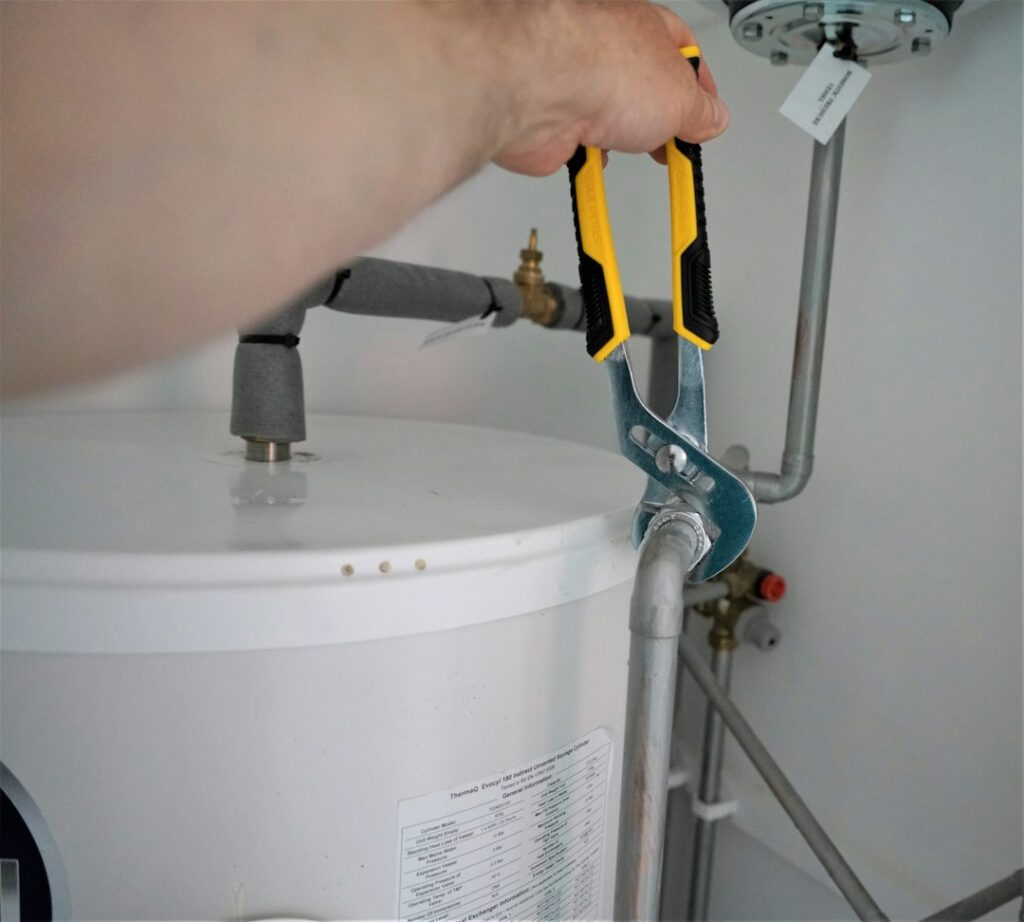
Tankless water heaters have a reputation for being low-maintenance because there is no tank to rust out or fill with sediment. That reputation is only partly earned. A tankless unit pushes water through a small heat exchanger at high temperature, and dissolved minerals in that water can build up as scale inside it. Scale reduces efficiency, restricts flow and can trigger error codes or shut the heater down. Inlet filters clog. Gas units need clear venting and combustion air, and condensing models produce acidic condensate that needs a working drain. This guide walks through tankless water heater maintenance: what flushing and descaling involve, how service valves make it possible, how hard water and softeners fit in, inlet filters, venting and condensate, common error code categories, manufacturer intervals and costs. It summarizes ENERGY STAR, CDC and CPSC guidance; gas appliance work and venting repairs belong with a qualified technician.
Part of our Plumbing & Water guide — start there for the full picture →
What Tankless Water Heater Maintenance Involves
Most manufacturers recommend a short list of routine tasks. The exact schedule and procedure are in the owner’s manual for the specific model, and following that manual matters for both performance and warranty coverage. In general, routine tankless water heater maintenance covers:
- Descaling or flushing the heat exchanger by circulating a descaling solution through the unit using its service valves.
- Cleaning the cold-water inlet filter screen, which catches sediment before it enters the unit.
- Checking venting and the combustion air intake on gas models for blockages, separation or damage.
- Checking the condensate drain and neutralizer on condensing gas models.
- Inspecting for leaks at fittings, valves and the pressure relief valve.
- Cleaning the air intake filter, where the model has one.
- Reviewing error history on units that store fault codes.
Some tasks are well within reach of a handy homeowner, particularly cleaning the inlet screen and, on units with service valves, flushing. Gas-side work, venting repairs and anything inside the cabinet are generally for a licensed plumber or manufacturer-certified technician. For background on how these units work and their trade-offs compared with tank models, see our tankless water heater guide.
Descaling and Flushing With Service Valves
Scale forms when minerals, mostly calcium and magnesium carbonates, come out of solution as water is heated. In a tank heater, much of it settles as sediment at the bottom of the tank. In a tankless unit, it tends to coat the narrow passages of the heat exchanger. Even a thin layer acts as insulation, so the burner or element has to work harder to reach the set temperature, and flow can drop.
How the flush works
Most modern installations include a pair of isolation valves, often called service valves or a valve kit, on the hot and cold lines just below the heater. Each has a small side port with a cap. A typical flush, described in general terms, looks like this:
- Turn off power to the unit and, for gas models, follow the manual’s guidance for the gas supply.
- Close the main hot and cold isolation valves to isolate the heater from the house plumbing.
- Connect hoses from the service ports to a small submersible pump sitting in a bucket of descaling solution, and a return hose back to the bucket.
- Open the service ports and circulate the solution through the heat exchanger for the time the manufacturer specifies.
- Drain the solution, flush with clean water, close the service ports, open the main valves and restore power.
Manufacturers commonly specify the descaling solution, often white vinegar or a commercial descaler made for water heaters, and the circulation time. Using a product the manufacturer does not recommend can damage components. The process usually takes an hour or two including setup.
Units without service valves
Some older or lower-cost installations were done without service valves. Without them, flushing requires cutting into the plumbing or removing fittings, which turns a routine maintenance task into a plumbing job. Adding a valve kit is a common recommendation when a unit lacks them, and the cost is typically modest compared to the convenience it adds.
How often
Many manufacturers suggest flushing roughly once a year, with more frequent service in hard water and less frequent where water is softened. Others tie the interval to water hardness or to an on-board scale detection alert. The manual for the specific model is the authority, and it is worth keeping service records because warranty claims can be affected by scale damage on units that were not maintained.
Hard Water, Softeners and Scale
How quickly scale builds depends mostly on water hardness, water temperature and usage. Higher set temperatures and heavy use both accelerate it. Water hardness varies widely along the Front Range. Some municipal supplies drawn from mountain snowmelt are relatively soft, while others and many private wells on the plains are considerably harder. Knowing the actual hardness is the first step, and our water hardness testing guide covers simple test strips, utility water quality reports and lab testing.
Water softeners
A whole-house water softener removes most calcium and magnesium through ion exchange, which greatly reduces scale formation in a tankless heater. Many tankless manufacturers recommend or require some form of treatment above a stated hardness level, and some reduce warranty coverage if the unit is operated on water above that level without treatment. The threshold and terms vary by manufacturer. Our water softener installation guide covers sizing, salt and drain requirements.
Scale-prevention cartridges
Some installers add a small scale-inhibitor cartridge just upstream of the heater. These typically feed a polyphosphate or similar compound that keeps minerals from adhering, rather than removing them. They do not soften the whole house and need periodic cartridge replacement. Manufacturers vary on whether they accept these in place of a softener.
Even with a softener
Softened water reduces but may not eliminate the need for periodic flushing, and the inlet filter still catches sediment. Many manufacturers still recommend periodic inspection on softened systems.
Inlet Filters, Leaks and Relief Valves
Every tankless unit has a small screen at the cold-water inlet. It catches sand, pipe debris and scale flakes that would otherwise lodge in the heat exchanger or flow sensor. A clogged screen reduces flow, can cause the heater to cycle on and off, and may trigger low-flow faults. Cleaning it is often a matter of closing the cold isolation valve, relieving pressure, unscrewing the filter, rinsing it, and reinstalling it. Many manuals suggest checking it at each flush or more often in wells with sediment.
Leaks
Look for drips at the water connections, valve packing nuts, the pressure relief valve outlet, and on the floor or wall beneath the unit. Corrosion, white mineral crust or green staining at fittings suggests a slow leak. A heater mounted on an interior wall can damage drywall and framing if a leak goes unnoticed.
Pressure relief valve
Tankless units have a temperature and/or pressure relief valve, often installed on the hot outlet line. It should have a discharge pipe routed to a safe location. A valve that drips or discharges regularly can indicate high water pressure, thermal expansion or a failing valve, and is worth having a plumber evaluate.
Venting, Combustion Air and Condensate
Gas tankless water heaters burn fuel at a high rate when running, so venting matters. The CDC describes carbon monoxide as an odorless, colorless gas that can cause sudden illness and death, and lists gas- and oil-burning appliances among household sources. CDC guidance recommends having water heaters and other gas, oil or coal burning appliances serviced by a qualified technician every year and making sure gas appliances are vented properly.
Non-condensing vs. condensing units
Non-condensing tankless heaters produce hot exhaust and typically use stainless steel or special category vent pipe, not the B-vent used for many tank heaters. Condensing units extract additional heat from the exhaust, producing cooler flue gases that can often be vented with PVC, CPVC or polypropylene as specified by the manufacturer. Using the wrong vent material, mixing vent brands, or exceeding the maximum vent length or number of elbows can create problems, so the installation manual’s venting section is critical.
What to check
- Vent pipe joints are intact, supported and not separated.
- The exterior termination is clear of snow, ice, leaves, nests and nearby obstructions.
- Intake and exhaust terminations on direct-vent models are positioned as the manual requires.
- No rust, soot or scorching appears around the cabinet or vent connections.
Snow along the Front Range can bury low sidewall terminations. Keeping them clear during and after storms is part of winter maintenance.
Condensate drains
Condensing units produce acidic condensate that must drain away. Many installations route it through a neutralizer cartridge filled with limestone or similar media before it goes to a floor drain or condensate pump. A clogged condensate line can cause the unit to shut down; a depleted neutralizer can let acidic water reach drains. Checking the line and neutralizer media periodically is typically part of service.
CO alarms
The CPSC recommends installing battery-operated CO alarms, or alarms with battery backup, on every level of the home and outside sleeping areas. Any home with a gas water heater benefits from working CO alarms.
Signs a Tankless Unit Needs Attention
Not every problem shows up as an error code. Several everyday symptoms often point to maintenance that is overdue:
- Temperature swings. Water that alternates between hot and cold during a shower can come from scale, a dirty inlet filter or flow near the unit’s minimum activation rate.
- Reduced hot water flow. A noticeable drop in hot water pressure compared with cold can indicate a restricted heat exchanger or filter.
- Longer waits or lukewarm water. Scale makes heat transfer less effective, especially in winter when incoming water is cold.
- New noises. Popping, rumbling or whistling from the unit can accompany scale or venting issues.
- Visible mineral crust at fittings, the relief valve or the cabinet bottom.
- Exhaust smells or soot near a gas unit, which call for prompt professional service and a check that CO alarms are working.
Keeping a simple log of flush dates, filter cleanings and any codes helps a technician diagnose problems and supports warranty claims.
Error Codes and What They Usually Mean
Most tankless heaters display numeric or letter codes when something goes wrong. Codes differ by manufacturer and model, so the specific meaning has to come from the manual, but they usually fall into a few broad categories:
- Ignition or flame failure. Gas supply issues, a closed gas valve, inadequate gas line sizing or a dirty flame sensor.
- Venting or air flow faults. Blocked intake or exhaust, fan problems or excessive vent length.
- Overheating or high exhaust temperature. Often linked to scale buildup or restricted flow.
- Scale or maintenance alerts. Some units estimate scale buildup and prompt a flush.
- Flow sensor or low-flow faults. Clogged inlet filter, low flow fixtures below the minimum activation rate, or crossed plumbing.
- Condensate faults. Blocked condensate drain on condensing models.
Resetting a code without addressing the cause usually brings it back. Repeated ignition, venting or overheating codes on a gas unit are reasons to call a qualified technician rather than continue resetting.
Gas line sizing
Gas tankless units can have high input ratings. When tank heaters are replaced with tankless units, the existing gas line may not be large enough, which can cause ignition faults and lukewarm water under high demand. ENERGY STAR’s buying guidance notes that installers should determine whether the existing natural gas line is sufficient.
Efficiency, ENERGY STAR and Sizing
ENERGY STAR says certified gas tankless water heaters heat water only when needed, cutting water heating expenses while providing continuous hot water. Its key product criteria certify water heaters by Uniform Energy Factor and describe instantaneous, or tankless, units as heating water while holding very little of it. Scale and poor maintenance work against that efficiency.
ENERGY STAR also notes that tankless models are rated by how many gallons per minute of hot water they produce, and gives average figures such as about 2.5 gallons per minute for a shower, so an undersized unit can feel like a maintenance problem when it is really a sizing problem. Colorado’s cold incoming water in winter reduces the flow a given unit can heat to a set temperature. For small, distant fixtures, a point-of-use water heater is sometimes added to reduce wait times.
What Home Inspectors Check
The ASHI Standard of Practice lists water heating equipment and hot water supply systems, and vent systems, flues and chimneys, among the plumbing items an inspector shall inspect, and requires describing water heating equipment including its energy source. Water conditioning systems such as softeners are listed among the items an inspector is not required to inspect. An inspector looking at a tankless unit will typically check:
- Unit operation at a hot fixture.
- Presence of service valves and a relief valve with a discharge pipe.
- Visible leaks, corrosion or scale at fittings.
- Venting materials, connections and terminations.
- Condensate drain routing on condensing models.
- Gas shutoff and supply connection.
- Approximate age from the data plate.
Inspectors generally do not flush units, open cabinets or verify maintenance history. Buyers can ask sellers for service records. See our guide to hiring a home inspector and the plumbing and water hub for more.
Maintenance Costs
All figures below are general 2026 ranges for planning only; local rates and models vary.
DIY flushing
A small submersible pump, hoses and a bucket are an occasional purchase, often under about a hundred dollars total, plus descaler or vinegar. On units with service valves, this is a manageable annual task for many homeowners.
Professional service
A plumber’s annual service visit including flush, inlet filter cleaning and inspection of venting and condensate commonly runs in the low to mid hundreds of dollars. Adding service valves where missing usually adds a modest amount.
Repairs
Replacing a flame sensor, fan, flow sensor or igniter varies by brand and access. Heat exchanger replacement can be costly and is sometimes covered by warranty if maintenance requirements were met. A softener installation, if needed, is a separate investment.
References
- Whole Home Tankless Gas Water Heaters — ENERGY STAR
- Water Heater Key Product Criteria — ENERGY STAR
- Carbon Monoxide Poisoning Basics — Centers for Disease Control and Prevention
- Carbon Monoxide Information Center — U.S. Consumer Product Safety Commission
- ASHI Standard of Practice for Home Inspections — American Society of Home Inspectors
Frequently asked questions
How often should a tankless water heater be flushed?
Many manufacturers suggest roughly once a year, more often with hard water and less often with softened water. The owner's manual for the specific model sets the interval, and some units display a scale alert.
Can I flush a tankless water heater myself?
On units with service valves, many homeowners can flush using a small pump, hoses and a manufacturer-approved descaler. Gas-side work, venting and internal repairs should be left to a qualified technician.
Do I need a water softener with a tankless water heater?
Not always, but many manufacturers recommend water treatment above a stated hardness level and may limit warranty coverage without it. Testing water hardness is the first step.
What does an error code on my tankless heater mean?
Codes vary by brand, but common categories include ignition failure, venting faults, overheating, scale alerts and low flow. Check the manual and call a technician for repeated ignition, venting or overheating codes.
How much does tankless water heater maintenance cost?
DIY flushing equipment often costs under about a hundred dollars. A professional annual service commonly runs in the low to mid hundreds. These are general 2026 ranges and vary by area and model.
Buying a home with a tankless water heater and no service records? Get in touch to connect with a Front Range inspector who checks water heaters, venting and gas connections.