Point of Use Water Heater: Under-Sink Units and Sizing
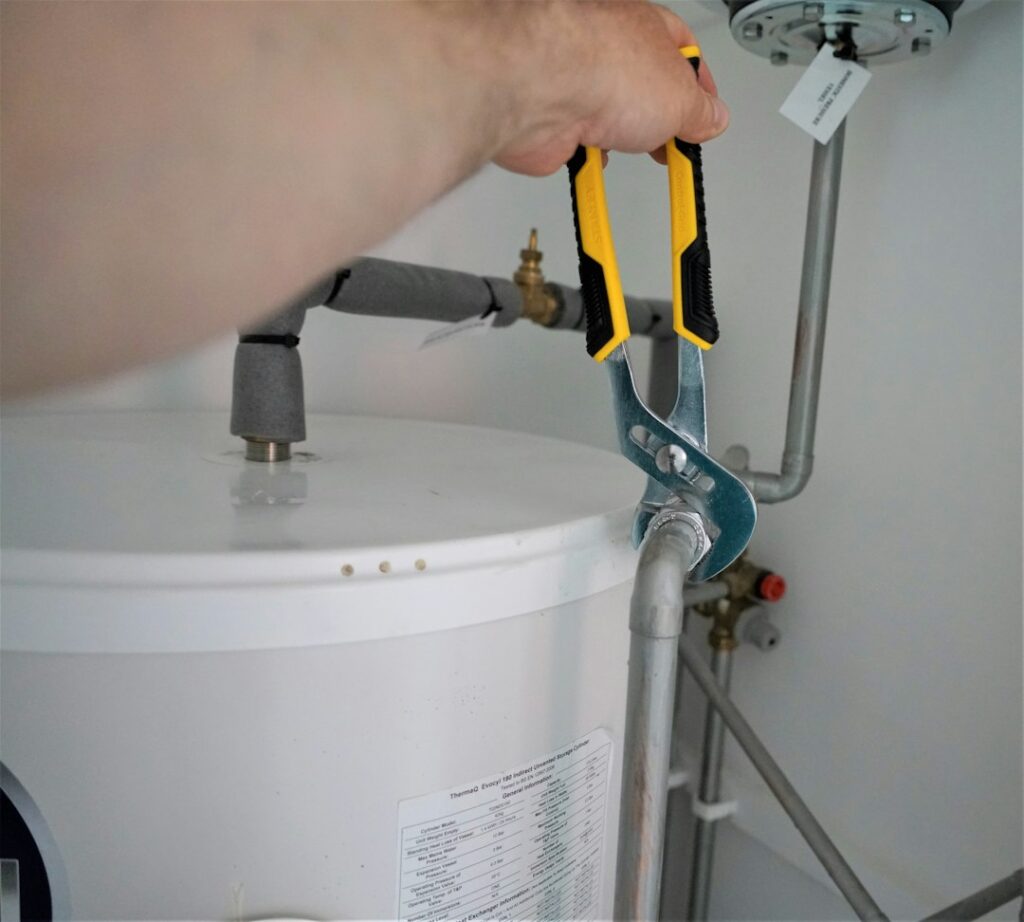
Waiting a minute or more for hot water at a far-off bathroom sink wastes water and patience. A point of use water heater addresses that problem by placing a small heater right at the fixture, usually in the cabinet under the sink, so hot water arrives in seconds instead of traveling the length of the house. These units come in two main styles: small storage tanks, often called mini-tanks, and compact electric tankless heaters. Both can be useful, and both come with electrical, plumbing and safety details that are easy to overlook. This guide explains how each type works, where they make sense, how they compare with recirculation and whole-house tankless systems, what circuits and protection they may need, how to think about scald risk, and what inspectors tend to note. Costs are hedged estimates for Front Range homeowners, not quotes.
Part of our Plumbing & Water guide — start there for the full picture →
Plumbing problem? Talk to a local plumber now.
📞 Call (877) 637-1527What a Point of Use Water Heater Is
A point-of-use (POU) water heater is a small heater installed at or very near a single fixture or a small group of fixtures, rather than a central heater serving the whole house. It may serve a bathroom vanity, a wet bar, a laundry sink, a kitchen island prep sink or a remote addition. Some homes use one as the only hot water source for a detached workshop or small accessory dwelling.
The appeal comes from distance. Hot water in a pipe cools between uses. When someone opens a tap far from the main heater, all that cooled water has to run out first. EPA’s WaterSense program notes that heating water is typically the second largest use of energy in a home after space heating and cooling, and that efficient distribution systems get hot water to the tap faster so residents waste less time, water and energy. WaterSense’s guidance for new homes even sets a design goal of storing no more than 0.5 gallons of water between the hot water source and any hot water fixture. A POU heater is one way to shrink that stored volume for a specific sink.
Point-of-use units come in two broad designs, covered next.
Mini-Tank Heaters vs Electric Tankless Point-of-Use Units
Mini-tank (small storage) heaters
Mini-tanks are scaled-down versions of a standard tank heater, commonly in the range of about 2.5 to 7 gallons, though smaller and larger sizes exist. They hold a small reserve of hot water ready at the tap and reheat it with an electric element.
- Strengths: immediate hot water at the fixture, modest electrical demand compared with tankless units, simple operation and relatively low purchase price.
- Limits: once the stored water is used, recovery takes time. A 4-gallon tank is comfortable for hand washing and small tasks but will not keep up with a long shower or filling a tub.
- Standby loss: like any tank, a mini-tank loses some heat through its walls between uses, though the small volume limits that loss.
Many mini-tank models are designed for 120-volt power, and some plug into a nearby receptacle while others are hardwired. Larger units or higher-wattage elements may need a dedicated circuit. The manufacturer’s installation instructions are the controlling document.
Electric tankless point-of-use heaters
Electric tankless POU units heat water only while it flows. They are compact enough to mount under a sink or on a wall nearby.
- Strengths: no stored water to run out, minimal standby loss, very small footprint.
- Limits: the temperature rise depends on flow rate and incoming water temperature. Small units are designed for low-flow fixtures such as lavatory faucets and may deliver only lukewarm water at higher flow rates.
- Electrical demand: heating water instantly takes a lot of power. Many tankless POU units require a dedicated circuit, and some need 240-volt power and a substantial breaker size. Electrical panel capacity can become the deciding factor.
- Minimum flow: tankless units need a minimum flow to activate. Very low-flow aerators may fail to trigger some models, so the faucet and heater need to be matched.
Winter inlet water on the Front Range
Incoming water is colder in winter, especially in homes fed by mountain reservoirs. A tankless unit that delivers comfortable water in August may produce noticeably cooler water in January because it must raise the temperature further. Manufacturers publish temperature-rise charts by flow rate; comparing them with cold-season inlet temperatures avoids disappointment. Mini-tanks are less sensitive to this because they store water at a set temperature.
Best Water Heaters: our top 3 picks
| Product | Best for | Key features | Price | Buy |
|---|---|---|---|---|
| Rheem PROE50 M2 RH95 | Best overall whole-house tank |
| $851.54as of Nov 19, 2026 10:00 am GMT+0000 | Buy now →Check current price |
| Rheem RTG 7.0 Indoor | Indoor gas tankless upgrade |
| $653.00as of Nov 19, 2026 2:00 pm GMT+0000 | Buy now →Check current price |
| Rheem RTEX-24 | All-electric home, no venting |
| $545.71as of Nov 19, 2026 2:00 pm GMT+0000 | Buy now →Check current price |


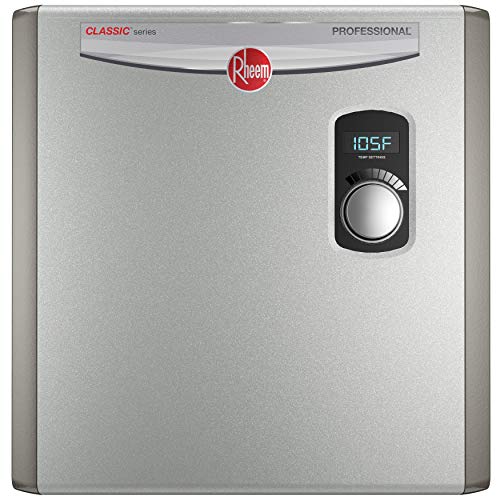
Prices are Amazon’s listed prices as of the time shown and change often; check Amazon for today’s price. As an Amazon Associate we earn from qualifying purchases.
When a Point-of-Use Heater Makes Sense
A POU heater is a targeted fix, not a general upgrade. It tends to make the most sense in situations like these:
- A remote fixture with a long pipe run. A primary bathroom at the far end of a ranch house, or a basement bar 60 feet of pipe away from the heater, are classic examples.
- Additions and conversions. A new bathroom over a garage or a finished basement where extending hot water piping is difficult or expensive.
- Low-volume uses. Hand sinks, wet bars, laundry tubs and office kitchenettes where hot water demand is small and intermittent.
- Boosting temperature. Some homeowners use a mini-tank to boost water temperature at a dishwasher or specific fixture while the main heater stays at a lower setting.
- Outbuildings. A shop, studio or small accessory unit that needs hot water at only one or two fixtures.
It makes less sense as the primary hot water source for showers or tubs in an occupied home, where demand is larger and sustained. It also may not be the best answer when several distant fixtures are all slow; in that case, recirculation or a redesign of the distribution system might address the whole problem at once.
Point-of-Use vs Recirculation vs Whole-House Tankless
Homeowners frustrated by long waits for hot water often compare three approaches.
Recirculation
A recirculation system moves water through the hot supply and back to the main heater, either through a dedicated return line or an under-sink crossover valve that uses the cold line as the return path. It can serve several fixtures, but it adds pump energy, may warm the cold line in crossover setups, and loses heat through piping if it runs continuously. Demand-activated controls reduce those losses. Our guide to the recirculation pump, its controls and tradeoffs covers the details.
Whole-house tankless
Replacing a tank with a whole-house tankless heater removes standby losses at the heater but does not remove the wait for hot water at a distant fixture. Water still has to travel from the heater to the tap, and some tankless units add a brief delay while they fire. A whole-house tankless unit paired with a POU mini-tank at one remote sink is a combination some homeowners use. See our guide to the tankless water heater, sizing and maintenance for more on whole-house units.
Point-of-use
A POU heater solves the problem for a single location without touching the rest of the system. It adds another appliance to maintain and another electrical load, but it does not require running new pipe through finished walls.
For a single problem sink, POU is often the simplest fix. For a whole wing of slow fixtures, recirculation or better pipe layout may be more effective. When the main heater itself is aging, it may make sense to plan a POU unit alongside a replacement; our guide to water heater replacement cost outlines what that larger project involves.
Electrical Requirements: Circuits and GFCI
Electrical details are where POU installations most often go wrong.
- Circuit capacity. A plug-in mini-tank sharing a general-purpose bathroom or kitchen circuit with a hair dryer or toaster can overload it and trip the breaker. Manufacturers specify whether a dedicated circuit is required.
- Hardwired tankless units. These typically need a dedicated circuit with conductor and breaker sizes matched to the unit’s rating. Some larger POU tankless models draw enough current that an older or full panel may not have room.
- Ground-fault protection. Receptacles under sinks and in bathrooms, kitchens, laundry areas and basements are commonly required to have GFCI protection under current electrical codes, and some heater instructions call for it as well. Requirements vary by code edition and local amendment, so a licensed electrician or the local building department should confirm what applies.
- Disconnect and access. Hardwired units generally need a way to disconnect power for service. Cramming a heater into a cabinet so tightly that its cover or connections cannot be reached creates problems later.
Nuisance tripping is a common complaint. If a GFCI keeps tripping when the heater runs, it may indicate a failing element, moisture in the unit, or an installation issue. Our guide on GFCI outlets that trip or will not reset walks through basic troubleshooting, but repeated tripping near water deserves a professional look rather than a workaround.
Relief Valves, Leaks and Under-Sink Plumbing
Mini-tanks are pressure vessels. Many models include a temperature and pressure (T&P) relief valve or call for one in their instructions, along with a discharge pipe routed to a safe location. Requirements depend on the model and local code, but a mini-tank installed without a relief valve, or with the valve capped or its discharge pointed into a closed cabinet, is worth questioning. Tankless POU units usually do not use a T&P valve, though some instructions call for pressure relief in certain configurations.
Other plumbing details to check:
- Supply connections. Braided connectors should be in good condition and not kinked. Shutoff valves before the heater make service easier.
- Drain pan or leak sensor. A small pan or a battery leak alarm under a mini-tank is inexpensive protection for cabinets and floors.
- Thermal expansion. Homes with a pressure-reducing valve or check valve on the main can see pressure rise when water heats. Manufacturers sometimes recommend an expansion device for tank-type units.
- Sediment and scale. Front Range water hardness varies by utility. Mini-tanks can accumulate sediment over time, and tankless elements can scale. Periodic flushing per the manual extends life.
When hot water disappears at a POU fixture, the cause may be a tripped breaker, a failed element or thermostat, or a tankless unit that is not sensing flow. For the main system, our no hot water troubleshooting guide covers the broader checklist.
Choosing a unit: a short checklist
Before buying, it helps to gather a few facts about the fixture and the house:
- Fixture flow rate. Lavatory faucets are often rated well below kitchen faucets. The aerator’s stamped rating is a good starting point for sizing a tankless unit.
- Typical use. Quick hand washing, filling a mop bucket and washing dishes by hand place very different demands on a small heater.
- Cabinet space. Measure height, width and depth, and account for the drain trap, disposal, filter cartridges and shutoff valves already in the cabinet.
- Electrical access. Note whether a receptacle exists, what circuit serves it, and how far the panel is from the sink.
- Service access. Element replacement, flushing and relief valve testing all require reaching the unit. A heater wedged behind a garbage disposal is a heater nobody maintains.
Comparing these answers with the manufacturer’s specification sheet narrows the choice quickly and avoids buying a unit that either cannot keep up or cannot be powered safely.
Temperature Settings and Scald Safety
Because a POU heater sits right at the tap, its setpoint determines exactly how hot the water is at the faucet, without the cooling that occurs in long pipe runs.
The U.S. Consumer Product Safety Commission’s publication on tap water scalds says the majority of injuries and deaths involving tap water scalds are to the elderly and children under five. CPSC urges users to lower water heaters to 120°F and notes that most adults will suffer third-degree burns from 150°F water in two seconds, from 140°F water in six seconds and from 130°F water in thirty seconds. Even at 120°F, CPSC says a five-minute exposure could cause third-degree burns. The agency also advises hand-testing water before bathing infants and young children.
The CDC adds another dimension. Its guidance on waterborne germs at home says keeping a water heater between 130°F and 140°F can kill germs such as Legionella but increases burn risk, and that households setting a water heater above 120°F should use thermostatic mixing valves at the tap to avoid burns, especially when young children, older adults or others at higher risk of burns live in the home. CDC suggests people discuss their Legionella risk with a healthcare provider. A POU unit serving a child’s bathroom deserves careful attention to this balance.
Costs and What Inspectors Note
Prices vary by brand, capacity, electrical work and access. As hedged estimates:
- Mini-tank units often cost in the low to mid hundreds of dollars for the heater. Installation on an existing suitable receptacle with straightforward plumbing may be a modest labor charge.
- Electric tankless POU units span a similar or slightly higher price range for small models, with larger units costing more.
- New dedicated circuits add electrician labor and materials and can become the largest part of the cost, especially if the panel is far away or needs upgrading.
- Operating cost depends on electricity rates, usage and setpoint. For a lightly used hand sink, operating cost is often small, but a high-wattage tankless unit serving frequent use can add up.
The ASHI Standard of Practice directs inspectors to inspect water heating equipment and hot water supply systems and to describe water heating equipment, including energy sources. In practice, an inspector who opens a sink cabinet may note a POU heater, active leaks, a missing or improperly routed relief valve discharge, an extension cord or overloaded receptacle, missing GFCI protection where expected, or a unit that does not appear to produce hot water. Inspectors generally do not evaluate sizing or test every function.
For more on how plumbing systems are evaluated, see our plumbing and water inspection hub and our guide to choosing and hiring a home inspector.
A point of use water heater can be a smart, low-disruption fix for a single slow fixture. Matching the unit to the fixture’s flow, the home’s electrical capacity and the household’s safety needs is what separates a good installation from a nuisance.
More Questions About Point-of-Use Water Heaters
How fast does a point-of-use water heater deliver hot water?
A point-of-use water heater delivers hot water almost immediately, usually within a few seconds, because it sits right at or near the faucet instead of far away at the main heater.
The wait time depends mostly on the length of pipe between the heater and the faucet. Mini-tanks deliver stored hot water immediately until they run out, while electric tankless units heat on demand, often with a brief warm-up delay. Keeping the run to the faucet short, ideally a few feet, gives the best results. A point-of-use unit does not speed up other fixtures, which still wait for the main heater.
How long does a point-of-use water heater last?
A point-of-use water heater typically lasts about 6 to 15 years, with mini-tank units at the shorter end and electric tankless units often lasting longer when maintained.
Hard water shortens lifespan by building scale on the elements and inside the tank. Flushing mini-tanks and descaling tankless units periodically, checking the relief valve and replacing leaking supply connectors extend service life. A tank that leaks from its body, rather than a fitting, usually means the unit should be replaced. Check the data plate for the manufacture date when buying a home.
Do point-of-use water heaters save money?
Point-of-use water heaters can save money by cutting the hot water wasted while waiting at a distant faucet and reducing standby losses, but the savings are modest for most homes.
They make the most financial sense where a fixture is far from the main water heater, such as a remote bathroom, a wet bar or an addition, and where adding a recirculation loop would be harder. Mini-tanks still have some standby loss, and electric tankless units draw a large current briefly. Federal energy tax credits for water heaters ended for work completed after December 31, 2025, so check utility rebates instead.
Can a point-of-use water heater serve a whole bathroom?
A single point-of-use water heater can serve a whole bathroom only if it is sized for the simultaneous flow of the shower and sink, which typically means a larger electric tankless unit rather than an under-sink mini-tank.
Mini-tanks hold a few gallons and run out quickly under a shower. Tankless point-of-use units are rated by flow at a given temperature rise, and in cold-inlet regions in winter, their flow drops. Check the electrical requirements carefully, since whole-bathroom tankless models often need a large dedicated circuit. A plumber can calculate the needed flow and temperature rise.
References
- Avoiding Tap Water Scalds (Publication 5098) — U.S. Consumer Product Safety Commission
- WaterSense Labeled Homes: Hot Water Distribution — U.S. Environmental Protection Agency, WaterSense
- Preventing Waterborne Germs at Home — Centers for Disease Control and Prevention
- ASHI Standard of Practice for Home Inspection — American Society of Home Inspectors
Frequently asked questions
What size point of use water heater do I need?
For hand washing at a single sink, a mini-tank of roughly 2.5 to 4 gallons is common. Larger tasks need more capacity. For tankless units, compare the fixture's flow rate and winter inlet temperature against the manufacturer's temperature-rise chart.
Can a point of use water heater plug into a regular outlet?
Some small mini-tanks are designed to plug into a 120-volt receptacle, but many units, especially tankless models, require a dedicated or hardwired circuit. Follow the manufacturer's instructions and local code, and have an electrician confirm circuit capacity.
Does a point of use water heater need a GFCI?
Receptacles near sinks and in bathrooms, kitchens and basements are commonly required to have GFCI protection, and some heater instructions call for it. Requirements depend on the code edition adopted locally, so confirm with an electrician or the building department.
Is a point of use heater better than a recirculation pump?
For a single remote sink, a point-of-use heater is often simpler. When several distant fixtures are slow, a recirculation system or improved pipe layout may solve the problem more completely.
What temperature should a point of use water heater be set to?
CPSC urges households to lower water heaters to 120 degrees Fahrenheit to reduce scald risk. If a higher setting is used, CDC recommends thermostatic mixing valves at the tap, particularly in homes with young children or older adults.
Is a point-of-use water heater the same as an instant hot water dispenser?
No, a point-of-use water heater supplies warm water through the regular faucet, while an instant hot water dispenser provides near-boiling water from a separate tap for tea or cooking. Dispensers hold a small volume and are not meant for washing.
Do point-of-use water heaters need a relief valve?
Tank-type point-of-use water heaters require a temperature and pressure relief valve, typically with a discharge pipe routed to a safe location. Many electric tankless units have built-in safety controls instead. Follow the manufacturer's instructions and local plumbing code.
Can a point-of-use water heater go in a kitchen?
Yes, a point-of-use water heater can be installed under a kitchen sink to deliver hot water quickly at that faucet. It works best for handwashing and rinsing. A dishwasher usually still connects to the main hot water line and heats its own water.
Looking at a house with add-on heaters, remodeled bathrooms or questionable under-sink wiring? Get in touch here and we can help you connect with a qualified Front Range inspector to review the plumbing and electrical before you commit.