Recirculation Pump: Instant Hot Water, Costs and Tradeoffs
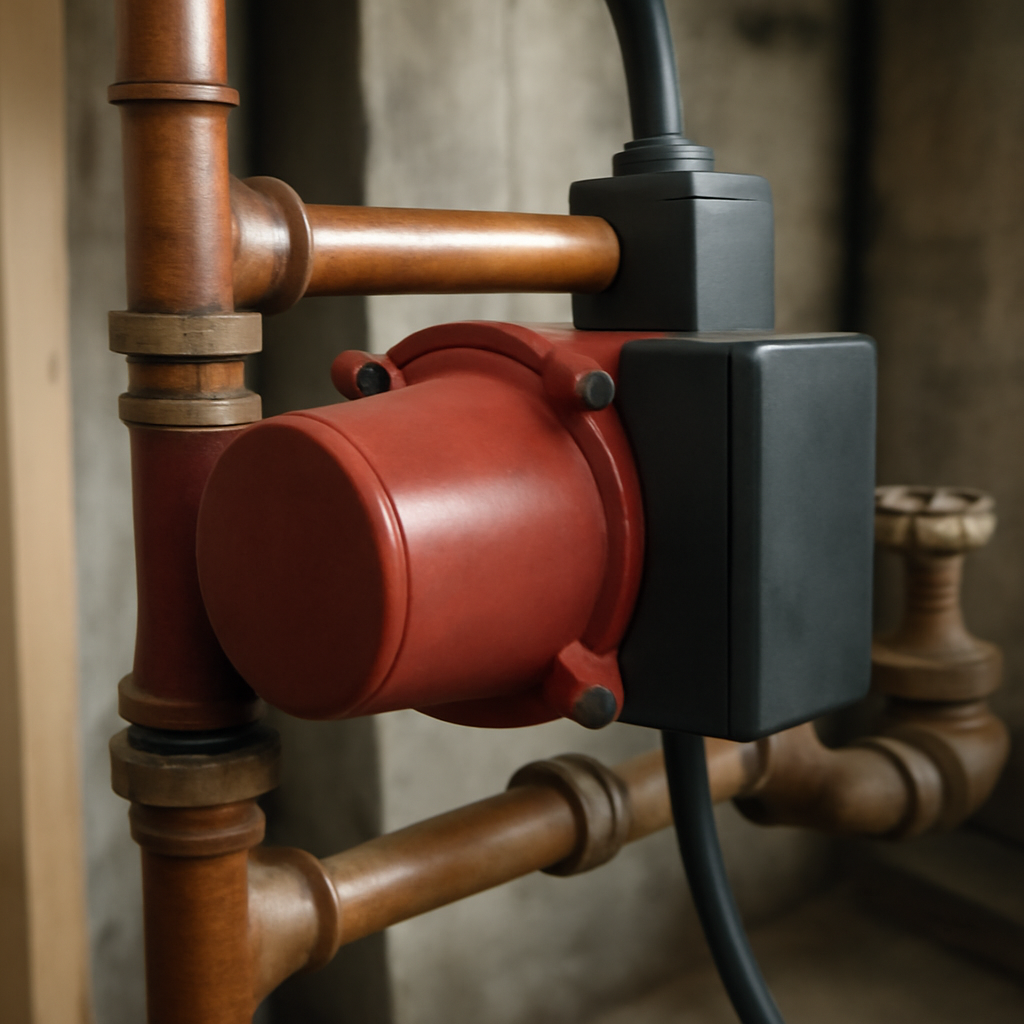
Waiting for hot water is one of the most common household annoyances. Open the tap in a far bathroom and cold water runs for a minute or more before the hot arrives, all of it going down the drain. A hot water recirculation pump is designed to shorten that wait by keeping hot water close to the fixtures or moving it there quickly on demand. These systems range from a pump on a dedicated return pipe to a small kit installed under a sink, and from always-on operation to a push-button control. This guide explains how each type works, the controls available, the energy and water tradeoffs, how recirculation interacts with tankless heaters, the lukewarm cold-water complaint that comes with crossover systems, and what home inspectors and buyers should look for. Cost figures are hedged estimates for Front Range homeowners rather than quotes.
Part of our Plumbing & Water guide — start there for the full picture →
What a Recirculation Pump Does
In a conventional plumbing layout, hot water sits in the pipes between uses and cools to room temperature. When someone opens a hot tap, that cooled water must be pushed out before hot water from the heater arrives. The longer the pipe run and the larger its diameter, the longer the wait and the more water wasted.
A recirculation pump moves water through the hot supply piping and back to the water heater, so the water that would have gone down the drain is returned to be reheated. Depending on the design and controls, the pump either keeps the hot line warm continuously or on a schedule, or primes it only when someone signals that hot water is about to be needed.
The idea is not new. Large homes and commercial buildings have used recirculation loops for decades. What has changed is the range of controls and retrofit options available for ordinary homes. EPA’s WaterSense program, in its guidance on hot water delivery, notes that heating water is typically the second largest use of energy in a home after space heating and cooling, and that efficient distribution systems get hot water to the tap faster so residents waste less time, water and energy.
Dedicated Return Line Systems
The traditional design uses a separate return pipe that runs from the far end of the hot water supply back to the water heater, usually connecting near the drain valve or a cold inlet fitting. A small circulator pump, typically mounted near the heater, moves water around the loop. A check valve keeps water flowing in the right direction.
Advantages of a dedicated return line:
- Hot water reaches fixtures quickly along the entire loop.
- The cold water lines are unaffected, so cold taps stay cold.
- The loop can be designed to serve several distant fixtures.
Drawbacks:
- Installing a return line in an existing house means opening walls, ceilings or crawl spaces, which raises cost.
- An always-running loop loses heat continuously through the pipe walls, especially if the pipe is uninsulated.
- The pump runs more hours, adding electricity use and wear.
New construction is the easiest time to add a dedicated return. The WaterSense hot water guidance describes a demand-initiated recirculation line as a good option for larger homes or layouts where fixtures are not centrally located, with branch piping running from the loop to fixtures typically within 10 feet of it. It also notes that such systems might be more expensive to install than other system types and may require homeowner training, and that if designed properly they can be the most water-efficient hot water delivery approach.
Under-Sink Crossover (Comfort) Systems
For existing homes without a return line, the most common retrofit uses the cold water pipe as the return path. A pump is installed at the water heater, and a thermostatic crossover valve, sometimes called a comfort valve or bypass valve, is installed under the sink farthest from the heater. The valve connects the hot and cold supply lines at that fixture.
When the pump runs, it pushes cooled water from the hot line through the crossover valve into the cold line, and from there back toward the heater through the cold supply. When water at the valve reaches a set temperature, the valve closes and circulation stops. Some kits place the pump under the sink instead of at the heater.
The appeal is obvious: no new pipe runs, and installation can often be completed in a few hours. The tradeoffs are covered below, but the most noticeable is that the cold water line now carries warm water some of the time.
The Lukewarm Cold Water Problem
Because the crossover valve sends hot water into the cold line, the first draw from a cold tap near that fixture may be warm or lukewarm. For many households this is a minor nuisance. For others, especially those who want cold drinking water straight from the tap, it is a real complaint. Effects can include:
- Warm water at the first draw from cold taps in the bathroom or kitchen served by the valve.
- Toilets filling with slightly warm water, which can cause condensation in some cases.
- Less reliable cold water for appliances that draw from the cold line.
Timers and on-demand controls reduce this effect by limiting how often the pump runs. Adjusting the crossover valve’s set point can also help. If cold-tap temperature is a priority, a dedicated return line or a point-of-use solution may be a better fit.
Timers, Sensors and On-Demand Controls
How the pump is controlled has a larger effect on energy use than which pump is installed. Common options include:
Continuous Operation
The pump runs all the time. Hot water is always nearby, but the loop loses heat around the clock and the pump uses electricity continuously. This approach is the least efficient and is uncommon in newer installations.
Timers
A timer runs the pump during set periods, such as early morning and evening. Timers cut energy use substantially compared with continuous operation, though the pump may still run when nobody needs hot water, and someone wanting hot water outside the schedule waits as usual.
Aquastats and Temperature Sensors
An aquastat turns the pump on when water in the line drops below a set temperature and off when it warms up. Combined with a timer, this keeps the line warm only during useful hours and only as much as needed.
On-Demand Buttons, Motion Sensors and Smart Controls
Demand-initiated systems run the pump only when someone presses a button, triggers a motion sensor or uses an app or voice command. The pump moves water until hot water reaches the fixture, then stops. Because the loop is not kept hot between uses, standby heat loss is much lower. EPA’s WaterSense home maintenance guidance suggests considering a demand recirculating system, which recirculates water that has cooled back to the water heater until the desired temperature is reached.
Some newer pumps learn household patterns and run themselves before typical use times. These can be convenient but are only as efficient as their settings.
Energy and Water Tradeoffs
A recirculation pump saves water by reducing what runs down the drain while waiting. Whether it saves energy depends on design and controls.
- Water savings are usually real for any working system, because cooled water is returned to the heater instead of the drain.
- Energy use can rise with continuous or poorly controlled systems, because the heater must keep reheating water that cools in the pipes and the pump consumes electricity.
- Demand-controlled systems generally offer the best balance, priming the line only when hot water is actually wanted.
- Pipe insulation on hot and return lines reduces heat loss for any recirculation system, and WaterSense home maintenance guidance suggests insulating the tank and connecting pipes to reduce heat loss.
The amount of water and energy involved varies widely by house layout, pipe size, number of users and habits, so specific savings claims should be treated with caution. A compact home with a centrally located water heater may gain little. A sprawling ranch with a heater at one end and the primary bath at the other may benefit a great deal.
Recirculation With Tankless Water Heaters
Tankless heaters solve one problem, running out of hot water, but not the wait at distant taps. In fact, some owners notice a longer wait after switching to tankless, because the heater needs a moment to fire and reach temperature before hot water even starts traveling down the pipe.
Many tankless models offer built-in recirculation pumps or are designed to work with an external pump and a dedicated return line. Not every tankless unit tolerates recirculation, however. Running water through a tankless heater repeatedly can cause frequent firing cycles, and some models have minimum flow requirements that a small pump may not meet. Manufacturer compatibility should be confirmed before adding a recirculation pump to a tankless system. Our guide to the tankless water heater covers sizing, maintenance and recirculation options in more detail.
Health, Safety and Plumbing Considerations
Water Temperature and Scalding
A recirculation system makes hot water arrive quickly, which also means scalding water can arrive faster than users expect. The U.S. Consumer Product Safety Commission (CPSC) urges lowering water heaters to 120 degrees Fahrenheit and notes that most adults will suffer third-degree burns after two seconds of exposure to 150 degree water. That guidance matters more in homes with young children or older adults. For background on settings, see our water heater thermostat guide.
Stagnant Water and Germs
The Centers for Disease Control and Prevention (CDC) explains that some germs, including Legionella, can grow in home water pipes when water sits still, for example when taps go unused for a long time. The CDC also notes that keeping a home water heater between 130 and 140 degrees can kill germs like Legionella but increases burn risk, and suggests thermostatic mixing valves at the tap if a heater is set above 120 degrees. The CDC advises people at higher risk to discuss the temperature setting with a healthcare provider. A recirculation loop that holds lukewarm water for long stretches does not automatically create a problem, but it is one reason many installers emphasize proper temperature settings and controls.
Water Hammer, Noise and Check Valves
Recirculation systems add check valves and sometimes quick-closing crossover valves. A sticking check valve can let water flow backward or create noise, and rapid valve closure can contribute to banging pipes in some systems. Our guide to water hammer explains causes and fixes. Pumps themselves may hum or click, so mounting location matters in finished spaces.
Pump Materials and Electrical Supply
Pumps used in potable water systems are generally made of bronze or stainless steel rather than cast iron, which is common in closed heating loops. A pump plugged into an outlet near the water heater should have a properly installed receptacle, and wiring should follow local electrical code.
Is a Recirculation Pump Worth It?
The answer depends mostly on the house. A few questions help sort it out:
- How long is the wait now? A wait of a few seconds rarely justifies the cost. A wait of a minute or more at a frequently used bathroom or kitchen often does.
- Where is the water heater? Heaters tucked in a garage or basement corner far from the main bath create the longest waits and the most waste.
- How many people use the distant fixtures? A busy family bathroom sees many more waits per day than a guest bath.
- Is there an easy return path? An unfinished basement or accessible crawl space can make a dedicated return line far more practical.
- Does cold-tap temperature matter? If it does, a crossover kit may disappoint.
Households that answer yes to the first three questions tend to be the happiest with recirculation. Those with short pipe runs often find the money better spent elsewhere.
Alternatives to a Recirculation Pump
A pump is not the only way to shorten the wait for hot water. Depending on the home, alternatives may include:
- Point-of-use water heaters. A small electric tank or tankless unit under a distant sink can deliver hot water almost immediately at that fixture, at the cost of another appliance to maintain and an electrical circuit to supply it.
- Better plumbing layout in new construction or major remodels. The WaterSense hot water guidance describes core layouts that run pipes directly from the water heater to centrally grouped fixtures, and manifold systems with smaller-diameter lines, both of which can reduce wait time and waste.
- Pipe insulation. Insulation does not remove the initial wait, but it keeps water in the line warmer between closely spaced uses, such as back-to-back showers.
- Relocating the water heater. When a heater must be replaced anyway, a more central location can shorten runs, though venting, gas and drainage requirements limit options.
Comparing these options against a recirculation system, including installation and operating costs, usually points to the most sensible choice for a particular house.
Costs and What Inspectors Note
Pricing depends on system type, house layout, access and local labor rates. As hedged estimates:
- Under-sink crossover kits often cost a few hundred dollars for the pump and valve, with professional installation adding labor.
- Pump replacement on an existing dedicated return loop often falls in the low to mid hundreds of dollars including labor, depending on the pump.
- Adding a dedicated return line to an existing home can cost substantially more, potentially well into the thousands, because of wall and ceiling access.
- Operating costs depend heavily on controls; continuous operation costs the most.
During a home inspection, an inspector may note a recirculation pump, whether it appears to operate, leaks at pump fittings, missing check valves, uninsulated return lines and complaints such as warm cold taps. Inspectors generally do not evaluate controls in depth or measure energy use. For an overview of how plumbing systems are covered, see our plumbing and water inspection hub and our main guide to hiring a home inspector.
A recirculation pump is a comfort upgrade with real water benefits, but its efficiency depends far more on design and controls than on the pump itself. Matching the system to the house layout and habits is what makes the difference.
More Questions About Hot Water Recirculation Pumps
How much does a hot water recirculation pump cost to install?
A hot water recirculation pump typically costs a few hundred dollars for an under-sink comfort system, while a dedicated return-line system can cost much more, often in the low thousands, according to industry estimates.
Costs depend on whether a new return line must be run, access to plumbing, controls, electrical outlet location and the water heater type. Retrofitting a return line in a finished house usually costs the most. Simple under-sink systems are easier to add but may cause warm cold-water lines.
How long does a hot water recirculation pump last?
A hot water recirculation pump often lasts about 5 to 10 years or more, depending on water quality, run time and pump type. Pumps that run continuously usually wear faster than pumps controlled by timers, sensors or on-demand buttons.
Hard water, sediment and air in the lines can shorten pump life. Noise, weak flow, overheating or failure to deliver hot water quickly are signs the pump may need service. Installing isolation valves makes future pump replacement easier.
Can a recirculation pump make hot water too hot?
A recirculation pump does not usually heat water itself, but it can make hot water arrive faster at fixtures, which may increase scald risk if the water heater is set high. Hot water at taps above about 120 F can burn skin quickly, especially for children and older adults.
Keeping the water heater set to a safe temperature and installing anti-scald or thermostatic mixing valves where needed helps. A plumber can check whether the system needs mixing valves or temperature controls.
Is a recirculation pump worth it in a small house?
A recirculation pump is usually less valuable in a small house with short pipe runs, because hot water already arrives quickly. It becomes more useful when fixtures are far from the water heater or people often wait a minute or longer for hot water.
In compact homes, insulating hot water pipes or adjusting fixture use may be enough. Larger homes, long runs to distant bathrooms, tankless water heaters and households that waste water while waiting are better candidates for recirculation.
References
- WaterSense Labeled Homes: Hot Water Distribution — U.S. Environmental Protection Agency, WaterSense
- Maintaining a Water-Efficient Home — U.S. Environmental Protection Agency, WaterSense
- Preventing Waterborne Germs at Home — Centers for Disease Control and Prevention
- Avoiding Tap Water Scalds (Publication 5098) — U.S. Consumer Product Safety Commission
Frequently asked questions
Does a hot water recirculation pump save money?
It usually saves water, but energy savings depend on controls. Continuous operation can raise energy use because the loop keeps losing heat. Demand-controlled systems that run only when hot water is wanted generally offer the best balance.
Why is my cold water warm after installing a recirculation pump?
Under-sink crossover systems use the cold line as the return path, so warm water can sit in it after the pump runs. Using a timer or on-demand control, adjusting the crossover valve setting or switching to a dedicated return line can reduce the effect.
Can a recirculation pump be used with a tankless water heater?
Often, yes, but compatibility varies. Many tankless models include a built-in pump or support an external one, while others have minimum flow requirements or cycling concerns. Confirm with the heater manufacturer before installing.
What is the most efficient way to control a recirculation pump?
Demand-initiated controls such as push buttons or motion sensors usually waste the least energy because the line is primed only when needed. Timers combined with aquastats are a common alternative. Insulating hot and return pipes helps any system.
Is a recirculation pump safe for drinking water?
Pumps designed for potable water, usually bronze or stainless steel, are intended for this use. Proper water heater temperature settings matter for both scald prevention and germ control, and the CDC suggests people at higher risk discuss settings with a healthcare provider.
Can a recirculation pump be added to an existing water heater?
Yes, a recirculation pump can usually be added to an existing tank water heater, either at the heater with a dedicated return line or under a distant sink. Tankless heaters need compatible controls and minimum flow, so the heater manual should be checked first.
Do recirculation pumps work with PEX plumbing?
Yes, recirculation pumps work with PEX plumbing, and PEX is often used to add a dedicated return line. Insulating the hot and return lines reduces heat loss, and fittings should be rated for continuous hot water circulation.
Do recirculation pumps need maintenance?
Recirculation pumps need little routine maintenance, but owners should listen for noise, check for leaks, and confirm hot water still arrives quickly. Plumbing sediment and hard water can affect pump performance over time, so flushing the water heater on schedule helps the pump too.
Curious whether the plumbing in a home you are considering is well designed and in good shape? Send us a message and we can help you connect with an inspector who will review the water heater, piping and any recirculation equipment.