Hot Water Dispenser: Instant Hot Taps, Wiring and Safety
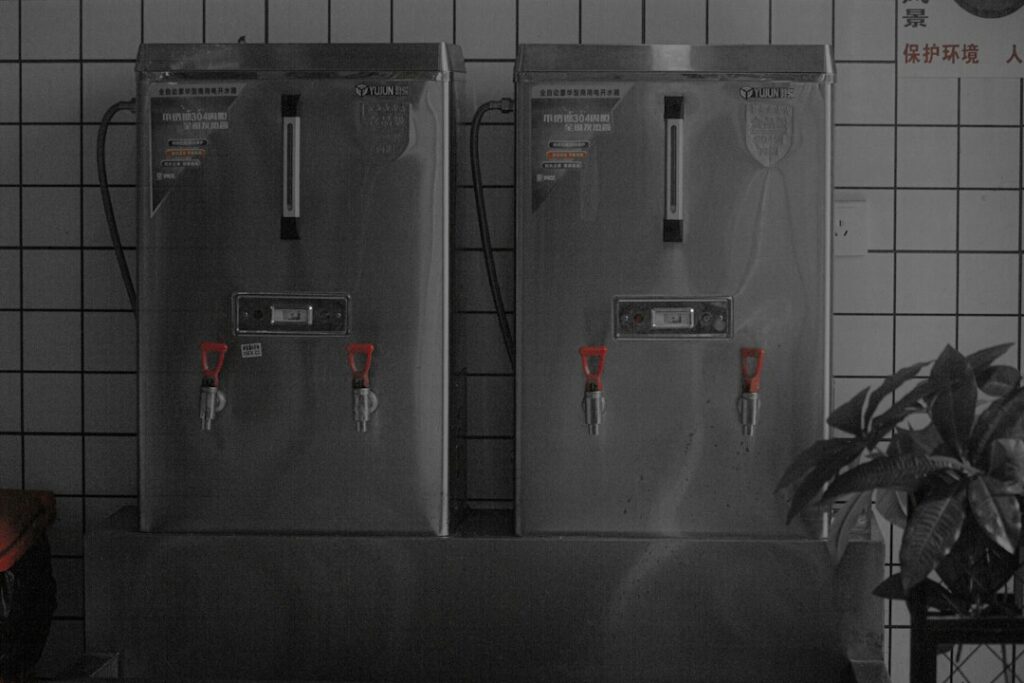
An instant hot tap delivers water close to boiling with the push of a lever, ready for tea, oatmeal, blanching vegetables or warming a baby bottle’s outer water bath. A hot water dispenser of this type is a small appliance with a heated tank under the sink and a dedicated faucet on the sink or countertop. It is convenient, but it also puts very hot water within reach of anyone who uses the sink, adds an electrical load inside a wet cabinet, and needs its own hole in the sink or counter. This guide explains how these units work, the scald and safety considerations for households with children, electrical and plumbing requirements, why high altitude on the Front Range changes the maximum temperature, energy use, common leaks, and what inspectors may note. Costs are hedged estimates rather than quotes.
Part of our Plumbing & Water guide — start there for the full picture →
How a Hot Water Dispenser Works
A typical under-sink hot water dispenser has three main parts:
- A small insulated tank. Usually holding well under a gallon to around a gallon, it sits in the sink cabinet and contains an electric heating element and a thermostat.
- A dispensing faucet. Mounted through a hole in the sink deck or countertop, it has its own handle or lever. Some models combine instant hot with filtered cold water, and some combination faucets also handle the regular hot and cold supply.
- A cold water connection. The tank is fed from the cold supply line under the sink, usually through a tee and a small supply tube.
When the lever opens, incoming cold water pushes hot water out of the tank and up through the spout. The tank then reheats the replacement water. Most manufacturers set these tanks to deliver water in the high 100s to around 200°F, well above the temperature from a regular hot tap.
Vented tanks and expansion
Many dispenser tanks are designed as non-pressurized or vented systems. Water expands as it heats, and in these designs the excess has somewhere to go, often a small amount that drips from the spout or moves through an expansion chamber. Some dripping during heat-up is described as normal in many owner’s manuals, while constant dripping or steam may indicate a thermostat set too high or another problem. Because tank designs vary, the manufacturer’s manual is the reference for what is normal for a particular unit.
This design means the tank is not a miniature water heater in the conventional sense. It should be installed exactly as the manufacturer specifies, including any required tubing routing and orientation.
Scald Risk, Children and Safe Use
The biggest concern with an instant hot tap is temperature. The U.S. Consumer Product Safety Commission’s publication on tap water scalds says the majority of injuries and deaths involving tap water scalds are to the elderly and children under five. It notes that most adults will suffer third-degree burns if exposed to 150°F water for two seconds, and that burns also occur with a six-second exposure to 140°F water. CPSC urges households to lower water heaters to 120°F.
A dispenser intentionally runs far hotter than that 120°F guidance because its purpose is hot beverages and cooking. That makes the dispenser itself the hazard to manage, rather than a setting to lower to bath temperature. Practical steps include:
- Child-resistant handles. Many dispensers use a push-and-turn or two-step lever. Households with young children may want to prioritize models with this feature.
- Faucet placement. Mounting the hot tap away from the edge where children stand, and away from the main faucet handle that adults reach for without looking, reduces mix-ups.
- Labeling and color. Clear red indicators on the handle help guests and caregivers recognize the near-boiling outlet.
- Container choice. Using a sturdy mug or pot set in the sink, rather than a thin cup held in the hand, limits splashes and spills.
- Turning it off. When young grandchildren visit or the house is being shown, switching the unit off at its power switch or unplugging it is a simple precaution.
CPSC also stresses supervision: it advises never taking hot water temperature for granted and notes that an adult’s presence at all times is the best defense against scalding of infants and young children.
Electrical Requirements: Outlet, Circuit and GFCI
Most residential dispensers plug into a 120-volt receptacle inside the sink cabinet. That simple fact raises several questions.
- Is there a receptacle? Many sink cabinets have one for a garbage disposal, often switched from the wall. A dispenser generally needs constant power, so a switched outlet may not be appropriate. Some installations use a split or duplex receptacle with one half switched for the disposal and one half always on.
- Circuit capacity. Dispenser heaters draw a moderate load, but sharing a circuit with a disposal and dishwasher can overload it, depending on the circuit. Some manufacturers recommend or require a dedicated circuit, and local code may have its own requirements for kitchen appliances. An electrician can confirm capacity.
- Ground-fault protection. Receptacles near sinks and in kitchens are commonly required to have GFCI protection under modern electrical codes, though the exact rules depend on the code edition adopted locally. A receptacle under a sink, surrounded by plumbing that can leak, is exactly the kind of location where ground-fault protection matters.
- Cord and placement. The power cord should reach the outlet without an extension cord, and the receptacle should be positioned where a leak is less likely to drip on it.
If the dispenser stops heating, a tripped GFCI is a common culprit, either at the cabinet receptacle or at an upstream GFCI on the same circuit. Our guide to GFCI outlets that trip or will not reset covers basic troubleshooting, but frequent tripping in a wet cabinet should be diagnosed rather than ignored.
Sink Holes, Faucets and Countertops
A dispenser needs its own mounting hole. Where that hole goes depends on the sink and counter.
Using an existing hole
Many kitchen sinks come with extra holes for a side sprayer, soap dispenser or air gap. Replacing an unused sprayer or soap pump with the hot tap is the simplest route. If the home has a dishwasher air gap in the sink deck, that hole is generally not available for a dispenser unless the air gap is relocated or eliminated where local code allows.
Drilling the countertop
Undermount sinks have no deck holes, so dispenser faucets go through the countertop itself. Drilling stone or quartz requires the right diamond core bit, water cooling and patience. Many homeowners have a fabricator or plumber drill the hole to avoid cracking an expensive slab. Our guide to undermount sink installation explains how sink style affects faucet and accessory placement.
Combination faucets
Some manufacturers offer three- or four-function kitchen faucets that deliver regular hot, regular cold, filtered cold and near-boiling water from one spout. These save a hole but tie the dispenser’s lifespan to the faucet’s. When a kitchen faucet is being replaced anyway, it is a good time to plan the hole count; our guide to kitchen faucet replacement, sprayers and hole counts covers that planning.
High Altitude and Maximum Temperature in Colorado
Altitude matters for any appliance that heats water close to boiling. Water boils at about 212°F at sea level, but the boiling point drops as air pressure falls at higher elevations. In Denver and much of the Front Range, at roughly a mile high, water boils at a noticeably lower temperature, commonly cited as around 202°F, and it is lower still in mountain towns.
For a dispenser, that has two implications:
- The maximum useful temperature is lower. A dispenser cannot deliver water hotter than the local boiling point in a vented tank. Tea and coffee drinkers may notice that “near-boiling” at altitude is a few degrees cooler than at sea level.
- The thermostat may need adjustment. If a dispenser is set for a temperature close to sea-level boiling, the water in its tank can boil at altitude, causing sputtering, spitting from the spout, steam and excessive dripping. Some manufacturers’ manuals include instructions for lowering the setting in high-altitude installations.
If a newly installed dispenser on the Front Range hisses, spits or steams, checking the thermostat setting against the manual’s high-altitude guidance is a reasonable first step. The near-boiling water that remains is still more than hot enough to cause serious scalds.
Installation Overview and Common Mistakes
Installation instructions differ between brands, but most follow a similar sequence. Understanding it helps homeowners judge whether a DIY job is realistic or whether a plumber and electrician should handle it.
- Plan the layout. Confirm the faucet location, tank mounting spot on the cabinet wall, tubing route and outlet location before drilling anything. The tank usually needs to be mounted upright at a specified distance below the faucet.
- Mount the faucet. Install it through the existing or newly drilled hole with the supplied gaskets and mounting nut.
- Mount the tank. Secure the bracket to the cabinet wall with screws long enough to hold the filled tank, which is heavier than it looks.
- Connect water. Shut off the cold supply, add a tee or adapter as instructed, and connect the supply tube. Many manuals call for specific tubing that should not be cut or kinked.
- Fill before power. Most manufacturers require the tank to be filled with water, typically by running the dispenser until water flows steadily, before plugging the unit in. Powering an empty tank can damage the element.
- Plug in and set temperature. Allow the tank to heat, then adjust the thermostat, taking altitude guidance into account.
- Check for leaks. Inspect every fitting after the first heat-up and again a day later.
Mistakes that show up later
- Plugging in before filling, which can burn out the heating element on the first use.
- Kinking or rerouting the vent or expansion tubing, which can cause spitting or overflow.
- Using a switched disposal outlet so the tank only heats while the disposal switch is on.
- Running an extension cord from a distant outlet across a damp cabinet floor.
- Mounting the tank where it blocks the main shutoff valves, making emergency shutoff harder.
- Overtightening plastic fittings, which can crack them and cause slow leaks.
A plumber is usually the right call when the countertop needs drilling, the cabinet has no suitable outlet, or shutoff valves are old and may not close fully.
Leaks, Mineral Scale and Maintenance
A dispenser is another water-connected appliance inside a cabinet that is not checked often. Common issues include:
- Supply connection leaks. The small tubing and compression fittings between the cold line tee and the tank can loosen over time.
- Tank leaks. Tanks eventually corrode or develop seam failures. Water collecting in the cabinet or a swollen cabinet floor are warning signs.
- Mineral scale. Hard water deposits build up in the tank and on the element. Front Range water hardness varies by utility, so scale is more of an issue in some neighborhoods than others. Scale can reduce heating efficiency and cause noise.
- Filter changes. Units with built-in or inline filters need cartridges replaced on the manufacturer’s schedule.
- Stagnant water. CDC guidance on waterborne germs notes that germs in the biofilm inside plumbing are more likely to come out when water has not been used in a while, such as a week or longer. After a vacation, running some water through the dispenser before use is a reasonable habit.
A drip tray or a battery-powered leak alarm on the cabinet floor is inexpensive protection. Swelling particleboard, musty odors or staining around the tank are signs that a slow leak may have been present for some time.
Energy Use and Running Cost
A dispenser keeps a small volume of water at a very high temperature around the clock. Even with insulation, that tank loses heat continuously, and the heater cycles to maintain temperature. EPA’s WaterSense program notes that heating water is typically the second largest use of energy in a home after space heating and cooling; a dispenser is a small piece of that picture, but it is an always-on load.
How much it costs to run depends on tank size, insulation, thermostat setting, how often it is used and local electricity rates. Some units have an energy-saving or vacation mode. Turning the unit off during long absences is the simplest way to avoid paying to keep water hot that nobody uses. Some households compare the dispenser’s standby cost with heating water in an electric kettle on demand and decide based on how often they actually use near-boiling water.
Costs and What Inspectors Note
All figures are hedged and depend on brand, features, countertop material and electrical access.
- Basic dispenser kits often cost in the low to mid hundreds of dollars. Models with filtration, combination faucets or digital temperature control cost more.
- Plumber installation using an existing hole and a suitable outlet may be a modest labor charge.
- Countertop drilling in stone or quartz adds cost, sometimes significantly, if a fabricator is required.
- Adding an outlet or circuit under the sink adds electrician labor and can be the largest part of the project.
- Replacement tanks are available for many models and can be less expensive than a full kit, though labor still applies.
The ASHI Standard of Practice calls for inspecting interior water supply and distribution systems, including fixtures and faucets, and for inspecting a representative number of receptacles and GFCI protection. During an inspection, an inspector may note a dispenser, active leaks or water damage in the cabinet, an extension cord powering the unit, missing GFCI protection where expected, or a dispenser that does not appear to produce hot water. Inspectors generally do not measure dispenser temperature or evaluate thermostat settings.
For more on what plumbing evaluations typically cover, see our plumbing and water inspection hub and our overview of how to hire a home inspector. Households weighing broader hot water upgrades may also compare a dispenser with a point of use water heater, which serves ordinary hot water needs at a remote sink rather than near-boiling water.
References
- Avoiding Tap Water Scalds (Publication 5098) — U.S. Consumer Product Safety Commission
- Preventing Waterborne Germs at Home — Centers for Disease Control and Prevention
- WaterSense Labeled Homes: Hot Water Distribution — U.S. Environmental Protection Agency, WaterSense
- ASHI Standard of Practice for Home Inspection — American Society of Home Inspectors
Frequently asked questions
How hot does a hot water dispenser get?
Many dispensers deliver water in the high 100s to around 200 degrees Fahrenheit. At Front Range elevations the boiling point is lower than at sea level, so the maximum practical temperature is also somewhat lower.
Is an instant hot water tap safe with children in the house?
It requires care. CPSC notes that tap water scalds mostly injure young children and older adults, and near-boiling water burns very quickly. Child-resistant handles, careful faucet placement and supervision reduce the risk.
Does a hot water dispenser need its own circuit?
Most plug into a 120-volt outlet under the sink, but some manufacturers recommend a dedicated circuit, and sharing a circuit with a disposal or dishwasher can overload it. An electrician can confirm capacity and GFCI protection.
Why is my hot water dispenser spitting or dripping?
Some dripping during heat-up is normal for many vented tanks. Spitting, steam or constant dripping can mean the thermostat is set too high for the local boiling point, which is common at Colorado altitudes. Check the manual's high-altitude guidance.
How much electricity does a hot water dispenser use?
It keeps a small tank hot continuously, so it is an always-on load. Cost depends on tank size, insulation, setting, usage and electricity rates. Using vacation or energy-saving modes and turning it off during absences reduces waste.
Touring a home with a remodeled kitchen and plenty of under-sink gadgets? Send us a message and we can help you connect with a Front Range inspector who will check the cabinet plumbing, receptacles and signs of hidden leaks.