Kitchen Faucet Replacement: Sprayers, Hole Counts and Shutoffs
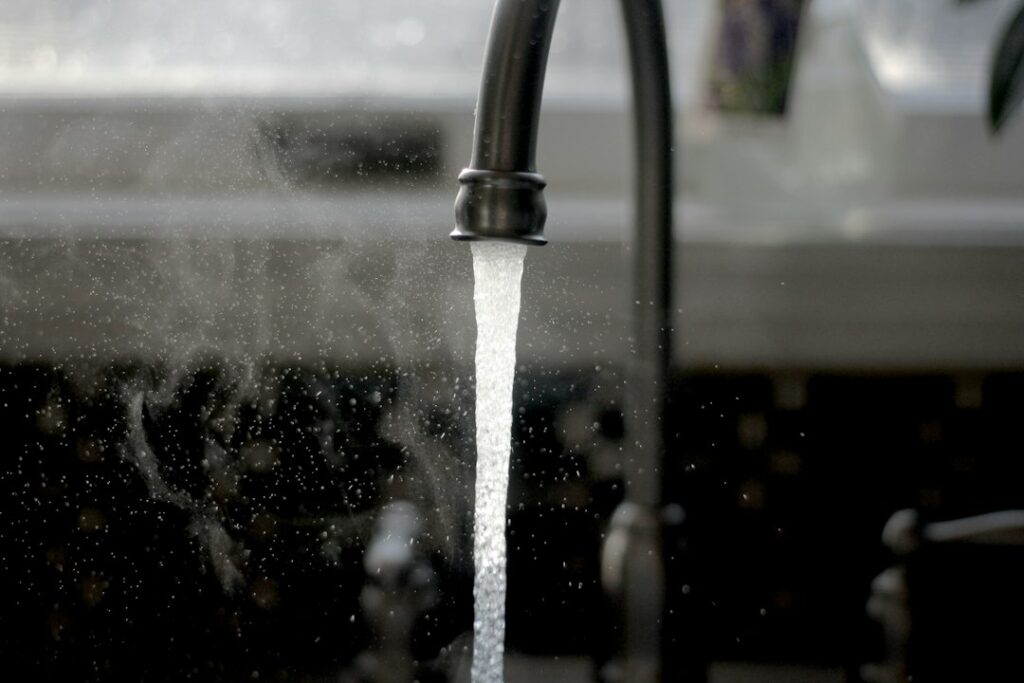
The kitchen faucet works harder than any other fixture in most homes. It fills pots, rinses dishes, feeds filters and gets yanked by the sprayer hose dozens of times a day, so it is no surprise that kitchen faucets develop drips, loose bases, sticky sprayers and leaks under the sink. A kitchen faucet replacement can be a quick upgrade or a frustrating afternoon, depending on how many holes the sink has, how cramped the cabinet is, the age of the shutoff valves and whether a dishwasher, water filter or soap dispenser shares the space. This guide covers sprayer styles and hose weights, deck plates and hole counts, supply lines and shutoffs, common leaks, undermount sinks, pot fillers, what EPA says about flow rates and lead, the replacement process, and the factors that drive cost.
Part of our Plumbing & Water guide — start there for the full picture →
Faucet Styles and Sprayers
Kitchen faucets are usually grouped by how the sprayer works and how the handles are arranged.
Pull-down faucets
A pull-down faucet has a tall, arched spout with a spray head that pulls straight down into the sink. The hose runs through the spout and hangs in a loop under the sink. Pull-downs suit deep single-bowl sinks and are the most popular style in remodeled kitchens. Their height can be a problem under low cabinets or windowsills, so measuring clearance before buying matters.
Pull-out faucets
A pull-out faucet has a shorter spout and a wand that pulls toward the user. The hose is often longer, which helps with filling pots on the counter or reaching corners of a large sink. Pull-outs work well where overhead clearance is limited.
Side sprayers
Older kitchens often have a separate side sprayer in its own hole, fed by a hose that connects to a diverter in the faucet body. Side sprayers are inexpensive but are known for weak flow when the diverter wears, and the sprayer hose can leak where it connects under the sink.
Hose weights and retraction
Pull-down and pull-out sprayers rely on a weight clamped to the hose under the sink to pull the spray head back into place. If the weight slides, is installed too high, or catches on supply lines, a drain, a garbage disposal or items stored in the cabinet, the spray head will not dock properly. Many sprayer complaints turn out to be weight placement problems. Some faucets use magnetic docking to hold the head in place, which helps but still depends on the hose moving freely.
Single-handle, two-handle and touch faucets
Single-lever faucets are the most common and are easy to operate with a wrist or forearm when hands are messy. Two-handle bridge faucets have a traditional look but need more deck space. Touch and hands-free faucets use a battery pack or plug-in power supply and a solenoid valve under the sink, which add convenience along with a few more parts that can fail.
Hole Counts and Deck Plates
Most kitchen sinks and countertops are drilled with one to four holes. A typical layout includes a faucet hole, with additional holes used for a side sprayer, soap dispenser, filtered water tap or dishwasher air gap.
- One hole: Fits single-hole faucets with integrated sprayers.
- Three holes: Often a two-handle faucet, or a single-lever faucet with a deck plate covering the outer holes.
- Four holes: Often a three-hole faucet plus a side sprayer, soap dispenser or air gap.
A deck plate (escutcheon) lets a single-hole faucet cover a three-hole sink. Extra holes that are not covered can be filled with a soap dispenser, a filtered water faucet or a hole cover. Before removing a dishwasher air gap, local code requirements should be checked, since some jurisdictions require an air gap while others accept a high drain loop. Counter thickness also matters. Thick stone counters, especially with undermount sinks, may need faucets with longer shanks or extension kits.
Spout reach and height should match the sink. A spout that ends too close to the back of the bowl splashes onto the deck, while an oversized spout on a small sink can spray past the bowl. The center of the stream ideally lands near the center of the bowl or drain.
Supply Lines and Shutoffs
Hot and cold supply lines run from shutoff valves under the sink to the faucet. Many kitchen faucets ship with integrated flexible lines, while others need separate braided connectors. The cold line often also feeds a refrigerator icemaker or water filter through a tee, and the hot line may feed the dishwasher.
Shutoff valves
Older multi-turn stops can seize, refuse to close fully, or start leaking at the packing nut once they are moved after years of disuse. Quarter-turn ball valves are generally more reliable, and replacing stops during a faucet swap is common. If the stops do not hold, water to the house must be shut off at the main. The main water shut-off valve guide explains how to locate and test it before starting.
Line condition and length
Supply lines that are kinked, stretched tight, corroded or more than several years old are worth replacing. Lines that are too long can loop into the sprayer hose path and interfere with the weight. Some home water systems use PEX supply piping, which may connect to stops with crimp, clamp, push-fit or expansion fittings. The PEX pipe guide explains how those connections work and when they need attention.
Shared connections: dishwashers, filters and icemakers
The space under a kitchen sink is usually crowded. A dishwasher supply line often tees off the hot stop, an under-sink filter or reverse osmosis unit may tee off the cold line, and a refrigerator icemaker line may share that cold connection. Each tee and compression fitting is another potential leak point, and older saddle valves that pierce a copper pipe are known for weeping or failing to close. Replacing the faucet is a convenient time to label each line, confirm each valve closes, and replace dual-outlet stops or tees that show corrosion. Filter cartridges and reverse osmosis membranes have their own replacement schedules, and a neglected unit can leak at its housing or restrict flow to its dedicated tap.
The dishwasher drain also connects nearby, either to the disposal inlet or a tailpiece branch, through an air gap or high loop. Moving these connections carelessly during a faucet swap can cause drain backflow into the dishwasher, so they are worth checking before the cabinet is restocked.
Leaks at and Under the Kitchen Sink
Kitchen sink cabinets often hold cleaning supplies, a trash can and a garbage disposal, which makes slow leaks easy to miss. Water damage typically shows up as swelling in the cabinet floor, stains, a musty smell or warped flooring nearby.
Faucet leaks
- Spout drip: Usually a worn cartridge or valve seats.
- Leak at the base of the spout: Often worn O-rings in swivel spouts.
- Leak from the sprayer hose: A worn hose, a loose quick-connect fitting under the sink or a cracked spray head.
- Water under the faucet base: A missing or failed base gasket lets deck water seep down the mounting hole.
The kitchen faucet leaking guide covers repairs that can extend the life of an existing faucet.
Under-sink leaks
Below the deck, leaks come from supply connections, stop valve packing nuts, sprayer hose connections, the sink drain flange (basket strainer), disposal connections, dishwasher drain connections and slip-joint nuts on the trap. The leak under kitchen sink guide explains how to trace each source. A faucet replacement is a good moment to check all of them while the cabinet is empty.
Undermount Sinks and Pot Fillers
Undermount sinks attach below the countertop, which means the faucet mounts through the counter rather than the sink deck. Faucet holes must be drilled in the stone or solid surface, and adding or relocating holes later requires specialized tools. Hole spacing, counter thickness and backsplash distance all affect which faucets fit. Sink clips and adhesive also need to stay sound, since a sagging undermount sink can break the seal and allow water into the cabinet. The undermount sink installation guide covers mounting methods and what to look for.
Some kitchens add a pot filler over the range, a wall-mounted faucet with an articulating arm. Pot fillers have their own supply line and valve inside the wall, often with a second shutoff at the spout. They are a separate fixture from the sink faucet, and installation involves opening the wall. The pot filler faucet guide explains the plumbing and leak risks.
Flow Rates, Aerators and WaterSense
Unlike bathroom faucets, kitchen faucets are not eligible for the EPA WaterSense label. EPA states that it has WaterSense labeling criteria only for private lavatory (bathroom sink) and bar sink faucets, and that it does not have criteria for other faucet types, including kitchen faucets. EPA had signaled in a 2024 notice that it intended to bring kitchen faucets into the specification, but it says that as of February 2025 it is pausing work on draft specifications for kitchen and public lavatory faucets.
Flow rate is still controlled largely by the aerator, the small screened insert at the spout tip. Kitchen faucets often have higher flow than bathroom faucets because filling pots quickly matters. Many pull-down heads offer a stream mode and a spray mode, and some include a pause button. A clogged aerator reduces flow and causes sputtering, and EPA’s lead guidance advises regularly cleaning faucet aerators, because sediment, debris and lead particles can collect in the screen.
Hard water scale builds up in aerators and spray head nozzles. Rubber nozzles on many spray heads can be rubbed clean, while removable aerators can be soaked in vinegar. If flow is low at the kitchen only, the aerator or sprayer is the usual suspect; if flow is low throughout the house, a broader pressure issue is more likely.
Lead-Free Requirements
Kitchen faucets supply drinking and cooking water, so lead content is a reasonable concern, particularly with older brass faucets. EPA identifies lead pipes, faucets and fixtures as the most common sources of lead in drinking water and notes that, in homes without lead service lines, brass or chrome-plated brass faucets and plumbing with lead solder are the most common problem.
EPA describes the Safe Drinking Water Act definition of “lead free” as a weighted average of 0.25 percent lead across the wetted surfaces of pipes, fittings and fixtures, and 0.2 percent for solder and flux. That definition was lowered from 8 percent through the Reduction of Lead in Drinking Water Act of 2011. EPA also states that, as of September 1, 2023, manufacturers and importers must have regulated plumbing products certified as lead free. Faucets sold by mainstream retailers carry third-party certification marks, and EPA publishes a fact sheet explaining how to identify them.
A new faucet removes one possible source, but it does not change service lines or older solder in the house. EPA recommends using only cold water for drinking, cooking and preparing baby formula and notes that boiling water does not remove lead. Testing is the only way to know what is in the water.
The Replacement Process
Manufacturer instructions vary, but a typical kitchen faucet swap includes these steps:
- Empty the cabinet, protect the floor and set a bucket and towels under the work area.
- Shut off the stops, open the faucet to release pressure and confirm the valves hold.
- Disconnect supply lines and the sprayer hose; unplug or disconnect a touch faucet’s power and solenoid.
- Loosen the mounting nut or bracket, which is often hidden behind the sink bowl and may require a basin wrench or a deep socket.
- Clean the deck of old putty, caulk and scale.
- Install the new base, gasket or deck plate and secure the mounting hardware from below.
- Route the sprayer hose, attach the weight at the marked location, and connect the supply lines.
- Remove the aerator or spray head, open the stops slowly and flush debris, then reinstall it.
- Pull the sprayer out several times to confirm the hose does not snag and the head docks properly, and check for leaks over the next day.
A garbage disposal can make access much harder, and some installers temporarily remove it. If the faucet is being replaced along with the sink, the order of work changes, since the faucet is often mounted to the new sink before the sink goes in.
Choosing features that last
Ceramic disc cartridges are the norm in most modern faucets and tend to hold up well, though hard water and debris can still wear seals over time. Faucets from brands with readily available replacement cartridges, spray heads and hoses are easier to keep running for years. Finish durability varies; some matte and dark finishes show scratches or react to harsh cleaners, so reviewing the manufacturer’s care instructions before cleaning helps protect the warranty.
Costs and When to Call a Plumber
Costs vary with the faucet, configuration and what turns up under the sink. Basic faucets are relatively inexpensive, while pull-down, touch and commercial-style models can cost many times more. Labor for a straightforward swap is often priced near a plumber’s service-call minimum or a flat rate. Seized stops, corroded mounting nuts, cramped access around a disposal, drilling new holes in stone, or adding a filtered water faucet all add time and cost. Pot filler installations and sink replacements are separate, larger jobs.
Reasons to call a professional
- Stop valves that will not close or that leak once turned.
- Corroded or soldered supply connections that need to be cut and replaced.
- Stone counters that need new holes drilled.
- Signs of water damage in the cabinet or subfloor.
- Persistent low flow that does not improve after cleaning the aerator.
What a home inspection covers
The ASHI Standard of Practice directs inspectors to inspect interior water supply and distribution systems, including fixtures and faucets, and interior drain, waste and vent systems, including fixtures. Inspectors typically run the kitchen faucet and sprayer, look under the sink for leaks, check drainage and note cabinet damage. The standard does not require inspectors to determine water quality, so lead testing is a separate step. The plumbing and water hiring guide covers who to call for follow-up repairs, and the main home inspector hiring guide explains how to choose an inspector.
References
- Bathroom Faucets (WaterSense scope and faucet criteria) — U.S. EPA WaterSense
- Use of Lead Free Pipes, Fittings, Fixtures, Solder, and Flux for Drinking Water — U.S. Environmental Protection Agency
- Basic Information about Lead in Drinking Water — U.S. Environmental Protection Agency
- ASHI Standard of Practice for Home Inspections — American Society of Home Inspectors
Frequently asked questions
Why won't my pull-down sprayer retract?
The hose weight is usually the cause. If the weight has slid, is installed in the wrong spot, or the hose catches on supply lines, the disposal or stored items, the spray head will not dock. Repositioning the weight and clearing the hose path fixes most cases.
Can a single-hole kitchen faucet go on a three-hole sink?
Yes. Many single-hole faucets include or offer a deck plate that covers the outer holes. Extra holes can also be used for a soap dispenser or filtered water tap.
Are there WaterSense kitchen faucets?
No. EPA states that WaterSense criteria exist only for private bathroom sink and bar sink faucets, not kitchen faucets. Aerators still control flow, and keeping them clean helps both flow and water quality.
Should shutoff valves be replaced with a new kitchen faucet?
Often, yes. Older multi-turn stops can seize or leak once moved. Swapping them for quarter-turn valves during the faucet replacement is a common and relatively inexpensive upgrade.
How much does kitchen faucet replacement cost?
It depends on the faucet and the installation. Straightforward swaps are often priced near a plumber's service-call minimum or a flat rate, while seized valves, stone drilling, disposal access or water damage increase the cost.
Kitchen sink cabinets often hide slow leaks and worn valves. Reach out if you would like an inspection that checks the kitchen plumbing before you buy.