Combi Boilers: Space Heat and Hot Water From One Unit
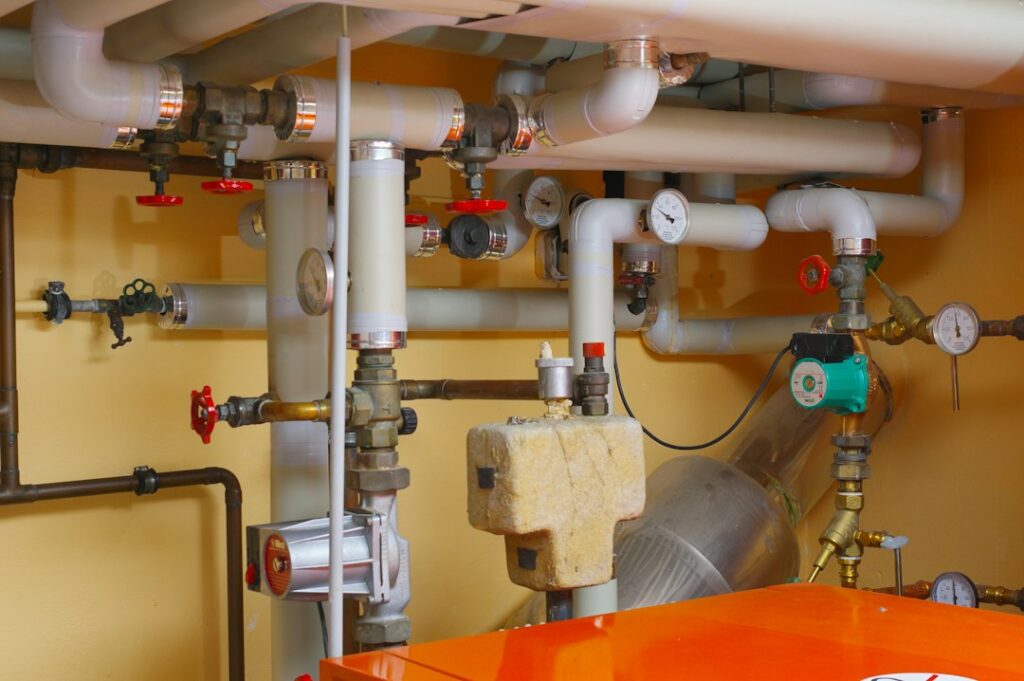
A combination boiler, usually shortened to combi boiler, packs two jobs into one wall-hung cabinet: it heats water for radiators, baseboard or radiant floors, and it heats domestic hot water on demand for showers and sinks, without a separate storage tank. Combis have been common in Europe for decades and have become a popular choice in North American homes that already use hydronic heat, particularly when an old cast-iron boiler and a separate tank water heater both need replacing. The appeal is obvious: one appliance, one vent, a small footprint and high efficiency. The limits are less obvious, and the biggest one is hot water flow rate. This guide explains how combi boilers work, sizing and flow-rate trade-offs, condensing efficiency and the drain and venting it requires, altitude setup along the Front Range, ENERGY STAR criteria, carbon monoxide safety and typical installed costs.
Part of our Heating, Cooling & Ventilation guide — start there for the full picture →
Heating or cooling trouble? Talk to a local HVAC technician.
📞 Call (833) 491-1876What a Combi Boiler Does
A combi boiler is a gas-fired (occasionally propane or oil) boiler with a built-in heat exchanger for domestic hot water. In heating mode, it works like any modern boiler: a burner heats water in a primary heat exchanger, and a circulator pump sends it through the home’s heating loop. When someone opens a hot water tap, a flow sensor detects the demand and the boiler switches priority to domestic hot water, heating fresh water as it passes through a secondary plate heat exchanger on its way to the faucet.
Key characteristics:
- No storage tank. Hot water is made on demand, similar to a tankless water heater.
- Domestic hot water priority. While a tap is running, most combis pause space heating. In a well-insulated house, short interruptions are rarely noticeable.
- Wall-mounted and compact. Most units hang on a wall, freeing floor space.
- Modulating burner. Most modern combis modulate their firing rate up and down to match the load.
- Condensing design. Most current gas combis are condensing appliances with sealed combustion.
A combi boiler only makes sense in a home with hydronic heat or one being converted to it. In a home with a forced-air furnace, a tankless water heater or a heat pump water heater is the more typical comparison.
Flow-Rate Limits: The Main Trade-Off
Because a combi heats water as it flows, the volume of hot water it can deliver depends on how much it must raise the water temperature and the boiler’s maximum firing rate for domestic hot water. That makes the flow rate in gallons per minute (gpm) the number that matters most.
The temperature rise is the difference between incoming cold water and the desired hot water temperature. Colorado municipal water supplied from mountain reservoirs can be quite cold in winter, often in the 40s °F, so a combi may need a temperature rise of 70 °F or more in January, versus less in summer. The same boiler that comfortably runs two showers in August may struggle in winter.
As a rough guide, manufacturer spec sheets for residential combi boilers typically list domestic hot water flow rates of a few gallons per minute at a large temperature rise. Typical household fixtures use roughly:
- Low-flow shower: about 1.5 to 2 gpm.
- Kitchen or bathroom faucet: often about 1 to 2 gpm.
- Dishwasher or clothes washer: intermittent, varying by model.
- Large soaking tub: fills slowly from a combi compared with a tank.
The practical effect is that a mid-size combi often handles one shower plus a sink comfortably, but two simultaneous showers in winter may push it to its limit, resulting in lower temperature or reduced flow. Homes with multiple bathrooms, large tubs or body-spray showers may be better served by a boiler with an indirect storage tank, or by a combi paired with a small buffer or storage tank where the manufacturer allows it.
Ask the installer to size the combi using the home’s actual fixtures, the winter incoming water temperature and the manufacturer’s flow rating at that temperature rise, not just the boiler’s heating output.
Heating Output and Sizing
Combis are often sized by their domestic hot water demand, which is usually larger than the space heating load in a modest, well-insulated home. That can leave a combi oversized for heating. Modern modulating burners reduce the problem, because they can turn down to a fraction of full output, but the turndown ratio varies by model. A boiler that cannot modulate low enough will short-cycle in mild weather.
A room-by-room heat loss calculation is the reliable way to size the heating side. Rules of thumb based on square footage or the old boiler’s size often lead to oversizing, especially in older homes that have received new windows and insulation.
Condensing Efficiency
A condensing boiler extracts additional heat by cooling flue gases below the point where water vapor condenses. That recovered heat is what pushes efficiency into the 90s. ENERGY STAR certified gas boilers have an annual fuel utilization efficiency (AFUE) of 90 percent or greater, which ENERGY STAR describes as approximately 6 percent more efficient than the federal standard. ENERGY STAR also lists features that help boilers reach greater efficiency, including electronic ignition, new combustion technologies and sealed combustion that uses outside air to fuel the burner.
Condensing only happens when the water returning to the boiler is cool enough, generally below about 130 °F for natural gas. Systems designed to run at lower water temperatures, such as radiant floors and generously sized radiators, keep the boiler condensing more of the time. Outdoor reset control, which lowers supply water temperature in milder weather, is commonly built into modern combis and helps efficiency. Our guides on radiant floor heating, hot water radiators and baseboard heaters explain how emitter type affects water temperature.
Condensate Drains and Venting
Condensing produces water, and that water is mildly acidic. A combi boiler needs a condensate drain path to a suitable drain, and many installers or local rules call for a neutralizer cartridge filled with limestone or similar media to raise the pH before the water reaches plumbing. Where no floor drain is nearby, a condensate pump is used.
Condensate lines are a common source of problems:
- A clogged trap or line can shut down the boiler.
- Lines routed outdoors or through unheated spaces can freeze during Colorado cold snaps, stopping the boiler.
- Neutralizer media is consumed over time and needs periodic replacement.
ENERGY STAR’s HVAC maintenance checklist includes checking and inspecting the condensate drain as part of annual service, noting that a plugged drain can cause water damage.
Most combis use sealed, direct-vent combustion, with an intake and exhaust running through a sidewall or roof, often in PVC, CPVC, polypropylene or stainless steel, depending on the manufacturer’s listing. Termination clearances from windows, doors, gas meters and grade are set by the manufacturer and local code. Along the Front Range, sidewall terminations need to stay clear of drifting snow, and exhaust plumes can create ice on nearby walkways in winter. Replacing an old atmospheric boiler with a combi often leaves the old masonry chimney serving only the water heater or nothing at all, which can have implications if other appliances still vent into it.
Altitude Setup on the Front Range
Gas appliances behave differently at altitude because air is thinner, so each cubic foot contains less oxygen for combustion. Manufacturers address this in their installation instructions, and requirements vary by model: some combis are approved for high altitude with a settings change, some require a kit or orifice change, and some are derated, meaning their maximum output is reduced at elevation.
For Denver at roughly 5,280 feet and higher mountain communities, the derate can meaningfully reduce maximum domestic hot water output, which compounds the flow-rate limits described above. A combi that barely meets demand at sea level may fall short in Evergreen or Conifer. The installer should confirm the model’s altitude rating and the derated output in the manufacturer’s literature, and set up combustion with an analyzer at the site rather than relying on factory settings.
Carbon Monoxide and Combustion Safety
A combi boiler burns fuel inside the home, so combustion safety applies just as it does for a furnace or water heater. Sealed combustion reduces the risk of spillage into the living space, but leaks at vent joints, blocked terminations and poor combustion can still produce carbon monoxide.
The CDC describes carbon monoxide as an odorless, colorless gas that can cause sudden illness and death, and recommends that heating systems, water heaters and other gas, oil or coal burning appliances be serviced by a qualified technician every year. The CPSC recommends installing battery-operated CO alarms or alarms with battery backup on every level of the home and outside sleeping areas, and notes interconnected alarms are best. If CO poisoning is suspected, the CPSC advises getting outside to fresh air immediately and then calling 911. Placement and alarm types are covered in our carbon monoxide detector installation guide.
ENERGY STAR’s maintenance checklist lists checking gas connections, gas pressure, burner combustion and the heat exchanger as heating-specific maintenance items, and warns that improperly operating gas connections are a fire hazard and can contribute to health problems.
Maintenance and Common Problems
Annual service for a combi typically includes inspecting and cleaning the burner and heat exchanger, combustion analysis, checking and cleaning the condensate trap and neutralizer, checking system pressure and the expansion vessel charge, testing safety controls and inspecting the venting.
Common problems include:
- Scale in the domestic hot water heat exchanger. Hard water deposits mineral scale, reducing hot water output and causing temperature fluctuations. Many Front Range water supplies are moderately hard, and some manufacturers recommend periodic descaling or a scale-reduction device.
- Low system pressure. Combis typically have a built-in expansion vessel and a pressure gauge. Pressure that drops repeatedly points to a leak or a faulty pressure relief valve.
- Fluctuating hot water temperature. Often caused by low flow below the minimum activation rate, scale, or a failing flow sensor or diverter valve.
- Lockouts and error codes. Frequently linked to condensate blockages, ignition problems or venting issues.
Our boiler repair guide goes deeper into troubleshooting and when repair is worth it versus replacement.
Combi Boiler vs Boiler With an Indirect Tank
The alternative to a combi in a hydronic home is a heat-only boiler paired with an indirect water heater, a storage tank heated by a coil connected to the boiler.
- Hot water capacity: an indirect tank stores a large volume and can deliver high flow rates for multiple showers; a combi is limited by its instantaneous output.
- Space: a combi saves floor space; an indirect tank needs room for a cylinder.
- Cost: a combi is usually cheaper to install because it is one appliance.
- Standby loss: a combi has essentially no storage standby loss; a well-insulated indirect tank has a small one.
- Redundancy: with a combi, one failure means no heat and no hot water at the same time.
Smaller homes with one or two bathrooms and moderate hot water use are often a good fit for a combi. Larger households with heavy simultaneous demand often favor an indirect tank.
What Home Inspectors Look For
During a general home inspection, a combi boiler is typically operated with normal controls, and hot water is run at fixtures to observe delivery. Common observations include:
- Vent and intake terminations that are blocked, too close to windows or grade, or not supported properly.
- Condensate lines that are disconnected, kinked, routed through cold spaces or draining onto floors.
- Missing or exhausted neutralizers where one was installed.
- Pressure relief valve discharge piping that is missing or terminates improperly.
- System pressure outside the normal range on the gauge.
- Signs of leaks, corrosion or water staining below the unit.
- Hot water that fluctuates or runs lukewarm when two fixtures are open.
- Missing CO alarms near sleeping areas.
A home inspector does not open sealed combustion chambers or perform a combustion analysis as part of a standard inspection. If defects appear, the usual recommendation is evaluation and service by a licensed heating contractor familiar with the brand.
Questions to Ask Before Buying a Combi
- What is this model’s domestic hot water flow rate at a 70 °F or larger temperature rise, after altitude derating?
- What is the minimum firing rate, and how does it compare with the home’s design heat loss?
- Where will the condensate drain, and is a neutralizer or condensate pump included?
- What vent material and termination location will be used, and how will it stay clear of snow?
- Is a water softener or scale-reduction device recommended for local water?
- Does the installer hold the required local licenses and pull a permit?
- What does the warranty require, such as annual service or registration, to stay valid?
Written answers make it easier to compare bids and avoid surprises the first time two people try to shower at once on a January morning.
Combi Boiler Costs
As general 2026 ranges for the Front Range, not quotes:
- Combi boiler equipment: often around $2,500 to $6,000 depending on brand, output and features.
- Installed replacement of an existing boiler and water heater: commonly about $7,000 to $15,000 or more, depending on piping changes, venting, condensate handling, gas line upgrades and removal of old equipment.
- Annual service: often around $175 to $350.
- Descaling the domestic hot water heat exchanger: often around $150 to $400 if done as a separate visit.
- Common repairs: diverter valves, flow sensors, fans and circulators often run from a few hundred to over $1,000 installed.
Utility rebates and federal incentives for high-efficiency equipment change over time, so check current programs before purchasing. For choosing an installer, see our heating and cooling hiring guide and the broader hiring process resources.
More Questions About Combi Boilers
How long does a combi boiler last?
A combi boiler typically lasts about 10 to 15 years, and well-maintained units can last longer, according to industry estimates. Lifespan depends on water quality, installation, how hard the boiler works and how regularly it is serviced. Hard water shortens life by scaling the domestic hot water heat exchanger. Annual service, descaling where needed, keeping the condensate drain clear and maintaining correct system pressure all help. Frequent lockouts, leaks or rising repair costs after about 10 years often point toward replacement.
Can a combi boiler work with radiant floor heating?
Yes, a combi boiler can work with radiant floor heating, and condensing combis run especially efficiently with radiant floors because the low water temperatures let the boiler condense more of the time. The system usually needs a mixing valve or separate zone for floors, a properly sized circulator, and controls that coordinate floors with any baseboard or radiators. The installer should calculate the home’s heat loss, since radiant zones can demand long, steady run times. The domestic hot water limit still applies when heat and hot water are needed together.
Is a combi boiler better than a furnace and tankless water heater?
A combi boiler is better for homes that already use hot water heat, such as baseboard, radiators or radiant floors, because one appliance replaces both the boiler and water heater. A furnace with a tankless water heater suits homes with ducts, especially when central air conditioning shares the ductwork. Combis save space and venting but can struggle with simultaneous large hot water demands. The right choice depends on the existing distribution system, hot water use, fuel and installed cost.
Why is combi boiler hot water lukewarm?
Combi boiler hot water is often lukewarm because demand exceeds the unit’s flow rate, such as running two showers at once, or because of scale buildup in the domestic hot water heat exchanger. Other causes include a temperature setting that is too low, a faulty diverter valve, a clogged inlet filter, low gas pressure, or incorrect altitude setup at high elevations. Try one fixture at a time and check settings. Persistent lukewarm water calls for a qualified technician to clean, descale or repair the unit.
Can a combi boiler run on propane?
Yes, many combi boilers can run on propane, either as a propane model or by converting a natural gas unit with the manufacturer’s conversion kit. The conversion must be done by a qualified technician and adjusted with a combustion analyzer, since propane and natural gas burn differently. Propane combis need an adequately sized tank and supply line to meet the boiler’s input rating. Operating costs depend on local propane prices, which are often higher than natural gas per unit of heat.
References
- Boilers — ENERGY STAR
- Maintenance Checklist — ENERGY STAR
- Carbon Monoxide Poisoning Basics — Centers for Disease Control and Prevention
- Carbon Monoxide Information Center — U.S. Consumer Product Safety Commission
Frequently asked questions
Can a combi boiler run two showers at once?
It depends on the model's hot water flow rating, the incoming water temperature and the showerheads. Many mid-size combis handle one shower and a sink comfortably, but two showers in winter can exceed their output.
Does a combi boiler need a hot water tank?
No. A combi heats domestic water on demand as it flows through. Some manufacturers offer small buffer or storage options for homes with higher demand.
Do combi boilers work at high altitude?
Many models are approved for high altitude, but setup varies and some are derated, which reduces maximum output. Installers should follow the manufacturer's altitude instructions and set combustion with an analyzer.
Why does a combi boiler need a condensate drain?
Condensing boilers produce acidic water when flue gases cool. That condensate must drain to a suitable location, often through a neutralizer, and lines must be protected from freezing.
How much does a combi boiler cost to install?
As a general 2026 range, installed replacement often runs about $7,000 to $15,000 or more, depending on piping, venting and gas line work.
Does a combi boiler work during a power outage?
No, a combi boiler does not work during a power outage, because its controls, igniter, fan and pump need electricity. A properly sized generator or battery backup connected by an electrician can keep it running. Never run a generator indoors or in an attached garage.
Why does a combi boiler lose pressure?
A combi boiler loses pressure most often because of a small leak in the heating system, a faulty pressure relief valve, a failing expansion vessel, or air bled from radiators. Topping up occasionally is normal, but frequent pressure drops call for a technician to find the cause.
Is a combi boiler good for a large house?
A combi boiler can heat a large house if sized for its heat loss, but hot water flow is the usual limit. Homes with several bathrooms used at the same time may be better served by a boiler with an indirect water heater tank.
Replacing an old boiler or buying a home with a combi already installed? Get in touch to connect with a Front Range inspector who checks venting, condensate handling and combustion safety.