Sewage Ejector Pump: Basement Bathrooms, Alarms and Venting
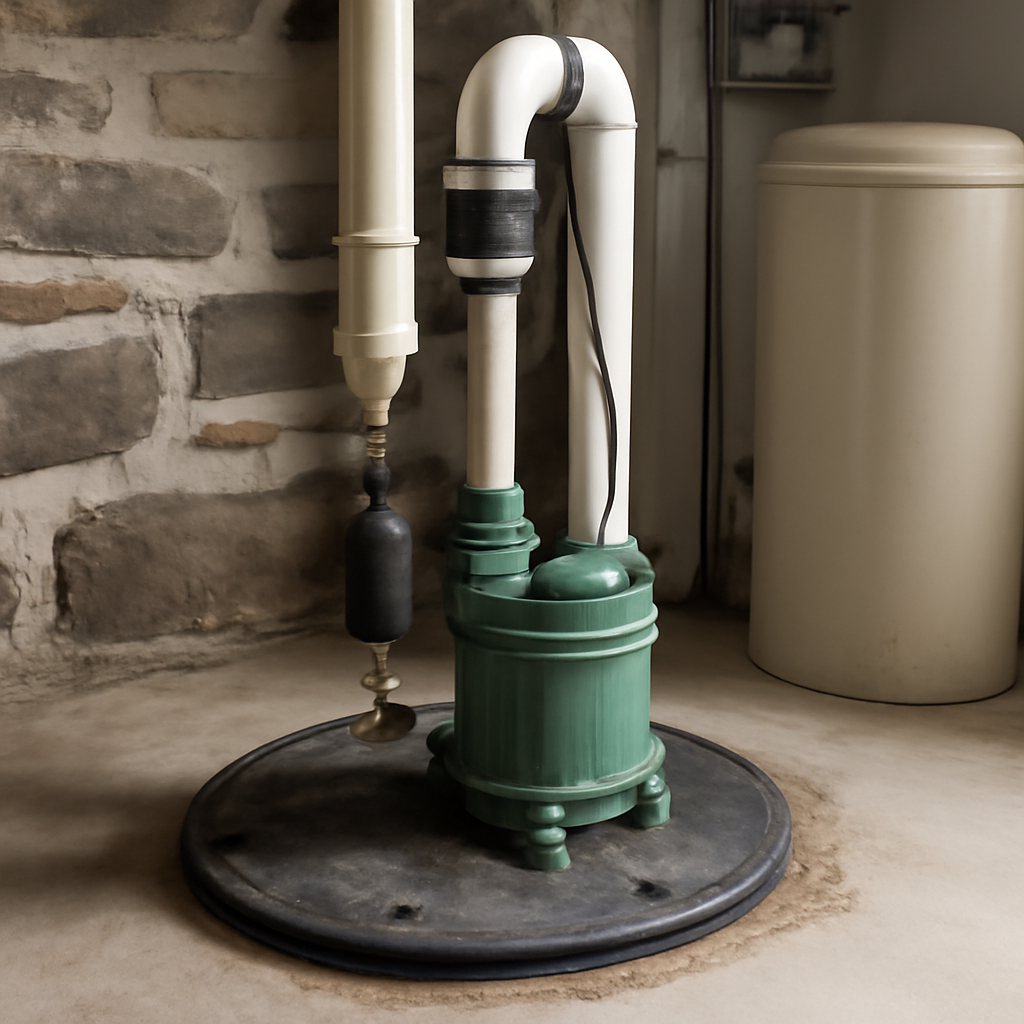
Gravity does most of the work in a home’s drain system. Wastewater flows downhill from sinks, tubs and toilets into the building drain and out to the city sewer or a septic tank. That works until a fixture sits lower than the sewer line leaving the house. A basement bathroom, a wet bar or a laundry room below the main drain has no downhill path, so the wastewater has to be lifted. That is the job of a sewage ejector pump: a pump in a sealed basin that collects drainage from low fixtures and pushes it up to the gravity drain. An ejector pump is a quiet, out-of-sight appliance until it fails, and when it fails the result is raw sewage in a finished basement. This guide covers when an ejector is needed, how the sealed basin and venting work, check valves and alarms, warning signs, how ejectors differ from sump pumps, sewer gas and cleanup safety, and what installation and repairs typically cost on the Front Range.
Part of our Plumbing & Water guide — start there for the full picture →
When a Home Needs an Ejector Pump
An ejector is needed when one or more plumbing fixtures discharge below the level of the building sewer, the pipe that carries waste out through the foundation wall or under the footing. In many Front Range homes, the main drain exits the basement wall several feet above the floor, or runs under the slab too shallow to serve a basement toilet. Common situations include:
- Basement bathrooms: a toilet, shower or sink added during a basement finish, especially when the main drain leaves the house above floor level.
- Basement laundry rooms: washing machines and laundry sinks below the drain line.
- Wet bars and kitchenettes: sinks and dishwashers in basement family rooms or mother-in-law suites.
- Walkout and split-level homes: lower levels below the street sewer connection.
- Homes with a shallow city main: the public sewer itself may be too high for gravity flow from the lower floor.
Planning a basement finish is the most common time homeowners meet the question. Before framing walls, a plumber can determine where the building drain is, how deep it runs, and whether under-slab plumbing can reach it by gravity. If not, an ejector basin is part of the project budget. Our guide to basement finishing cost explains how plumbing for a bathroom fits into the overall estimate.
Some homes use an upflush or macerating toilet system instead, a compact unit behind the toilet that grinds waste and pumps it up through a small pipe. These are generally easier to install but serve fewer fixtures and have their own maintenance needs. A full ejector basin is the more traditional approach for a complete bathroom.
How the Sealed Basin Works
An ejector system consists of a basin, commonly around 18 to 24 inches across and set into the slab, a submersible pump inside it, a float or pressure switch, a discharge pipe running up to the gravity drain, a check valve, a vent pipe and a gasketed lid. Fixture drains slope into the basin through an inlet hub. As wastewater rises, the switch starts the pump, which pushes the contents up the discharge line until the level drops.
Unlike a sump pit, the basin must be sealed. A tight, bolted lid with gaskets around every pipe penetration keeps sewer gas and odors inside the system and keeps people and pets out of the sewage. Cracked lids, missing bolts, open conduit holes and loose grommets are common inspection findings and a common source of basement odors.
Ejector pumps are designed to pass solids. Many residential units are rated to pass solids of roughly 2 inches, which is why they are used for toilets. That is different from a grinder pump, which chops solids before pumping them through a narrow pressure line. Our guide to the grinder pump covers that distinction and where grinders are used.
Planning an Ejector for a Basement Finish
Where the basin goes matters as much as which pump goes in it. A few planning points come up on most projects:
- Location: placing the basin close to the bathroom keeps under-slab drain runs short and well sloped, while leaving room to lift the lid and pull the pump later. Utility rooms and closets with a removable access panel are common choices; a basin buried under finished flooring is not.
- Simplex or duplex: most homes use a single pump. A duplex basin with two pumps and an alternating controller costs more, but provides redundancy for a suite that sees heavy use or a rental unit.
- Pump sizing: the pump must lift wastewater the full vertical distance to the gravity drain and push it through the horizontal run. A plumber sizes the pump from that total head and the number of fixtures.
- Electrical: a dedicated circuit and an outlet suited to the pump and alarm are typical. Local code determines whether GFCI protection is required.
- Noise: pumps and check valves can be heard in a quiet bedroom. Insulated walls around the utility area and a quieter check valve design help.
- Permits: new basins, drains and vents generally require a plumbing permit and inspection. Unpermitted basement bathrooms are a frequent issue when a home is later sold.
Venting Requirements for Ejector Basins
An ejector basin needs a vent. When the pump empties the basin, air must flow in to replace the wastewater; when fixtures drain into it, air must escape. Without a vent, the pump works against a vacuum or pressure, traps can be siphoned, and sewer gas can be forced out through the weakest seal, often the lid or a nearby floor drain. Plumbing codes generally require the basin vent to connect to the home’s vent system or run independently to the outdoors. Our guide to the plumbing vent stack explains how vents protect traps throughout the house.
Homeowners sometimes ask whether an air admittance valve, a one-way valve that lets air into the drain system without a pipe to the roof, can vent the basin. That depends on local code and the basin manufacturer. Air admittance valves let air in but do not let gas out, and a sealed sewage basin needs to release air as it fills, so many codes do not accept an AAV as the only vent on a sewage basin; some products and jurisdictions allow special arrangements. A plumber familiar with local requirements, and the building department, should make that call. Our guide to the air admittance valve covers where these valves are typically used and their limitations.
Check Valves, Shutoffs and Alarms
Three components protect an ejector system and the people using it.
- Check valve: installed on the discharge pipe just above the basin, it prevents pumped sewage from falling back into the basin after the pump shuts off. A failed check valve causes short cycling, as the same wastewater gets pumped repeatedly. Many check valves make an audible clunk when they close; a valve that slams loudly or stays open needs attention.
- Shutoff valve: a full-port ball valve above the check valve allows the pump to be removed without draining the whole discharge line onto the floor. Not every older system has one.
- High-water alarm: a separate float in the basin that triggers a buzzer or light if the level rises too high. It is the best early warning of pump failure. Alarms that run on a separate circuit from the pump, or that have battery backup, keep working when the pump circuit trips.
A union or flexible coupling on the discharge line also makes pump replacement easier. Without one, a plumber may have to cut and rebuild the discharge piping.
Signs an Ejector Pump Is Failing
Ejector pumps rarely fail without warning. The trouble is that the warnings tend to be subtle and happen in rooms nobody uses daily. Common signs include:
- Alarm sounding: the most obvious signal, and one that should never be silenced and ignored.
- Slow drains or gurgling: basement fixtures that drain slowly or gurgle can mean the basin is not emptying.
- Pump runs constantly or cycles rapidly: a stuck float, failed check valve or worn pump.
- Humming without pumping: a jammed impeller, often from wipes, rags or debris.
- Sewer odor near the basin: a broken lid seal, dry floor drain, vent problem or a leak.
- Tripped breaker or GFCI: a pump that keeps tripping its circuit is drawing too much current or has an electrical fault.
- Wet floor around the basin: leaking pipe joints, cracked basin or overflow.
Power outages are a particular concern. An ejector pump does not run without electricity, so wastewater from basement fixtures continues to collect in the basin. During an outage, limiting water use in the basement, and in many homes avoiding use of the laundry and lower bathroom altogether, prevents overflow. Some homes add a generator inlet or battery backup for the ejector.
When the basin overflows, or when the city main backs up into a basement, the result is a sewer backup. Our guide to sewer backup covers causes, backwater valves and what to do immediately. The CDC’s flood-preparedness guidance recommends backflow valves or plugs for drains, toilets and other sewer connections to keep floodwater out.
What Should Not Go Down the Drain
Ejector pumps handle human waste and toilet paper. They do not handle wipes, paper towels, feminine hygiene products, dental floss, grease or kitty litter well. Products labeled flushable can still wrap around impellers and float switches. The EPA’s sanitary sewer overflow FAQ notes that fats, oils and grease, and household products including some marked flushable, such as baby wipes and facial wipes, can create sewer blockages. The same materials cause most ejector jams.
Ejector Pumps Versus Sump Pumps
The two pumps look similar and often sit near each other, but they serve different purposes and should never be interchanged.
- What they pump: a sump pump handles groundwater from foundation drains; an ejector handles wastewater and sewage from plumbing fixtures.
- Basin: sump pits are usually open or loosely covered; ejector basins are sealed and vented.
- Discharge: sump pumps discharge outdoors, away from the foundation; ejector pumps discharge into the sanitary drain.
- Solids: ejectors pass solids; most sump pumps are designed for relatively clear water.
Connecting a sump pump to the sanitary sewer is a common code violation. The EPA identifies sump pumps, roof leaders, foundation drains and area drains as inappropriate connections that can overload a sanitary sewer. Draining a laundry sink or washer into a sump pit is also a problem, since soapy greywater does not belong in groundwater systems. Our guide to sump pump installation covers the groundwater side.
Cleanouts, Access and Maintenance
Ejector systems need routine attention. A typical maintenance plan includes:
- Testing the pump and alarm by running water from basement fixtures and watching a full cycle.
- Checking the lid gasket, bolts and grommets for a tight seal.
- Listening for the check valve closing and watching for short cycling.
- Having a plumber pull and inspect the pump periodically, and clean grease buildup from the basin and floats as needed.
- Keeping the area around the basin clear so the lid can be removed.
A cleanout on the discharge line or the gravity drain above it gives plumbers access if a clog forms beyond the pump. Our guide to the sewer cleanout covers where to find access points and why they matter for camera inspections.
Sewer Gas and Cleanup Safety
Sewage basins can release gases including hydrogen sulfide. OSHA describes hydrogen sulfide, also called sewer gas, as a colorless gas known for its rotten-egg odor at low concentrations, heavier than air and able to collect in low-lying and enclosed spaces such as sewers and manholes. OSHA also notes that at higher concentrations people can lose their sense of smell, so odor is not a reliable warning. In a home, a persistent sewage smell around an ejector basin points to a seal, vent or trap problem that should be fixed, not masked with air fresheners.
Opening an ejector basin and working inside it is a job for a plumber with appropriate gear. Homeowners should keep the lid sealed, avoid leaning over an open basin, and ventilate the area if odors are strong.
If sewage overflows into a basement, safe cleanup matters. The EPA notes that raw sewage carries bacteria, viruses and parasites, and that basements flooded with sewage must be thoroughly cleaned and disinfected, with rugs, curtains, flooring, wallboard and upholstered furniture that contact sewage usually needing replacement. The EPA’s flooded homes cleanup guidance covers protective gear, drying and deciding what to keep. For anything beyond a small, contained spill, a professional water damage and sanitation contractor is often the safest route.
What Ejector Pump Work Typically Costs
Costs vary widely with the pump brand and horsepower, the depth of the basin, access, local permit fees and Front Range labor rates. The ranges below are rough planning estimates, not quotes.
- Pump replacement in an existing basin: commonly several hundred to over a thousand dollars, including the pump and labor.
- New check valve or shutoff: often a modest parts cost plus a service call.
- High-water alarm: generally inexpensive to add.
- New ejector system in a basement finish: often a few thousand dollars or more, since it may involve cutting the slab, setting the basin, running vent and discharge piping, and electrical work.
- Emergency service after an overflow: after-hours rates plus cleanup, which can be the largest expense.
Getting written estimates, confirming who pulls permits, and asking whether the price covers the alarm, check valve and shutoff makes bids easier to compare.
Ejector Pumps in a Home Inspection
The ASHI Standard of Practice lists sewage ejectors among the plumbing components a home inspector inspects. An inspector typically looks at the basin lid and seals, the visible discharge and vent piping, the check valve, and the alarm, and may run basement fixtures to see the pump cycle. Inspectors generally do not open sealed basins. A sewer scope covers the gravity line past the house but does not evaluate the pump. Buyers should ask sellers for the pump’s age and service history. For help planning inspections during a purchase, see our guide to hiring a home inspector and the plumbing and water hub.
References
- ASHI Standard of Practice for Home Inspections — American Society of Home Inspectors
- Hydrogen Sulfide — Occupational Safety and Health Administration
- Sanitary Sewer Overflow (SSO) Frequent Questions — U.S. Environmental Protection Agency
- Flooded Homes Cleanup Guidance — U.S. Environmental Protection Agency
- Preparing for Floods — Centers for Disease Control and Prevention
Frequently asked questions
Do I need an ejector pump for a basement bathroom?
Only if the bathroom fixtures sit below the building drain that carries waste out of the house. If the main drain runs deep enough under the slab, gravity may work. A plumber can confirm the drain depth before the project is planned.
Does a sewage ejector basin need a vent?
Yes. The basin needs air to move in and out as it empties and fills. Codes generally require it to tie into the home's vent system or vent outdoors. Whether an air admittance valve is acceptable depends on local code and the basin manufacturer.
What happens to an ejector pump during a power outage?
It stops running. Wastewater from basement fixtures keeps collecting in the basin, so limiting basement water use during an outage helps prevent overflow. Some homes add battery backup or generator connections.
How long does a sewage ejector pump last?
Service life varies with the pump quality, how often it runs and what goes down the drain. Pumps that jam on wipes or grease often fail sooner. Regular testing and keeping the alarm working help catch problems early.
Can a sump pump be used as an ejector pump?
No. Sump pumps are designed for groundwater and are not built to pass sewage solids, and sump pits are not sealed or vented for sewer gas. Each system needs its own pump and basin.
Buying a home with a basement bathroom and unsure about the pump below the floor? Contact our team and we will help you schedule an inspector who checks the ejector, alarm and venting.