Air Admittance Valve: How AAVs Work and Where They Fail
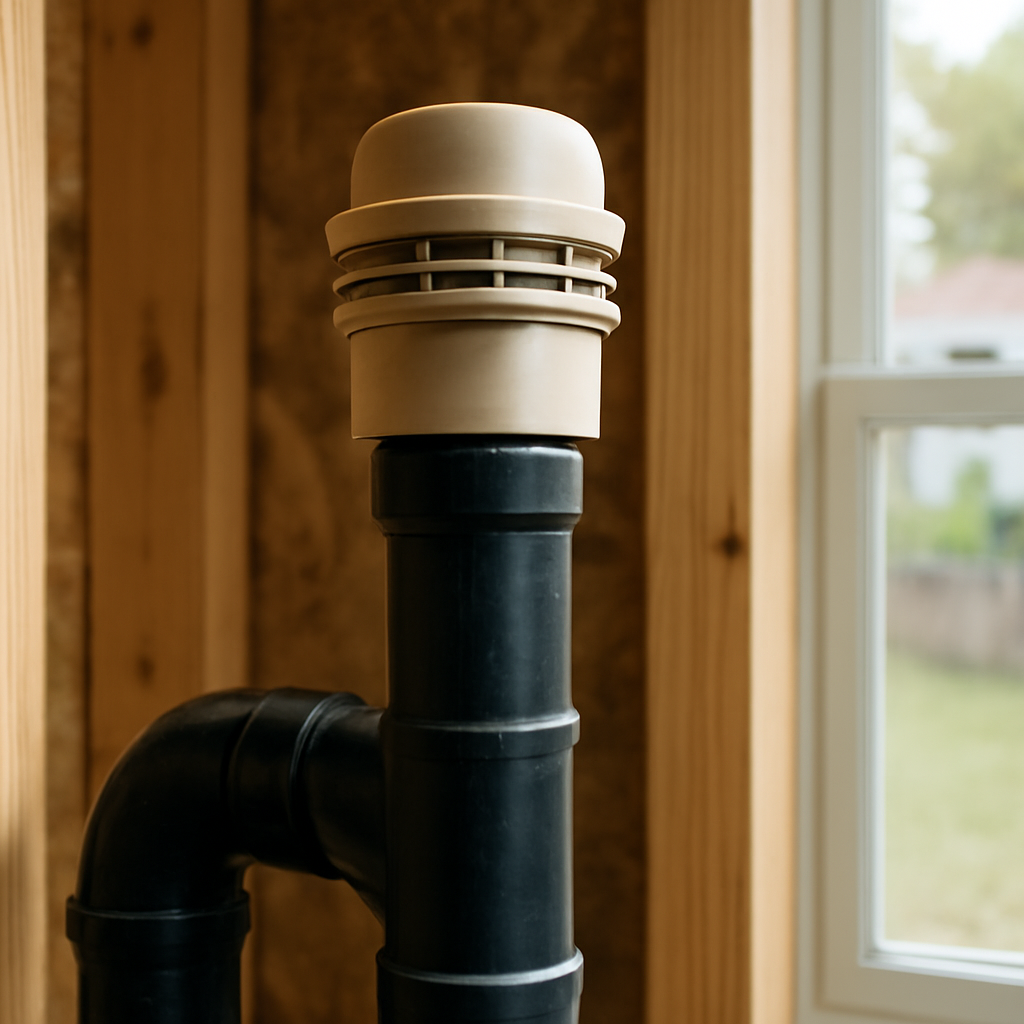
Open the cabinet under a kitchen island or a basement bar sink and there is a decent chance you will find a small plastic cap, usually white or gray, sitting on top of a short vertical pipe above the drain trap. That cap is an air admittance valve, often shortened to AAV and sometimes called by brand names such as Studor. It is a one-way mechanical vent: it opens to let air into the drain system when water rushes through, then closes by gravity so sewer gas cannot escape into the room. Builders and remodelers like AAVs because they can save a long run of vent pipe through walls and roofs. Inspectors and some code officials are more cautious, because a valve with moving parts can stick, and because local rules on where AAVs may be used vary. This guide explains how an AAV works, where it is commonly allowed, how to spot a failing valve, what home inspectors look for, and what replacement or a conventional vent tends to cost for Front Range homeowners.
Part of our Plumbing & Water guide — start there for the full picture →
What an Air Admittance Valve Does
Every drain in a house needs air. When water flows down a drain pipe, it pushes air ahead of it and pulls a partial vacuum behind it. Without a way for fresh air to enter the system, that vacuum can suck the water out of nearby fixture traps. A dry trap is an open path for sewer gas. The traditional solution is a vent pipe that connects to the drain near each trap and runs up through the roof, open to the outdoors. Our guide to the plumbing vent stack explains that system in detail.
An air admittance valve handles the same job locally. Inside the cap is a lightweight diaphragm or seal that rests on a seat. When negative pressure develops in the drain line, the diaphragm lifts and air flows in, equalizing the pressure so the trap seal stays intact. When the flow stops and pressure returns to neutral or turns positive, the diaphragm drops back onto its seat and seals the opening. No air or gas leaves the pipe through the valve under normal conditions.
There are a few important limits to that design:
- AAVs only let air in. They cannot relieve positive pressure, which builds when large volumes of water drop down a stack or when the sewer main surcharges. That is why plumbing codes that allow AAVs still generally require at least one conventional vent that is open to the atmosphere somewhere in the system.
- They are mechanical. The seal can stiffen, warp or collect debris over years of use, and a valve that sticks open or shut stops doing its job.
- They need air around them. A valve buried inside a sealed wall cavity with no air supply cannot draw in air, even if it works perfectly.
Common Places AAVs Show Up
Kitchen islands are the classic location, because there is no wall above the sink for a vent pipe to run through. Other common spots include basement bathrooms and wet bars added after construction, laundry sinks, remodeled kitchens where the sink moved away from the original wall, and bathroom vanities where running a new vent would mean opening finished walls or the roof. Some homes also have a larger stack-type AAV in an attic, installed on top of a vent stack instead of carrying that stack through the roof.
Where AAVs Are Allowed and Where a True Vent Is Needed
Whether an air admittance valve is acceptable depends on the plumbing code your jurisdiction has adopted and any local amendments. Model codes used in many parts of the country permit AAVs in certain situations, provided the valve is a listed product, installed according to the manufacturer’s instructions, and placed at a minimum height relative to the drain it serves. Other codes and some individual cities or counties restrict them more tightly, allow them only for specific fixtures, or limit them to repairs and remodels. Colorado jurisdictions adopt and amend plumbing codes on their own schedules, so the answer can differ between Denver, the suburbs, Colorado Springs and mountain towns.
A few principles tend to hold regardless of jurisdiction:
- The drainage system usually still needs at least one vent that extends to the outdoors, so positive pressure has somewhere to go.
- The valve typically has to sit above the trap weir or the horizontal branch it serves, by an amount stated in the installation instructions.
- The valve has to remain accessible for inspection and replacement. An AAV sealed behind drywall with no access panel is a frequent finding.
- Many installation instructions require the valve to be in a space with adequate air, and some prohibit installing it where it could be exposed to freezing or high heat.
Because the details depend on the adopted code and the specific product, homeowners planning new work should ask the local building department or a licensed plumber before relying on an AAV. For a buyer, the practical question is usually simpler: does the valve that is there now appear to work, is it accessible, and did the work that added it appear to be permitted?
Attic and Stack-Type Valves
Some builders cap a main vent stack in the attic with a large AAV rather than running it through the roof. That approach reduces roof penetrations, but in cold climates it raises questions. Attics on the Front Range can drop well below freezing in winter and climb well above outdoor temperatures in summer. A valve installed there should be rated for those conditions and placed where insulation or stored items will not bury it. If the attic stack-type valve is the only vent for a section of the house, a plumber may want to confirm that a conventional vent exists elsewhere for pressure relief.
Island Sinks
Island sinks present the hardest venting problem in a kitchen. The traditional answer is a loop vent, sometimes called an island fixture vent, that rises as high as possible under the counter, loops back down, and ties into a vent below the floor that eventually connects to an open vent. That arrangement needs careful planning and floor access. An AAV is far simpler, which is why it is so common in island cabinets. When an island sink drains slowly or gurgles, the valve is one of the first things to check, along with the trap and drain line covered in our guide to the kitchen sink drain.
Signs an Air Admittance Valve Is Failing
AAVs fail in two basic ways. A valve can stick closed, so it no longer admits air, or it can stick open or lose its seal, so sewer gas escapes into the cabinet or room. Each failure leaves different clues.
When the Valve Sticks Closed
- Gurgling: water draining from the sink, or from a nearby fixture, makes a glugging sound as air is pulled through the trap instead of through the valve.
- Slow drainage: the drain empties sluggishly even after the trap has been cleaned, because the vacuum behind the water slows the flow.
- Emptied traps: a sink that sits unused for a while, or a trap that is siphoned by a nearby fixture, may lose its water seal and let odors through.
Gurgling and slow drains can also be caused by an ordinary blockage. Our guide to a clogged drain explains how to tell a simple clog from a venting problem. A practical test: if the trap and drain line are clear and the sink still gurgles, remove the AAV temporarily (it usually unscrews by hand) and drain the sink. If the drain suddenly runs freely, the valve was probably not opening. Put it back, or replace it, before walking away, because the open fitting will let sewer gas into the room.
When the Valve Leaks Gas
A valve that does not reseal releases sewer gas whenever there is pressure in the line. The usual clue is a rotten-egg or sewage smell inside the sink cabinet, sometimes strongest just after a toilet is flushed or a bathtub drains elsewhere in the house. Our guide to sewer smell in the house walks through other sources, including dry floor drains, failed wax rings and cracked vent pipes.
Sewer gas is a mixture, and one of its characteristic components is hydrogen sulfide, the source of the rotten-egg odor. The Occupational Safety and Health Administration notes that the odor of hydrogen sulfide is first noticeable to some people at very low concentrations, that prolonged exposure at several parts per million may cause nausea, headaches, eye irritation or loss of sleep, and that at higher concentrations people can lose their sense of smell, a condition called olfactory fatigue. The concentrations OSHA describes as dangerous are associated mainly with industrial settings such as sewers and confined spaces, not with a household sink cabinet. Even so, a persistent sewer odor indoors is worth tracking down rather than masking, and anyone with asthma may be more sensitive, according to OSHA.
Other Clues
- A valve installed below the trap or below the drain line, where it can be wetted by wastewater and fouled.
- A valve that is tilted far from vertical. Most designs rely on gravity to reseat the diaphragm and are intended to be installed upright.
- Stored cleaning products, insulation or dust packed around the valve, blocking air.
What Home Inspectors Look For
The American Society of Home Inspectors Standard of Practice directs inspectors to inspect interior drain, waste and vent systems, including fixtures, and to describe the drain, waste and vent piping materials. The same standard says inspectors are not required to inspect the interiors of vent systems that are not readily accessible. In practice, that means an inspector will look at visible AAVs under sinks and in accessible attics, run water through fixtures, and note symptoms, but will not take apart the valve or the vent system to test them.
Typical AAV-related findings in an inspection report include:
- A valve that is missing, leaving an open pipe or a capped stub where a vent should be.
- A valve concealed inside a wall without an access panel.
- A valve mounted lower than the trap or drain it serves.
- Gurgling or slow drainage at a fixture with an AAV, with a recommendation for evaluation by a plumber.
- A sewer odor at a cabinet that contains a valve.
- An entire bathroom or basement addition that appears to be vented only by AAVs, raising the question of whether the work was permitted.
An inspector usually cannot confirm whether the installation meets the local code in effect at the time of the work. When a report flags an AAV, the usual next step is a licensed plumber who can evaluate the venting and, where needed, check with the local building department. For a broader look at which questions to ask about plumbing during a purchase, see the plumbing and water hub.
Replacing an AAV or Installing a Conventional Vent
Replacing a failed air admittance valve is one of the simpler plumbing repairs. Most residential valves thread onto a female adapter, so the old one unscrews and a new one of the same type and rating screws on. The main things to match are the connection size and the rated drainage capacity, which manufacturers list for individual fixtures, branches or stacks. A valve sized for a single sink should not be used to vent a whole bathroom group.
A few practical points for homeowners and buyers:
- Check the location before replacing. If the old valve was below the trap or buried in a wall, a straight swap does not correct the underlying problem.
- Keep the area clear. Leave space around the valve in a sink cabinet. Avoid stuffing sponges, bags or bottles against it.
- Consider an access panel. If a valve has to live in a wall, a removable grille or panel lets air reach it and allows future replacement.
- Watch for repeat failures. A valve that fails quickly may be overwhelmed by positive pressure from a vent system with no outlet to the outdoors, or fouled by repeated backups. That points to a larger venting or drain problem.
In some cases, a plumber may recommend replacing an AAV with a conventional vent. That can be practical during a remodel when walls or ceilings are already open, or when the local code does not allow an AAV in that location. Running a new vent can mean opening finished surfaces, drilling framing and adding a roof penetration, which needs proper flashing. Our guide to the plumbing vent stack explains how those connections work.
A Note on Drain Care
Some AAV failures start with what goes down the drain. Grease and food solids slow drainage, and repeated partial backups can wet and foul a valve. The Environmental Protection Agency’s septic care guidance tells homeowners to avoid chemical drain openers for a clogged drain, to use boiling water or a drain snake instead, and never to pour cooking oil or grease down the drain. That advice is aimed at protecting septic systems, but the same habits help keep any drain line, and the valve that vents it, working smoothly.
What Air Admittance Valve Repairs Typically Cost
Costs depend on access, the type of valve, local labor rates and whether the job turns into a larger venting correction. The ranges below are broad estimates for general planning, not quotes, and Front Range prices can vary between metro Denver, Colorado Springs, northern Colorado and mountain communities.
- Replacement valve (parts only): a standard under-sink AAV is usually an inexpensive part at a home center or plumbing supplier. Larger stack-rated valves cost more.
- Plumber replacing an accessible valve: often falls within a minimum service-call charge, sometimes combined with clearing the trap.
- Relocating a valve or adding an access panel: several hundred dollars is common once drywall, cabinetry or a new section of pipe is involved.
- Adding a conventional vent or island loop vent: can run from several hundred to a few thousand dollars, depending on how much finish material must be opened and whether a roof penetration is required.
Permits may be required for venting changes, and permit fees vary by jurisdiction. Getting more than one estimate, and asking each plumber to explain whether the existing AAV is acceptable under the local code, helps sort out cosmetic swaps from real corrections.
Air Admittance Valves in a Home Purchase
For buyers touring a home, a quick check of sink cabinets tells a lot. Look for the valve above the trap, smell for sewer odor, and run the faucet for a minute while listening for gurgling. Note island sinks, basement bathrooms and wet bars, since those are where AAVs and unpermitted plumbing additions tend to show up. If a basement bathroom appears to have been added after the original construction, it is reasonable to ask the seller whether permits were pulled.
An AAV is not a defect on its own. Many homes use them without trouble, and a properly installed, accessible valve is a legitimate part of many plumbing systems. The concerns are a valve that has failed, one that cannot be reached, or a system that relies on valves alone without any open vent to the outdoors. For guidance on choosing an inspector and reading a report, see our guide to hiring a home inspector.
References
- Hydrogen Sulfide: Hazards — Occupational Safety and Health Administration
- ASHI Standard of Practice for Home Inspections — American Society of Home Inspectors
- How to Care for Your Septic System — U.S. Environmental Protection Agency
Frequently asked questions
What does an air admittance valve do?
An air admittance valve is a one-way vent installed above a drain trap. It opens to let air into the drain line when water flows, which protects the trap seal, then closes to keep sewer gas from escaping into the room.
Are air admittance valves allowed by code?
Many plumbing codes allow listed AAVs in certain locations, but rules vary by jurisdiction and local amendments. Most systems still need at least one vent open to the outdoors. Check with the local building department or a licensed plumber before relying on one.
How do I know if my air admittance valve is bad?
Common signs are gurgling, slow drainage after the trap has been cleaned, and a sewer smell inside the sink cabinet. A valve stuck closed causes drainage symptoms, while one that does not reseal lets odor escape.
Can an air admittance valve be installed inside a wall?
Installation instructions and many codes require the valve to stay accessible and to have an air supply. A valve hidden behind drywall usually needs an access panel or grille so it can breathe and be replaced.
How long does an air admittance valve last?
Service life varies with the product, temperature, and how often the drain backs up. Because the valve has a moving seal, it can wear out, so any valve that causes gurgling or odor should be replaced rather than assumed to be permanent.
Hearing gurgles from an island sink or smelling sewer gas in a cabinet during a showing? Send us a note and we can help you find an inspector who checks drains, traps and vents before you close.