Shower Valves: Pressure-Balance, Thermostatic and Diverters

Behind every shower handle is a valve body buried in the wall, and that hidden part decides whether the water stays at a steady, safe temperature when someone flushes a toilet down the hall. The shower valve also controls flow, sends water to the showerhead or tub spout, and holds the cartridge that wears out over time. Because it sits behind tile, most homeowners never think about it until the handle gets stiff, the temperature swings, a drip will not stop or a remodel exposes an old valve with no scald protection at all. This guide explains the main valve types, how anti-scald protection works, what cartridges and diverters do, why access panels matter, what replacing a valve behind finished tile involves and what the work typically costs.
Part of our Plumbing & Water guide — start there for the full picture →
Planning a bathroom or kitchen remodel? Talk to a local remodeler.
📞 Call (844) 791-3031What a Shower Valve Does
A shower valve is the plumbing fitting that receives the hot and cold supply lines, mixes them to the temperature the user selects and sends the mixed water to the showerhead, the tub spout or both. The visible handle, escutcheon plate and spout are the trim. The valve body, usually brass, is mounted to framing inside the wall, and a replaceable cartridge or stem assembly inside it does the actual mixing and shutoff.
Valve designs fall into a few families:
- Single-handle valves that control temperature, and often volume, with one lever or knob. Most modern pressure-balance valves are this type.
- Two- and three-handle valves, common in older homes, with separate hot and cold handles and sometimes a center diverter handle. Many older multi-handle valves have no scald protection.
- Thermostatic valves, often with separate temperature and volume controls, found in higher-end bathrooms and multi-outlet showers.
The trim and the valve body are typically matched by brand and series. A new handle from a different manufacturer usually will not fit an existing valve, which is why replacing just the trim is easy but changing brands generally means replacing the valve body inside the wall.
Pressure-Balance vs Thermostatic Shower Valves
Most plumbing codes now call for showers and tub-shower combinations to have valves that limit sudden temperature changes, either pressure-balance, thermostatic or a combination design. The two approaches solve the same problem in different ways.
Pressure-balance valves
A pressure-balance valve contains a spool or diaphragm that senses the pressure of the incoming hot and cold supplies. When someone flushes a toilet and cold-water pressure drops, the spool shifts to reduce the hot side proportionally, so the mix stays close to the selected temperature. When hot pressure drops, it does the reverse. If one supply fails entirely, the valve typically reduces flow sharply rather than delivering pure hot water.
Pressure-balance valves are relatively inexpensive, reliable and widely available. Their limitation is that they respond to pressure, not temperature. If the water heater’s output temperature changes, or incoming cold water is much warmer in summer than in winter, the shower temperature changes with it. Most also control temperature and volume with a single movement, so turning the handle for less flow also changes the temperature.
Thermostatic valves
A thermostatic valve uses a temperature-sensing element, often a wax or bimetal element, to adjust the hot and cold mix continuously to hold a set outlet temperature. It responds to both pressure and temperature changes. Many thermostatic valves allow separate control of temperature and volume, so occupants can set a preferred temperature and leave it, and they often support multiple outlets such as a rain head, handheld and body sprays.
Thermostatic valves cost more, and their cartridges are more complex. They can be more sensitive to hard water and debris, which matters along parts of the Front Range where water hardness varies by supply. Inlet screens and check stops on many models need periodic cleaning.
Which is better?
For a standard shower or tub-shower, a pressure-balance valve is the common, code-compliant choice. Thermostatic valves make sense for multi-outlet showers, households with young children or older adults who want tighter temperature control, or homes with unstable water heater output. The choice should match the fixtures, water quality and budget rather than default to the most expensive option.
Best Shower Valves: our top 3 picks
| Product | Best for | Key features | Price | Buy |
|---|---|---|---|---|
| Moen 2510 M-Pact Posi-Temp | Pressure-balance rough-in valve |
| $89.96as of Nov 19, 2026 10:59 pm GMT+0000 | Buy now →Check current price |
| Delta R10000 MultiChoice | Universal body, thermostatic upgrade |
| $52.90as of Nov 19, 2026 10:59 pm GMT+0000 | Buy now →Check current price |
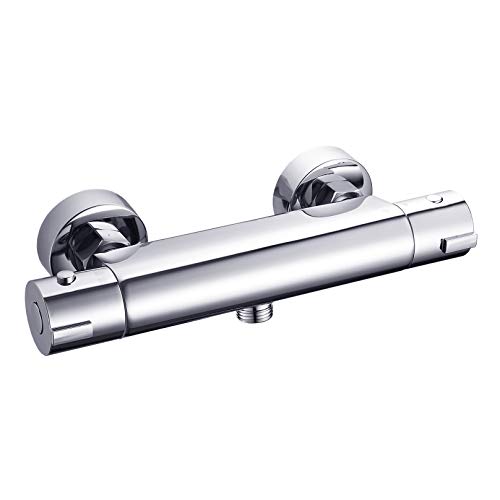
| MISSMIN Thermostatic Mixer | Exposed thermostatic, clawfoot tub |
| $69.99as of Nov 19, 2026 10:59 pm GMT+0000 | Buy now →Check current price |


Prices are Amazon’s listed prices as of the time shown and change often; check Amazon for today’s price. As an Amazon Associate we earn from qualifying purchases.
Scald Protection and Water Heater Temperature
Scald protection is the main reason modern valve requirements exist. According to the U.S. Consumer Product Safety Commission’s publication on avoiding tap water scalds, most adults will suffer third-degree burns if exposed to 150-degree water for two seconds, with burns also occurring after six seconds at 140 degrees or thirty seconds at 130 degrees. CPSC adds that even at 120 degrees, a five-minute exposure could result in third-degree burns. The agency notes that the majority of tap water scald injuries and deaths involve the elderly and children under age five.
CPSC urges users to lower water heaters to 120 degrees Fahrenheit and notes that a thermostat setting of 120 degrees may be necessary to reduce or eliminate the risk of most tap water scald injuries. It also notes that lowering the temperature conserves energy and saves money, and it recommends always hand-testing water before bathing infants and young children.
Shower valves add a second layer of protection. Most pressure-balance valves include an adjustable rotational limit stop, often a plastic ring or tab under the handle, that caps how far the handle turns toward hot. Installers set it at installation, but many are never adjusted, and some are set at the maximum. Thermostatic valves typically include a safety stop that requires pressing a button to go above a preset temperature.
A few practical points:
- The limit stop should be checked after a water heater replacement or temperature change, since the right handle position changes with supply temperature.
- A pressure-balance valve does not protect against a water heater set too hot; it only limits swings from pressure changes.
- Tankless and point-of-use water heaters can interact with low-flow showerheads and thermostatic valves in ways that cause fluctuations if the heater’s minimum flow rate is not met, so equipment compatibility is worth checking.
Cartridges, Diverters and Showerhead Flow
Cartridges
Most single-handle valves use a removable cartridge that contains the mixing mechanism and, in pressure-balance designs, the balancing spool. Over time, mineral deposits and worn seals cause stiff handles, drips from the showerhead after shutoff, reduced flow or poor temperature control. Replacing the cartridge, matched to the valve brand and model, usually restores normal operation without opening the wall. Shutoff of the water supply is required, and some valves include integral service stops that let the shower be isolated without turning off the whole house. Older multi-handle valves use stems with washers or seats that can be replaced in a similar way.
Diverters
A diverter sends water to a different outlet. In a tub-shower, the most common type is a lift-gate diverter built into the tub spout, which redirects flow up to the showerhead. Other systems use a diverter handle on the valve itself, or a separate two-way or three-way diverter or transfer valve for showers with a handheld, rain head or body sprays. Worn diverters let water leak from the tub spout while the shower runs. A spout diverter is usually fixed by replacing the spout; a valve-mounted diverter may need a new cartridge or stem. Tub drains are the other common tub-shower complaint, covered in the tub drain stopper guide.
Showerhead flow
EPA’s WaterSense program notes that standard showerheads use 2.5 gallons per minute, while WaterSense labeled showerheads must use no more than 2.0 gallons per minute and are tested for spray force, spray coverage and pressure compensation, meaning a minimum flow across a range of household water pressures. EPA estimates that the average family could save 2,700 gallons per year with WaterSense showerheads. Some older valves were designed around higher flow rates, so a very low-flow head paired with an older valve occasionally produces temperature complaints; the valve manufacturer’s guidance is the best reference.
Access Panels and Replacing a Valve Behind Tile
Some homes have an access panel on the back side of the shower wall, often in a closet or adjacent bedroom, that exposes the valve body and supply connections. When present, it makes valve replacement, leak checks and supply repairs far simpler. When absent, any work on the valve body means opening tile or drywall.
Options for replacing a valve in a finished tile wall include:
- Working from the back. If the back of the wall is drywall in a closet or bedroom, a plumber can cut an opening there, replace the valve and add a removable access panel. This preserves the tile.
- Oversized trim or cover plates. Some manufacturers offer remodel or retrofit plates large enough to cover a modest tile cut around the valve. A plumber can open a tile area slightly smaller than the plate, replace the valve and cover the opening.
- Retrofit valves. Certain valves are designed to fit openings left by older valves, limiting the demolition needed.
- Partial or full tile replacement. When the tile is old, damaged or the wall has hidden water damage, re-tiling or switching to shower wall panels may be the practical route.
Opening the wall often reveals more than the valve. Leaks at old valve connections can wet framing and insulation over years. EPA’s mold and moisture guidance advises fixing plumbing leaks as soon as possible and notes that hidden mold can grow inside walls around leaking or condensing pipes. Any wet or moldy material found during a valve replacement should be dried or replaced before the wall is closed.
Permits
Swapping a cartridge or trim is generally treated as a repair. Replacing a valve body, changing valve types or moving supply lines is often considered plumbing work that requires a permit in many Colorado jurisdictions, and some require a licensed plumber. Rules vary by city and county, so checking with the local building department before starting avoids problems at resale.
Troubleshooting Common Shower Valve Problems
Many shower complaints point to the valve, but not all of them. Sorting symptoms first can save a wall from being opened unnecessarily.
- Temperature swings when another fixture runs. On a pressure-balance valve, a worn or mineral-bound balancing spool is a common cause, and a new cartridge usually helps. On an older two-handle valve with no balancing feature, swings are normal behavior for that design and only a valve upgrade solves them.
- Not enough hot water, or water never gets hot. A limit stop set too low, a cartridge installed with hot and cold reversed, a failing water heater or a crossed supply connection elsewhere in the house can all cause this. Checking the water heater and limit stop comes before replacing parts.
- Low flow at the shower only. A clogged showerhead or flow restrictor is the simplest explanation. Debris in the cartridge, clogged inlet screens on a thermostatic valve or partly closed integral stops are next. Low flow throughout the house points to supply pressure instead.
- A handle that is hard to turn. Mineral buildup on the cartridge is typical in hard-water areas. Silicone grease approved for plumbing can help temporarily, but replacement is the lasting fix.
- Water on the floor outside the shower or stains on the ceiling below. This can come from the valve or its supply connections, but it can just as easily come from a failed grout line, an unsealed escutcheon, a leaking shower pan or a drain. A plumber or leak specialist can narrow it down before demolition.
Upgrading Valves in Older Front Range Homes
Homes built before scald-protection requirements became standard often still have their original two- or three-handle shower valves. These valves may work perfectly well as plumbing, but they offer no protection against a sudden burst of hot water when cold-water pressure drops. In houses with young children or older adults, upgrading to a pressure-balance or thermostatic valve is a common safety improvement, often scheduled alongside a bathroom remodel when the tile is coming off anyway.
Older homes also tend to have galvanized steel supply piping, which narrows with internal corrosion and can starve a new valve of flow. When a plumber opens the wall, replacing the branch piping serving the shower is often worth considering at the same time. Until a valve upgrade is possible, a correctly set water heater remains the most important scald safeguard.
What Inspectors Check and What Shower Valve Work Costs
Under the ASHI Standard of Practice, inspectors inspect interior water supply and distribution systems, including fixtures and faucets, and interior drain, waste and vent systems, along with water heating equipment. The standard specifically states that inspectors are not required to fill shower pans and fixtures to test for leaks. Inspectors typically run each shower, note poor flow, leaks at the spout or head, a loose or damaged handle, a diverter that leaks, and visible damage around the valve escutcheon. Many also note older multi-handle valves that appear to lack anti-scald protection and measure hot water temperature at a fixture. Gaps around the escutcheon plate should be sealed so shower spray does not enter the wall.
As general 2026 ranges, to be confirmed with local quotes:
- Replacement cartridge: commonly around $20 to $100 depending on brand and type; thermostatic cartridges usually cost more.
- Plumber to replace a cartridge or adjust a limit stop: often a service-call charge in the low hundreds of dollars.
- Valve body replacement with back-wall access: frequently several hundred dollars to around $1,000, plus the valve.
- Valve replacement through finished tile: can rise well beyond that once tile repair, a remodel plate or re-tiling is included.
- Thermostatic multi-outlet systems: considerably more, often as part of a bathroom remodel.
Buyers who find temperature swings, a valve that cannot be shut off fully or signs of moisture around a shower can ask for a plumber’s evaluation before closing. The plumbing and water inspection hub covers related questions, the toilet wax ring guide covers the other common bathroom leak source, and the home inspector hiring guide explains how to choose an inspector.
More Questions About Shower Valves
Do you have to replace the shower valve to change the handle?
Often yes, a shower handle usually has to match the brand and model of the valve behind the wall, so changing to a different style of handle can mean replacing the valve itself. Many manufacturers sell trim kits that fit their own valve bodies, which lets the look change without opening the wall. A plumber should identify the valve brand and model before ordering parts. When the original valve is discontinued or a new brand is wanted, replacement requires wall access and often a permit.
Is a volume control the same as a pressure-balance valve?
No, a volume control and a pressure-balance valve are different parts. A pressure-balance valve keeps the hot and cold mix steady when water pressure changes, such as when a toilet flushes, which protects against scalding. A volume control simply adjusts how much water flows, usually as a separate handle in thermostatic systems, where one control sets temperature and another sets flow. Many single-handle pressure-balance valves control temperature only, with flow fixed at full once turned on.
Does a shower need a diverter valve?
A shower needs a diverter valve only when one valve feeds two or more outlets, such as a tub spout and a showerhead, or a showerhead plus a handheld or body sprays. A stand-alone shower with a single showerhead does not need one. Diverters can be built into the tub spout, into the trim as a separate handle or button, or into a multi-port valve. A diverter that leaks water from the tub spout while the shower runs usually needs a new spout or cartridge.
Does it matter what valve kit you buy when replacing all three shower valves?
Yes, it matters, because older three-handle showers use separate hot, cold and diverter valves, and replacement stems must match the existing valve body’s brand and thread. Many plumbers recommend replacing a three-handle setup with a single pressure-balance or thermostatic valve instead, which adds scald protection that old three-valve systems lack. That upgrade requires opening the wall and usually a permit. Bring the old stems to a supply house to find matching parts when only rebuilding is planned.
References
- Avoiding Tap Water Scalds (Publication 5098) — U.S. Consumer Product Safety Commission
- Showerheads — U.S. EPA WaterSense
- A Brief Guide to Mold, Moisture and Your Home — U.S. Environmental Protection Agency
- ASHI Standard of Practice for Home Inspections — American Society of Home Inspectors
Frequently asked questions
What is the difference between a pressure-balance and a thermostatic shower valve?
A pressure-balance valve senses hot and cold supply pressure and adjusts to keep the mix stable when pressure changes, such as a toilet flush. A thermostatic valve senses temperature and holds a set outlet temperature, usually with separate volume control, but costs more.
What temperature should a water heater be set to prevent scalds?
The Consumer Product Safety Commission urges lowering water heaters to 120 degrees Fahrenheit and says that setting may be necessary to reduce or eliminate most tap water scald injuries. Always hand-test bath water for young children.
Can a shower valve be replaced without removing tile?
Often, yes. A plumber can work from the back of the wall if it is accessible drywall, or use a retrofit valve or an oversized remodel plate that covers a small tile opening. Damaged walls may still need re-tiling.
Why does my shower drip after it is turned off?
A worn cartridge, stem washer or seat is the most common cause. Replacing the cartridge with one matched to the valve brand and model usually fixes it without opening the wall.
Do I need a permit to replace a shower valve?
Replacing a cartridge or trim is generally a repair. Replacing the valve body or changing supply piping often requires a permit in many Colorado jurisdictions. Check with the local building department.
Do shower pressure-balance spools stop water if there is no hot water?
Many pressure-balance shower valves reduce or nearly stop flow if hot water pressure drops to zero, which keeps the shower from going suddenly cold or scalding. Some keep a small trickle. If the shower barely runs, check whether the water heater is working before replacing the cartridge.
How long does a shower valve last?
A shower valve body often lasts 20 years or more, while cartridges and washers typically need replacement every 5 to 15 years, depending on water hardness and use. Signs of a worn cartridge include dripping, stiff handles and trouble holding a steady temperature.
How much does it cost to replace a shower cartridge?
Replacing a shower cartridge typically costs about $20 to $100 for the part, and about $150 to $350 with a plumber, by industry estimates. Thermostatic cartridges and premium brands cost more. Replacing the whole valve behind tile costs much more because of wall access and repair.
Want a second look at the plumbing in a Front Range home before you commit? Get in touch here to be matched with a qualified local inspector.