Kitchen Sink Drain: Clogs, Leaks, Traps and Dishwasher Hookups
The kitchen sink drain works harder than almost any other drain in a house. It carries dishwater loaded with grease and food particles, takes the discharge from a dishwasher several times a week, and often feeds a garbage disposal that grinds scraps into a slurry. All of that flows through a few feet of pipe tucked into a sink cabinet that also stores cleaning supplies, trash bags and sometimes a water filter. When the assembly is laid out well and kept clear of grease, it can run for decades with little attention. When it is not, the problems show up as slow drainage, gurgling, sour odors, a damp cabinet floor or water backing up into one bowl when the other drains. This guide walks through how a kitchen sink drain is put together, how disposals and dishwashers tie into it, why clogs form, how to tell a simple clog from a venting problem, what home inspectors commonly note, how to handle leaks and smells, and what repairs tend to cost for Front Range homeowners.
Part of our Plumbing & Water guide — start there for the full picture →
How a Kitchen Sink Drain Is Laid Out
Under most kitchen sinks, the drain is made up of a short chain of parts that connect the sink basket to the drain line in the wall:
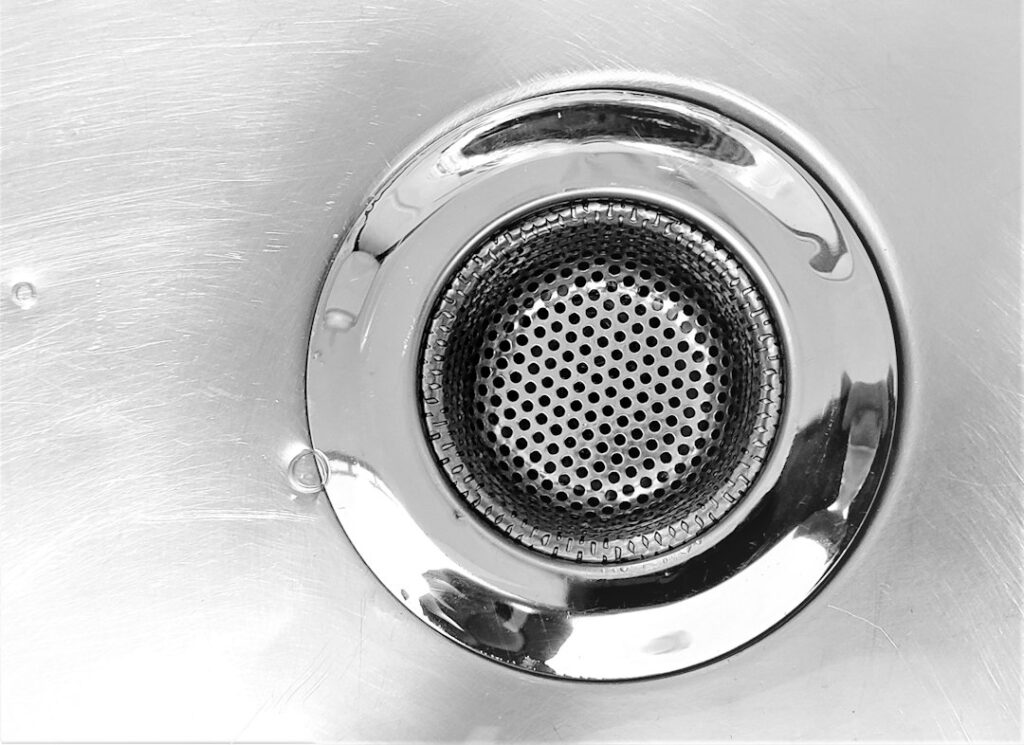
- Basket strainer: the metal fitting set into the sink bowl, sealed with plumber’s putty or a gasket and held from below by a large locknut. It catches food and lets water pass.
- Tailpiece: a short vertical pipe that drops from the strainer. Some tailpieces include a side inlet for the dishwasher hose.
- Continuous waste or baffle tee: on double-bowl sinks, a horizontal pipe that joins the two tailpieces so both bowls share one trap.
- P-trap: the U-shaped bend that stays full of water. That standing water is the seal that keeps sewer gas out of the kitchen.
- Trap arm: the horizontal section that runs from the trap into the wall, where it connects to the drain line through a fitting that is usually tied to the vent system.
Most of these pieces are joined with slip nuts and tapered washers, which makes them easy to take apart for cleaning but also means each joint is a potential leak point. Older homes may have chrome-plated brass traps that corrode from the inside, while newer homes usually have white or black plastic. The pipe inside the wall in many Front Range houses built from the 1970s on is plastic, often black ABS; our guide to ABS pipe covers how that material ages and what to look for. Older homes may still have galvanized steel or cast iron behind the cabinet, which can narrow with buildup over time.
Why the Trap Matters
The trap is the single most important safety feature of the drain. Without it, there is an open path from the kitchen to the sewer or septic system. A trap that has been removed, cut out, or replaced with a straight run of pipe is a defect even if the sink drains quickly. Traps also catch dropped rings and utensils, which is one reason the removable slip-joint design has lasted so long.
Garbage Disposal and Dishwasher Connections
A disposal mounts directly to the bottom of the sink in place of the basket strainer. Its outlet pipe then connects to the trap. Because the disposal sits lower than a basket strainer would, the trap often has to be lowered as well, and that sometimes leaves the trap arm sloping slightly uphill toward the wall. An uphill trap arm holds standing water and debris, which can lead to repeated clogs. Our guide to garbage disposal installation covers mounting, outlet height and electrical connections in more detail.
The dishwasher usually drains through a hose that connects either to a side inlet on the disposal or to a branch tailpiece on the sink drain. Two details matter here:
- Backflow protection: the hose should rise in a high loop up to the underside of the countertop, or pass through an air gap fitting mounted on the sink deck, depending on what local rules and the manufacturer require. Either arrangement helps keep dirty sink water from flowing back into the dishwasher.
- The knockout plug: new disposals ship with a plug sealing the dishwasher inlet. If the plug is not knocked out when a dishwasher is connected, the dishwasher cannot drain at all. This is a common mistake after a disposal is replaced.
Our guide to dishwasher installation explains hose routing, the high loop and the air gap, while the guide to a dishwasher not draining covers what to check when water stays in the bottom of the tub.
Why Kitchen Sink Drains Clog
Grease is the main culprit. Fats and oils from cooking go down the drain warm and liquid, then cool and cling to the inside of the trap and drain pipe. Over months, the coating thickens and catches food particles, coffee grounds and soap residue until water barely gets through. Hot water and dish soap move the grease along a few feet but do not eliminate it; it often solidifies further down the line.
The U.S. Environmental Protection Agency’s guidance on caring for a septic system tells homeowners to never pour cooking oil or grease down the drain, and to eliminate or limit the use of a garbage disposal to reduce the fats, grease and solids that enter the septic tank. That guidance is written for septic owners, but the same habits protect the household drain lines in homes on city sewer. Practical habits include:
- Wiping greasy pans with a paper towel before washing them.
- Pouring cooled grease into a can or jar and putting it in the trash.
- Scraping plates into the trash or compost rather than the sink.
- Keeping coffee grounds, eggshells, rice and fibrous peels out of the disposal.
- Running plenty of cold water while the disposal grinds and for a short time afterward.
Clearing a Clog Mechanically
Most kitchen clogs sit in the trap or within a few feet of the wall. A plunger can clear them if the other bowl is sealed off with a stopper or wet rag; on a double bowl, plunging one side without sealing the other just pushes water up the second drain. If plunging fails, removing the trap over a bucket and cleaning it out often solves the problem. A hand auger fed into the trap arm can reach clogs farther into the wall. Our guide to a clogged drain covers when a kitchen clog is really a symptom of a blockage in a branch line or the main sewer.
The same EPA septic guidance recommends avoiding chemical drain openers for a clogged drain and using boiling water or a drain snake instead. With plastic drain pipe, very hot water is generally fine for a short flush, but very large volumes of boiling water poured repeatedly into a plastic trap may soften slip joints, so a snake is usually the better tool for a stubborn clog.
Never Mix Drain Chemicals
When a sink is backed up, it is tempting to pour in one product, wait, and then try another. That is where accidents happen. The EPA’s brief guide to mold, moisture and your home warns never to mix chlorine bleach solution with other cleaning solutions or detergents that contain ammonia because toxic fumes could be produced. Many drain openers are strongly caustic or acidic, and two different products sitting together in a trap full of standing water can react, splash or release fumes.
Sensible precautions:
- Try a plunger, trap cleaning or a hand auger before any chemical.
- If a chemical is used, use only one product and follow the label exactly.
- Do not plunge a sink that has caustic product standing in it; splashback can injure eyes and skin.
- Ventilate the kitchen and wear gloves and eye protection.
- Tell a plumber exactly what has already been poured into the drain before work begins.
Slow Drains Versus Vent Problems
Not every slow kitchen drain is a clog. A drain needs air behind the water to flow smoothly. That air comes from the vent system, the network of pipes that runs up through the roof or, in some installations, from a mechanical air admittance valve under the sink. When venting is missing, blocked or undersized, the symptoms can look a lot like a partial clog:
- Gurgling or glugging sounds as the sink drains.
- Water draining fine at first, then slowing as the bowl empties.
- The trap being siphoned dry, which allows sewer odor into the kitchen.
- Bubbles rising back into the sink, or another fixture gurgling when the kitchen sink drains.
Kitchen sinks on island cabinets are especially prone to venting challenges because there is no wall to run a vent pipe up. These setups may use a loop vent, a specially designed island fixture vent or an air admittance valve, depending on what local plumbing rules allow. An air admittance valve is a one-way valve that lets air in but keeps sewer gas from escaping. They can fail over time, and a failed valve may cause slow drainage or odors.
In winter, a roof vent can occasionally frost over in very cold conditions, which may cause temporary gurgling in fixtures on that vent. If the problem disappears when the weather warms, frost was a likely cause.
S-Traps and Missing Vents as Inspection Findings
An S-trap is a trap that turns downward into the floor instead of continuing horizontally into the wall. Because the water drops away through a vertical pipe, an S-trap can siphon itself dry, leaving no water seal. Many current plumbing codes do not allow new S-traps, and home inspectors commonly note them, particularly in older homes or where a previous owner installed a sink without access to a wall drain. Similarly, a drain with no apparent vent, or a vent that has been capped off during a remodel, may be flagged. These notes are usually recommendations for evaluation by a licensed plumber, since only a plumber can confirm what is behind the wall and what correction is practical. The fix can range from simple rerouting under the cabinet to opening a wall to add a proper vent.
Leaks at Slip Joints and the Basket Strainer
A wet cabinet floor is the most common sign of a kitchen sink drain leak. Typical sources include:
- Slip nuts: the tapered washer inside each nut can shift, harden or crack, especially after the trap has been removed and reassembled.
- Basket strainer: the putty or gasket under the strainer can fail, letting water seep out around the locknut whenever the bowl is filled.
- Disposal flange and outlet: a disposal that has loosened on its mounting ring can leak from the top, while worn gaskets can leak at the outlet pipe or the dishwasher inlet.
- Corroded metal: older chrome-plated traps can rust from the inside and develop pinholes.
- Supply lines and faucet: some apparent drain leaks are really dripping supply connections or a faucet body leak running down onto the drain.
A simple test helps isolate the source. Dry everything under the sink, lay paper towels on the cabinet floor, then fill one bowl, let it sit, and drain it while watching the joints. Leaks that appear only while the sink is full point to the strainer; leaks that appear only while draining point to the slip joints, the disposal or the trap. Our guide to a leak under the kitchen sink walks through the full process, and the guide to a kitchen faucet leaking covers faucet-side sources.
Small drips matter more than they seem. EPA’s Fix a Leak Week page notes that a faucet dripping at one drip per second can waste more than 3,000 gallons a year. Drain leaks do not waste water in the same way, but they soak the cabinet floor. The EPA’s mold guidance says to dry water-damaged areas and items within 24 to 48 hours to prevent mold growth, so a swollen or stained cabinet base should be dried promptly and checked for soft particleboard.
Odors From the Kitchen Sink
A smelly kitchen sink usually falls into one of three categories:
- Food and grease buildup: residue in the disposal, the underside of the splash guard, and the trap can produce a rotten smell even when the drain flows well. Cleaning the splash guard and flushing the trap often helps.
- A dry or siphoned trap: if a sink is rarely used, or if venting is poor, the trap water can disappear and let sewer gas through.
- Sewer-side issues: a cracked drain line, failed vent connection or problem in the main line can produce sewer odors that seem to come from the sink but originate elsewhere.
The dishwasher can also be a hidden source if dirty water sits in its drain hose because the high loop or air gap is missing. Our guide to a sewer smell in the house explains how to trace odors that do not go away after cleaning.
What a Home Inspector Looks At
The American Society of Home Inspectors (ASHI) Standard of Practice calls for inspectors to inspect interior drain, waste and vent systems, including fixtures, and to describe the drain, waste and vent piping materials. Under its interior section, the standard also calls for inspecting installed dishwashing machines and food waste grinders by using normal operating controls to activate their primary function. In practice, at the kitchen sink an inspector commonly:
- Runs water in each bowl and watches for slow drainage, gurgling or backup into the other bowl.
- Looks under the cabinet for active drips, stains, swollen cabinet floors and corrosion.
- Notes trap configuration, such as S-traps, missing traps or improvised connections.
- Checks for a dishwasher high loop or air gap where visible.
- Operates the disposal and dishwasher through a normal cycle where practical.
Inspectors typically do not take drains apart, run cameras through the lines or determine whether venting meets current code in walls they cannot see. A sewer scope of the main line is often a separate service. If a report mentions repeated slow drains in several fixtures, buyers may want a plumber’s evaluation before closing.
Kitchen Sink Drain Repair Costs
Costs vary with access, materials and whether the problem is in the cabinet or inside the wall. These are rough planning figures, not quotes:
- Clearing a clog: often under a few hundred dollars for a basic plumber visit; clearing a branch line or the main sewer usually costs more.
- Replacing a P-trap or slip-joint assembly: parts are commonly inexpensive; a plumber visit for the job is often a modest service charge.
- Resetting a basket strainer: commonly a small job, though a corroded locknut can add time.
- Replacing a garbage disposal: commonly several hundred dollars installed, depending on the unit; our guide to garbage disposal repair covers when a repair makes more sense.
- Correcting an S-trap or adding a vent: can range from a few hundred dollars for a simple reroute to well over a thousand if walls must be opened.
- Cabinet floor repair after a long leak: adds carpentry and finish costs, and possibly mold cleanup if materials stayed wet.
Prices along the Front Range can vary between metro Denver, Colorado Springs and mountain communities, and emergency or after-hours calls usually cost more. For a larger kitchen remodel, our guide to undermount sink installation describes how sink style affects the drain.
Kitchen Drains in a Front Range Home Purchase
During a showing, a buyer can learn a lot by opening the sink cabinet. Water stains, a warped cabinet floor, buckets or towels, and a strong odor are all clues. Running the faucet in both bowls for a minute shows whether the kitchen sink drain keeps up. For help choosing an inspector and knowing which plumbing questions to ask, see our guide to hiring a home inspector and the plumbing and water hub.
References
- How to Care for Your Septic System — U.S. Environmental Protection Agency
- A Brief Guide to Mold, Moisture and Your Home — U.S. Environmental Protection Agency
- Fix a Leak Week — U.S. EPA WaterSense
- ASHI Standard of Practice for Home Inspections — American Society of Home Inspectors
Frequently asked questions
Why does my kitchen sink drain keep clogging?
Grease is the most common cause. Fats and oils cool and coat the trap and drain pipe, then trap food particles and coffee grounds. An uphill trap arm after a disposal install, or a partial blockage further down the line, can also cause repeat clogs.
Can I pour grease down the kitchen sink with hot water?
EPA guidance tells homeowners never to pour cooking oil or grease down the drain. Hot water only moves grease a short distance before it cools and sticks further down the pipe. Let grease cool, put it in a container and throw it away.
Why does my kitchen sink gurgle?
Gurgling often points to a venting problem, such as a blocked roof vent, a failed air admittance valve or a missing vent, though a partial clog can also cause it. If cleaning the trap does not help, a plumber can check the vent.
Is an S-trap under a kitchen sink a problem?
S-traps can siphon themselves dry and let sewer gas into the home, and many current plumbing codes do not allow them in new work. Home inspectors commonly note them and recommend evaluation by a licensed plumber.
How much does it cost to fix a kitchen sink drain?
A simple clog or trap replacement is often a modest service call. Correcting venting, replacing a disposal or repairing cabinet damage from a long-running leak can cost several hundred dollars or more, depending on access and local rates.
Buying a home and worried about what is hiding under the kitchen sink? Reach out through our contact page and we can help connect you with an inspector who checks drains, traps and signs of past leaks.