Well Pump Replacement Cost: Submersible vs Jet Pumps

For a home on a private well, the pump is the water supply. When it fails, the taps go dry, the toilets stop refilling and, in winter, the household may be one cold night away from frozen lines. Many Front Range homes outside municipal service areas, from the foothills west of Boulder and Golden to rural parts of Douglas, Elbert and El Paso counties, depend on wells that can run hundreds of feet deep. That depth is a major factor in well pump replacement cost, along with the pump type, its horsepower, the wiring and controls, and whether the pump must be pulled from the well with specialized equipment. This guide compares submersible and jet pumps, lists the warning signs of failure, breaks down what drives the price and explains why water testing belongs on the to-do list after any well work. Cost figures are general industry estimates, not quotes.
Part of our Plumbing & Water guide — start there for the full picture →
What Does Well Pump Replacement Cost?
As rough industry estimates, replacing a shallow-well jet pump often costs from several hundred dollars to around two thousand dollars installed, because the pump sits above ground and is relatively easy to reach. Replacing a submersible pump in a drilled well commonly runs from roughly one thousand to several thousand dollars, and deep mountain wells that require a pump hoist or truck rig, new drop pipe or new wire can push the total higher still. Emergency, weekend and winter calls typically add to the bill.
Those ranges are wide for a reason. A replacement on a 120-foot well with good access and a matching pump on the truck is a different job from a 600-foot well on a steep lot that needs a new pump, new wire, a new control box and a pressure tank. The sections below explain each cost driver so homeowners can read bids with more confidence. The only reliable numbers come from written estimates by licensed well and pump installers after a site visit.
Submersible vs Jet Pumps
The EPA’s private well guidance describes the two main pump types. Jet pumps are the most commonly used pumps for shallow wells, roughly 25 feet deep or less. They are mounted above ground and use suction to draw water up. Submersible pumps are the most commonly used pumps for deep private wells. The pump unit sits inside the well casing, below the water level, and is powered from the surface.
Jet Pumps
Jet pumps live in a basement, crawl space, pump house or well pit. Because they are accessible, repairs and replacements are usually quicker and cheaper. They are limited by physics: suction can only lift water so far, so single-drink jet pumps serve shallow wells, and two-pipe or deep-well jet configurations stretch that limit somewhat with lower efficiency. Jet pumps can lose prime, especially after a power outage or a leak in the suction line, and they tend to be louder than submersible pumps. Freeze protection matters if the pump is in an unheated space.
Submersible Pumps
Submersible pumps push water up rather than pulling it, which makes them suited to deep drilled wells common in Colorado’s foothills and plains. They are quieter, generally efficient and protected from freezing by their location underground. Water reaches the house through a pitless adapter, which the EPA describes as a connector that keeps the pipe below the frost line while maintaining a sanitary, frost-proof seal. The downside is access. When a submersible pump fails, the entire pump, drop pipe and electrical cable must be pulled out of the well.
Two-Wire vs Three-Wire Submersibles
Submersible pumps come in two-wire and three-wire versions. Two-wire pumps contain their starting components inside the motor. Three-wire pumps use a control box at the surface, which can make some electrical failures cheaper to fix because the starting capacitor or relay can be replaced without pulling the pump. Newer constant-pressure systems use a variable-frequency drive to adjust pump speed and hold steady pressure, at a higher equipment price.
Best Well Pump: our top 3 picks
| Product | Best for | Key features | Price | Buy |
|---|---|---|---|---|
| Red Lion RL12G07-2W2V | Household drilled wells to 200 ft |
| $485.00as of Nov 19, 2026 2:27 pm GMT+0000 | Buy now →Check current price |
| Acquaer CJE100-1 | Wells from 25 to 90 ft |
| $208.99as of Nov 19, 2026 2:27 pm GMT+0000 | Buy now →Check current price |
| Hallmark 1 HP 230V | No-control-box 1 HP submersible |
| $159.97as of Nov 19, 2026 2:27 pm GMT+0000 | Buy now →Check current price |
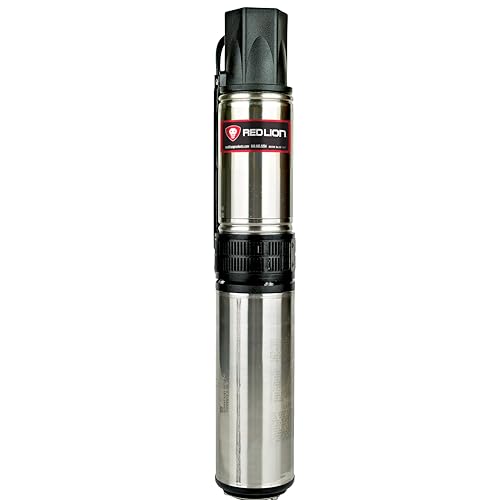

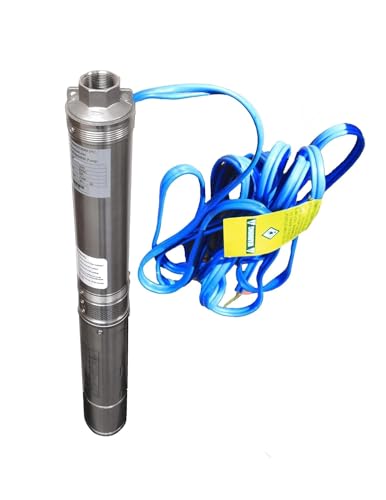
Prices are Amazon’s listed prices as of the time shown and change often; check Amazon for today’s price. As an Amazon Associate we earn from qualifying purchases.
Signs Your Well Pump Is Failing
Pumps rarely fail without warning. Common signs include:
- No water at all. Check the obvious first: a tripped breaker, a blown fuse, a pressure switch with burned contacts, or a power outage. If power is reaching the pump and nothing happens, the motor or control box may have failed.
- Sputtering faucets or air in the lines. This can point to a falling water level, a leak in the drop pipe, or a pump that is drawing air.
- Low or fluctuating pressure. Worn impellers, a clogged intake, a failing pressure switch or a waterlogged pressure tank can all cause it.
- Constant cycling. A pump that turns on and off every few seconds when a faucet runs is short cycling, which wears out motors quickly. A failed or waterlogged pressure tank is a frequent cause; our well pressure tank guide explains how to check it.
- Pump runs nonstop. A pump that never shuts off may have a leak somewhere in the system, a stuck pressure switch, or a worn pump that can no longer reach cut-out pressure.
- Higher electric bills. A pump running longer than it should shows up on the utility bill.
- Sediment, sand or cloudy water. A pump set too close to the bottom of the well, or a deteriorating well screen, can pull sediment that damages the pump.
- Unusual noises. Grinding, clicking or humming from a jet pump, or rapid clicking at the pressure switch, deserves attention.
Before authorizing a pump replacement, ask the installer what tests were done. A good technician checks voltage and amperage at the control box, measures insulation resistance on the pump cable, checks the pressure switch and tank, and may measure the static water level. Some no-water calls end with an inexpensive part rather than a new pump.
What Drives Well Pump Replacement Cost
Well Depth and Pump Setting
Depth is the single biggest variable for submersibles. Deeper wells need more drop pipe, longer cable, more labor to pull and reset the pump, and often a truck-mounted hoist. The setting depth of the pump, not the total well depth, determines how much pipe and wire are involved. Drilled wells, according to the EPA, can range up to thousands of feet deep, though most residential wells are far shallower.
Pump Size and Horsepower
Pumps are sized by flow rate (gallons per minute) and total dynamic head, which accounts for the vertical lift plus friction and the pressure the house needs. Deeper wells and larger households typically need higher horsepower. A larger motor costs more and may require heavier wire. Oversizing a pump for a low-yield well can actually drain the well faster than it recovers.
Pulling the Pump
Older installations using galvanized steel drop pipe are heavy and may need to be replaced if corroded. Plastic pipe is lighter but can be damaged during removal. Pumps that are stuck because of sediment, a collapsed casing or tangled wire can add hours or require specialized tools. In rare cases the pump cannot be recovered at all.
Wiring, Control Box and Pressure Switch
Many contractors recommend replacing the submersible cable, wire splice and torque arrestor along with the pump, since the old wire has already been in the well for years. Three-wire systems may get a new control box. The pressure switch is inexpensive and frequently replaced at the same time. Electrical work at the panel, including a new breaker or a disconnect, may be needed on older systems.
Pressure Tank
If the tank is waterlogged or undersized, it contributed to the pump’s demise and will shorten the life of the replacement. Many replacements bundle a new tank. Ask whether the bid includes one.
Permits, Access and Timing
In Colorado, well construction and pump installation work is regulated at the state level, and licensed pump installers or well contractors typically handle it. Electrical permits may also apply locally. Steep driveways, snow, a well buried in landscaping or a pit with restricted access all add labor. Weekend and holiday emergency rates are common.
Cost Factor Summary
- Pump type and horsepower
- Setting depth, drop pipe and cable length
- Need for a pump hoist or truck rig
- New wire, control box, pressure switch or pressure tank
- Constant-pressure drive upgrade
- Site access, season and emergency timing
- Permits and any required inspection
Colorado Well Considerations
Front Range wells vary widely. Foothills and mountain properties often draw from fractured bedrock, and those wells can be deep with modest yields. Some homes rely on a storage tank or cistern with a booster pump to compensate for a slow well. Plains wells east of Interstate 25 may tap deeper aquifers with different characteristics. Because of this variety, the same symptom can have different causes in different areas, and the well’s original construction record is valuable. Colorado maintains permit and well construction records that can show total depth, casing depth, static water level and yield at the time of drilling. Ask the seller or your contractor to help locate them.
Seasonal water level changes and drought can lower static water levels. A pump that ran fine for years may start sputtering in late summer if the water level drops close to the intake. Sometimes the fix is lowering the pump setting rather than replacing it. In rarer cases, the well itself needs work or deepening.
Winter adds urgency. A failed pump can leave plumbing without flow, and a pump house or pit without heat can freeze. Plan for well service access before snow if the wellhead is far from the driveway.
Repair vs Replace: Making the Call
Not every pump problem calls for a new pump. Several common failures are cheaper to fix at the surface:
- Pressure switch. Pitted or burned contacts and clogged pressure-sensing tubes are frequent culprits. The part itself is inexpensive.
- Control box components. On three-wire submersibles, a failed start capacitor or relay can stop the pump. Replacing it does not require pulling anything from the well.
- Pressure tank. A waterlogged tank causes short cycling that mimics a failing pump.
- Breakers and wiring at the panel. A loose connection or a weak breaker can cut power intermittently.
- Jet pump seals and impellers. Above-ground jet pumps can sometimes be rebuilt rather than replaced.
Replacement usually makes sense when the motor has failed, the pump cannot reach its cut-out pressure despite a good tank and switch, the pump is old and has already been pulled once for repairs, or sand has worn the impellers. Because the most expensive part of a submersible job is often the labor and equipment to pull and reset the pump, many contractors and homeowners choose to replace an aging pump rather than reinstall it after a repair. When the pump is already out of the well, it is also a sensible moment to replace worn wire, splices and corroded drop pipe.
Ask for the old pump’s amperage readings and insulation resistance figures before agreeing to replacement. Those numbers support the diagnosis and give a baseline for the new installation.
Extending the Life of a New Pump
A replacement pump is a significant expense, and a few habits help protect it:
- Fix short cycling quickly. Every start heats the motor. A pump that cycles every few seconds wears out far faster than one that runs in longer, steady cycles.
- Check the tank pre-charge periodically, or have the pump installer check it during service visits.
- Repair leaks promptly. A running toilet or a dripping outdoor spigot can make the pump start dozens of extra times a day.
- Protect against power problems. Lightning and utility surges can damage pump motors and control boards. A whole-house surge protector at the panel, plus protection for constant-pressure drives, is worth discussing with an electrician.
- Watch for sediment. A sediment filter after the tank protects fixtures, but sand coming up from the well signals a pump or well problem worth investigating.
- Keep records. Note the install date, pump model, setting depth and amperage readings. Those details speed up future diagnosis.
Testing Water After Well Pump Work
Pulling a pump opens the well and exposes it to surface contamination from tools, pipe and hands. The EPA advises private well owners to test their well immediately when any part of the well system is replaced or repaired, and to test annually for total coliform bacteria, nitrates, total dissolved solids and pH. Many contractors shock chlorinate the well after the work; ask whether that is included and how long to wait before sampling. Use a state-certified laboratory. Our well water testing guide explains which tests to order and how to read the results.
The EPA also notes that private well owners are responsible for the safety of their water, since private domestic wells are not regulated under the federal Safe Drinking Water Act. That makes post-repair testing the homeowner’s job, not the contractor’s, unless the contract says otherwise.
Well Pumps When Buying a Home
A standard home inspection does not evaluate the well. The ASHI Standard of Practice lists wells, well pumps and water storage-related equipment among items inspectors are not required to inspect, and inspectors are not required to measure well water quantity or water quality. Buyers of homes on wells should budget for a separate well inspection, including a flow or yield test, a look at the pump controls and pressure tank, and laboratory water testing. Our well inspection cost guide covers what those services include and typical pricing, and the home inspector hiring guide explains how to coordinate specialists during the inspection period.
Useful questions for the seller:
- When was the pump last replaced, and by whom?
- Is the well construction record or permit available?
- Has the household ever run out of water in late summer or drought?
- When was the water last tested, and what were the results?
- Are there any service records for the pressure tank, switch or treatment equipment?
When to Call a Professional
Homeowners can safely check breakers, look at the pressure gauge and confirm whether the pump is short cycling. Opening the pressure switch cover, working in the control box or pulling a pump involves live 240-volt circuits, heavy lifting and the risk of dropping equipment into the well. Leave those tasks to a licensed pump installer. Get at least two written bids that specify the pump model and horsepower, setting depth, what pipe and wire will be replaced, whether the tank and switch are included, disinfection after the work and the warranty terms.
More Questions About Well Pump Replacement
How long does it take to replace a well pump?
A well pump replacement typically takes a crew about half a day to a full day for a standard submersible pump, and often less for a jet pump installed above ground. Deep wells, heavy drop pipe, corroded fittings or a pump stuck in the casing can stretch the job to two days. Most contractors bring pump-pulling equipment for deeper wells. Expect no water during the work, and plan for disinfecting and flushing the system afterward, which can add time before the water is ready to drink.
Can you replace a well pump yourself?
A homeowner can sometimes replace a shallow jet pump, but replacing a submersible pump is usually a job for a licensed well contractor. Submersibles can hang hundreds of feet down on heavy pipe and wire, and dropping one down the well creates an expensive retrieval problem. The work also involves electrical connections and disinfection afterward. Many states or counties require a licensed pump installer for work inside the well casing, so check local rules before attempting it.
What size well pump do I need?
Well pump size depends on the household’s peak water demand, the well’s yield and the vertical distance the water must be lifted. Many homes use a pump in the range of about 7 to 12 gallons per minute, but the pump must not outpace the well’s recovery rate or it can run dry. A contractor matches horsepower and pump stages to well depth, static water level and desired pressure. Oversizing wastes money and can cause short cycling; undersizing leaves weak pressure.
Does a well pump need maintenance?
A well pump needs little routine maintenance, but the system around it does. Check the pressure tank pre-charge once or twice a year, watch for short cycling, and listen for a pump that runs longer than usual. Replace sediment filters on schedule so the pump is not working against a clog. Annual water testing can catch sand or iron that wears pump parts. Fix leaking fixtures quickly, since a running toilet can keep a pump cycling for hours and shorten its life.
References
- Learn About Private Water Wells: Types, Components and Pumps — U.S. Environmental Protection Agency
- Protect Your Home’s Water: Testing Frequency for Private Wells — U.S. Environmental Protection Agency
- Private Drinking Water Wells — U.S. Environmental Protection Agency
- ASHI Standard of Practice for Home Inspections — American Society of Home Inspectors
Frequently asked questions
How much does it cost to replace a well pump?
As rough industry estimates, a shallow-well jet pump often costs several hundred to around two thousand dollars installed, while a submersible pump commonly runs from about one thousand to several thousand dollars. Deep wells, new wire or pipe, a new pressure tank and emergency timing raise the total.
How long does a well pump last?
Lifespan varies with water quality, sediment, pump sizing and how often the pump cycles. Many pumps last a decade or more, but short cycling from a failed pressure tank or sand in the water can shorten that considerably.
Is a submersible or jet pump better?
It depends on well depth. The EPA notes jet pumps are most common for shallow wells of about 25 feet or less, while submersible pumps are most common for deep wells. Most drilled wells on the Front Range use submersible pumps.
Should I test my water after replacing a well pump?
Yes. The EPA advises testing a private well immediately after any part of the well system is replaced or repaired, because the work can introduce bacteria. Ask the contractor whether the well will be disinfected, then use a certified lab.
Does a home inspection check the well pump?
Generally no. The ASHI Standard of Practice lists wells and well pumps among items inspectors are not required to inspect. Buyers should schedule a separate well inspection with flow testing and laboratory water testing.
What happens if my well pump runs dry?
A well pump that runs dry can overheat and damage its motor and impellers within a short time. Low-yield wells often use a dry-run protection device or pump saver that shuts the pump off when water drops. Sputtering faucets or air in the lines are warning signs worth having checked.
Is a constant pressure well pump worth it?
A constant pressure well pump uses a variable speed drive to hold steady pressure, which helps households that run several fixtures at once. It typically costs more up front and adds electronics that may need repair. For many homes a standard pump with a properly sized pressure tank works fine.
Can a power surge damage a well pump?
A power surge or lightning strike can damage a well pump motor, control box or pressure switch. Whole-house surge protection and a properly grounded well system lower the risk. Some homeowners policies cover lightning damage, so document the date and get a written diagnosis from the contractor.
Under contract on a Front Range home with a private well? Reach out through our contact page and we can connect you with local professionals who can evaluate the well, pump and water quality before your inspection deadline.