Well Pressure Tank: Signs of Failure and Replacement

The pressure tank is the quiet partner to a well pump. It stores a reserve of pressurized water so the pump does not have to start every time someone rinses a glass or flushes a toilet. When the tank works, water pressure stays steady and the pump runs in long, efficient cycles. When it fails, the pump starts and stops every few seconds, pressure surges and drops, and the pump motor wears out far sooner than it should. Recognizing those symptoms early can turn an expensive pump replacement into a far cheaper well tank replacement or a simple air pre-charge adjustment. This guide explains how pressure tanks work, the warning signs of failure, how to check the air charge safely, how pressure switches fit in, how tanks are sized, and when to call a licensed pump installer. Cost figures are general industry estimates, not quotes.
Part of our Plumbing & Water guide — start there for the full picture →
When Is a Well Tank Replacement Needed?
A well tank replacement is usually needed when the tank has become waterlogged and cannot hold an air charge, when the internal bladder or diaphragm has ruptured, when the steel shell is leaking or badly corroded, or when the tank is too small for the household’s demand and the pump short cycles even with a correct air charge. The most common trigger is a ruptured bladder. Once water fills the space that should hold air, the tank stops cushioning pressure and the pump cycles rapidly.
Before replacing a tank, it is worth confirming the diagnosis. A tank that simply lost some air pre-charge over time can often be restored by adding air with the system drained. A pressure switch with clogged sensing ports can also cause erratic cycling. If the pre-charge will not hold, water comes out of the air valve, or the tank shell is leaking, replacement is the usual fix.
How Well Pressure Tanks Work
Most modern residential systems use a pre-charged tank with a flexible rubber bladder or diaphragm that separates water from a cushion of compressed air. Older systems sometimes have plain steel tanks with no separator, in which air and water touch directly and the air gradually dissolves into the water, requiring periodic recharging.
The cycle works like this:
- When a faucet opens, water flows out of the tank, pushed by the compressed air.
- As water leaves, pressure drops. When it falls to the cut-in pressure set on the pressure switch, the switch closes and starts the pump.
- The pump refills the tank and supplies the house. Water entering the tank compresses the air again.
- When pressure reaches the cut-out pressure, the switch opens and the pump stops.
Common pressure switch settings are 30/50 psi and 40/60 psi, meaning the pump starts at 30 or 40 psi and stops at 50 or 60 psi. Some homes use other ranges, and constant-pressure systems with variable-speed drives work differently. Check the label inside the switch cover or the pressure gauge near the tank to see how a particular system cycles.
The amount of water the tank delivers between cut-out and cut-in is called drawdown. Drawdown is always much smaller than the tank’s total volume, because much of the tank holds compressed air. A larger drawdown means fewer pump starts.
The tank usually connects to the water line through a tank tee that also holds the pressure switch, pressure gauge, a drain valve and sometimes a pressure relief valve. In submersible systems, water comes from the well through the pitless adapter, which the EPA describes as the connector that keeps the pipe below the frost line with a sanitary, frost-proof seal.
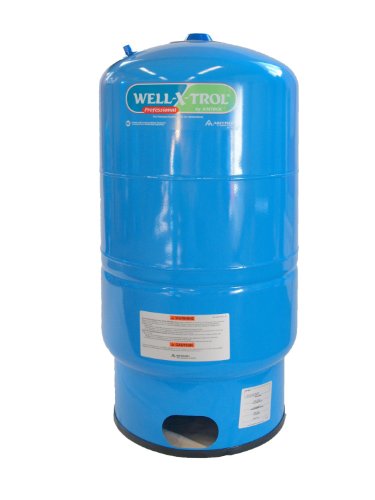
Best Well Pressure Tanks: our top 3 picks
| Product | Best for | Key features | Price | Buy |
|---|---|---|---|---|
| Red Lion RL34A | Most homes, stated drawdown |
| $432.99as of Oct 29, 2026 8:40 pm GMT+0000 | Buy now →Check current price |
| WaterWorker HT-30B | Value with NSF 61 listing |
| $298.89as of Oct 29, 2026 8:40 pm GMT+0000 | Buy now →Check current price |
| Amtrol WX-202 | Long stated warranty |
| $327.99as of Oct 29, 2026 8:40 pm GMT+0000 | Buy now →Check current price |


Prices are Amazon’s listed prices as of the time shown and change often; check Amazon for today’s price. As an Amazon Associate we earn from qualifying purchases.
Signs of a Failing Pressure Tank
Short Cycling
The classic symptom. Open a faucet and listen to the pump or watch the pressure gauge. If the pump turns on within a few seconds and shuts off a few seconds later, repeating rapidly while water runs, the tank is likely waterlogged or has lost its air charge. Short cycling overheats pump motors and burns pressure switch contacts.
Pressure Gauge Swings Rapidly
A healthy system shows a gradual, steady drop in pressure while water flows, then a steady rise when the pump runs. A needle that jumps from cut-out to cut-in almost instantly points to little or no air cushion.
The Tap Test
Tapping the side of the tank from top to bottom gives a rough indication. The upper part of a working bladder tank, which holds air, sounds hollow. The lower part, which holds water, sounds dull. A tank that sounds dull all the way up may be waterlogged. This is only a quick screen, not a diagnosis.
Water From the Air Valve
The air valve on top of the tank looks like a tire valve. Briefly pressing the pin should release only air. If water spurts out, the bladder or diaphragm has almost certainly failed, and the tank needs replacement.
Rusty Water, Leaks and Corrosion
Rust-colored water can come from many sources, including iron in the groundwater, but a steel tank corroding from the inside can contribute in older or non-bladder systems. Weeping seams, rust spots at the base and moisture around fittings indicate a tank near the end of its life.
Spitting Faucets and Pressure Surges
Air in the lines, banging pipes or pressure that pulses with each pump cycle can stem from a failed tank, though they also overlap with pump problems. Our well pump replacement cost guide covers pump-side failure signs and how to tell them apart.
How to Check the Air Pre-Charge
Checking the pre-charge is a common homeowner task, but it involves electricity and stored pressure, so follow the tank manufacturer’s instructions and stop if anything is unclear. The general process:
- Turn off power to the pump at the breaker or dedicated disconnect. The pump must not be able to start during the check.
- Drain the tank. Open a faucet near the tank, or the tank drain valve with a hose attached, until water stops flowing and the pressure gauge reads zero.
- Check the air pressure at the air valve with an accurate tire pressure gauge.
- Compare to the target. A commonly cited guideline is to set pre-charge about 2 psi below the cut-in pressure, for example around 28 psi on a 30/50 system or 38 psi on a 40/60 system. Confirm the exact target in the tank manufacturer’s instructions.
- Adjust. Add air with a compressor or bike pump if it is low, or release air if high. Recheck after a few minutes.
- Close the drain and faucet, restore power and watch the pump fill the tank to cut-out.
If the tank will not hold air, losing pressure again within days or weeks, the bladder or valve is likely failing. If water came from the air valve at any point, skip the adjustment and plan for replacement.
Never check pre-charge with the tank full of water. The reading will reflect water pressure, not the air charge, and adding air in that condition will not fix the problem.
Pressure Switch Problems That Mimic Tank Failure
The pressure switch tells the pump when to run. It sits on a small pipe nipple near the tank and contains spring-loaded contacts. Common issues:
- Clogged sensing port. Sediment or mineral scale in the small tube under the switch can make it respond late or erratically.
- Pitted or burned contacts. Short cycling accelerates wear, and burned contacts can cause the pump to fail to start or chatter.
- Incorrect settings. A switch adjusted too close together creates a narrow pressure band and frequent cycling.
- Low-pressure cutoff tripped. Some switches include a lever that shuts the pump off if pressure drops too low, protecting it from running dry. It must be reset manually.
The switch carries line voltage, often 240 volts, even when the pump is not running. Removing the cover exposes live terminals. Adjustment and replacement are best left to a pump installer or electrician unless the homeowner is confident with electrical safety and has confirmed power is off.
Types of Pressure Tanks
Bladder Tanks
A bladder tank holds water inside a replaceable or sealed rubber balloon, with compressed air surrounding it in the steel shell. Water never touches the shell, which limits internal corrosion. When the bladder fails, water leaks into the air side and the tank becomes waterlogged. Most residential bladder tanks are sealed units, so a failed bladder usually means replacing the entire tank.
Diaphragm Tanks
A diaphragm tank uses a flexible rubber membrane fixed across the inside of the tank, with water below and air above. Diaphragm and bladder tanks behave similarly in daily use and share the same failure symptoms. The difference matters mainly to installers choosing models and orientations.
Galvanized or Plain Steel Tanks
Older systems may have a plain steel tank with no separator. Air and water touch, the air slowly dissolves into the water, and the tank gradually waterlogs. These systems often rely on an air volume control or a snifter valve on the pump to replenish air, and they need periodic draining and recharging. Many homeowners replace them with bladder tanks when they fail, which also frees up floor space because modern pre-charged tanks deliver more drawdown for their size.
Placement, Winter and Maintenance Tips
Pressure tanks are usually in a basement, utility room, crawl space or well house. Front Range winters make freeze protection the first concern. A tank, switch and gauge in an unheated pump house or crawl space can freeze during a cold snap, cracking fittings and the pressure switch’s sensing tube. Insulation, heat tape rated for the purpose, or a small thermostatically controlled heater in a well house are common protections. If the home has been vacant over winter, check the tank area for frozen or split fittings before restoring power.
A simple maintenance routine helps catch problems early:
- Glance at the pressure gauge during normal water use. A steady, gradual drop and rise is a good sign.
- Check the air pre-charge about once a year, or when cycling seems to change.
- Look for moisture, rust or drips at the base, fittings and air valve.
- Keep the area around the tank clear so leaks are visible and the tank can be serviced.
- Note the install date on the tank with a marker so future owners know its age.
Water treatment equipment, such as a softener, sediment filter or reverse osmosis system, typically installs after the pressure tank. Clogged filters can cause pressure drops at fixtures that look like a tank problem, so check filter cartridges before assuming the tank has failed.
Sizing a Pressure Tank
Tank size is about drawdown and pump protection. Pump manufacturers often specify a minimum run time per cycle, commonly a minute or more, to keep motors cool. The installer chooses a tank whose drawdown, at the system’s pressure settings, provides enough water to meet that minimum run time based on the pump’s flow rate.
General factors:
- Pump flow rate. Higher-flow pumps need more drawdown to achieve the same run time.
- Pressure settings. Drawdown for the same tank shrinks at higher pressure ranges.
- Household demand. Larger homes, irrigation or livestock watering can justify a bigger tank or multiple tanks.
- Space. Larger tanks are tall and heavy when full. Basement stairs, crawl spaces and pump houses can limit options.
- Constant-pressure systems with variable-speed drives often use smaller tanks, since the pump adjusts speed instead of cycling on and off.
Tanks are labeled by total volume, which can be misleading. Compare drawdown at your cut-in and cut-out pressures, which manufacturers publish in their sizing charts.
Replacement Steps: DIY vs Hiring a Pro
A tank replacement on an accessible system is mechanically straightforward. In outline, the job involves shutting off power to the pump, draining the system, disconnecting the tank from the tank tee, setting the new tank’s pre-charge before it is filled, connecting it with appropriate fittings and sealant, restoring power and checking for leaks while the system cycles. Many installers also replace the pressure switch, gauge and tank tee at the same time, since they are inexpensive and often worn.
Reasons to hire a licensed pump installer or plumber:
- The pressure switch wiring needs to be disconnected and reconnected.
- The tank is in a tight crawl space or well pit.
- A full tank of water and steel can be very heavy and awkward to move.
- The pump itself may also be failing, and diagnosis is uncertain.
- Local rules require licensed work on the potable water system.
After any work that opens the water system, the EPA advises private well owners to test their water. It recommends testing immediately when any part of the well system is replaced or repaired, and testing annually for total coliform bacteria, nitrates, total dissolved solids and pH.
Well Tank Replacement Cost
As rough industry estimates, the tank alone typically ranges from a few hundred dollars for smaller residential models to around a thousand dollars or more for large-capacity tanks. Installed by a professional, a well tank replacement commonly runs from several hundred to a couple of thousand dollars, depending on tank size, accessibility, and whether the pressure switch, gauge, tank tee and valves are replaced at the same time. Emergency and winter calls usually cost more. Get written bids that list the tank model and drawdown, the pre-charge setting and the components included.
A tank replaced promptly can also protect the pump. Running a pump against a waterlogged tank for months adds thousands of extra starts and can shorten its life.
Pressure Tanks During a Home Purchase
Buyers of homes on private wells should know that a standard home inspection does not cover the well system in depth. The ASHI Standard of Practice lists wells, well pumps and water storage-related equipment among items inspectors are not required to inspect, and it does not require inspectors to measure water supply flow and pressure. A dedicated well inspection evaluates the pump, tank, switch and flow rate, and adds lab water testing. Our well inspection cost guide outlines typical scope and pricing. If water pressure at the fixtures seems weak or inconsistent, our water pressure test guide explains how to measure it. The home inspector hiring guide covers how to schedule specialists within a contract’s inspection period.
References
- Learn About Private Water Wells: Well Components — U.S. Environmental Protection Agency
- Protect Your Home’s Water: When to Test a Private Well — U.S. Environmental Protection Agency
- Private Drinking Water Wells — U.S. Environmental Protection Agency
- ASHI Standard of Practice for Home Inspections — American Society of Home Inspectors
Frequently asked questions
How do I know if my well pressure tank is bad?
Common signs include a pump that turns on and off every few seconds while water runs, a pressure gauge that swings rapidly, water spurting from the air valve, and a tank that sounds dull when tapped all the way up. Leaks and rust on the shell also indicate a tank near the end of its life.
What should the air pressure be in a well tank?
A commonly cited guideline is about 2 psi below the pump's cut-in pressure, such as 28 psi on a 30/50 system or 38 psi on a 40/60 system. Check it with power off and the tank drained, and confirm the target in the manufacturer's instructions.
How much does a well tank replacement cost?
As rough industry estimates, a professionally installed replacement commonly runs from several hundred to a couple of thousand dollars, depending on tank size, access and whether the pressure switch and fittings are replaced too. Get written bids.
Can a bad pressure tank damage my well pump?
Yes. A waterlogged tank causes short cycling, which makes the pump start far more often than designed. Frequent starts overheat the motor and wear the pressure switch, which can shorten pump life.
How long do well pressure tanks last?
Lifespan varies with water chemistry, sediment, installation and how often the system cycles. Many bladder tanks last a decade or more, but a ruptured bladder or corroded shell can end a tank's life sooner.
Buying a home on a well somewhere along the Front Range? Send us a note and we can help you find a local inspector and well specialist to check the tank, pump and water before your deadline.