Countertop Replacement Cost: Granite, Quartz and Hidden Extras
Countertops are one of the most visible upgrades in a kitchen and one of the easiest to underestimate on a budget. The price per square foot that shows up in a showroom covers only part of the job. Tear-out, edge profiles, sink and cooktop cutouts, seams, plumbing reconnection and a new backsplash all add to the final invoice, and removing old tops sometimes exposes cabinet damage or old leaks that need attention before stone goes down. This guide breaks down the cost to replace granite countertops alongside the common alternatives, explains what drives the price, and covers the inspection-style issues that tend to surface during a swap. Figures are broad 2026 ranges for professionally installed work; local fabricator pricing, slab selection and kitchen layout can move the total well outside these numbers, so treat them as a way to read bids rather than as quotes.
Part of our Structure & Exterior guide — start there for the full picture →
What Does It Cost to Replace Granite Countertops?
For a typical kitchen, replacing laminate or tile with installed granite often falls somewhere in the range of roughly $40 to $100 or more per square foot, including fabrication and installation. Entry-level granite colors from common quarries sit at the low end; exotic slabs, heavily veined stones and thicker 3-centimeter material with premium edges sit at the high end. An average kitchen with around 30 to 50 square feet of counter surface might therefore land somewhere near $2,000 to $5,000 for basic stone, and considerably more for large islands, premium slabs or complex layouts.
Those numbers usually assume a straightforward swap: old tops removed, cabinets in good shape, one undermount sink cutout, one cooktop or range cutout, a standard eased or bevel edge, and the sink and faucet reconnected. Every departure from that baseline adds cost, which is why two quotes for the “same” granite can differ by thousands of dollars.
Replacing an existing granite top with new granite tends to cost a bit more than replacing laminate, because stone tear-out is heavier work, the old slab must be hauled away, and removing a glued stone top can damage cabinets or the wall behind it.
Countertop Materials and Typical Price Ranges
Granite is still common, but most buyers compare several materials. The ranges below are rough installed figures; actual pricing depends heavily on region, brand, thickness and how much fabrication the job requires.
Granite
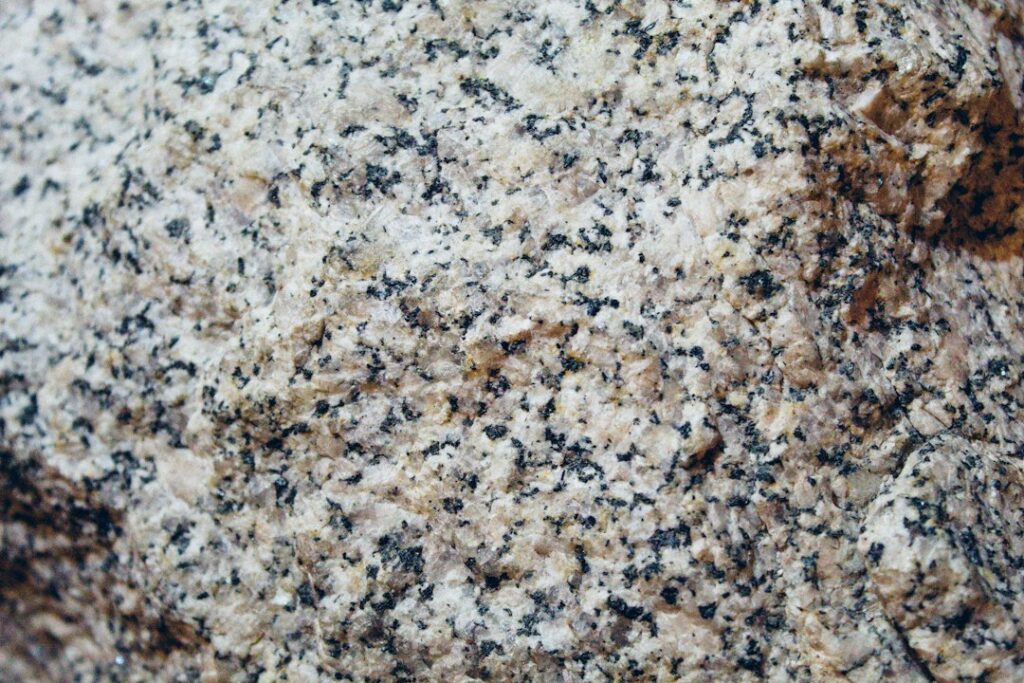
Natural granite is quarried, cut into slabs and fabricated to fit. Each slab is unique, which is part of the appeal and part of the risk: what looks good in a small sample can read differently across a full slab. Granite is heat-tolerant and scratch-resistant but porous to varying degrees, so most fabricators recommend periodic sealing. Installed pricing often runs roughly $40 to $100 or more per square foot.
Quartz (Engineered Stone)
Quartz countertops are an engineered product made from crushed quartz bound with resins and pigments. They offer consistent color, low maintenance and no routine sealing. Pricing commonly lands near granite, often in the range of roughly $50 to $120 or more per square foot installed, with designer patterns that mimic marble at the top. Quartz is less tolerant of direct heat than granite, and manufacturers generally recommend trivets for hot pans.
Laminate
Laminate is a plastic surface bonded to a particleboard or MDF substrate. Modern laminates mimic stone reasonably well and are the budget leader, often somewhere around $20 to $50 per square foot installed. Weaknesses include vulnerability to heat, knife scratches and water swelling at seams and around the sink.
Butcher Block
Wood countertops, usually maple, oak, walnut or bamboo, typically run around $40 to $100 per square foot installed, depending on species and thickness. They feel warm and can be sanded and refinished, but they need regular oiling and are vulnerable to standing water near sinks.
Solid Surface
Solid surface materials are acrylic or polyester-based sheets that can be joined with nearly invisible seams and integrated sinks. Installed prices often fall somewhere around $40 to $90 per square foot. They are repairable by sanding but scratch and scorch more easily than stone.
Other options, including marble, soapstone, concrete, porcelain slab and stainless steel, are available at a range of price points. Marble and porcelain slab often sit at the upper end of the stone range.
What Drives Countertop Replacement Cost
Material is the starting point, but labor and fabrication details drive much of the spread between bids. When comparing quotes, look for these line items.
Edges
Most fabricators include a basic edge, such as eased, bevel or half-bullnose. Ogee, full bullnose, mitered and laminated thick edges are often billed by the linear foot and can add hundreds to over a thousand dollars across a large kitchen.
Cutouts
Undermount sink cutouts require polishing the exposed edge, and cooktop, prep sink, faucet hole, soap dispenser and pop-up outlet cutouts may each carry a separate charge. Farmhouse or apron-front sinks can add fabrication and support work.
Seams
Slabs come in limited sizes. Long runs, L-shaped layouts and large islands often require seams. Placement affects both cost and appearance; a skilled fabricator lays out the job to keep seams out of high-visibility areas and away from the sink when possible.
Tear-Out and Disposal
Removing laminate is relatively quick. Removing tile tops with a mortar bed, or old stone that was glued down, takes longer and risks damaging cabinets, drywall and the existing backsplash. Some bids include tear-out and haul-away; others list it separately.
Plumbing and Appliance Reconnection
Many countertop companies disconnect and reconnect sinks and faucets, but some require a separate plumber, particularly for garbage disposals, instant hot water dispensers, filtration systems and gas cooktops. Gas connections should be handled by a qualified professional.
Backsplash
New counters rarely line up perfectly with an old backsplash. Thicker stone may cover or expose part of the existing tile, and tear-out can damage the wall behind it. Budget for a new backsplash or at least a 4-inch stone splash. Our guide to kitchen backsplash installation covers materials, outlets and sealing details.
Access and Logistics
Stone slabs are heavy. Second-floor kitchens, tight stairways, long carries from the street and condo buildings with elevator restrictions can add labor charges. Mountain-town jobs outside the Denver metro may also carry travel fees.
Cabinet Problems That Surface During Tear-Out
Countertop replacement is often the first time anyone has looked at the cabinet tops in years. Several issues commonly appear once the old counter is off.
- Out-of-level cabinets. Stone does not flex. Fabricators typically shim cabinets to level, but cabinets that are far out of level, racked or loosely fastened to the wall may need resetting or reinforcement first.
- Weak cabinet boxes. Older particleboard boxes with water damage can sag under the weight of stone. Base cabinets that were fine under laminate may need added support for granite or quartz.
- Overhang support. Islands and peninsulas with seating overhangs often need steel brackets or corbels. Fabricators generally specify support requirements based on overhang depth and material thickness.
- Sink base damage. Swollen or delaminated sink-base floors are a sign of past leaks.
When the cabinets need significant work, the project can shift from a countertop swap toward a broader remodel. Our overview of kitchen remodel cost helps frame that decision.
Sinks, Leaks and Moisture
The sink area deserves a close look before new counters go in. Old faucet supply lines, slow drain leaks and failing caulk at the sink rim can wet the cabinet floor and the back wall for years without obvious signs. If the cabinet floor is soft or stained, or there is a musty smell, investigate before covering it with a new top. Our guide to a leak under the kitchen sink explains common sources and fixes.
The U.S. Environmental Protection Agency (EPA) states that the key to mold control is moisture control, and that water-damaged areas and items should be dried within 24 to 48 hours to help prevent mold growth. EPA also advises against painting or caulking over moldy surfaces. For a countertop project, that means repairing leaks and drying or replacing damaged materials before the new sink and counter are installed.
Replacing the faucet at the same time as the counter is common. New supply lines, a new shutoff valve if the old one is stiff or corroded, and a properly sealed undermount sink help reduce future leak risk.
Electrical: GFCI Outlets Along the Counter
Countertop receptacles are among the most-used outlets in a home, and in most modern kitchens they are expected to be GFCI-protected. New countertops can change the outlet situation in a few ways: thicker stone or a new backsplash may require box extenders, outlets may be relocated, and an island may gain new receptacles that need wiring. Any electrical changes should be done by a licensed electrician, and many jurisdictions require a permit.
After the job, test each countertop outlet. If a GFCI does not reset or trip, our guide to a GFCI outlet not working walks through common causes.
Radon and Granite: What EPA Says
Granite occasionally raises radon questions, especially in Colorado, where radon from soil is a well-known concern. EPA’s page on radon and radioactivity in granite countertops states that granite can contain varying concentrations of uranium and other naturally occurring radioactive elements, and that some granite used for countertops may contribute variably to indoor radon levels. However, EPA says that at this time the existing data is insufficient to show that the types of granite commonly used in countertops are significantly increasing indoor radon levels.
EPA also states that it believes the principal source of radon in homes is the soil in contact with basement floors and walls, and it recommends testing the home’s air and fixing homes with radon levels of 4 picocuries per liter or more. EPA notes that a generally accepted radiation testing protocol for countertops does not currently exist. For most homeowners, the practical step is the same with or without granite: test the home for radon and mitigate if results are elevated.
Silica Dust from Cutting Stone and Quartz
A newer concern involves the people who fabricate and install countertops. The National Institute for Occupational Safety and Health (NIOSH) and the Occupational Safety and Health Administration (OSHA) jointly updated a hazard alert in February 2026 on the dangers of respirable crystalline silica dust exposure for workers who manufacture, finish and install natural and engineered stone countertops. A NIOSH science blog on engineered stone notes that quartz surfacing materials may contain up to 93 percent crystalline silica, compared with less than 45 percent in a granite slab, and that workers who fabricate and install quartz surfacing are at risk of overexposure during sizing, cutting, grinding and polishing. The same blog notes that prolonged inhalation of silica dust can lead to silicosis.
For homeowners, the main implications are practical:
- Most cutting and polishing should happen at the fabricator’s shop, where wet cutting and dust controls are more practical.
- Ask how the installer handles any on-site cuts or adjustments. Wet methods and tools with dust collection reduce airborne dust.
- Keep children and pets away from the kitchen during installation, and clean up with a HEPA vacuum or wet methods rather than dry sweeping.
- Do-it-yourself cutting of quartz or stone without proper dust controls is a poor idea.
Ways to Keep Countertop Costs in Check
Budgets have more flexibility than the per-square-foot price suggests. Several choices can trim the total without settling for a material the household dislikes:
- Choose a stocked color. Fabricators often carry popular granite and quartz colors in volume. Entry-level colors can cost noticeably less than a specially ordered slab.
- Consider remnants. Small vanities, bar tops, laundry counters and short runs can sometimes use leftover pieces at a discount.
- Keep the standard edge. Upgraded edge profiles are billed by the foot, and the difference is rarely noticed once the kitchen is in use.
- Simplify the layout. Fewer cutouts, fewer seams and squared corners cost less to fabricate than curves and angled runs.
- Mix materials. Some homeowners put stone on the island and a lower-cost surface on the perimeter, or the reverse.
- Bundle work. Scheduling plumbing, electrical and backsplash work together can reduce trip charges and repeated disruption.
Saving on the visible surface should not come at the expense of the substrate. Reinforcing a weak cabinet or fixing a leak is cheaper before the stone is set than after.
How to Get Accurate Countertop Bids
A few steps make quotes easier to compare and reduce change orders:
- Measure roughly first. Sketch the layout with lengths and depths so square-footage estimates can be checked.
- Choose sink and faucet early. Fabricators need the sink model and faucet hole count to template accurately.
- Ask what is included. Tear-out, disposal, edge profile, cutouts, sealing, plumbing reconnection, backsplash and travel should all be listed.
- See the slab. For natural stone, view and approve the actual slab when possible.
- Plan for downtime. Templating usually happens after old tops are removed or cabinets are set, and fabrication can take days to weeks. Many households are without a working sink for a few days.
- Check permits. A straight swap often needs no permit, but moving plumbing, adding circuits or relocating gas lines may.
Countertops and Home Inspections
For buyers, new countertops can be a selling point and a distraction. A fresh slab of quartz says little about the plumbing beneath it or the wiring behind the backsplash. During a general inspection, inspectors commonly look under the sink for active leaks and water damage, test a representative number of receptacles including GFCI protection, and run the faucet and drain. Hidden damage under new counters may not be visible at all.
Sellers who replace counters before listing should keep receipts and note any repairs made during the swap, such as cabinet reinforcement or leak repair. Buyers can ask about the age of the work and whether permits were pulled for any electrical or plumbing changes. Our guide to hiring a home inspector explains what a general inspection covers, and the structure and exterior hub covers related interior and structural topics. For a bathroom project with similar trade-offs, see our bathroom remodel cost guide.
References
- What About Radon and Radioactivity in Granite Countertops? — U.S. Environmental Protection Agency
- OSHA/NIOSH Hazard Alert: Worker Exposure to Silica during Countertop Manufacturing, Finishing, and Installation — National Institute for Occupational Safety and Health
- Silica Hazards from Engineered Stone Countertops — National Institute for Occupational Safety and Health
- A Brief Guide to Mold, Moisture and Your Home — U.S. Environmental Protection Agency
Frequently asked questions
How much does it cost to replace granite countertops?
Installed granite often runs roughly $40 to $100 or more per square foot, so an average kitchen might land around $2,000 to $5,000 for basic stone. Edges, cutouts, seams, tear-out, plumbing and backsplash work can push the total higher. These are general 2026 ranges, not quotes.
Is quartz more expensive than granite?
They often overlap. Quartz commonly runs about the same as granite or somewhat higher, with designer patterns at the top of the range. Entry-level granite can be cheaper than mid-range quartz, while exotic granite can exceed most quartz.
Do granite countertops cause high radon levels?
EPA says existing data is insufficient to show that granite commonly used in countertops significantly increases indoor radon, and that soil beneath the home is the principal source. EPA recommends testing the home and mitigating at 4 pCi/L or more.
Can I keep my cabinets when replacing countertops?
Often, yes, if they are level, solidly fastened and free of water damage. Stone is heavy and rigid, so weak, racked or water-damaged boxes may need reinforcement or replacement first. Islands with overhangs may need added brackets.
How long does countertop replacement take?
Templating, fabrication and installation often span one to three weeks, with installation itself usually taking a day. Plumbing reconnection and backsplash work may add a few days, and many households go without a working sink briefly.
Buying a home with new counters and wondering what is under them? Get in touch and we will connect you with a Front Range inspector who can check the sink base, outlets and plumbing before you commit.