Quartz Countertops: Durability, Heat Limits and Seams
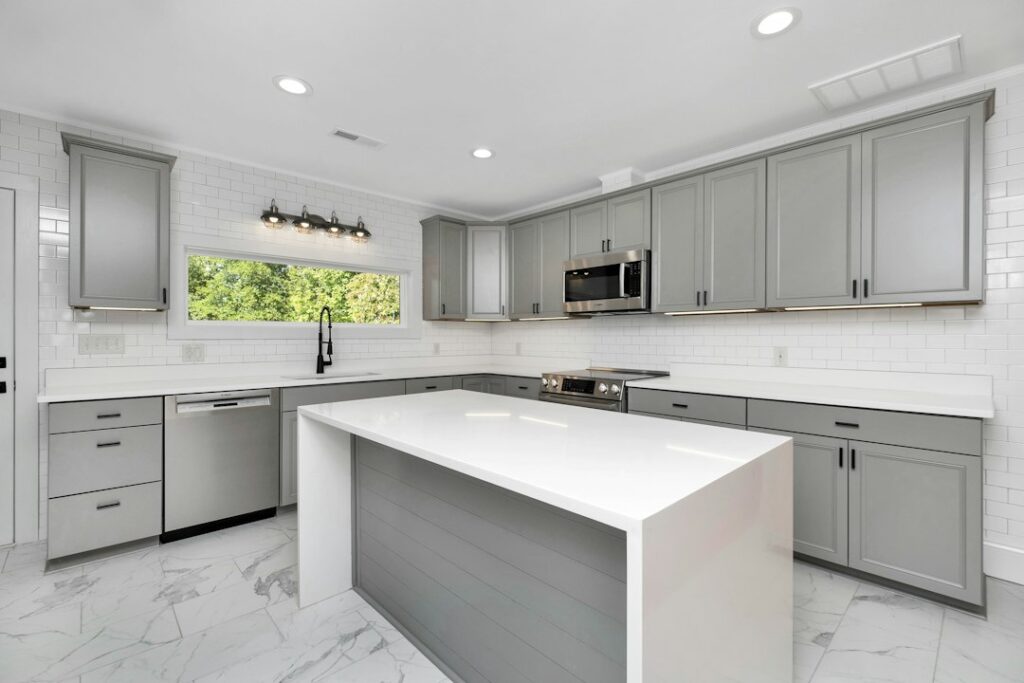
Engineered quartz has become one of the most popular countertop surfaces in American kitchens and bathrooms, prized for consistent color, low maintenance and resistance to stains. It is also widely misunderstood. Quartz is not a solid slab of natural quartz rock, it is not heatproof, and its durability depends heavily on how it is fabricated, supported and installed. There is also a serious occupational health story behind the material: cutting and grinding engineered stone can release dangerous silica dust, and federal agencies have tied it to severe lung disease among fabrication workers. This guide explains what quartz countertops are made of, how they handle heat, where seams and support matter, what to check around sink cutouts, what OSHA and CDC have said about silica hazards in fabrication and what installation typically costs. It summarizes OSHA and CDC publications current as of 2026 and is general information, not medical or legal advice.
Part of our Structure & Exterior guide — start there for the full picture →
What Quartz Countertops Are Made Of
Quartz countertops are an engineered stone product. Manufacturers combine crushed quartz or other crystalline silica with polymer resins, pigments and sometimes other additives, then compact and cure the mixture into slabs. The resin binds the mineral particles and fills voids, which is why engineered quartz is far less porous than most natural stone.
The exact recipe varies by brand and product line. A joint OSHA and NIOSH hazard alert on countertop fabrication notes that crystalline silica can make up as much as 95 percent of some engineered stone, with resins, pigments and adhesives making up the rest. The same document notes that some engineered stones contain less than 50 percent crystalline silica, and that some products made with recycled glass and pigments in a portland cement matrix contain less than 0.2 percent. “Quartz” on a showroom label therefore describes a family of products, not a single material.
That composition explains the material’s strengths and weaknesses:
- Low porosity. Most quartz surfaces do not require periodic sealing and resist common kitchen stains better than many natural stones.
- Consistency. Slabs are more uniform in color and pattern than quarried stone, which makes matching across seams easier.
- Resin sensitivity. The polymer binder is more vulnerable to high heat and, for some products, to prolonged ultraviolet exposure than natural stone.
- Hardness and chipping. The surface is hard and scratch-resistant in daily use, but edges and corners can chip from impacts with heavy pots or dropped objects.
Quartz vs quartzite
Quartzite is a natural metamorphic rock, quarried and cut like granite or marble. It is a different product from engineered quartz, though the names are easily confused in showrooms. The OSHA-NIOSH hazard alert lists quartzite as typically containing 95 percent or more crystalline silica, so it shares the fabrication hazard discussed below. For homeowners, the important point is to know which material is actually being quoted, because care, cost and performance differ.
Heat Limits, Trivets and Everyday Care
Quartz manufacturers commonly warn against placing hot pans, slow cookers, griddles or other heat sources directly on the surface. Sudden, localized heat can scorch or discolor the resin and, in some cases, cause thermal shock cracking, especially near cutouts and seams where the slab is narrower. Many warranties exclude heat damage. A trivet or hot pad under anything coming straight off a burner or out of the oven is a simple habit that avoids most problems.
Other care points are similarly straightforward:
- Cleaning. Mild soap and water are generally recommended. Harsh chemicals, strong solvents and highly alkaline or acidic cleaners can dull or damage the resin, depending on the product. Follow the manufacturer’s care guide.
- Cutting. Use a cutting board. Quartz resists scratching well, but knives dull quickly on it, and repeated cutting can still mark the surface.
- Sun exposure. Some quartz products are not rated for outdoor use or long-term direct sunlight, which can cause yellowing or fading of the resin. Check the specification before using quartz in a sunroom or outdoor kitchen.
- Impact. Edges and corners near the sink and dishwasher are where chips most often occur. Eased or rounded edge profiles tend to resist chipping better than sharp square edges.
Small chips can often be filled by a fabricator with color-matched resin. Cracks that run across a section of the countertop are more serious and should be evaluated to determine whether the cause is impact, heat or inadequate support.
Seams, Support and Overhangs
Quartz slabs come in limited sizes, so large kitchens, L-shaped runs and big islands often require seams. A good fabricator plans seam locations to minimize their visibility and to avoid weak points. Common recommendations include keeping seams away from the narrow strips in front of and behind sink and cooktop cutouts, aligning seams over cabinet partitions where they have solid support, and matching the pattern or veining across the joint.
A well-made seam is tight and flush, filled with color-matched adhesive, and barely noticeable to the touch. Signs of trouble include:
- A lip or height difference between the two pieces.
- Wide or uneven joints, or adhesive that has discolored.
- Cracks starting at a seam or at a cutout corner.
- Gaps opening between the countertop and the backsplash.
Cabinet support and leveling
Quartz is heavy, and the slab depends on a flat, level and rigid base. Cabinets must be set level and secured before templating. Many manufacturers specify how the slab should be supported, including whether a plywood substrate is needed for thinner slabs and how far apart supports may be. An uneven base can cause the slab to bridge across a high spot, concentrating stress that may later crack the stone.
Slab thickness affects support needs as well. Quartz is commonly sold in thicknesses around 2 cm and 3 cm. Thicker slabs are stiffer and can span farther, while thinner slabs are lighter and less expensive but may need a full substrate or a laminated, built-up edge to look substantial. The fabricator should specify which approach the chosen product requires.
Overhangs at islands and peninsulas
Seating overhangs are where support most often falls short. Manufacturers publish maximum unsupported overhang limits, which depend on slab thickness and product. Beyond those limits, steel brackets, corbels, hidden steel plates or support legs are typically required. An overhang that flexes when someone leans on it, or a crack running from the cabinet edge toward the overhang, is a sign the support may be inadequate. The cabinets themselves also need to be anchored well enough to resist the leverage of people sitting at the counter. For related hardware issues, the guide to cabinet hinges covers sagging doors and alignment problems that often appear when cabinets shift.
Sink Cutouts and Plumbing Fixtures
Undermount sinks are a popular pairing with quartz because the polished cut edge of the countertop is exposed around the bowl, creating a clean look that is easy to wipe into the sink. They also put the countertop to work as part of the sink’s support system.
Key points around cutouts include:
- Rounded inside corners. Cutouts should have radiused corners rather than sharp right angles, which concentrate stress and are a common starting point for cracks.
- Sink support. Undermount sinks are typically held by clips anchored to the underside of the countertop, by brackets or rails attached to the cabinet, or both. A heavy cast iron or fireclay sink full of water and dishes places a significant load on those attachments.
- Sealant. The joint between the sink rim and the countertop should be continuously sealed to keep water out of the cabinet and away from the adhesive.
- Faucet holes. Holes for the faucet, soap dispenser and air gap are drilled during fabrication, so fixture choices need to be finalized before templating.
The guide to undermount sink installation covers sink support methods and the warning signs of a sink that is pulling away from the countertop. When a new countertop also means a new backsplash, the guide to kitchen backsplash installation covers the transition between counter and wall.
The Engineered Stone Silica Hazard for Fabricators
The most significant health concern associated with quartz countertops is not in the kitchen but in the fabrication shop. When engineered stone is cut, ground, edged or polished, it can release respirable crystalline silica, very fine particles that can be inhaled deep into the lungs.
The OSHA and NIOSH hazard alert on countertop work states that workers who inhale respirable crystalline silica are at risk for silicosis, which it describes as an incurable, progressively disabling and potentially fatal lung disease. It also lists increased risk of lung cancer, chronic obstructive pulmonary disease, tuberculosis and kidney disease. It identifies the hazard in fabrication shops and during on-site finishing and installation, and it notes that workers operating powered hand tools such as saws, grinders and high-speed polishers have some of the highest exposures.
A 2019 CDC Morbidity and Mortality Weekly Report described 18 cases of silicosis, including two deaths, among stone fabrication workers in California, Colorado, Texas and Washington. The report states that most of the workers in outbreaks reported internationally worked with engineered stone, which it describes as a quartz-based composite that can contain more than 90 percent crystalline silica. It concluded that stone fabrication workers, especially those working with engineered stone, are at risk for silicosis.
OSHA has followed up with enforcement. An OSHA hazard analysis from its engineered stone emphasis program reports that about one quarter of breathing-zone samples collected during 2022 inspections at stone slab workplaces exceeded OSHA’s permissible exposure limit, and it describes an initiative launched in September 2023 focused on enforcement and compliance assistance in engineered stone fabrication and installation.
What this means for homeowners
The OSHA, NIOSH and CDC documents cited here address workers who cut, grind and polish stone. They do not describe a hazard from using an installed, finished countertop. The dust they discuss comes from cutting and shaping the material. That has two practical implications for homeowners:
- On-site cutting. Most cutting happens in the fabricator’s shop, but some trimming, cutout adjustments and seam work may take place in the home. The hazard alert recommends controls such as wet methods and dust extraction and warns against dry sweeping or using compressed air to clean up. Homeowners can ask installers how they control dust on site and keep family members and pets out of the work area.
- Choosing a fabricator. Asking a fabricator about wet cutting, dust collection and respiratory protection is a reasonable question. A shop that takes worker safety seriously is also more likely to take quality seriously.
Homeowners planning their own demolition of an old quartz countertop should avoid dry cutting or grinding it and consider leaving removal to a contractor equipped for dust control.
How Quartz Compares With Other Countertop Materials
Quartz is often chosen in direct comparison with granite, solid surface and laminate. Each has trade-offs that matter more than showroom appearance.
Quartz vs granite
Granite is a natural stone, so every slab is unique, and it tolerates heat better than resin-bound quartz. In exchange, most granite benefits from periodic sealing, and its natural fissures and pits are part of the material. Quartz offers more uniform patterns and generally needs no sealing, but it is less forgiving of hot cookware and, for some products, of sunlight. The guide to granite countertops covers sealing, cracks and the radon question in detail.
Quartz vs solid surface
Solid surface materials are acrylic or polyester based. They are softer than quartz and scratch more easily, but scratches and minor burns can often be sanded out, and seams can be made nearly invisible. Integrated sinks of the same material are common. Quartz is harder and more scratch-resistant but more difficult to repair invisibly.
Quartz vs laminate
Laminate is the budget option, with a thin decorative layer over a particleboard or fiberboard core. Modern patterns can be convincing, but laminate is vulnerable to heat, knife cuts and water swelling at seams and around undermount-style sinks, which most laminate cannot accommodate. Quartz costs considerably more but lasts longer under heavy use.
Quartz in bathrooms
Quartz is also common on bathroom vanities, where its stain resistance handles cosmetics, toothpaste and hair products well. Vanity tops are smaller and often cut from remnants, which can lower cost. Hot styling tools such as curling irons and flat irons are the main heat risk in a bathroom, so a heat-resistant mat is a sensible precaution.
Costs and Inspection Considerations
Quartz pricing depends on the brand, design, slab thickness, edge profile, number of cutouts and seams, and local labor. As a broad 2026 planning estimate, installed quartz often falls somewhere in the range of roughly $60 to $150 per square foot, with premium designs, thicker slabs and complex fabrication running higher. Removal and disposal of old countertops, plumbing reconnection, new sinks and backsplash work are commonly priced separately. Prices on the Front Range can differ from national averages, and written quotes from several fabricators are the only reliable guide. The guide to countertop replacement cost compares quartz with granite, laminate and other surfaces, and the guide to kitchen remodel costs puts countertops in the context of a full project.
During a home inspection, countertops are part of the interior evaluation. The ASHI Standard of Practice lists countertops and a representative number of installed cabinets among the interior items an inspector inspects. In practice that means looking for cracks, chips, loose sections, failed seams, sinks pulling away and water damage in the sink base. Inspectors do not identify the brand of quartz, evaluate fabrication quality in detail or test the material. The structure and exterior inspection hub covers how inspectors handle interior and structural components, and the guide to hiring a home inspector explains what to expect from the report.
Before signing a quartz contract, it helps to confirm the exact product and thickness, the seam plan, the overhang support method, the sink attachment method, what the warranty covers and excludes, and how the installer will control dust during any on-site work.
More Questions About Quartz Countertops
Can quartz countertops be used outdoors?
Quartz countertops are generally not recommended for outdoor kitchens. The resins that bind engineered quartz can yellow, fade or discolor with long exposure to direct sunlight, and many manufacturers exclude outdoor use from their warranties. Freeze-thaw cycles and large temperature swings add stress. Natural stones such as granite, along with materials designed for exterior use, are more common choices for outdoor counters. Indoor counters that get strong afternoon sun through a window may also show some color change over many years.
How long do quartz countertops last?
Quartz countertops typically last for decades, often the life of the kitchen, when installed on level, well-supported cabinets and cared for properly. The surface does not need sealing, and it resists most stains and scratches. The usual causes of early damage are heat shock from hot pans, impact chips at edges and corners, and cracks from poor support or settlement. Many manufacturers offer long warranties, commonly 10 years or more, but these often require installation by an authorized fabricator and exclude heat damage.
What cleaners should not be used on quartz countertops?
Harsh or high-pH cleaners should not be used on quartz countertops. Avoid:
- Oven cleaner and drain cleaner
- Bleach and products with strong alkaline or acidic ingredients
- Abrasive scouring powders and pads
- Paint strippers and solvents such as nail polish remover left to sit
These can dull the finish or damage the resin. Warm water with mild dish soap or a cleaner labeled safe for quartz handles daily cleaning. Dried spills come off with a plastic scraper.
Can a chipped quartz countertop be repaired?
Yes, a chipped quartz countertop can usually be repaired by a fabricator or stone repair technician. Small chips on edges and corners are filled with a color-matched resin or epoxy, cured, then sanded and polished flush. A good repair is hard to spot, though a perfect color match is not always possible on patterned slabs. Large cracks, especially across a section, may need a seam or a replacement piece. DIY repair kits exist, but they rarely blend as well as a professional repair.
How thick should a quartz countertop be?
Most quartz countertops are either 2 centimeters (about 3/4 inch) or 3 centimeters (about 1 1/4 inches) thick. The 3 cm slab is common in kitchens because it typically needs no plywood subtop and handles overhangs better. The 2 cm slab is lighter and often used for vanities, backsplashes and walls, sometimes with a laminated edge that makes it look thicker. Overhang limits and support needs depend on thickness, so follow the manufacturer’s guidance for the chosen slab.
References
- Hazard Alert: Worker Exposure to Silica during Countertop Manufacturing, Finishing, and Installation — OSHA and NIOSH
- Severe Silicosis in Engineered Stone Fabrication Workers — California, Colorado, Texas, and Washington, 2017–2019 — Centers for Disease Control and Prevention
- Hazard Analysis: Lessons Learned and Initial Findings from OSHA’s Emphasis Program on Silica in Engineered Stone — Occupational Safety and Health Administration
- ASHI Standard of Practice — American Society of Home Inspectors
Frequently asked questions
Can you put hot pans on quartz countertops?
Manufacturers generally advise against it. The resin binder can scorch or discolor, and sudden heat can crack the slab, particularly near cutouts. Use a trivet or hot pad, and check the warranty, which often excludes heat damage.
Do quartz countertops need to be sealed?
Most engineered quartz is nonporous enough that routine sealing is not required, unlike many natural stones. Cleaning with mild soap and water is usually sufficient. Follow the specific manufacturer's care instructions.
Is quartz dust dangerous?
OSHA, NIOSH and CDC have linked respirable crystalline silica dust from cutting and grinding engineered stone to silicosis among fabrication workers. Their publications address workers doing that cutting, not people using a finished countertop. Keep household members away from any on-site cutting.
Why is my quartz countertop cracking?
Common causes include inadequate cabinet support, an unsupported overhang, heat shock from hot cookware, sharp cutout corners and impact damage. A fabricator can usually determine the cause and whether repair or replacement is needed.
How much do quartz countertops cost?
Installed quartz often runs somewhere around $60 to $150 per square foot, with premium designs and complex fabrication higher. Removal, plumbing and backsplash work are often extra. These are rough 2026 estimates; local quotes vary.
Do quartz countertops stain?
Quartz countertops resist stains well because the surface is nonporous, but they are not stain-proof. Turmeric, permanent marker, hair dye and some strong cleaners can leave marks if left to sit. Wipe spills promptly and use a cleaner labeled safe for quartz on dried residue.
Is quartz heavier than granite?
Quartz and granite slabs of the same thickness weigh roughly the same, so standard kitchen cabinets can usually carry either. Large islands, long overhangs and older or unlevel cabinets may need extra support. The fabricator checks the base cabinets before templating.
Can you cut food directly on a quartz countertop?
Cutting food directly on a quartz countertop is not recommended. Quartz is hard enough to dull knives quickly, and repeated cutting can leave fine marks or metal traces on the surface. Use a cutting board, which also keeps the countertop cleaner.
Buying a home with new counters and want to know what is underneath them? Contact us to be matched with a Front Range inspector who looks at cabinets, sinks and plumbing as well as the surface.