Sump Pump Replacement Cost: Typical Ranges and Cost Drivers

Sump pump replacement cost typically falls in the range of a few hundred dollars to around fifteen hundred dollars for a straightforward like-for-like swap of the pump in an existing pit, with most of the variation coming from the pump type, horsepower, whether the check valve and discharge piping are replaced and local plumber rates. Costs climb well beyond that when a new pit has to be dug, a battery backup system is added or the discharge line has to be rerouted. These are typical national ranges rather than quotes, and actual prices on the Front Range depend on access, the condition of the existing system and the contractor. This guide breaks down what goes into the price, how to tell when a pump needs replacing rather than repair, the options worth considering while the system is open, how sump pits interact with radon mitigation in Colorado and what an inspector looks for.
Part of our Crawl Space & Attic Guide guide — start there for the full picture →
Typical Sump Pump Replacement Cost Ranges
Because the job can be anything from unplugging one pump and dropping in another to cutting concrete for a new basin, it helps to break the cost into scenarios. All figures below are typical national ranges, not guaranteed prices.
Pump-only replacement in an existing pit
- The pump itself: pedestal pumps are often among the least expensive, commonly around one hundred to a couple of hundred dollars. Submersible pumps from established brands typically run from roughly one hundred fifty dollars to several hundred dollars, with heavy-duty cast-iron and higher-horsepower models at the upper end.
- Professional installation: labor for a simple swap is often a few hundred dollars, depending on the trip charge, how easily the old pump comes out and whether new fittings are needed.
- Overall: a professionally installed like-for-like replacement commonly lands somewhere between roughly four hundred and fifteen hundred dollars.
Replacement plus upgrades
- New check valve and discharge piping: modest parts cost, but adds labor time.
- Sealed or airtight pit lid: often added for radon mitigation, odor control or safety.
- Battery backup pump: a secondary pump and battery system commonly adds several hundred dollars to well over one thousand dollars installed, depending on battery capacity and controller features.
- Water-powered backup: uses municipal water pressure; requires adequate pressure and often a backflow preventer, and is not permitted everywhere.
- High-water alarm or Wi-Fi monitor: usually a small add-on cost.
New sump pit or system
Installing a sump system where none exists involves breaking the basement slab, excavating, setting a basin, possibly connecting interior drain tile, running a new discharge line and patching concrete. That is a much larger project, and typical national costs can run from roughly fifteen hundred dollars to several thousand dollars, more when an interior perimeter drain is included.
What Drives the Price
Quotes for the same house can vary widely. The main drivers are:
- Pump type. Submersible pumps sit in the water inside the pit and are quieter and more compact. Pedestal pumps keep the motor above the pit, are easier to service and often cheaper, but are louder and less common in finished basements.
- Horsepower and capacity. Most homes use one-third or one-half horsepower pumps. A pit that fills quickly in spring, or a discharge line with a high vertical lift, may need more capacity.
- Material and switch type. Cast iron dissipates heat and tends to last longer than thermoplastic. Vertical and tethered float switches, and electronic switches, differ in reliability and price.
- Discharge path. A short, simple discharge line is cheap. Long runs, freezing protection or rerouting away from the foundation add cost.
- Access. A pit in a tight closet under stairs or behind finished walls takes longer to work on.
- Emergency calls. Replacing a pump during a storm, on a weekend or with water already rising usually costs more.
- Permits and code. Some jurisdictions regulate where discharge may go and require permits for new pits or connections.
Best Sump Pumps: our top 3 picks
| Product | Best for | Key features | Price | Buy |
|---|---|---|---|---|
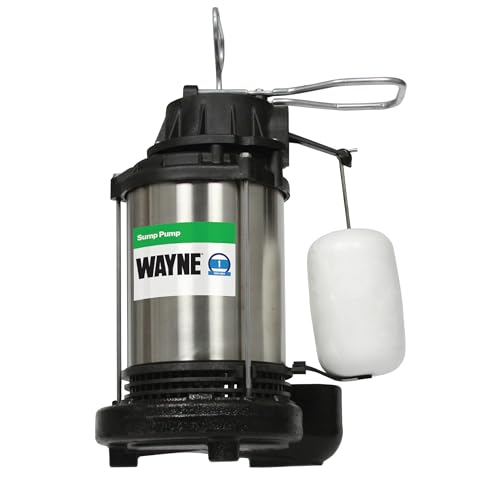
| Wayne CDU800 | Most basements |
| $197.99as of Oct 20, 2026 5:55 pm GMT+0000 | Buy now →Check current price |
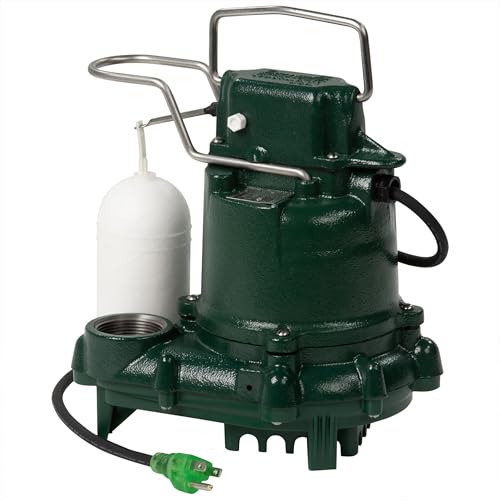
| Zoeller M53 Mighty-mate | Proven 1/3 HP cast iron pump |
| $213.08as of Oct 20, 2026 5:55 pm GMT+0000 | Buy now →Check current price |
| Wayne CDU1000 | Heavy inflow and high water tables |
| $254.99as of Oct 20, 2026 7:27 pm GMT+0000 | Buy now →Check current price |

Prices are Amazon’s listed prices as of the time shown and change often; check Amazon for today’s price. As an Amazon Associate we earn from qualifying purchases.
Submersible vs. Pedestal: Choosing the Replacement Pump
The replacement is a chance to reconsider the pump type rather than automatically buying the same model.
| Feature | Submersible | Pedestal |
|---|---|---|
| Location of motor | Sealed, inside the pit underwater | On a column above the pit |
| Noise | Quieter; water muffles the motor | Louder, noticeable in finished spaces |
| Pit size | Fits standard and larger basins | Works in small or narrow pits |
| Serviceability | Must be pulled out to service | Motor is easy to reach |
| Lid compatibility | Works well with sealed, airtight lids | Column makes a full seal harder |
| Typical price | Moderate to higher | Lower |
For a finished basement or a home with a radon mitigation system, a submersible pump under a sealed lid is the common choice. A pedestal pump can make sense in an unfinished utility area with a small pit, or where easy access to the motor is the priority.
Sizing the new pump
Bigger is not automatically better. An oversized pump can empty a small pit so quickly that it short-cycles, turning on and off every few seconds. An undersized pump falls behind during heavy inflow. A plumber typically looks at how fast the pit fills during wet periods, the vertical distance from the pump to the discharge point (the “head”) and the length of the discharge line. Pump manufacturers publish performance curves showing gallons per hour at different heads, which is a better comparison than horsepower alone.
Signs a Sump Pump Needs Replacing
Many pumps fail without warning, but several signs suggest the end is near:
- Age. Many residential sump pumps are expected to last somewhere around seven to ten years, sometimes less with heavy use. If the pump is older and the pit sees regular water, replacing it before it fails is reasonable.
- Running constantly or cycling rapidly. A stuck float, a failed check valve or an undersized pump can all cause short cycling, which wears the motor.
- Unusual noises. Grinding, rattling or loud humming can point to a damaged impeller or worn bearings.
- Visible rust or corrosion on the pump body or discharge fittings.
- Not starting when the float rises. Lift the float carefully or pour water into the pit to test it.
- Water in the basement after storms or snowmelt despite a pump being present.
- A tripped breaker or GFCI that repeatedly cuts power to the pump.
Repair or replace?
A stuck float, a jammed switch or a failed check valve can sometimes be fixed for much less than a new pump. A seized motor, a cracked housing or an old pump that has already been repaired once usually points toward replacement. Since labor is a large part of any service call, many plumbers recommend replacing an aging pump rather than paying for repeated repairs.
How to Test a Sump Pump
A simple test takes a few minutes and is worth doing in early spring before snowmelt and the rainy season:
- Confirm the pump is plugged in and the outlet has power. If the pump is on a GFCI, check that it has not tripped.
- Remove the pit lid and look for debris, gravel or silt around the pump intake.
- Slowly pour a bucket of water into the pit until the float rises.
- Watch that the pump starts, empties the pit and shuts off cleanly.
- Go outside and confirm water is coming out of the discharge line well away from the foundation.
- Listen for the check valve closing; water flowing back into the pit after shutoff suggests a failed valve.
If anything about the test looks wrong, or the pump is old, that is a good time to get a quote.
Options Worth Considering During Replacement
When a plumber is already at the pit, a few additions can be done at lower incremental cost:
- Backup pump. Power outages often coincide with severe storms. A battery or water-powered backup keeps water moving if the primary pump or power fails.
- New check valve. A worn check valve lets water flow back into the pit and makes the pump work harder.
- Alarm. A high-water alarm warns before the basement floods, which is especially useful for homeowners who travel.
- Sealed lid. Reduces humidity and odors from the pit, keeps children and pets out and is part of many radon mitigation systems.
- Discharge improvements. Extending the outlet so water flows away from the foundation, and protecting it from freezing.
Sump Pits and Radon in Colorado
This is the Front Range issue that most often surprises homeowners. Colorado has widespread elevated radon potential, and an open sump pit connects the basement directly to soil gas below the slab. The EPA describes radon as a naturally occurring radioactive gas that you cannot see or smell, notes that testing is the only way to know your level of exposure and calls radon a leading cause of lung cancer.
Practical implications for a sump replacement:
- If the home has a radon mitigation system, the sump pit is often sealed with an airtight lid and sometimes connected to the mitigation piping. Replacing the pump means breaking that seal, and it needs to be resealed properly afterward. A poorly resealed lid can reduce the system’s effectiveness.
- If the home has no mitigation system, a sealed lid on an open pit is a sensible addition, though a lid alone is not a substitute for testing and, where needed, mitigation.
- Retest after major basement work. If the pit seal, slab or mitigation system was disturbed, a follow-up radon test confirms the system still performs.
Our guide to radon fan replacement cost covers the other mechanical component that keeps a mitigation system working.
Moisture, Mold and Why a Working Pump Matters
A sump pump is part of a home’s moisture defense, not only its flood defense. Even a small amount of water that seeps onto the slab or wicks into finished walls after a failure can cause damage. The EPA’s guidance is that the key to mold control is moisture control, and it recommends drying water-damaged areas and items within 24 to 48 hours to prevent mold growth. In a finished basement, carpet pad, drywall and stored boxes can stay wet longer than that after a pump failure.
That is why the cost of a replacement pump, or a backup, is usually small compared with the cost of drying out and repairing a finished basement. If water has already reached finished materials, the source needs to be fixed first, then wet materials dried or removed. Our crawl space and below-grade guides cover related moisture control topics.
Front Range Considerations
- Seasonal water. Many Front Range pits are dry most of the year and busy during spring snowmelt and summer storms. A pump that rarely runs can seize; testing it a couple of times a year helps.
- Expansive soils. Parts of the region have bentonite clay soils that swell when wet. Discharging sump water right next to the foundation can add to that problem. Route it well away from the house.
- Freezing discharge lines. An exterior discharge line that holds water can freeze in winter and block the pump’s outlet. A sloped line that drains completely and an approved freeze-protection fitting can help.
- Flood risk is not only near rivers. FEMA notes that floods can happen almost anywhere, with heavy rains and poor drainage among the causes. Its flood maps show which areas have the highest mapped risk. The September 2013 Front Range floods were a reminder that basements well away from mapped floodplains can still take on water.
- Discharge rules. Many municipalities prohibit sending sump water into the sanitary sewer. Check local rules before rerouting a line.
Doing It Yourself vs. Hiring a Plumber
A pump-only swap is one of the more approachable plumbing tasks for a handy homeowner, which is why do-it-yourself replacement is common. The basic steps are unplugging the old pump, disconnecting the discharge pipe at a union or coupling, lifting the pump out, setting the new one level on a firm base so the float can move freely, reconnecting the discharge and check valve, and testing with water. The savings are mostly the labor portion of the cost.
Hiring a plumber or waterproofing contractor is usually the better choice when:
- The pit is sealed as part of a radon mitigation system and the seal must be restored properly
- The electrical supply is questionable, such as an extension cord, an ungrounded outlet or a shared circuit that trips
- The discharge piping is cracked, glued without unions or needs rerouting
- A backup pump, alarm or new pit is part of the job
- Water is already rising and the replacement is an emergency
Whoever does the work, avoid a few common mistakes: installing the check valve backward, setting the pump directly on silt or gravel that can clog the intake, letting the float rub against the pit wall and plugging the pump into an extension cord.
The Cost of Waiting
Because a sump pump spends most of its life idle, it is easy to put off replacing an old one. The trade-off is the potential cost of a failure. Cleaning up even a modest amount of water in a finished basement can involve removing carpet and pad, cutting out the lower part of drywall, running fans and dehumidifiers and replacing damaged belongings, and those costs can quickly exceed the price of several pumps. Insurance coverage for sump backup is often a separate endorsement on a homeowners policy rather than standard coverage, so it is worth checking the policy before relying on it.
Getting and Comparing Quotes
When requesting quotes, ask each contractor to specify:
- The pump brand, model, horsepower and material
- The switch type
- Whether the check valve and any discharge piping will be replaced
- Whether the pit lid, and any radon seal, will be restored or upgraded
- Backup options and their battery capacity or water requirements
- Disposal of the old pump and any permit fees
- The warranty on both the pump and the labor
Comparing those details matters more than comparing the bottom line. Similar decision points apply to other mechanical systems; see our guides to water heater replacement cost and well pump replacement cost.
What a Home Inspector Looks For
The ASHI Standard of Practice directs inspectors to inspect sewage ejectors, sump pumps and related piping. Within a visual inspection, an inspector may note:
- Whether a pump is present and appears to operate when the float is raised, if safely accessible
- An open pit without a lid
- Missing or damaged check valves
- Discharge lines that end next to the foundation or are disconnected
- Extension cords or improper electrical connections
- Water stains, efflorescence or other signs of past water entry
- An apparent radon mitigation system and whether the pit appears sealed
An inspector does not predict how long a pump will last or test its capacity, and concerns are typically referred to a plumber or waterproofing contractor.
References
- Radon — U.S. Environmental Protection Agency
- A Brief Guide to Mold, Moisture and Your Home — U.S. Environmental Protection Agency
- Flood Maps — Federal Emergency Management Agency
- ASHI Standard of Practice for Home Inspection — American Society of Home Inspectors
Buying a Front Range home with a sump pit or radon system in the basement? Get in touch to connect with a local inspector who can look at both.