Water Heater Drain Valve: Leaks, Flushing and Replacement
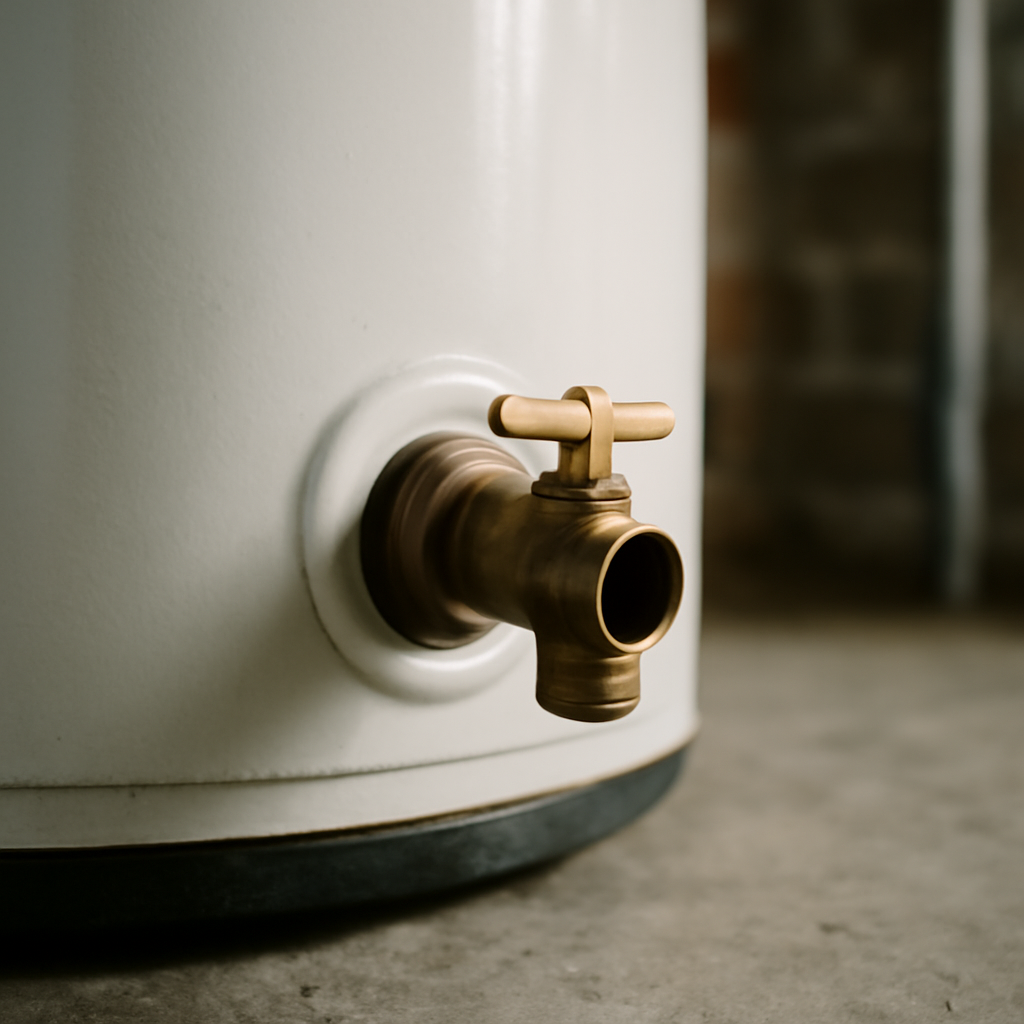
Near the bottom of almost every tank water heater sits a small spigot with a hose thread. It looks like an outdoor faucet, and most owners only notice it when it drips onto the floor or refuses to open during a flush. That fitting is the water heater drain valve, and it is the only practical way to empty the tank, remove sediment or lower the water level for other repairs. This guide explains what the valve does, the difference between the plastic and brass versions found on residential heaters, why drain valves leak or clog, how flushing works in concept, how a stuck or leaking valve is replaced and how tankless heaters handle the same job. Cost figures are hedged estimates for Front Range homeowners rather than quotes, and the heater manufacturer’s instructions should always come first.
Part of our Plumbing & Water guide — start there for the full picture →
Plumbing problem? Talk to a local plumber now.
📞 Call (877) 637-1527What a Water Heater Drain Valve Does
A tank water heater stores dozens of gallons of water under household pressure. The drain valve is threaded into an opening near the bottom of the tank so that water, and the sediment that collects on the tank floor, can be let out through a garden hose. Typical uses include:
- Routine flushing to remove mineral sediment.
- Draining the tank before replacing a heater, an element or the temperature and pressure relief valve.
- Lowering the water level for repairs on fittings near the top of the tank.
- Winterizing a heater in a vacant or seasonal property where freezing is possible.
- Sampling water from the bottom of the tank to check for rust or debris.
The valve is not a shutoff for the house. It only controls water leaving the tank, and opening it under full pressure without a hose attached will release scalding water onto the floor. For isolating the heater, see our guide to the water heater shut-off valve.
Plastic vs Brass Drain Valves
Manufacturers install whichever valve fits their design and price point, and the type matters more than many owners realize.
Plastic Drain Valves
Many residential heaters leave the factory with a plastic drain valve. These valves are inexpensive and resist corrosion, and they work well enough for occasional use. Their drawbacks show up with age and heat:
- The plastic can become brittle after years of contact with hot water.
- The stem and threads can crack if the valve is forced or bumped.
- The internal passage is often narrow, so it clogs easily with sediment.
- Some designs turn with a slotted screwdriver head that strips easily.
Brass Drain Valves
Brass drain valves are a common upgrade. They tend to tolerate heat and repeated use better and are less likely to crack when a hose is attached. Many brass replacement valves are ball valves with a full-port opening, which lets sediment pass far more easily than the narrow passage of a typical factory valve. That larger opening is the main reason some plumbers recommend upgrading during the first flush, especially in hard-water areas.
Brass has its own considerations. A brass valve threaded into a steel tank fitting is a junction of dissimilar metals, and some installers use dielectric precautions or a specific fitting recommended by the heater maker. Replacement parts should match the thread size and length that the manufacturer specifies, because a nipple that is too long can protrude into the tank and trap sediment around it.
Which Is Better?
For most homes, a full-port brass ball valve is the more durable choice and makes flushing easier. A plastic factory valve that works and does not leak, however, is not automatically a defect. Some heater warranties have specific requirements about replacement parts, so check the warranty terms before making changes on a newer unit.
Best Water Heaters: our top 3 picks
| Product | Best for | Key features | Price | Buy |
|---|---|---|---|---|
| Rheem PROE50 M2 RH95 | Best overall whole-house tank |
| $851.54as of Nov 19, 2026 10:00 am GMT+0000 | Buy now →Check current price |
| Rheem RTG 7.0 Indoor | Indoor gas tankless upgrade |
| $653.00as of Nov 19, 2026 2:00 pm GMT+0000 | Buy now →Check current price |
| Rheem RTEX-24 | All-electric home, no venting |
| $545.71as of Nov 19, 2026 2:00 pm GMT+0000 | Buy now →Check current price |


Prices are Amazon’s listed prices as of the time shown and change often; check Amazon for today’s price. As an Amazon Associate we earn from qualifying purchases.
Why Drain Valves Leak or Clog
A drip at the bottom of the heater can come from several places, and the drain valve is one of the easiest to check. Common issues include:
Worn Washer or Seat
Like any faucet, a drain valve relies on a washer or seal. Over time the seal wears or hardens, and the valve drips from the outlet even when fully closed. Sometimes a few turns open and closed will reseat it; often it will not.
Sediment Under the Seat
Sediment from the bottom of the tank can lodge under the seat after the valve has been opened, holding it slightly open. This is especially common right after a flush. Opening the valve fully for a few seconds with a hose attached can flush the particle out. If the drip continues, the valve likely needs replacement.
Cracked Body or Leaking Threads
Water seeping from where the valve threads into the tank, or from a crack in the valve body, is a different problem. Leaking threads can sometimes be resealed when the valve is replaced. A crack in a plastic valve is a clear reason to replace it.
Clogged Valve
A valve that opens but delivers only a trickle is usually packed with sediment. Along much of the Front Range, mineral content in tap water is high enough that sediment accumulates steadily, and narrow factory valves can plug quickly. A full-port valve is far less prone to this.
When It Is Not the Drain Valve
Water at the base of the heater does not always come from the drain valve. The temperature and pressure relief valve discharge pipe, a leaking supply fitting dripping down the side, condensation on a gas heater or a corroded tank can all leave water in the same spot. A tank that leaks from the steel shell itself cannot be repaired and generally means replacement. Our guide to a water heater leaking walks through how to trace the source, and our water heater pressure relief valve guide covers drips from the safety valve.
How Flushing Works
Minerals dissolved in water settle out as sediment when the water is heated. That sediment collects on the bottom of the tank, where it can reduce efficiency, cause rumbling or popping noises on gas heaters and contribute to early failure of the lower element on electric models. EPA’s WaterSense home maintenance guidance recommends flushing a water heater once a year to reduce sediment buildup, which can decrease efficiency. The Centers for Disease Control and Prevention (CDC) adds that regular flushing can help prevent germs from growing and help the heater last longer, and notes that many manufacturers recommend flushing annually, before moving into a home, after plumbing work and if tap water is discolored.
In concept, a flush follows a predictable sequence, though the manufacturer’s manual for the specific heater should be the guide:
- Shut off the energy source. Turn off the breaker for an electric heater, or set a gas heater to its vacation or pilot setting per the manual. WaterSense guidance also notes turning off the power supply before draining.
- Let the water cool if practical. Tank water is hot enough to scald. The U.S. Consumer Product Safety Commission (CPSC) notes that exposure to 140 degree water for six seconds can cause third-degree burns in most adults.
- Attach a garden hose to the drain valve and run it to a floor drain, laundry sink or outdoors, somewhere that can handle hot water.
- Close the cold supply and open a hot faucet in the house to let air in.
- Open the drain valve and let the tank empty or partly empty. Some methods briefly reopen the cold supply with the drain open to stir up sediment.
- Close the drain valve, remove the hose and refill the tank completely with the hot faucet open until water flows steadily without sputtering.
- Restore power or gas only after the tank is full.
Our full guide to a water heater flush covers each step in more detail, including how often to repeat it.
Why Old Tanks Can Be Risky to Flush
A heater that has never been flushed in ten or more years may have a thick layer of hardened sediment. Opening the drain valve can stir loose debris that jams the valve partly open, leaving a tank that cannot be closed until the valve is replaced. On older tanks, sediment can also be helping to plug small corrosion pinholes, and disturbing it occasionally reveals a leak. None of this means old tanks should never be flushed, but having a replacement valve or a plumber available is wise.
Where the Water Goes: Practical Drainage Issues
The drain valve sits only a few inches above the floor, so gravity sets the rules. A hose attached to it can only drain to a point lower than the valve. In many Front Range basements that means a floor drain, a sump pit or a laundry tub with a small transfer pump. Running a hose up and out a basement window will not work by gravity alone, and a hose that rises partway can leave the tank draining slowly or not at all.
A few other details tend to catch homeowners off guard:
- Hot discharge. Water draining from a tank that was recently heated can soften cheap vinyl hoses and scald pets or plants outdoors. Letting the tank cool for a few hours helps.
- Winter drainage. Discharging dozens of gallons onto a driveway or sidewalk in a Colorado winter can create a sheet of ice. A floor drain or sanitary drain inside is usually the better choice.
- Sediment in drains. Heavy sediment can collect in a floor drain trap. Running clean water through afterward helps keep it from settling there.
- Seasonal properties. Mountain cabins and vacant homes that will go unheated are often winterized by draining the heater completely. A tank left full in a building that freezes can split.
Planning the drainage route before opening the valve turns a messy job into a routine one.
Replacing a Stuck or Leaking Drain Valve
Replacement is a routine repair, though it requires draining the tank, which means working with hot water and an open drain. The general process:
- Turn off power or gas and close the cold supply.
- Relieve pressure by opening a hot faucet.
- Drain the tank. If the old valve is clogged, plumbers use various methods, such as a wet vacuum or a short drain-down through another fitting, to lower the water.
- Unscrew the old valve. Plastic valves sometimes break apart and leave threads in the fitting, which must be removed carefully.
- Install the new valve with suitable thread sealant, making sure the outlet faces down or toward the drain route.
- Refill the tank completely, check for leaks and restore the energy source.
Some quick fixes exist for a dripping valve that cannot be replaced immediately. A hose cap with a rubber washer threaded onto the outlet can stop a minor drip temporarily. That is a stopgap, not a repair, and the valve should be replaced at the next opportunity.
On electric heaters, the refill step is critical. Restoring power before the tank is full can burn out a heating element within seconds. Our water heater element guide explains why.
Tankless Heaters: Service Ports Instead of a Drain Valve
Tankless heaters do not store water, so they have no tank drain valve. Instead, many installations include a pair of isolation valves with small service ports on the hot and cold connections. Those ports let a technician isolate the unit and circulate a descaling solution through the heat exchanger with a small pump. In hard-water areas, mineral scale inside the heat exchanger is a common cause of reduced flow, error codes and temperature fluctuation, so the service valves are an important feature. A tankless unit installed without isolation valves is harder and more expensive to maintain. Our guide to the tankless water heater explains maintenance intervals and other differences.
Drain Valves, Inspections and Heater Lifespan
The American Society of Home Inspectors (ASHI) Standard of Practice requires inspectors to inspect water heating equipment and to describe it, including the energy source. It does not require inspectors to operate shut-off valves, so inspectors usually do not open the drain valve. What they may note instead is an active drip, corrosion or mineral crust around the valve, a damaged plastic valve, water staining on the floor or pan, and signs that the heater is nearing the end of its service life.
A leaking drain valve on its own is usually a small repair. The more important question is the heater’s overall condition. A heater with heavy sediment, rust-colored water, a corroded base and an age near the typical service life may be a better candidate for replacement than for a new valve. Our water heater lifespan guide explains how to estimate age from the serial number and what signs suggest replacement. For an overview of what a plumbing inspection covers, see our plumbing and water inspection hub and the main guide to hiring a home inspector.
Costs and Practical Tips
Costs depend on the heater, access, local labor rates and whether the tank must be fully drained. As hedged estimates:
- Replacement plastic drain valves are typically inexpensive, often under twenty dollars.
- Full-port brass ball valve kits usually cost more, often in the range of a few tens of dollars.
- Professional drain valve replacement commonly falls in the low hundreds of dollars, including draining and refilling the tank.
- A professional flush is often a similar range and may be bundled with a valve upgrade.
- Tankless descaling service varies by provider and region and may cost more if isolation valves need to be added.
A few practical habits reduce trouble:
- Keep the area around the drain valve clear so a hose can be attached easily.
- Check under and around the valve for drips during routine look-overs.
- Upgrade to a full-port brass valve the first time a plastic valve fails, if the manufacturer allows it.
- Use a drain pan with a drain line where local code requires it or where a leak would damage finished space.
- Never open the drain valve on a hot tank without a hose attached and a safe place for the water to go.
A drain valve is a simple part, but it is the gateway to nearly every kind of water heater maintenance. Keeping it working means flushing stays easy, leaks stay small and repairs do not turn into emergencies.
More Questions About Water Heater Drain Valves
What size is a water heater drain valve?
Most residential water heater drain valves have a 3/4-inch male garden hose thread on the outlet and thread into the tank with a 3/4-inch NPT connection. That standard size lets a regular garden hose attach for draining.
Replacement valves come in short and long shank versions, and some full-port ball valves have a larger internal passage that flushes sediment better. Measure the existing valve and check the heater manual before buying, since a too-long shank can hit internal parts on some tanks.
How long does it take to drain a water heater?
Draining a typical 40- or 50-gallon water heater through its drain valve usually takes about 30 minutes to an hour with a garden hose. Clogged valves, sediment, and long or uphill hose runs can make it take much longer.
Opening a hot faucet in the house lets air in so the tank drains faster. Allow time for the water to cool first, or keep people and pets away from the hot discharge. Flushing sediment afterward adds more time.
Can a water heater be drained without using the drain valve?
A water heater can be drained without the drain valve by removing the valve itself, siphoning through the top, or disconnecting a supply line, but these methods are messier and usually left to plumbers. They are typically used when the original valve is clogged or broken.
Removing a drain valve from a full tank releases water quickly, so the tank should be cool and water shut off. A wet vacuum or pump can help remove the remaining water before replacing the valve.
Should a water heater drain valve be capped?
Capping a water heater drain valve with a brass garden hose cap is a simple way to stop minor drips and prevent accidental opening. It does not fix a valve that is leaking internally, but it contains the drip until the valve is replaced.
A cap should be removable for draining and flushing. If water collects behind the cap or the valve leaks around its threads, the valve or tank connection needs repair rather than just a cap.
References
- Maintaining a Water-Efficient Home — U.S. Environmental Protection Agency, WaterSense
- Preventing Waterborne Germs at Home — Centers for Disease Control and Prevention
- Avoiding Tap Water Scalds (Publication 5098) — U.S. Consumer Product Safety Commission
- ASHI Standard of Practice for Home Inspections — American Society of Home Inspectors
Frequently asked questions
Why is my water heater drain valve leaking?
The most common causes are a worn washer, sediment lodged under the seat after the valve was opened, or a cracked plastic valve body. Briefly opening the valve with a hose attached can sometimes clear sediment. A valve that keeps dripping or leaks at the threads usually needs replacement.
Is a brass drain valve better than plastic?
A full-port brass ball valve is generally more durable and lets sediment pass more easily during flushing. A working plastic factory valve is not automatically a problem, but many plumbers suggest upgrading when it fails. Check the heater warranty before changing parts on a newer unit.
How often should a water heater be flushed?
EPA's WaterSense program recommends flushing once a year to reduce sediment buildup. The CDC notes many manufacturers also recommend flushing before moving into a home, after plumbing work and if tap water is discolored.
Can a stuck water heater drain valve be fixed without draining the tank?
Usually not. Replacing the valve requires lowering the water below the valve opening, which generally means draining the tank. A hose cap can stop a minor drip temporarily until the valve is replaced.
Do tankless water heaters have a drain valve?
Not a tank drain valve. Many installations instead have isolation valves with service ports that let a technician flush the heat exchanger with a descaling solution, which is important in hard-water areas.
Is sediment coming out of the drain valve normal?
Sediment coming out of a water heater drain valve is normal during flushing, especially in hard-water areas. Grainy white or tan particles are usually mineral scale. Large flakes or rusty debris may indicate corrosion or a spent anode rod.
Can hot water from a drain valve damage a lawn or drain?
Hot water from a water heater drain valve can scald plants, damage some plastic drain fittings and soften asphalt. Let the tank cool for several hours or run cold water through it before draining, and direct the hose to a safe floor drain or outdoor area.
Is a full-port ball drain valve worth it?
A full-port ball drain valve can be worth it in hard-water areas because its wider opening flushes sediment better and is less likely to clog than many stock valves. It is a common upgrade during routine maintenance or drain valve replacement.
Want a clear picture of the water heater and plumbing before you buy? Contact us and we can help you find an inspector who will note leaks, sediment issues and the heater’s age in the report.