Garage Door Panel Replacement: Dents, Cracks and Matching
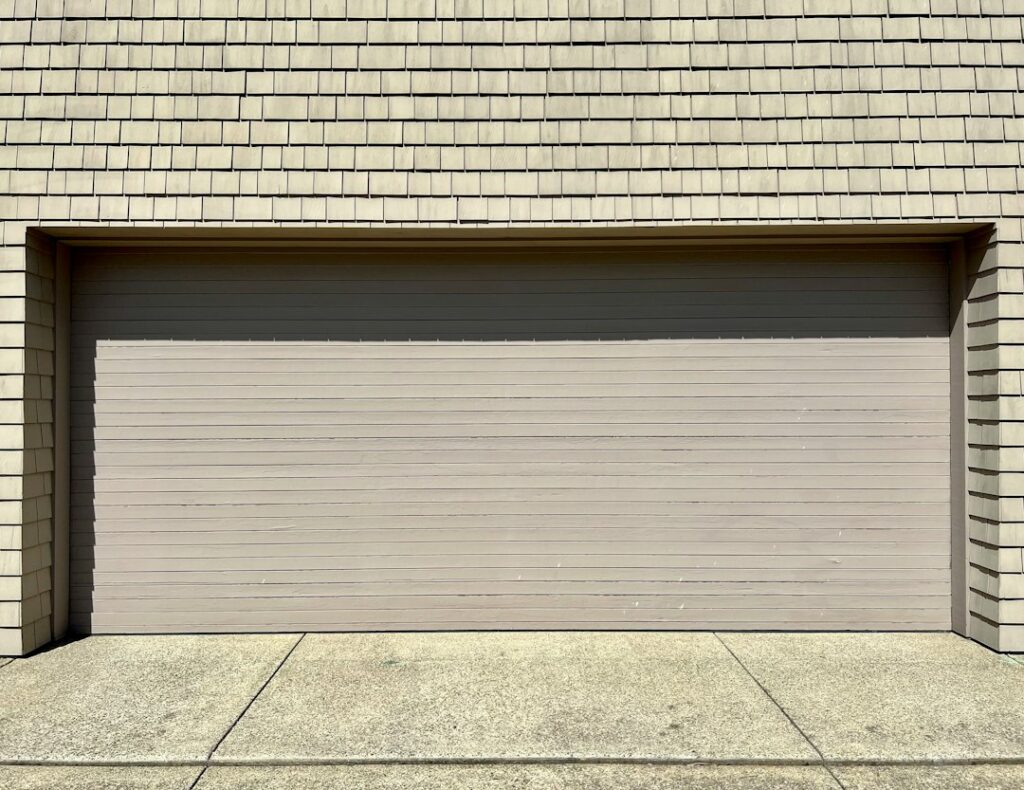
A backed-in bumper, a basketball game, a hailstorm or years of sun can leave one section of a garage door dented, cracked or warped while the rest of the door looks fine. Replacing just the damaged section sounds like the obvious fix, and sometimes it is. Most residential garage doors are sectional, built from three to five horizontal panels hinged together, so individual sections can be swapped out. But garage door panel replacement has complications that are not obvious from the driveway: finding a panel that matches a door that may be fifteen or twenty years old, working on a door held under heavy spring tension, and making sure the door is balanced and the opener still reverses safely afterward. This guide explains when a single panel is worth replacing, when the whole door is the better choice, why the work is generally for professionals, how insulated panels change the picture and what repairs typically cost.
Part of our Structure & Exterior guide — start there for the full picture →
When Garage Door Panel Replacement Makes Sense
Panel replacement is generally a good option when:
- Damage is limited to one section, or at most two, and the remaining sections are in good condition.
- The door is relatively new, so the manufacturer still makes matching panels in the same design, color, thickness and insulation.
- The tracks, hinges, rollers and springs are in good shape and did not bend or break in whatever caused the damage.
- The cost of the panel plus installation is well below the cost of a comparable new door.
A full door replacement is often the better choice when:
- The door model has been discontinued and no matching panel is available.
- Several sections are damaged, or the damage is to the bottom section along with rot, rust or failed weatherstripping on others.
- The door is old enough that springs, cables and rollers are nearing the end of their lives anyway.
- The homeowner wants to upgrade to an insulated door, a different style or windows.
Many installers say that once panel replacement costs approach half the cost of a new door, the new door is worth considering, though that is a rule of thumb rather than a fixed threshold. Our garage door installation guide covers what a full replacement involves.
Common Types of Panel Damage
Dents
Steel doors, the most common type on Front Range homes, dent easily, especially thinner single-layer doors. Minor dents can sometimes be pushed out or filled and painted, though results vary. Deep creases, dents that cross a panel’s horizontal joint or dents that have bent the internal reinforcing struts usually call for replacement, because the section may no longer track straight or seal at the joint.
Cracks and splits
Wood doors can split along the grain or crack at joints, and fiberglass and composite skins can crack from impact or from age and cold. Cracks let water into wood and into the insulated core of some doors, which can lead to rot, delamination or swelling.
Hail damage
Hailstorms are a regular part of Front Range summers, and a single storm can dimple every panel on a steel door. Hail damage usually affects the whole door rather than one section, which makes full replacement more common than single-panel replacement. Homeowners insurance may cover hail damage, subject to deductibles and policy terms, so documenting damage with photos soon after the storm is worthwhile. When a hail claim covers the door, the adjuster’s estimate typically assumes a comparable replacement, so it is worth confirming whether the insurer will pay for a full matching door if only some sections are damaged and the original panels are no longer made. Policies differ on how they handle matching, so read the terms or ask the agent before authorizing work.
Bottom section rot and rust
The bottom section sits closest to snowmelt, road salt and puddles. Wood bottom sections rot and steel bottom sections rust, especially where the bottom weatherseal has failed. Bottom sections are the most frequently replaced panels for this reason.
Bent sections from opener problems
If an opener keeps pushing when a door binds, or a door closes on an obstruction without reversing, the force can buckle the top section where the opener arm attaches. Some top sections have reinforcing struts for exactly this reason. Bent top sections often point to an opener adjustment or door balance problem that needs correcting along with the panel.
Repairs short of replacement
Not every damaged section needs to come out. Depending on the material and severity, technicians and homeowners sometimes use:
- Dent removal or filling. Shallow dents in steel can sometimes be eased out from behind, or filled with an exterior-grade body filler, sanded and painted. Filler can crack as the door flexes and the steel expands and contracts, so this tends to be a cosmetic, short-term fix.
- Reinforcing struts. A horizontal steel strut fastened across the inside of a section can stiffen a slightly bowed panel and help a long double-car door stay straight, particularly where the opener attaches to the top section.
- Wood repairs. Small cracks and soft spots on wood doors may be consolidated, filled and repainted, as with other exterior wood. Rot that has spread through a section or into the stiles usually means replacement.
- Bottom weatherseal and retainer replacement. Sometimes what looks like a damaged bottom panel is a torn rubber seal or a bent aluminum retainer, which is a much simpler repair.
Any repair that adds weight, such as struts or heavy filler, can slightly change the door’s balance, so the spring and opener should be checked afterward.
How a section swap typically proceeds
Every door is different, but the general approach for a middle or top section is to close the door, disconnect the opener, secure the door so it cannot move, remove the hinges connecting the damaged section to its neighbors, slide the section out of the tracks and fit the new one with new hinges and rollers. For a bottom section, spring tension is usually released first, the cables are detached from the bottom brackets, and the brackets and weatherseal are transferred or replaced before tension is restored. Technicians typically finish by checking balance, adjusting the opener and testing the safety reversal. The job often takes a few hours once the panel is on hand, but waiting for a special-order panel can leave a door unusable or temporarily patched for some time.
Matching Panels on Older and Discontinued Doors
Garage door manufacturers change their product lines regularly. Panel embossing patterns, raised-panel profiles, colors, steel gauge, section heights and insulation thicknesses vary between models and production years. A replacement panel has to match all of these closely to look right and to function correctly with the existing hinges and tracks.
To find a match, an installer typically needs:
- The manufacturer and model, often printed on a label on the inside of a door section edge or the end stile.
- The door width and the height of each section.
- The panel design (short raised panel, long raised panel, flush, carriage house, ribbed), texture and color.
- The construction type: single-layer steel, insulated steel with a backer, or a sandwich construction with steel on both sides, plus the insulation thickness and type.
- Any window inserts in that section.
Even when the manufacturer still makes the same model, colors fade with sun exposure, so a new panel may look slightly brighter than its weathered neighbors. Some homeowners repaint the whole door afterward to blend them. When no match exists, options include replacing the entire door, choosing a contrasting panel (sometimes used intentionally with glass sections at the top), or moving a damaged lower section to a less visible position if the panels are interchangeable, though this is not always structurally appropriate.
Why Panel Replacement Is Usually a Professional Job
A garage door can weigh well over a hundred pounds, and much more for wood, insulated or oversized doors. That weight is counterbalanced by torsion springs above the door or extension springs along the tracks, which store a large amount of energy. Removing a section disturbs that balance. Depending on which section is replaced and the door’s design, the installer may need to release spring tension, disconnect cables at the bottom brackets or support the door while sections are unhinged.
The bottom section is particularly hazardous because the lift cables attach to its bottom brackets, and those brackets are under spring tension. Loosening the wrong fastener on a bottom bracket can release that tension suddenly. Our guides to garage door spring repair and garage door cables explain the components involved and why spring and cable work is generally left to trained technicians.
CPSC advises that a properly operating garage door will be balanced, meaning it will stay in place when stopped in any partially open position, and that a severely unbalanced garage door could unexpectedly crash to the floor, possibly striking someone under it. CPSC recommends that doors that are not balanced, or that bind or stick, be serviced by a professional.
After a section is replaced, the installer typically checks and adjusts:
- Spring tension for the new door weight, since an insulated or heavier panel changes it.
- Cable length and tension on both sides so the door closes level.
- Hinges and rollers on the new section, which are often replaced at the same time.
- Track alignment and fastening.
- Bottom and perimeter weatherseals.
- Opener force and travel settings.
Insulated Panels and Mixing Panel Types
Insulated garage doors use polystyrene panels or injected polyurethane foam between steel skins or behind a steel face. They are stiffer and more dent-resistant than single-layer doors, quieter, and they help moderate garage temperatures, which matters for attached garages under bedrooms and for Front Range winters. Our insulated garage door guide compares insulation types and R-value claims.
Replacing one section of a non-insulated door with an insulated section, or vice versa, is generally not recommended. Sections of different construction can differ in weight, thickness and stiffness, which affects spring balance, hinge alignment and how the sections seal against each other. A door with mixed sections may look and perform unevenly. Adding a retrofit insulation kit to an existing non-insulated door is a separate option, but it also adds weight, so spring tension usually needs adjustment afterward.
Opener Balance and Safety Reversal After Repairs
Any change to a garage door’s weight or balance affects the opener. Openers are designed to move a balanced door, not to lift a heavy one, and an opener straining against an unbalanced door wears out faster and may not reverse properly.
Federal safety requirements have applied to residential garage door openers for decades. In a 1992 announcement of final rules, CPSC said that residential openers manufactured on or after January 1, 1993 must include either an external entrapment protection device, such as an electric eye or door edge sensor, or a constant-contact wall control that requires the button to be held for the door to close. CPSC’s garage door opener safety publication adds that, if an electric eye is used, it should be installed 4 to 6 inches above the floor.
CPSC recommends testing the reverse function by placing a 2×4 on the floor in the door’s path. If the door does not reverse when it strikes the board, CPSC advises disengaging the opener until it is adjusted according to the owner’s manual, repaired or replaced. CPSC also recommends inspecting the door and opener every 30 days and periodically checking balance manually by pulling the quick release with the door closed and moving the door by hand.
After a panel replacement, it is worth confirming:
- The door stays put when stopped partway open with the opener disconnected.
- The door reverses on the 2×4 test.
- The photo eyes are aligned, at the correct height and reverse the door when the beam is broken.
- The opener does not strain, stall or make new noises.
If the door will not close fully, reverses unexpectedly or the opener struggles after repairs, see our guides to garage door opener repair and a garage door that won’t close.
Garage Door Panel Replacement Costs
Costs vary by region, door brand, size, construction and panel availability. As rough 2026 planning ranges:
- Single section on a standard single-layer steel door: often a few hundred dollars for the panel plus installation labor, when a match is in stock.
- Insulated steel, wood, composite or custom sections: typically more, sometimes approaching or exceeding the cost of a new basic door.
- Bottom sections: may cost more to install because of the cable and bracket work involved.
- Related parts: new hinges, rollers, weatherseals, cables or springs commonly add to the bill, especially on older doors.
- Special-order panels: may take several weeks to arrive, and some suppliers charge shipping or minimum order fees.
- Full door replacement: often ranges from roughly the low thousands for a basic single-car steel door to considerably more for insulated, double-wide, wood or custom doors.
Get written quotes that list the panel model and color, whether hinges and rollers are included, whether spring tension and opener settings will be adjusted and how long the door will be inoperable while waiting for parts.
What Home Inspectors Check
Under the ASHI Standard of Practice, home inspectors inspect garage vehicle doors and garage vehicle door operators. A typical inspection includes operating the door with the opener, testing auto-reverse and photo eyes, and visually checking panels, hinges, rollers, tracks, springs and cables for damage. Inspectors commonly note dented or cracked panels, damaged bottom sections, failed weatherseals, missing or misaligned photo eyes, failed reversal tests and signs of imbalance. They generally do not adjust springs or disassemble hardware, so follow-up with a garage door technician is the usual recommendation for anything beyond cosmetic damage. Our structure and exterior inspection section covers related items, and the main guide to hiring a home inspector explains how to choose an inspector.
References
- Non-Reversing Automatic Garage Door Openers Are a Hazard (Publication 523) — U.S. Consumer Product Safety Commission
- Safety Commission Publishes Final Rules for Automatic Garage Door Openers — U.S. Consumer Product Safety Commission
- ASHI Standard of Practice for Home Inspections — American Society of Home Inspectors
Frequently asked questions
Can you replace just one panel on a garage door?
Yes, on most sectional doors, provided the manufacturer still makes a matching panel in the same design, size, color and construction. If the model is discontinued or several sections are damaged, replacing the whole door is often more practical.
Is garage door panel replacement a DIY job?
Generally no. Removing a section disturbs a door held under heavy spring tension, and bottom sections connect to cables and brackets under load. CPSC recommends that unbalanced, binding or sticking doors be serviced by a professional.
Can I put an insulated panel in a non-insulated garage door?
It is generally not recommended. Sections of different construction can differ in weight, thickness and stiffness, affecting spring balance, alignment and sealing. Matching the existing construction, or replacing the whole door, usually works better.
What should be checked after a garage door panel is replaced?
The door should stay in place when stopped partway open, the opener should reverse when the door hits a 2x4 on the floor, and the photo eyes should be aligned and working. Springs and opener settings often need adjustment.
How much does garage door panel replacement cost?
A single section on a basic steel door often costs a few hundred dollars installed when a match is available. Insulated, wood, custom or bottom sections cost more, and extensive damage may make a new door the better value. These are rough 2026 ranges.
Wondering whether the garage door on a house you are buying is balanced and reverses safely? Get in touch here to connect with a Front Range inspector who tests doors, openers and safety sensors.