Garage Door Spring Replacement Cost: Typical Prices and Quotes
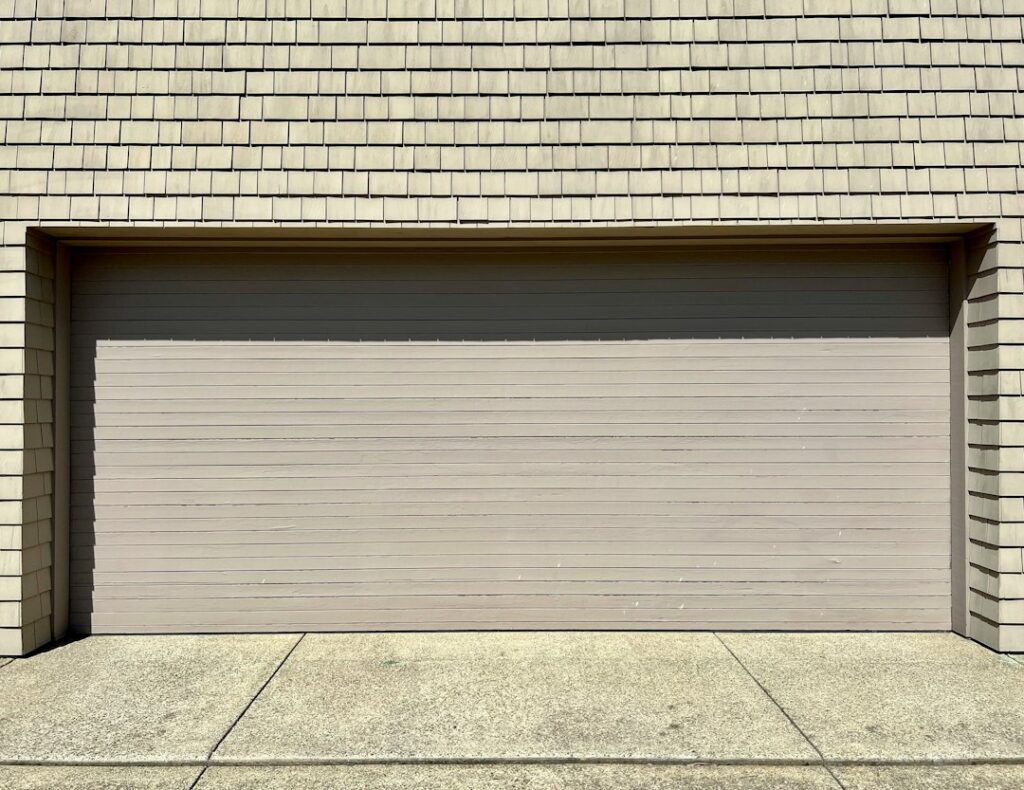
Garage door spring replacement cost typically runs from roughly $150 to $450 for a standard residential door when a technician replaces the springs on a normal service call, with heavier doors, high-cycle springs, after-hours visits and system conversions pushing the bill higher. Most homeowners land in the low-to-middle part of that range when both springs on a two-spring door are replaced together. This guide explains the typical ranges by spring type, what actually drives the price, when replacing springs makes more sense than replacing the whole door, how to read a quote line by line, and why spring work is one job that should almost always be left to a trained technician. Prices here are typical national ranges for 2026 and are not quotes; local labor rates, door weight and travel distance all move the number, so collect written quotes before agreeing to any work.
Part of our Structure & Exterior guide — start there for the full picture →
Typical Garage Door Spring Replacement Cost at a Glance
Springs are quoted per job rather than per hour in most markets. The technician arrives, measures the old spring (wire size, inside diameter, length and wind direction for torsion springs), weighs or estimates the door, and prices the parts plus labor as a package. The table below shows the ranges homeowners typically see.
| Job type | What is usually involved | Typical national range, 2026 (get local quotes) |
|---|---|---|
| Single torsion spring, one-spring door | Unwind, remove and replace one spring above the door; rebalance | About $150 to $300 |
| Pair of torsion springs, two-spring door | Replace both springs on the shaft, adjust tension, lubricate | About $200 to $450 |
| Pair of extension springs (side-mounted) | Replace both side springs plus safety cables if missing or worn | About $150 to $350 |
| High-cycle or oversized torsion springs | Longer-life or heavier-wire springs for heavy or frequently used doors | Often $50 to $200 more than standard springs |
| Heavy wood, carriage-style or double-wide insulated door | Larger springs, sometimes four springs, two technicians | Roughly $300 to $700 or more |
| Convert extension springs to a torsion system | New shaft, springs, drums, bearings and center bracket | Roughly $350 to $900 |
| Emergency, weekend or after-hours visit | Same work outside normal hours | Often an added $75 to $250 |
Those ranges usually include the trip charge, the springs, labor and a basic tune-up. They often do not include rollers, cables, bearings, a new opener or panel repairs, which a technician may recommend once the door is apart. Some of those add-ons are legitimate. Some are not. The quote section below explains how to tell the difference.
If the door has other symptoms beyond a broken spring, our broader guide to garage door spring repair walks through how springs fail and what the repair involves step by step.
Torsion vs Extension Springs: Why the Type Changes the Price
Residential overhead doors are counterbalanced by one of two spring systems. The type on the door sets the baseline price and the safety picture.
Torsion springs
Torsion springs sit on a steel shaft directly above the closed door. As the door closes, the springs are wound tighter, storing energy that helps lift the door when it opens. Cable drums at each end of the shaft wind the lift cables. Most newer sectional doors use torsion springs, and many two-car doors have two of them. Torsion springs are generally quieter and smoother, and the shaft keeps the door more evenly balanced from side to side.
Replacement means safely unwinding the remaining tension (on the unbroken spring, if there is one), removing the old springs, installing new ones of the correct size and wind direction, winding them a set number of turns with winding bars, and then testing balance. The parts themselves are not expensive. Most of the cost is skilled labor and liability.
Extension springs
Extension springs run along the horizontal tracks on each side of the door and stretch as the door closes. They are more common on older and lighter doors. Parts and labor are often a little cheaper than torsion work, but extension springs have a well-known failure mode: when one breaks, the pieces can whip across the garage unless a safety cable runs through the center of each spring. A good quote for extension springs includes those containment cables if they are not already in place.
Why replacing both springs is common
On a two-spring door, both springs were installed at the same time and have seen the same number of cycles. When one breaks, the other is usually close behind. Most technicians recommend replacing the pair, and that is a reasonable practice rather than an upsell. Replacing both on the same visit avoids a second trip charge a few months later and keeps the door balanced with matched springs.
What Drives the Price Up or Down
Two homeowners with the same broken spring can get quotes that differ by a few hundred dollars. The main drivers are predictable.
- Door weight and size. A single-car steel door needs a much lighter spring than a 16-foot insulated door with windows or a solid wood carriage door. Heavier doors need thicker wire, longer springs or more springs, and sometimes two technicians.
- Spring grade. Standard springs are commonly rated for roughly 10,000 open-close cycles, and high-cycle springs for several times that. High-cycle springs cost more upfront but can make sense for a door used many times a day.
- Number of springs. One, two or four springs changes both parts and labor time.
- Condition of related parts. Frayed cables, worn bearings, a bent shaft or cracked drums often show up once the door is opened up. These are real costs when they are genuinely worn.
- Access. Low headroom, a ceiling-mounted storage rack in the way, or a cluttered garage can add time.
- Timing. A broken spring often traps a car inside. Same-day, evening and weekend calls typically carry a premium.
- Travel distance. Rural and foothill addresses may carry a higher trip charge than homes in the metro core.
- Warranty. Some companies include a multi-year parts warranty on springs. A longer warranty often comes with a higher price, but it has real value if the springs are high-cycle.
Spring replacement normally does not require a building permit. A full door replacement sometimes does, especially if the opening changes or the home is in an area with wind-load requirements, so check with your city or county building department if the job grows into a new door.
Repair vs Replace: Springs, Opener or the Whole Door
A broken spring is a wear item, not a sign that the whole door is finished. In most cases, replacing the springs and tuning up the hardware is the right call. A few rules of thumb help with the bigger decision. They are rules of thumb, not formulas, and the condition of the door matters more than any ratio.
- Replace springs and keep the door when the panels are straight, the tracks are solid, the door closes squarely and the opener works. That covers the majority of spring failures.
- Consider a new door when panels are cracked or badly dented (Front Range hail does this to thin steel doors), the door is uninsulated in a garage under a bedroom, sections are rotted wood, or the combined repairs approach roughly half the cost of a new installed door.
- Consider a new opener separately when the existing one is old, noisy or lacks working photo-eye sensors. A failed spring often strains the opener, because the motor tries to lift a door it was never designed to carry alone.
For homeowners weighing a full door, our guide to garage door installation explains when a single section can be swapped and when the whole door is the better value. If the opener itself is the weak link, have it evaluated separately, since motor and sensor problems are a different repair.
Signs the spring is the problem
- A loud bang from the garage, often when nobody was using the door.
- A visible gap of a few inches in a torsion spring coil above the door.
- The opener strains, hums or lifts the door only a few inches before stopping.
- The door feels extremely heavy when lifted by hand after pulling the release.
- The door goes up crooked or one cable hangs slack.
If those symptoms appear, stop using the opener. Running the motor against a door with a broken spring can damage the opener and pull the cables off their drums.
Why Spring Replacement Is Not a DIY Job
Garage door springs hold enough stored energy to lift a door that can weigh well over 100 pounds and, on large wood doors, several hundred. That energy is released suddenly if a winding bar slips, a set screw is loosened in the wrong order or an extension spring snaps without a safety cable. Serious hand, arm and head injuries are a known outcome of amateur spring work. Inexpensive spring kits are sold online, and those low prices are not a reason to take the risk.
The U.S. Consumer Product Safety Commission’s homeowner safety sheet on garage doors explains that a properly operating door is “balanced,” meaning it stays in place when stopped partway open. The same publication warns that a severely unbalanced door “could unexpectedly crash to the floor possibly striking someone under the open door,” and advises that doors that are not balanced, or that bind or stick, should be serviced by a professional. It also tells homeowners to check the springs, hardware and fittings by closing the door, pulling the quick-release to detach the opener, and moving the door by hand.
That manual check is a reasonable thing for a homeowner to do. Adjusting, unwinding or replacing the springs is not. The safest homeowner actions are:
- Keep everyone, especially children, out from under the door.
- Do not try to lift a door with a broken spring using the opener.
- Do not loosen any bolts on the bottom brackets, which are also under cable tension.
- If the door is stuck open, leave it, or have a technician lower it under control.
- Call a garage door technician and get a written price before work begins.
Once the springs are replaced, test the opener’s auto-reverse. The CPSC sheet describes placing a 2×4 on the floor in the door’s path; if the door does not reverse when it strikes the board, the opener should be disengaged until it is adjusted, repaired or replaced. The CPSC also notes that photo-eye sensors, if used, should be installed 4 to 6 inches above the floor. A much older CPSC release on garage door accidents similarly advised adjusting the automatic reverse mechanism periodically for sensitivity, following the owner’s manual. Our guide to garage door safety sensors covers alignment and testing.
How to Read a Garage Door Spring Quote
The garage door repair trade has a reputation for low advertised prices that grow on site. A clear written quote is the best protection. Get two or three when the door is not an emergency, and at least a written price before work starts when it is.
Line items that should be there
- Spring type, quantity and grade (standard or high-cycle), ideally with wire size and length.
- Labor and any trip or service-call fee, stated separately or clearly bundled.
- Any additional parts with a reason, such as “cables frayed at bottom bracket” or “center bearing seized.”
- Warranty terms on parts and labor, in writing.
- Emergency or after-hours surcharge, if any.
Red flags
- A very low phone price that triples on arrival. A $49 or $79 “service call” that turns into a large bill is a common pattern.
- Pressure to replace the whole door when the panels and tracks are in good shape.
- “Lifetime” springs at a premium price with vague warranty terms. Ask what the warranty actually covers and for how long.
- A full package of rollers, cables, bearings and an opener presented as mandatory. Each part should be justified by its condition.
- No written price before work starts, or a technician who will not show the old parts.
- Mismatched springs or a single spring replaced on a two-spring door without explanation.
Questions to ask
- What is the cycle rating of the springs being installed?
- Are you replacing both springs, and why or why not?
- Which other parts are worn, and can you show me?
- What does the warranty cover, and who honors it if the company closes?
- Will you test balance and the opener’s auto-reverse before leaving?
Replacement rollers are one of the more common legitimate add-ons. If the technician says the old rollers are cracked or flat-spotted, our guide to garage door rollers explains the difference between steel and nylon options, and readers who want to compare products can see our picks for the best garage door rollers.
Front Range Factors Worth Knowing
Most of what drives spring cost is the same everywhere. A few Colorado conditions do show up in garage doors.
- Cold snaps. Steel springs can become more brittle at low temperatures, and many technicians report more breaks during sharp cold spells. A spring near the end of its life often fails on the first very cold morning of the season.
- Hail. Hail can dent thin steel panels badly enough that the door binds in the track, which loads the springs and opener unevenly. If a hail claim is open, mention the door to the adjuster before paying for a new door out of pocket.
- Dry air and dust. Dust collects on springs, rollers and bearings. A light lubricant designed for garage door hardware, applied according to the manufacturer’s directions, helps reduce friction and noise.
- Heavier insulated doors. Many Front Range homeowners choose insulated doors to protect bedrooms over garages and to keep winter temperatures in check. Heavier doors need correctly sized springs. Ask the technician to confirm spring size against the actual door weight after any door upgrade.
- Distance. Homes in the foothills or on the eastern plains may pay higher trip charges and wait longer for same-day service.
How a Home Inspection Flags Spring Problems
The ASHI Standard of Practice lists garage vehicle doors and garage vehicle door operators among the interior items a home inspector shall inspect. In practice, an inspector operates the door with the opener, watches how it travels, checks the photo-eye sensors and auto-reverse where it is safe to do so, and looks at visible springs, cables, brackets and tracks.
An inspection report may note a broken or gapped spring, a missing extension-spring safety cable, frayed lift cables, a door that does not reverse, sensors mounted too high, or a door that slams or drifts when stopped partway. Inspectors generally do not adjust spring tension or disassemble the system. The standard also does not require inspectors to perform procedures that are likely to be dangerous, and spring work clearly qualifies. When a report flags the door, the next step is a quote from a garage door technician.
For buyers, a flagged spring is a small negotiating item compared with roofs, foundations or sewer lines, but it is a genuine safety item. Asking the seller to have springs replaced and auto-reverse corrected before closing is reasonable. Worn lift cables and bent tracks are often found on the same visit and should be priced as separate line items.
More cost guides for exterior and structural repairs are grouped on our structure and exterior hub.
Keeping New Springs Working Longer
Spring life is measured in cycles, so use matters more than calendar years. A door opened four times a day reaches 10,000 cycles in roughly seven years. A door used as the family’s main entrance, opened a dozen times a day, can reach it in two or three. A few habits help:
- Do the CPSC-style manual balance check periodically: pull the release, lift the door halfway and see whether it stays put.
- Keep rollers, hinges and bearings lubricated with a product meant for garage doors.
- Replace worn weatherstripping so the door does not have to crush a stiff seal to close.
- Choose high-cycle springs if the garage is the main entry to the house.
- Listen for new noises and watch for jerky travel, which often show up before a failure.
When to Call a Specialist or Inspector
Call a garage door technician right away if a spring is visibly broken, the door is stuck partway, a cable has come off its drum, or the door falls when the opener releases it. Do not use the opener in the meantime. For buyers and sellers, a home inspection is the right time to catch a tired spring, a missing safety cable or a door that fails the auto-reverse test, so the fix can be priced into the deal rather than discovered on move-in day.
Questions about a garage door noted in an inspection report, or about other systems in a home you are buying, can go to our team through the contact page.
References
- Non-Reversing Automatic Garage Door Openers Are a Hazard (Publication 523) — U.S. Consumer Product Safety Commission
- Garage Door Operators and Gate Operators: Voluntary Standards — U.S. Consumer Product Safety Commission
- CPSC Warns of Garage Door Accidents — U.S. Consumer Product Safety Commission
- ASHI Standard of Practice for Home Inspection — American Society of Home Inspectors
Frequently asked questions
How much does it cost to replace a garage door spring?
A typical national range in 2026 is roughly $150 to $300 for a single torsion spring and about $200 to $450 for a pair, including the service call and labor. Heavy doors, high-cycle springs and after-hours visits cost more, so get a written local quote.
Should both garage door springs be replaced at once?
Usually yes. Both springs on a two-spring door have the same number of cycles, so the second one tends to fail soon after the first. Replacing the pair on one visit avoids a second trip charge and keeps the door balanced.
Can a homeowner replace a garage door spring themselves?
It is not recommended. Springs store enough energy to cause serious injuries if a winding bar slips or a spring snaps. The CPSC advises that unbalanced doors, or doors that bind or stick, be serviced by a professional.
How long do garage door springs last?
Spring life is rated in open-close cycles rather than years. Standard springs are commonly rated around 10,000 cycles and high-cycle springs several times that, so a frequently used door wears out springs much faster.
Does a home inspector check garage door springs?
Yes, as part of the garage door and opener. The ASHI Standard of Practice includes garage vehicle doors and operators. Inspectors look at visible springs, cables and sensors and test operation where safe, but they do not adjust spring tension.
Buying a home on the Front Range and want the garage door and every other system looked at before closing? Reach out to our team to connect with a qualified local inspector.