Quiet Radon Fan: What Homeowners Need to Know
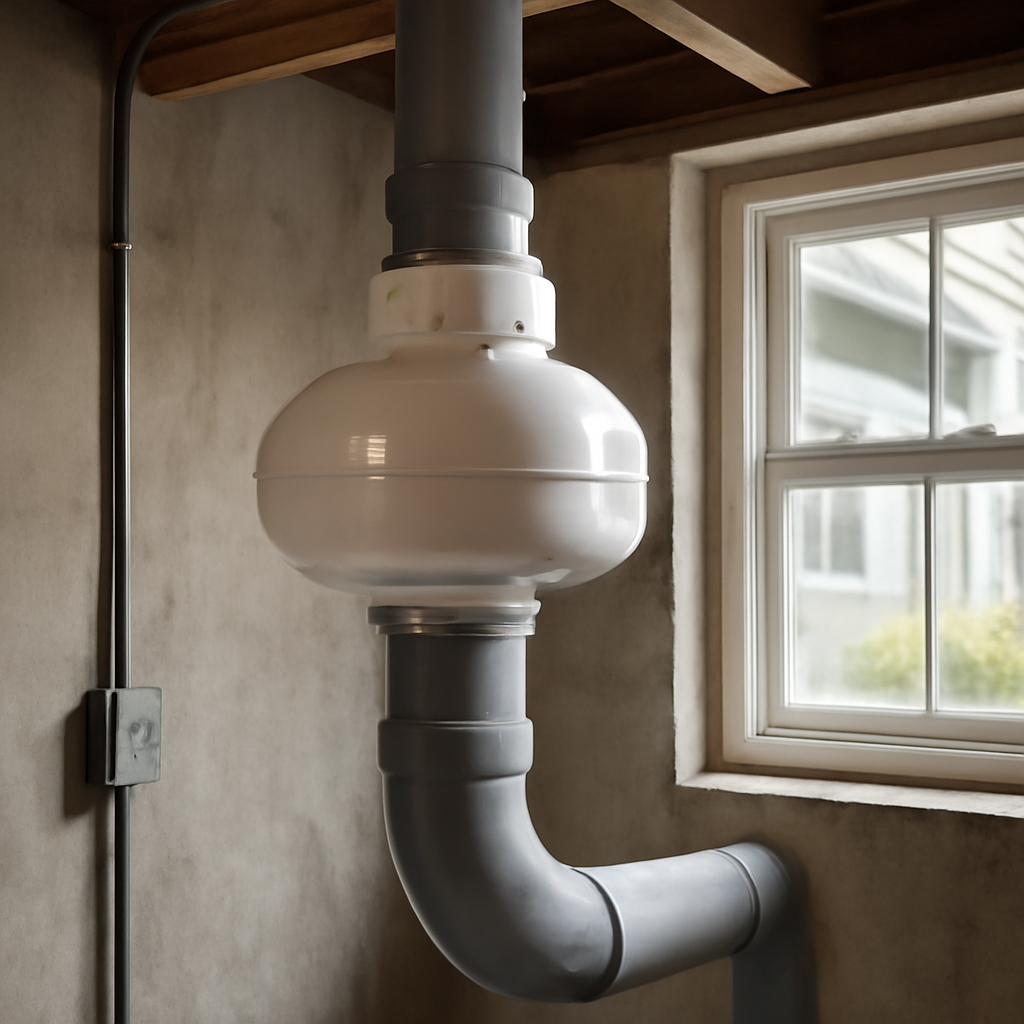
A radon mitigation system runs around the clock, so any noise it makes is noise you live with constantly. Most homeowners barely notice a well-installed system, but a fan mounted in the wrong spot, or simply a louder model, can produce a hum or whoosh that grates over time. A quiet radon fan, paired with thoughtful placement, keeps protection invisible in every sense. This guide reflects EPA mitigation guidance and manufacturer specifications current as of 2026; it is informational only, not a diagnosis, and a certified professional should make fan selection and design decisions for your home.
Part of our Radon Mitigation Systems guide — start there for the full picture →
What makes a radon fan quiet?
A quiet radon fan combines a well-balanced motor, sound-dampening housing, and a suction-and-airflow curve matched to the home so the fan is not forced to run at the loud end of its range. Manufacturers publish noise ratings, and quieter residential models operate in a low decibel range, often comparable to a soft household hum, while higher-suction industrial fans run louder by design.
Noise in a radon system comes from two sources: the motor and impeller themselves, and the air rushing through the pipe. A fan sized correctly for the home’s sub-slab conditions runs efficiently and quietly; one that is undersized strains and whines, while an oversized one moves more air than needed and adds turbulence noise. Selecting the right fan is as much about matching it to the soil as about the fan’s own rating. The mechanics of how the fan generates suction are covered in our guide to the radon vent fan.
Why some systems are louder than others
The single biggest noise factor is often not the fan model but its installation. A fan rigidly bolted to the house framing transmits vibration straight into the structure, turning a wall into a sounding board. Proper installation uses rubber couplings and isolation to keep that vibration out of the building.
Pipe routing matters too. Sharp turns, undersized pipe, and long horizontal runs create air turbulence and a whooshing sound. A fan placed inside an attic directly above a bedroom can carry hum down through the ceiling, while the same fan mounted outside on an exterior wall is far less intrusive. The trade-offs of indoor versus outdoor placement are discussed in our note on the exterior radon fan.
How to make an existing system quieter
If a system is already installed and noisy, several fixes can help without replacing the fan. Adding rubber isolation couplings between the fan and the pipe dampens vibration. Securing loose pipe sections that rattle, and adding straps with cushioned mounts, reduces structure-borne noise. Sometimes simply relocating the fan away from a bedroom wall solves the problem.
If the fan itself is the issue, swapping to a quieter, properly sized model is the next step. Because the fan must still hold the suction the home needs, the replacement should match or be re-sized to the original’s performance, not just chosen for low decibels. A fan that is quiet but too weak leaves radon elevated, defeating the purpose. Verifying performance after any change ties back to the testing approach in our Front Range radon testing guide.
Choosing a quiet fan for a new system
For a new installation, the path to a quiet result starts with design. A certified mitigator runs diagnostics to learn how the home’s soil resists airflow, then selects a fan whose curve meets that demand without straining. Matching the fan to the soil is what lets a quieter model do the job, because it never has to run flat out.
Routing the pipe with smooth, gradual turns, using the correct diameter, and mounting the fan with isolation couplings all contribute. Homeowners who know they are sensitive to noise should raise it during the design conversation so the installer can prioritize a low-decibel model and a placement away from living spaces. The fan is one part of a system that also depends on the radon vent pipe being properly sized and pitched.
Understanding the two kinds of system noise
To address noise effectively, it helps to separate the two distinct sources. The first is airborne noise, the hum of the motor and the rush of air through the pipe, which travels through the air and is heard directly. The second is structure-borne noise, vibration from the fan that transmits into the building’s framing and is felt and heard through walls, floors, and ceilings.
Airborne noise is reduced by choosing a quieter fan model, keeping the fan outside or in an unfinished space, and ensuring smooth pipe routing that minimizes turbulence. Structure-borne noise is reduced by isolating the fan from rigid contact with the structure, using rubber couplings and cushioned mounts so vibration is absorbed rather than transmitted. Many noise complaints are actually structure-borne, which is why a fan that seems quiet up close can still produce an annoying hum in a room two floors away.
Diagnosing which type dominates points to the right fix. If the noise is loudest near the fan, it is likely airborne and a quieter model or better routing helps. If the noise seems to come from the walls or ceiling rather than the fan itself, isolation and mounting are the targets. This is part of why a professional assessment is valuable; the fix depends on correctly identifying the source.
Fan placement choices that reduce noise
Where the fan sits has a large effect on perceived noise, within the constraint that it must always be outside conditioned living space. An exterior wall mount keeps both airborne and structure-borne noise largely outside the home, which is why noise-sensitive homeowners often prefer it, as discussed in our note on the exterior radon fan.
An attic-mounted fan is hidden and weather-protected, but it sits inside the building envelope and can transmit hum down through the ceiling, especially into bedrooms directly below. When an attic location is chosen, installers avoid placing the fan directly above sleeping areas and use isolation mounts to limit vibration transfer into the joists. A garage location is another option that keeps noise out of living space.
The pipe route matters alongside placement. Gentle, sweeping turns instead of sharp elbows, the correct pipe diameter, and securely but flexibly mounted pipe runs all reduce the turbulence and rattle that contribute to noise. A thoughtfully routed system in the right location is often quiet even with a standard fan, while a poorly routed one can be loud with the quietest fan made.
What decibel ratings actually tell you
Manufacturers often publish sound ratings for radon fans, usually in decibels measured at a set distance. These numbers are useful for comparison but should be read with care. A rating measured at one meter in a lab does not capture how the fan will sound once mounted on a real house, where the structure, the pipe routing, and the room layout all shape what a person actually hears.
A fan rated at a low decibel level still produces noticeable noise if it is bolted rigidly to a bedroom wall, because the rating measures airborne sound, not the structure-borne vibration that rigid mounting creates. Conversely, a slightly louder-rated fan mounted with good isolation outdoors may be effectively inaudible inside. The rating is one input, not the whole answer, and installation quality often matters more than the spec sheet.
For comparison, quieter residential radon fans operate in a range roughly comparable to a soft refrigerator hum, while higher-suction units run louder. When shopping, a homeowner should look at the rating, but weigh it alongside the fan’s suction capability and the planned installation. A quiet rating means little if the fan cannot keep the home below the action level, since an ineffective fan defeats the system’s entire purpose.
Realistic expectations for a quiet system
It helps to set expectations honestly. A radon mitigation system is mechanical equipment that runs continuously, so a perfectly silent system is not realistic. The goal is a system quiet enough that it fades into the background of normal household sound, not one that is literally inaudible. Most well-designed systems achieve this, becoming something the household stops noticing within days.
Outdoor and unfinished-space sounds, like the low hum of an exterior fan or a faint whoosh in a basement pipe, are normal and not a sign of a problem. What is worth addressing is noise that intrudes on living or sleeping areas, a rattle, a vibration in a wall, or a hum carrying into a bedroom. Those are fixable with the placement, routing, and isolation measures described above.
Homeowners should also remember that some noise is reassuring. A fan that is audibly running and a manometer showing suction together confirm the system is active. The aim is to reduce intrusive noise to a comfortable level, not to silence the system so completely that a failure would go unnoticed. A faint, steady hum is the sound of protection working, and a properly installed system delivers that without disrupting daily life. The system’s effectiveness still rests on the radon vent pipe and fan being correctly sized and sealed.
Quiet does not mean working
A crucial caution: a quiet system is not the same as an effective one. A fan that has failed makes no noise at all, and a silent fan with a level manometer means radon is no longer being removed. Homeowners should not interpret silence as success. The manometer on the pipe, showing uneven liquid levels, is the indicator that the fan is running and holding suction.
Because radon is invisible and odorless, the only proof a quiet system is doing its job is a radon test. The EPA recommends retesting every two years and after any fan change. A homeowner who quiets a system by replacing the fan should always confirm the new fan still keeps levels below the action level of 4 pCi/L. Treating silence as success without a test is exactly the kind of false reassurance that lets exposure build unnoticed.
When to call a professional
Diagnosing the source of system noise, selecting a quieter fan that still meets the suction demand, and installing isolation correctly all benefit from a certified radon mitigation contractor. A homeowner can tighten a rattling strap, but matching a replacement fan to the soil and verifying the result is professional work.
Call a professional when noise persists after simple fixes, when you want a quieter fan for a new or existing system, or when the manometer suggests the current fan is failing. Quiet operation is a comfort goal; keeping radon below the action level, and reducing the long-term lung cancer risk, is the real objective, and a professional ensures both are met.
A professional can also balance the trade-offs that a homeowner shopping on decibel ratings alone might miss. The quietest fan on paper may not generate enough suction for a home over tight soil, leaving radon elevated. The most powerful fan may be louder than necessary for a home over permeable gravel. Matching the fan to the soil first, then optimizing for quiet within the models that meet the suction requirement, is the correct order of operations, and it is the approach a certified mitigator takes.
For Front Range homeowners adding or upgrading a system, raising noise as a priority early in the design conversation lets the installer plan placement, routing, and fan selection around it from the start. Retrofitting quiet into a noisy existing system is possible but harder than designing it in. The result of getting it right is a system that protects the home around the clock while being easy to forget it is there, which is exactly what most homeowners want from a radon mitigation system that has to run continuously for many years.
References
- Consumer’s Guide to Radon Reduction — U.S. Environmental Protection Agency
- About Radon — Centers for Disease Control and Prevention
- Radon Mitigation in Colorado — Colorado Department of Public Health and Environment
Frequently asked questions
What makes a radon fan quiet?
A balanced motor, sound-dampening housing, and a fan sized to the home's soil so it runs efficiently rather than straining. Quieter residential models operate in a low decibel range, while oversized or undersized fans add noise.
How can I make my noisy radon system quieter?
Add rubber isolation couplings between the fan and pipe, secure rattling pipe sections, and relocate the fan away from bedroom walls. If the fan itself is loud, swap in a quieter, properly sized model that still holds the needed suction.
Does a quiet radon fan mean it stopped working?
Not necessarily, but silence can signal failure. A failed fan makes no noise. Check the manometer on the pipe: uneven liquid levels mean it is running and holding suction. Confirm performance with a radon test.
Will a quieter fan still lower my radon?
Only if it meets the home's suction demand. A fan chosen purely for low noise but too weak for the soil will leave radon elevated. The replacement should match the original's performance and be verified with a follow-up test.
If your radon system is noisier than you’d like, or you want a quiet fan installed correctly, reach out through our contact page for a connection to a vetted Front Range radon professional.
Radon mitigation fans & parts
If a sub-slab depressurization system is the fix, the inline fan is the heart of it. Match the fan to your soil and pipe diameter — or have a certified installer size it.
| Product | Why | Buy |
|---|---|---|
 RadonAway RP145 Inline Fan RadonAway RP145 Inline Fan | Common 4-in. SSD workhorse fan. | Amazon — $152.00 |
 Fantech Rn2 Radon Fan Fantech Rn2 Radon Fan | Quiet operation; energy-efficient. | Amazon — $153.89 |
 Radon U-Tube Manometer Radon U-Tube Manometer | Confirms the system is pulling suction. | Amazon — $8.95 |