Fantech Rn2 Radon Fan
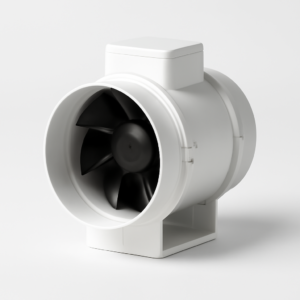
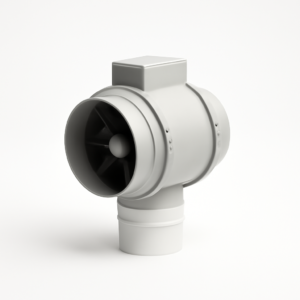
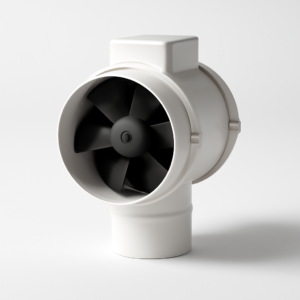
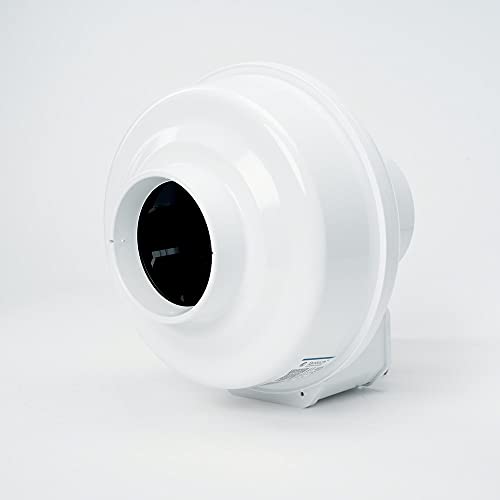
The Fantech Rn2 is a radon mitigation fan sized for standard 4.5-inch connections and aimed at residential sub-slab depressurization systems.
The Fantech Rn2 is a radon mitigation fan sized for standard 4.5-inch connections and aimed at residential sub-slab depressurization systems. It suits homeowners whose mitigator has recommended a moderate-suction fan, and anyone replacing an older Fantech HP2190Q, which this model supersedes. Its standout trait is transparency about performance: the listing states airflow at two different static pressures, giving a mitigator real numbers to match against the suction a given slab actually needs, instead of a single free-air figure.
Specifications
| Specification | Details |
|---|---|
| Model | Rn2 (formerly sold as the HP2190Q) |
| Duct / pipe size | 4.5-inch connections |
| Rated airflow | 123 CFM at 0.50 in. static pressure; 20 CFM at 1.75 in. |
| Housing | Vibration-welded seam for a leak-resistant housing; white |
| Dimensions | About 13.25 x 13.25 x 11 in |
| Weight | Listed as 1 lb (verify; the figure looks low for a fan this size) |
| Wattage, warranty, outdoor rating | Not stated in listing |
Fantech Rn2 — 4.5-in duct, 123 CFM at 0.5 in. / 20 CFM at 1.75 in. static pressure, welded-seam housing, replaces HP2190Q
How It Compares
The Only Fan on This Shelf That States Airflow at Specific Static Pressures
We read 17 similar listings. Every one of them relates to radon, but only some are fans: the RadonAway RP145 and GP501, two Festa AMG Maverick listings, a PCLINE 250-CFM fan, an aftermarket Tjernlund-compatible replacement and four Healthy Air Solutions bundles that pair this same Rn2 with couplings, a manometer and labels. The rest are vent caps, install kits, a replacement hood and a condensate bypass.
Among those fans, the Rn2 is the only listing that ties its airflow to a stated static pressure. The Festa Maverick and PCLINE listings quote 260 and 250 CFM respectively, but without a pressure figure those numbers describe air moved with little resistance, which tells a buyer little about performance beneath a tight slab. The two RadonAway listings give no airflow figures at all. The Rn2 numbers show the trade-off plainly: strong flow at light suction, dropping sharply as resistance rises, which suggests a fit for gravel or porous fill rather than dense clay.
Gaps remain. The listing does not state wattage, a warranty term, or whether the fan is rated for outdoor mounting, all of which the RP145 and GP501 listings address in part. If buying the bare fan, couplings and a manometer must be sourced separately, which is why those four bundle listings exist.
Who It’s For — and Who Should Skip It
The Rn2 suits households whose certified mitigator has run diagnostics and specified a fan in this performance range, and owners replacing an aging HP2190Q who want a like-for-like successor. Its published curve also helps homeowners who want to understand why a mitigator chose one fan over another.
Skip it if testing points to tight, low-permeability soil where a higher-suction fan is likely needed, or if nobody has confirmed elevated radon yet. It is also a poor choice for anyone planning to wire a fan without an electrician or certified installer.
Using It at Home
Along the Front Range, mitigators typically mount fans in the garage, attic or outside the house, never inside the basement, with the discharge pipe rising above the roof. Fan choice depends on sub-slab conditions, so leave sizing, mounting and electrical work to an NRPP- or NRSB-certified professional; the EPA lists how to find a certified radon mitigation professional.
- Check the U-tube manometer on the riser pipe regularly. Uneven fluid levels mean the fan is pulling suction; level fluid suggests it has stopped or the pipe is blocked.
- Note the reading at installation and watch for large changes over time, which can signal a failing fan or frozen discharge in winter.
- Retest radon after installation and periodically afterward.
When the manometer goes flat, the fan stops, or a retest shows elevated radon, contact us for a follow-up test or referral.
Pros
- Airflow stated at two static pressures
- Welded-seam housing aimed at preventing leaks
- Direct successor to the familiar HP2190Q
- Widely sold in bundles with couplings and a manometer
Cons
- Airflow drops steeply at higher suction
- No wattage, warranty or outdoor rating listed
- Listed weight appears inaccurate
Related Guides
- Radon fans explained
- Radon vent pipe basics
- Understanding pCi/L radon readings
- Best radon tests
- Shop radon mitigation fans and parts
As an Amazon Associate we earn from qualifying purchases. Product details come from the current Amazon listing; we have not lab-tested this unit, and prices and availability change.
$154.03 as of Oct 9, 2026 6:11 am GMT+0000
Prices change often — check the live price on Amazon. As an Amazon Associate we earn from qualifying purchases.