Does Ammonia Kill Mold? Safer Ways to Clean It Up
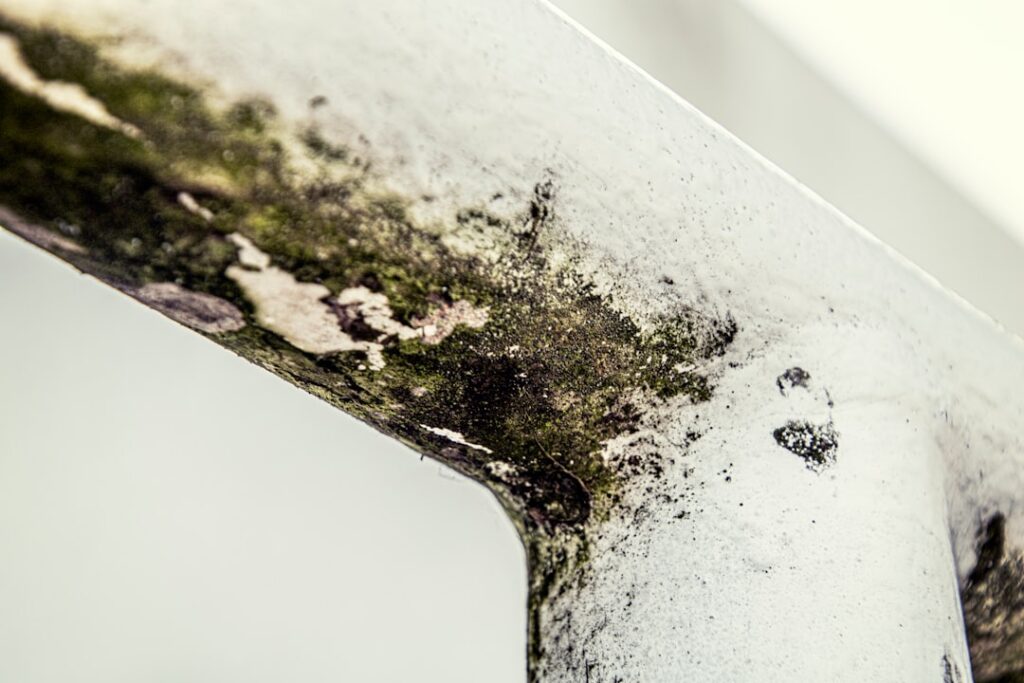
Household ammonia sits under a lot of sinks, so it is natural to wonder whether it can handle a patch of mold on a window sill or bathroom tile. The short answer to “does ammonia kill mold” is a hedged maybe: ammonia is a strong cleaner and may kill some surface mold on hard, non-porous surfaces, but it is not a recommended mold treatment, it does nothing for mold rooted inside porous materials, and it carries a serious hazard if it ever meets bleach. Federal guidance points homeowners toward a simpler approach: scrub hard surfaces with detergent and water, dry everything, remove porous materials that stay moldy, and fix the moisture source. This guide explains where ammonia fits, why it is rarely the best choice, how it compares with other household cleaners, and what protective steps matter before any mold cleanup.
Part of our Mold Removal & Remediation guide — start there for the full picture →
Is this mold, asbestos, or water damage? Get a free instant screen
Upload a clear photo of the suspect area. You'll get an instant AI screening opinion and what to do next. This is screening guidance, not a professional determination.
Screening guidance only. AI can be wrong. Confirm asbestos, mold type, or lead with lab testing or a licensed professional before acting.
Does Ammonia Actually Kill Mold?
Ammonia is an alkaline compound, and household ammonia is a diluted solution of it in water. Strong alkaline cleaners can damage microbial cells, so it is plausible that ammonia kills some mold growing on the surface of glass, glazed tile, sealed countertops, or metal. Some cleaning guides recommend it for exactly that. However, there are three practical problems with relying on it.
- Killing mold is not the goal. The EPA’s mold course, Chapter 1, notes that dead mold is allergenic and may cause allergic reactions and other health effects in some people, so it is not enough to simply kill the mold. It has to be removed.
- Biocides are not routine. The same EPA chapter states that using a biocide, a chemical that kills organisms such as mold, is not recommended as a routine practice during mold remediation. Ammonia used to kill mold falls into that same category of approach.
- Porous materials hold mold beneath the surface. Ammonia can wipe the visible stain off the face of drywall or wood, but it cannot reliably reach growth inside the material.
So ammonia may kill some surface mold on non-porous surfaces, but it does not offer a clear advantage over plain detergent and water, and it adds fume and mixing risks. That is why most guidance, including the EPA’s, does not single it out as a mold treatment.
For a broader view of cleanup methods, see the mold removal hub and the main mold inspection guide.
Never Mix Ammonia and Bleach
This is the most important safety point on the page. Mixing ammonia with chlorine bleach produces toxic gases, commonly described as chloramine vapors. Breathing them can irritate the eyes, nose, throat, and lungs and can cause serious harm in an enclosed space like a bathroom.
Both federal health and environmental agencies are direct about this. The CDC’s mold and health page tells readers to never mix bleach with ammonia or other cleaners, warning that doing so will produce a poisonous gas. The EPA’s mold course chapter likewise says never to mix chlorine bleach with other cleaning solutions or with detergents that contain ammonia because toxic fumes could be produced.
The mixing risk is easy to trigger by accident:
- Sequential cleaning. Spraying bleach on mold, then following up with an ammonia-based glass cleaner on the same surface, can create fumes right where someone is working.
- Hidden ammonia. Some glass cleaners and multi-surface sprays contain ammonia. Check labels before using anything on a surface that has had bleach on it.
- Shared buckets and rags. A bucket or sponge used for one product can carry residue into the next.
- Toilets and drains. Urine contains ammonia compounds, and bleach poured into a toilet bowl or a drain with other products in it can react.
If anyone accidentally mixes these products, leave the area right away, get fresh air, and ventilate the room from outside if possible. Anyone with trouble breathing or other symptoms should seek medical help or call Poison Control. The safest rule is simple: pick one product per job, rinse thoroughly, and never combine cleaners.
Fumes, Ventilation, and Porous Materials
Ammonia fumes on their own
Even without bleach, household ammonia gives off a strong, irritating vapor. In a small, poorly ventilated bathroom or closet, fumes can build up quickly and irritate the eyes and airways, especially for people with asthma or other breathing conditions. If ammonia is used at all, follow the label directions, keep the dilution at what the label recommends, open windows, run an exhaust fan, and take breaks outside. Keep children and pets out of the room until it is aired out. The EPA mold course advises that if disinfectants or biocides are used, the area should always be ventilated and the air exhausted to the outdoors.
Porous and semi-porous materials
The surface matters more than the product. The EPA’s Mold Cleanup in Your Home page says to scrub mold off hard surfaces with detergent and water and dry completely. It also says absorbent or porous materials, such as ceiling tiles and carpet, may have to be thrown away if they become moldy, because mold can grow in the empty spaces and crevices of porous materials and may be difficult or impossible to remove completely.
That has direct consequences for drywall, which is one of the most common surfaces people want to treat:
- Painted drywall with light surface spotting can sometimes be cleaned with a damp cloth and mild detergent, then dried quickly. Ammonia adds little and may damage paint.
- Drywall that has been wet, is soft, or has mold on the paper facing or the back side generally needs to be cut out and replaced. No spray, ammonia or otherwise, fixes mold growing through the paper and gypsum.
- Unfinished wood is semi-porous. Surface growth can often be scrubbed and the wood dried, but deep growth or rot calls for removal or repair.
- Carpet, ceiling tile, upholstery, and insulation that have become moldy are usually discarded rather than cleaned.
The EPA page also warns against painting or caulking over moldy surfaces, noting that paint applied over mold is likely to peel. Cleaning and drying come first. The EPA’s guidance applies to small areas; the same page notes that larger areas of mold, over roughly 10 square feet, warrant reading its fuller remediation guidance and considering a professional.
Ammonia Compared With Other Household Mold Cleaners
Most people asking about ammonia are really asking which household product works best. The honest answer is that the product matters less than the method: remove the growth physically, dry the material, and fix the water source. Still, each option has a place and a set of hazards. The table below summarizes them in general terms.
| Cleaner | Suitable surfaces | Main hazards | Notes |
|---|---|---|---|
| Detergent and water | Hard, non-porous surfaces; light spotting on sealed or painted surfaces | Minimal; avoid over-wetting drywall or wood | The EPA’s recommended starting point for hard surfaces, followed by thorough drying |
| Household ammonia | Hard, non-porous surfaces such as glass and glazed tile | Strong fumes; toxic gas if mixed with bleach; can harm some finishes | May kill surface mold but offers no clear advantage over detergent |
| Chlorine bleach (diluted) | Hard, non-porous surfaces | Fumes; toxic gas if mixed with ammonia or other cleaners; bleaches fabrics | CDC notes a solution of no more than 1 cup of bleach per gallon of water for hard surfaces |
| White vinegar | Hard surfaces; some semi-porous surfaces | Mild acid; can etch stone; do not mix with bleach | Low fume option; results vary by mold and surface |
| Hydrogen peroxide (3%) | Hard surfaces; some fabrics after spot testing | Can lighten colors; irritating at higher strengths | Breaks down to water and oxygen; still requires physical removal |
| Commercial disinfectant sprays | As listed on the product label | Varies; follow label; some contain ammonia compounds | Label directions and surface list matter more than brand |
Each of these has its own guide on this site:
- Does bleach kill mold covers why bleach works on hard surfaces but struggles on porous ones.
- Does white vinegar kill mold looks at vinegar as a lower-fume option.
- Hydrogen peroxide for mold explains strengths, spot testing, and limits.
- Does Lysol kill black mold covers commercial disinfectant sprays.
- Household mold killer compares common products side by side.
What about drywall mold killers and sprays?
Many searches focus on a “mold killer for drywall” or a spray that will fix moldy walls in one pass. Sprays can lighten stains and may kill surface growth, but the EPA porous-material guidance still applies: if mold has grown into the paper or gypsum, removal is the dependable fix. A spray can also add moisture to drywall, which is the opposite of what is needed. If a wall keeps showing spots after cleaning, that is a sign of an ongoing moisture source behind it, such as a plumbing leak, condensation on a cold exterior wall, or poor bathroom ventilation.
How to Clean Small Areas of Mold Safely
For a small area of surface mold on a hard surface, a cautious, low-chemical approach usually works best. A general process looks like this:
- Find and stop the moisture. Fix the leak, improve ventilation, or reduce condensation first. Cleaning without fixing the source means the mold returns.
- Protect yourself. Wear gloves, eye protection, and a fitted respirator. The CDC page advises rubber boots, rubber gloves, and goggles during cleanup. An N95 is a common choice for small jobs; the guide to an N95 mask for mold covers fit and limits.
- Ventilate. Open windows and doors and run an exhaust fan to move air outdoors.
- Choose one cleaner. Detergent and water is the simplest starting point. If a stronger product is used, use only one and follow the label.
- Scrub and wipe. Physically remove the growth from hard surfaces rather than just spraying it.
- Dry completely. Use fans or a dehumidifier. Dry surfaces are much less likely to support regrowth.
- Bag porous debris. Seal moldy materials that will be discarded in plastic bags before carrying them through the house.
- Watch for return. If spots come back within weeks, the moisture problem has not been solved.
For specific rooms, the guide on how to clean mold in a shower covers grout, caulk, and ventilation in detail.
Who should avoid doing cleanup
People with asthma, allergies, weakened immune systems, or chronic lung disease may react more strongly to mold and to cleaning chemicals. They should generally avoid mold cleanup and stay out of the area while work is done. The same applies to infants and anyone pregnant who is concerned about fumes.
Common Mistakes When Using Ammonia on Mold
Most problems with ammonia and mold come from a handful of predictable errors. Avoiding them matters more than which bottle is chosen.
- Treating the stain instead of the cause. Mold grows where moisture lingers. Wiping the spot with ammonia while a slow drip continues inside the wall guarantees the mold will be back, often worse.
- Using stronger is better thinking. Higher concentrations of ammonia mean stronger fumes, not better results. Label dilutions exist for a reason, and undiluted cleaning products can damage finishes and irritate airways.
- Switching products mid-job. Starting with bleach, deciding it is not working, and reaching for an ammonia glass cleaner is exactly how toxic gas gets made. If a product is swapped, rinse the surface with plain water, let it dry, and ventilate first.
- Spraying without scrubbing. Mold growth needs to be physically removed. A spray that sits on the surface may change its color without removing it.
- Soaking porous materials. Saturating drywall, wood, or grout with any liquid adds moisture and can push the problem deeper.
- Covering mold with paint or primer. Painting over mold hides it temporarily. Stain-blocking primers have a role after cleanup and drying, not instead of it. The guide to whether Kilz kills black mold explains that distinction.
- Working without protection. Scrubbing disturbs spores and fragments, and ammonia adds a chemical irritant. Gloves, goggles, and a respirator reduce both exposures.
- Skipping the dry-out. Leaving a cleaned surface damp gives mold the conditions it needs to return.
Is there any situation where ammonia is the right pick?
Ammonia’s practical niche is cleaning glass, mirrors, and some non-porous hard surfaces where streak-free results are wanted. If a window pane or a glass shower door has light surface spotting and no bleach has been used anywhere nearby, an ammonia-based cleaner following label directions can tidy it up. Even there, a mild detergent usually does the same job with fewer fumes. Ammonia should not be used on mold in grout, caulk, drywall, wood, or fabric, and it should be avoided entirely in any room where bleach is being used or stored open.
Some people also ask about heat-based or chemical-free options. The guide to whether boiling water kills mold looks at that approach and its limits, which mirror ammonia’s: heat or chemicals may kill surface growth, but removal and drying are what solve the problem.
Preventing Mold So Cleaners Are Not Needed
The best mold cleaner is the one never needed. Because mold depends on moisture, prevention focuses on controlling water and humidity:
- Run bathroom exhaust fans during showers and for a while afterward, and make sure the fan vents outdoors rather than into the attic.
- Fix leaks quickly. Under-sink drips, toilet supply lines, roof leaks, and window flashing problems are common sources of hidden growth.
- Dry wet materials fast. Materials that are dried promptly after a spill or leak are much less likely to grow mold.
- Manage indoor humidity. A simple hygrometer helps track humidity. Swamp coolers, humidifiers, and drying laundry indoors can raise it.
- Watch cold surfaces in winter. Along the Front Range, condensation on window frames and exterior wall corners is a frequent trigger for spotting. Better air circulation, lower humidity, and improved insulation help.
- Keep gutters and grading working. Water that collects against the foundation often ends up in basements and crawl spaces.
- Clean routinely. Regular cleaning of shower grout, window tracks, and refrigerator gaskets with ordinary detergent keeps small spots from getting established.
With those habits in place, the question of which harsh chemical to use rarely comes up.
When Cleaning Is Not Enough
Ammonia, bleach, and every other cleaner share the same limit: they treat what is visible. Signs that the problem is bigger than a cleaning job include:
- Mold covering a large area, or showing up in several rooms.
- A persistent musty odor with no visible source, which can point to hidden growth inside walls, under floors, or in the HVAC system.
- Mold that returns soon after cleaning.
- Soft, stained, or bulging drywall, or ceiling stains after a roof or plumbing leak.
- Water damage from contaminated water, such as a sewer backup or flooding.
- Health symptoms that seem to track with time spent in the home.
In those situations, a mold inspection or professional assessment can locate the moisture source and the extent of growth before anyone spends money on sprays. Homeowners who want an initial screen can look at options in the mold test kit category, keeping in mind that test results without a moisture investigation rarely tell the whole story.
Front Range considerations
The Colorado Front Range is dry for much of the year, which helps limit mold, but problems still show up in predictable places: bathrooms without working exhaust fans, basements with foundation seepage, crawl spaces, window frames with winter condensation, and anywhere a roof leak or ice dam has wet drywall. Swamp coolers can add humidity during summer. Because the climate is dry, wet materials often dry quickly once the leak stops, which makes fixing the water source the most effective step of all.
Older Front Range homes add another wrinkle. Basements finished decades ago may have drywall or carpet installed directly against concrete foundation walls with no moisture barrier, and that hidden contact can stay damp long after the rest of the house is dry. Homes with evaporative coolers, finished basements, or past roof leaks benefit from a quick moisture check before anyone starts scrubbing, because the right next step may be repairing a grading problem or a flashing detail rather than buying another cleaning product.
So, to come back to the original question: ammonia may kill some surface mold on hard surfaces, but it is a poor first choice. Detergent, water, scrubbing, and drying are safer and match federal guidance, and ammonia should never be used anywhere bleach has been or will be applied.
References
- Mold Cleanup in Your Home — U.S. Environmental Protection Agency
- Mold Course Chapter 1: Introduction to Molds — U.S. Environmental Protection Agency
- About Mold and Your Health — Centers for Disease Control and Prevention
Frequently asked questions
Does ammonia kill mold?
Ammonia may kill some surface mold on hard, non-porous surfaces such as glass and glazed tile, but it is not a recommended mold treatment. EPA guidance favors scrubbing hard surfaces with detergent and water, drying them completely, and fixing the moisture source.
Is it dangerous to mix ammonia and bleach?
Yes. Both the CDC and EPA warn never to mix bleach with ammonia or cleaners containing ammonia because the combination produces a toxic gas. Use one product per job and rinse surfaces between products.
Can ammonia remove mold from drywall?
It may lighten surface stains on painted drywall, but it cannot reach mold growing into the paper or gypsum. Drywall that has been wet or has mold beyond the surface usually needs to be cut out and replaced.
What is better than ammonia for cleaning mold?
For hard surfaces, detergent and water followed by thorough drying is the simplest approach. Diluted bleach, white vinegar, or hydrogen peroxide are alternatives, but never combine products, and none of them fix the moisture problem behind the mold.
What should be worn when cleaning mold?
Gloves, eye protection such as goggles, and a fitted respirator like an N95 for small jobs are common choices. Ventilate the area and keep people with asthma or weakened immune systems away from the work.
Mold keeps coming back no matter what you clean it with? Reach out to our team and we can help you figure out where the moisture is coming from and whether an inspection makes sense.
Mold removal & cleanup picks
For a small, contained patch (under ~10 sq ft) these EPA-friendly removers handle surface mold. Larger or recurring growth warrants a professional assessment first.
| Product | Why | Buy |
|---|---|---|
 RMR-86 Instant Mold Stain Remover RMR-86 Instant Mold Stain Remover | Fast-acting on stains; ventilate and wear PPE. | Amazon — $29.99 |
 Concrobium Mold Control Concrobium Mold Control | No-bleach formula that also helps prevent regrowth. | Amazon — $11.26 |
 Mold Armor Mold & Mildew Remover Mold Armor Mold & Mildew Remover | Widely stocked bathroom/surface remover. | Amazon — $22.98 |