Does Boiling Water Kill Mold? Where Heat Helps and Fails
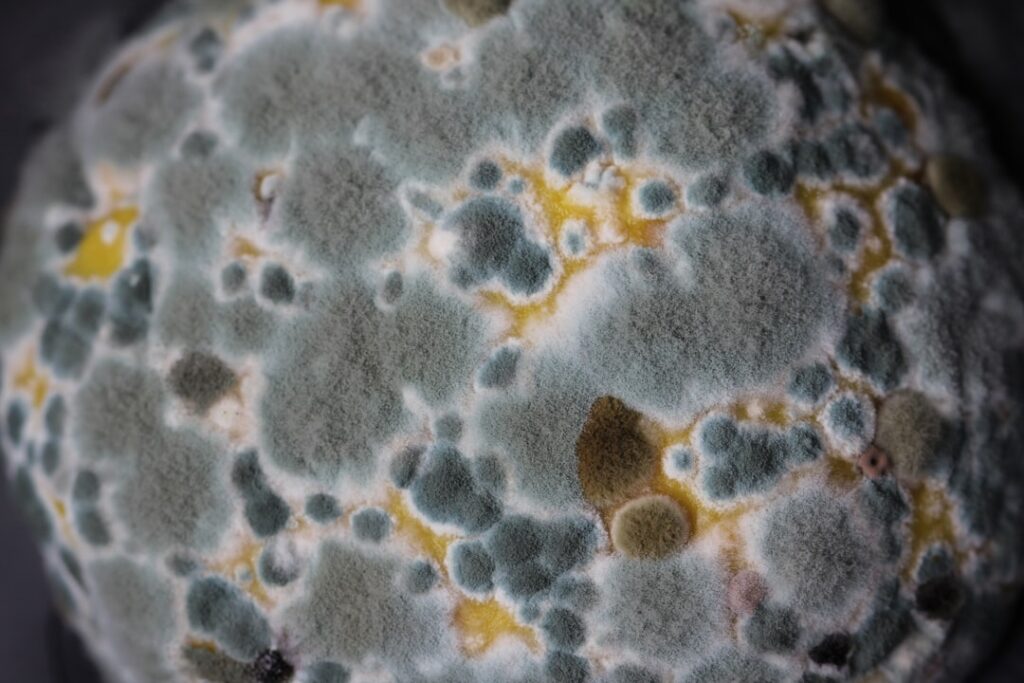
So, does boiling water kill mold? On the right item, heat can kill mold growth, and a pot of boiling water or a hot laundry cycle is a perfectly reasonable tool for heat-tolerant dishes, glass jars, metal utensils and washable fabrics. On a wall, a ceiling, a window frame or a wood cabinet, though, boiling water is the wrong tool. It is hard to keep hot long enough to matter, it soaks moisture into the very materials mold feeds on, and it carries a real burn risk. Even when heat does kill the growth, federal guidance is clear that dead mold can still trigger allergic reactions, so the residue has to be physically removed either way. This guide explains where hot water makes sense, where it backfires, how it compares with detergent, vinegar, hydrogen peroxide and bleach, and when a patch is too big to tackle yourself.
Part of our Mold Removal & Remediation guide — start there for the full picture →
Is this mold, asbestos, or water damage? Get a free instant screen
Upload a clear photo of the suspect area. You'll get an instant AI screening opinion and what to do next. This is screening guidance, not a professional determination.
Screening guidance only. AI can be wrong. Confirm asbestos, mold type, or lead with lab testing or a licensed professional before acting.
Does Boiling Water Kill Mold? The Short Answer
Heat damages living cells, and mold is no exception. Water at a full rolling boil is far hotter than the temperatures most household molds grow at, so an item that can be fully submerged in boiling water for several minutes, or run through a high-temperature dishwasher or laundry cycle, will usually come out with its surface growth killed.
The problem is everything around that kernel. Three issues make boiling water a poor general-purpose mold treatment:
- Killing is not the goal; removal is. The EPA’s mold course notes that dead mold is allergenic and may cause allergic reactions and other health effects in some people, so it is not enough to simply kill the mold. It must also be removed. A wall splashed with hot water still has spores, stains and fragments sitting on it.
- Water is what mold needs. EPA guidance repeats that moisture control is the key to mold control. Pouring water onto drywall, wood trim, grout or a window sill adds the exact ingredient that allowed growth in the first place.
- Boiling water cools fast and burns fast. Once it leaves the kettle and hits a vertical surface, it loses heat within seconds, so it rarely stays hot long enough to do much. Meanwhile it can easily scald the person holding it.
So the honest answer is “yes, on some objects, and no, not as a way to fix mold in a house.” For a broader look at what actually happens to spores during cleanup, see our guide on how to kill mold spores, and the mold inspection pillar for how growth is found and assessed in the first place.
Why Boiling Water Is a Poor Choice on Walls and Porous Materials
Most mold problems that homeowners actually face are not on a cereal bowl. They are on bathroom ceilings, around windows, on the back of closet walls, under sinks and on basement framing. Every one of those surfaces argues against boiling water.
It adds moisture to materials that hold it
Drywall paper, wood, ceiling tiles, carpet and insulation are porous. EPA cleanup guidance warns that absorbent or porous materials may have to be thrown away if they become moldy, because mold can grow on or fill in the empty spaces and crevices of porous materials and may be difficult or impossible to remove completely. Saturating that material with hot water drives moisture deeper, swells wood fibers, softens gypsum and can loosen paint, all without reaching the growth inside the material. EPA also advises that wet materials be dried within 24 to 48 hours to prevent mold growth, and a bucket of boiling water poured on a wall works directly against that timeline.
It does not stay hot
The heat that matters is the heat at the mold, for long enough to affect it. A wall, tile or window frame acts as a heat sink. Water splashed or wiped onto it drops toward room temperature quickly, especially in a cool Front Range basement or on a cold exterior wall in winter.
It can spread spores and debris
Splashing, pouring and steam can disturb loose spores and fragments and carry them onto nearby surfaces. EPA guidance recommends avoiding exposure to mold during cleanup and wearing protective equipment such as gloves, goggles and an N-95 respirator, which is easier to manage with a controlled scrub than with a pot of boiling water.
It is a scald hazard
The Consumer Product Safety Commission’s tap water scald guidance shows how little time hot water needs to injure skin. CPSC states that most adults will suffer third-degree burns if exposed to 150 degree water for two seconds, that burns will occur with a six-second exposure to 140 degree water or a thirty-second exposure to 130 degree water, and that even 120 degree water can cause third-degree burns with a five-minute exposure. CPSC adds that most tap water scald injuries and deaths involve the elderly and children under five. Boiling water is far hotter than any of those figures, and carrying it up a ladder or overhead toward a ceiling is a recipe for a serious burn.
For drywall specifically, our guide to killing mold on drywall covers when surface cleaning is enough and when the panel needs to be cut out.
Where Boiling or Hot Water Does Make Sense
There are legitimate uses for heat. The pattern is simple: the item must be heat-tolerant, it must be able to be fully immersed or run through a hot cycle, and it must be able to dry completely afterward.
Dishes, glass, metal and canning jars
Glass jars, ceramic dishes without crazed glaze, stainless steel pots and metal utensils can handle boiling water. A forgotten container of leftovers or a jar with fuzzy growth can be emptied outdoors or into a sealed bag, scrubbed with hot soapy water, then boiled or run through a high-heat dishwasher cycle and dried thoroughly. Hard, nonporous surfaces like these are exactly where scrubbing and heat work together well. If an item is cracked, chipped or has deep scratches that hold residue, replacing it is often simpler.
Washable fabrics
Towels, cotton sheets, washable cloth shower curtains, bath mats and many work clothes can go through a hot laundry cycle. The care label is the rule here: some fabrics shrink, fade or lose their finish at high temperatures, and synthetic fibers can deform. Wash promptly, use detergent, and dry completely, ideally in a dryer on an appropriate setting or in direct sun. Musty-smelling laundry that went through a hot wash but was left damp afterward will simply grow mold again. Our guide on how to remove mold from fabric walks through pre-treating stains and what to do with items that cannot take heat.
Plastic and silicone items
Some kitchen silicone and certain plastics are rated for dishwasher or boiling temperatures; many are not. Bath toys, sippy-cup valves and soft plastics often have hidden internal cavities where water collects. Heat may not reach inside, and the items may warp. For anything with an enclosed cavity that has grown mold, replacement is usually the cleaner answer.
What not to boil
Wood cutting boards, wicker, leather, upholstered items, books, mattresses, carpet, and anything glued or laminated should not be boiled. Wood swells and cracks, adhesives fail, and porous materials hold moisture. For wood, see our guide on how to clean mold off wood.
Boiling Water Compared With Other Mold Cleaning Methods
The table below summarizes common household surfaces, whether boiling water is appropriate, and the method that usually works better. It is general guidance, not a substitute for a manufacturer’s care instructions.
| Surface or material | Is boiling water appropriate? | Better method |
|---|---|---|
| Glass jars, ceramic dishes, metal utensils | Yes, if fully immersed and then dried | Scrub with hot soapy water, then boil or use a high-heat dishwasher cycle |
| Cotton towels, sheets, washable clothing | Hot laundry cycle, within care-label limits | Pre-treat, wash with detergent at the hottest label-allowed setting, dry fully |
| Painted drywall or plaster walls | No: adds moisture, cools quickly, burn risk | Damp-wipe with detergent and water, dry fast; replace drywall if growth goes through the paper |
| Ceramic tile and grout | No: tile cools it instantly and grout absorbs water | Scrub with detergent and a stiff brush, ventilate, reseal grout once dry |
| Wood trim, cabinets, framing | No: swells wood, raises grain | Vacuum loose growth with HEPA, scrub with detergent, dry, sand stains if needed |
| Carpet, pads, mattresses, upholstery | No: soaks and cannot dry in time | Usually discard if moldy; professional cleaning for valuable items |
| Ceiling tiles, insulation, cardboard | No | Discard and replace after fixing the moisture source |
| Window sills and frames | No: adds condensation-style moisture | Wipe with detergent solution, dry, then reduce indoor humidity |
| Wood cutting boards | No: cracks and warps | Scrub with soap and water, dry upright; replace if deeply grooved or stained |
Detergent and water: the EPA baseline
EPA’s home cleanup guidance is direct: scrub mold off hard surfaces with detergent and water, and dry completely. Scrubbing physically lifts growth, spores and staining, which addresses the “dead mold is still allergenic” problem that heat alone ignores. CDC likewise says mold can be removed from hard surfaces with household products, soap and water, or a bleach solution. Our explainer on whether soap kills mold covers why removal matters more than killing.
White vinegar
Vinegar is mildly acidic and widely used for light surface mold on hard, nonporous items. It is not a magic fix, it should never be mixed with bleach, and on porous materials it shares the same limitation as any liquid. See does white vinegar kill mold for a fuller comparison.
Hydrogen peroxide
Household 3 percent hydrogen peroxide is another common option for small areas on hard surfaces. It can lighten some materials and fabrics, so spot-test first. Details are in our guide to hydrogen peroxide for mold.
Bleach
Bleach is the method people reach for most, and the one federal agencies treat most cautiously. CDC says that if bleach is used, the solution should be no more than 1 cup of household laundry bleach in 1 gallon of water, that bleach should never be mixed with ammonia or other cleaners because this produces a poisonous gas, and that windows and doors should be opened for fresh air. The EPA mold course goes further, noting that using a biocide such as chlorine bleach is not recommended as a routine practice during mold cleanup, though professional judgment may call for one in certain situations, such as when immune-compromised people are present. Our guide on does bleach kill mold explains why bleach often whitens a stain without solving the problem underneath.
Steam cleaners
Steam cleaners are sometimes suggested as a “boiling water done right” alternative. They deliver heat in a more controlled way, but they still add moisture and still need to be followed by thorough drying. On sealed tile, steam plus a detergent scrub can be useful; on drywall, wood or anything porous, the moisture drawback remains. For bathrooms in particular, see how to clean mold in a shower.
Killing Versus Removing: Why the Difference Matters
The appeal of boiling water is that it feels decisive. If the mold is dead, the problem must be over. Federal guidance does not see it that way. The EPA mold course states that in most cases it is not possible or desirable to sterilize an area; a background level of mold spores will remain, but those spores will not grow if the moisture problem has been resolved. In other words, the goal is a clean, dry surface, not a sterile one.
That framing changes how to judge any method, heat included:
- Does it remove the growth and staining? Scrubbing does. Pouring water does not.
- Does it leave the surface dry? A wipe with a damp cloth followed by a fan does. A soaking does not.
- Does it address the reason mold grew? No cleaning method does. Only fixing the leak, condensation or humidity source does.
CDC’s guidance points the same way: if mold is growing in a home, it needs to be cleaned up and the moisture problem fixed. CDC also notes that exposure to damp and moldy environments may cause a variety of health effects, or none at all, and that people with asthma or mold allergies may have severe reactions. Those are the household members who benefit most from removal rather than a quick kill.
The bigger lesson is that the method matters less than what happens afterward. A shower wall cleaned perfectly with any product will grow mold again if the exhaust fan is broken. A towel washed at the hottest setting will smell musty again if it hangs in a damp, closed bathroom.
The 10 Square Foot Rule and Drying Within 24 to 48 Hours
Before choosing any cleaning method, size up the problem. EPA guidance says that if the moldy area is less than about 10 square feet, roughly a 3 foot by 3 foot patch, in most cases homeowners can handle the job themselves. If there has been a lot of water damage, or growth covers more than 10 square feet, EPA points to its professional remediation guidance. EPA also advises bringing in a professional when water damage came from sewage or other contaminated water, and not running an HVAC system that is known or suspected to be contaminated with mold, since it could spread mold through the building.
The second number to remember is time. EPA states that if wet or damp materials or areas are dried within 24 to 48 hours after a leak or spill, in most cases mold will not grow. That is the clearest reason boiling water works against homeowners on building materials: it creates a new wetting event that then has to be dried on that same clock.
Practical drying steps after any cleanup:
- Run bathroom and kitchen exhaust fans, and leave them on for a while after showers and cooking.
- Use box fans and, in damp basements, a dehumidifier.
- Keep indoor humidity below 60 percent, ideally between 30 and 50 percent, as EPA recommends. CDC suggests no higher than 50 percent. An inexpensive hygrometer makes this easy to track.
- Open cabinet doors and closets so air can move around previously wet areas.
Colorado’s dry climate helps in summer, but winter brings its own issue: warm, humid indoor air meeting cold windows and exterior walls. Condensation on those surfaces is a frequent source of the small, recurring patches that tempt people to reach for a kettle. Reducing that condensation does far more good than any cleaning method.
A Safer Step-by-Step for Small Mold Patches
For a small area on a hard surface, this sequence follows EPA and CDC guidance and avoids the hazards of boiling water:
- Find and stop the moisture. Look for leaks, condensation, poor ventilation or recent spills.
- Protect yourself. Gloves, eye protection and an N-95 respirator, as EPA suggests. Keep children and pets out of the area.
- Ventilate. Open a window and run a fan exhausting to the outdoors where possible.
- Scrub with detergent and warm water. Warm, not boiling. A soft brush or sponge for painted surfaces, a stiffer brush for tile and grout.
- Wipe clean and dry completely. Use clean cloths and a fan. Bag and discard used rags.
- Decide on porous items. Moldy carpet, ceiling tile, insulation or soft drywall may need to be removed and replaced.
- Do not paint or caulk over mold. EPA notes paint applied over moldy surfaces is likely to peel. Clean and dry first.
- Watch for regrowth. If it returns in the same place, the moisture source is still active.
For larger or recurring problems, our mold removal hub and the guide to black mold removal cover containment and when to hire a remediation contractor.
Common Myths Around Heat and Mold
“Dead mold is harmless”
Both the EPA Brief Guide and the EPA mold course say dead mold may still cause allergic reactions in some people. Physical removal is the step that matters.
“Hot water is safer than chemicals”
Safer for what? Detergent and warm water are gentle and effective. Boiling water introduces a burn hazard that CPSC data show can cause serious injury in seconds, particularly for young children and older adults.
“Testing tells you which method to use”
CDC says it does not recommend mold testing and that there is no need to know the type of mold before removing it. Visible growth should simply be cleaned up and the moisture fixed. Testing has a role in some situations, such as investigating hidden growth or confirming cleanup, which is where a professional inspection or a mold test kit may be useful as a screening tool.
When to Call a Professional
Boiling water is a reasonable fix for a moldy jar. Step back when the mold is on the house itself and any of the following apply:
- The affected area is larger than about 10 square feet.
- Growth keeps returning after cleaning, pointing to a hidden leak or condensation problem.
- There is a musty odor without visible growth, suggesting mold behind walls, under floors or in ductwork.
- The water source was sewage, a flood or another contaminated source.
- Someone in the household has asthma, mold allergies, a weakened immune system or chronic lung disease.
- The home is being bought or sold and the condition needs to be documented.
An inspector can trace moisture with meters and thermal imaging, identify the source, and recommend whether cleaning, material replacement or professional remediation fits the situation.
References
- Mold Cleanup in Your Home — U.S. Environmental Protection Agency
- Mold Course Chapter 1: Introduction to Molds — U.S. Environmental Protection Agency
- About Mold — Centers for Disease Control and Prevention
- Avoiding Tap Water Scalds — U.S. Consumer Product Safety Commission
Frequently asked questions
Does boiling water kill mold?
Heat can kill mold on items that can be fully immersed in boiling water or run through a hot cycle, such as glass, metal, ceramic dishes and many washable fabrics. On walls, wood and other porous building materials it is impractical, adds moisture and creates a burn risk.
Can boiling water get rid of mold on walls?
Not reliably. Water cools quickly on a wall, soaks into drywall and wood, and does not remove the growth. EPA guidance is to scrub hard surfaces with detergent and water, dry completely, and replace porous materials that cannot be cleaned.
Is dead mold still a problem?
Yes. EPA notes that dead mold may still cause allergic reactions in some people, so killing it is not enough. The growth and residue need to be physically removed, and the moisture source fixed.
Will a hot wash remove mold from towels and clothes?
Often, if the fabric can tolerate it. Wash with detergent at the hottest temperature the care label allows and dry completely right away. Items that stay damp after washing can grow mold again.
What is better than boiling water for mold?
For small areas on hard surfaces, detergent and water with thorough drying is the EPA baseline. Vinegar or hydrogen peroxide are common alternatives, and diluted bleach can be used with care and ventilation, never mixed with ammonia or other cleaners.
Cleaning the same patch of mold every few weeks on the Front Range? Reach out to our team and we can help track down the moisture source behind it.
Mold removal & cleanup picks
For a small, contained patch (under ~10 sq ft) these EPA-friendly removers handle surface mold. Larger or recurring growth warrants a professional assessment first.
| Product | Why | Buy |
|---|---|---|
 RMR-86 Instant Mold Stain Remover RMR-86 Instant Mold Stain Remover | Fast-acting on stains; ventilate and wear PPE. | Amazon — $29.99 |
 Concrobium Mold Control Concrobium Mold Control | No-bleach formula that also helps prevent regrowth. | Amazon — $34.27 |
 Mold Armor Mold & Mildew Remover Mold Armor Mold & Mildew Remover | Widely stocked bathroom/surface remover. | Amazon — $22.98 |