Outdoor Fireplaces: Clearances, Chimneys and Wildfire Risk
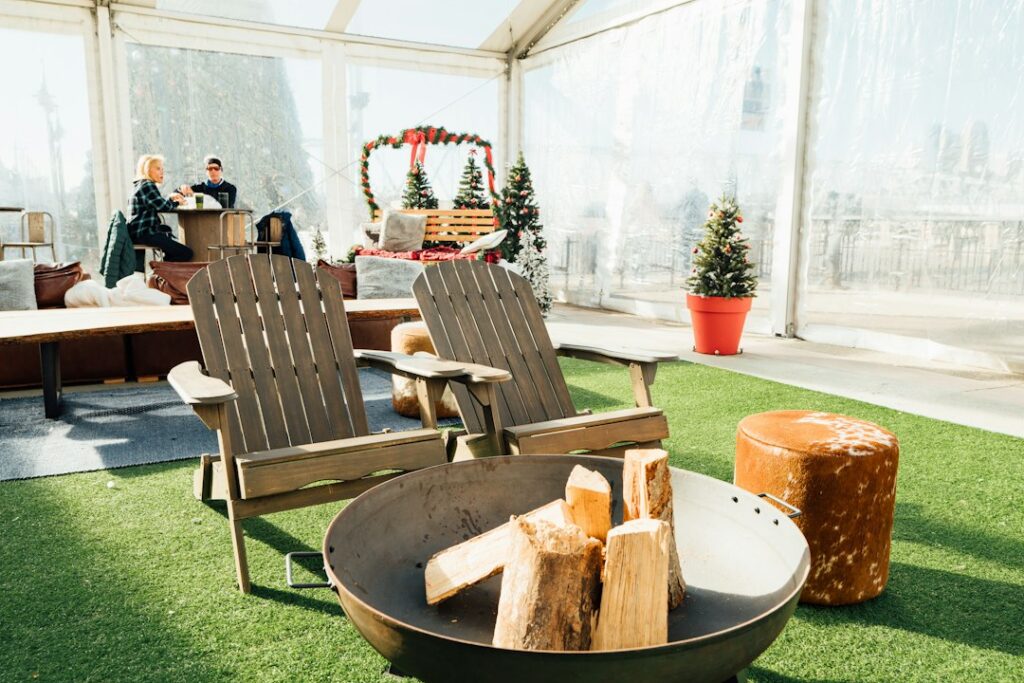
An outdoor fireplace turns a patio into a room, extending evenings on the deck well into fall and giving a focal point to a backyard. On the Colorado Front Range, where clear nights cool quickly, the appeal is obvious. The risks are just as clear. An outdoor fireplace concentrates heat and sparks near the house, often under or beside a wood-framed patio cover, in a region where dry grass, wind and wildfire are part of life. Gas units add fuel lines and connections. This guide covers what homeowners and buyers should know about an outdoor fireplace: types and fuel choices, clearances to the house and overhead structures, chimneys, caps and spark arrestors, gas line safety, fire restrictions and wildfire risk on the Front Range, maintenance, inspection and typical costs. Manufacturer installation instructions, local building and fire codes, and HOA rules govern any specific installation.
Part of our Heating, Cooling & Ventilation guide — start there for the full picture →
What Counts as an Outdoor Fireplace
An outdoor fireplace is a permanent or semi-permanent firebox with a chimney or flue that directs smoke upward, as opposed to an open fire pit or a freestanding chiminea. The main types are:
- Site-built masonry fireplaces. Brick, stone or concrete block with a firebrick-lined firebox and a masonry chimney, built on a substantial footing.
- Modular or kit masonry units. Precast refractory components assembled on site and finished with stone or stucco.
- Prefabricated metal outdoor fireboxes. Factory-built units, listed for outdoor use, installed into a framed or masonry enclosure according to the manufacturer’s instructions and clearances.
- Gas outdoor fireplaces. Fireboxes with burners and gas logs, fueled by natural gas or propane, sometimes with no chimney at all if listed as a vent-free outdoor appliance.
- Portable units. Chimineas and freestanding steel fireplaces that can be moved.
Fire pits, which have no chimney and send smoke and sparks directly into the air, are covered in our fire pit guide. Many of the same placement and wildfire rules apply to both.
Clearances to the House, Overhangs and Combustibles
Placement is the most important safety decision. Heat from a fireplace radiates forward and upward, and sparks and embers can exit the chimney and drift on the wind. The safe distance from the house, eaves, patio covers, fences, trees and furniture depends on the specific unit, its listing and the local code, so the manufacturer’s installation instructions and the building department are the authorities to follow. Common considerations include:
- Distance from the house wall. A fireplace built against or very near siding, especially vinyl or wood, can scorch or ignite it over time. Masonry units built tight to a house usually need a noncombustible separation and attention to heat transfer.
- Overhead structures. Pergolas, patio covers, eaves and tree canopies above or near the chimney outlet are exposed to heat and embers. Many manufacturers specify minimum chimney heights and clearances to overhead combustibles. Our patio cover guide discusses how covers are framed and what they are made of.
- Hearth extension. A noncombustible hearth in front of the firebox catches rolling logs and embers. Wood decking in front of a wood-burning fireplace is a frequent concern.
- Decks. Building a heavy masonry fireplace on a wood deck raises both structural and fire concerns. Many manufacturers and codes restrict or prohibit installing wood-burning units on combustible decks.
- Furniture and storage. Cushions, umbrellas, firewood stacks and propane cylinders need to stay well clear of the firebox.
The U.S. Fire Administration’s heating fire safety guidance tells households to keep anything that can burn at least 3 feet from all heat sources, including fireplaces, and to have heating equipment and chimneys cleaned and inspected each year by a professional. That 3-foot rule is a minimum for indoor heating equipment; an outdoor wood fire with an open front often warrants more room, particularly downwind.
Wood-Burning vs Gas Outdoor Fireplaces
The fuel choice affects safety, convenience, maintenance and whether the fireplace can be used during fire restrictions.
Wood-burning
Wood fires provide the crackle, aroma and heat that many people want. They also produce embers and sparks, smoke that can drift into the house or to neighbors, ash that has to be disposed of safely, and creosote that builds up in the chimney. Ashes can stay hot for days, so they should go into a covered metal container placed away from the house and other combustibles. Burning only dry, seasoned wood reduces smoke and creosote. Treated lumber, trash and yard waste should not be burned.
Gas
Natural gas and propane units light instantly, produce no embers and little smoke, and shut off with a valve or switch. They are often allowed during fire restrictions when wood fires are not, although that depends on the specific restriction and the device; some restrictions allow only devices with a shut-off valve. Gas units bring their own requirements: a properly sized and installed gas line, listed components, correct burner and log placement, and periodic checks for leaks. Our gas fireplace installation guide covers burners, venting and permits, and our gas line pressure test guide explains how new and altered gas piping is tested before use.
Gas fireplaces still produce carbon monoxide. The CDC notes that CO is found in fumes produced any time fuel is burned in stoves, grills, fireplaces and other appliances, and that it can build up indoors. An outdoor unit placed in a partially enclosed porch or under a low, enclosed cover can push combustion products toward windows and doors. Keep outdoor fireplaces in open-air settings as the manufacturer intends.
Chimneys, Caps and Spark Arrestors
The chimney on a wood-burning outdoor fireplace does more than move smoke. Its height helps the fire draw and lifts smoke above people’s heads, and its cap is the last line of defense against sparks and embers leaving the firebox.
A chimney cap with a spark arrestor screen covers the top of the flue with metal mesh that stops larger embers while letting smoke pass. Caps also keep rain, snow, birds and animals out of the flue. In wildfire-prone areas, a spark arrestor is often required on wood-burning chimneys; check with the local fire district. Mesh needs periodic cleaning, because creosote and soot can clog it and restrict draft. Our chimney cap guide covers cap types, mesh sizes and installation.
Chimneys on outdoor fireplaces also need inspection like indoor ones. The CDC recommends having a chimney checked or cleaned every year, noting that chimneys can be blocked by debris, and the U.S. Fire Administration recommends annual cleaning and inspection of heating equipment and chimneys by a professional. Outdoor masonry chimneys face Colorado’s freeze-thaw cycles directly, so cracked crowns, loose stones and failing mortar joints are common. Water that enters cracks freezes, expands and worsens the damage each winter.
Signs of chimney and firebox trouble
- Cracked or missing firebrick, or gaps in the firebox lining.
- Cracks in the chimney crown, the concrete or mortar cap at the top.
- Loose or missing stones and open mortar joints.
- A missing, rusted-through or clogged spark arrestor.
- Soot staining on the front face, suggesting poor draft.
- Leaning or separating chimney sections, which can indicate footing movement.
Footings, Weight and Structural Support
Masonry outdoor fireplaces are extremely heavy. A stone firebox and a chimney tall enough to clear a patio cover can weigh many tons, concentrated on a small footprint. That load needs a properly designed concrete footing, typically reinforced and extended below the local frost depth so that freeze-thaw cycles do not lift one side. On Front Range expansive clay soils, an engineer may recommend deeper footings, piers or soil preparation to limit movement.
When a fireplace footing is undersized or too shallow, the chimney can begin to lean, separate from an adjacent wall or patio, or crack diagonally through the stonework. Because the chimney is tall relative to its base, even a small tilt at the footing shows up as noticeable movement at the top, and a leaning masonry chimney can eventually become a falling hazard. Fireplaces built on top of an existing patio slab are especially prone to this, since a typical patio slab is not designed for concentrated masonry loads.
Prefabricated metal fireboxes weigh less but still need a stable, level, noncombustible base and an enclosure built to the manufacturer’s specifications. Framing an enclosure with wood studs around a unit not listed for that installation, or skipping required air spaces, can let heat reach the framing over many fires. Steel studs and cement board are common in listed outdoor enclosures, but only the installation instructions determine what is acceptable.
Smoke, Neighbors and Patio Comfort
Smoke is the most common complaint about outdoor wood fireplaces. A short chimney, a fireplace placed where house walls trap air, or wet firewood can send smoke across the patio, into open windows and onto neighboring yards. Wood smoke contains fine particles that can irritate eyes and lungs, and people with asthma or heart and lung conditions are often more sensitive to it. Practical steps include burning only dry, seasoned wood, building smaller and hotter fires, extending the chimney where the manufacturer allows, and paying attention to wind direction before lighting.
Some Front Range communities issue voluntary or mandatory no-burn advisories on high-pollution days during winter, which can apply to wood burning generally. A gas unit avoids most smoke complaints. Homeowners who simply want warmth on the patio without a fire feature sometimes choose radiant heaters instead; our patio heater guide compares propane, natural gas and electric options.
Wildfire Risk, Fire Restrictions and Burn Bans
Much of the Front Range sits in or near the wildland-urban interface, where homes meet grass, shrubs and forest. Fires that start in grassland can spread rapidly in wind, as Colorado residents have seen. An outdoor wood fire in a dry, windy period is a genuine ignition risk.
Colorado counties, municipalities and federal land managers commonly impose fire restrictions during dry conditions, often described as Stage 1 and Stage 2. The details differ, but restrictions frequently prohibit open fires and wood-burning devices, and sometimes allow only gas devices with shut-off valves. Some cities also have rules on residential wood burning on high-pollution days. Before lighting a fire, check current restrictions with the county sheriff or local fire district, and skip the fire on red-flag warning days or whenever winds are strong.
The National Fire Protection Association’s guidance on preparing homes for wildfire divides the area around a house into an immediate zone of 0 to 5 feet, which it says should be a noncombustible area and is the most vulnerable to embers, an intermediate zone of 5 to 30 feet, and an extended zone of 30 to 100 feet and out to 200 feet. NFPA recommends moving flammable material such as mulch, flammable plants, leaves and needles, and firewood piles away from exterior walls, and clearing roofs and gutters of debris that could catch embers. Those recommendations bear directly on outdoor fireplaces: firewood stored beside the fireplace against the house, or a fireplace surrounded by bark mulch and junipers, works against the defensible space around the home. Our defensible space guide explains how to apply the zones on a Colorado lot.
Safe-use checklist
- Check fire restrictions and the weather before each use.
- Keep a hose, extinguisher or bucket of water nearby.
- Never leave the fire unattended, and keep children and pets back from the hearth.
- Use a fireplace screen on wood-burning units.
- Let ashes cool in a covered metal container away from the house.
- Store firewood well away from the house and the fireplace.
Before leaving the patio for the night, make sure the fire is fully out rather than simply burned down. Spread the remaining coals, douse them with water, stir and douse again until nothing hisses or feels warm near the ash. For gas units, close the supply valve or switch off the unit at its control, and confirm the flame is out. Homes in the foothills and on the grassy edges of the plains face the highest stakes, but embers carried by wind can travel surprising distances in any neighborhood, so the same habits make sense everywhere along the Front Range.
Inspection, Maintenance and Typical Costs
Outdoor fireplaces often fall outside the standard home inspection. The ASHI Standard of Practice lists fuel-burning fireplaces and appliances located outside the inspected structures among items the inspector is not required to inspect, and inspectors are also not required to inspect the interiors of flues and chimneys that are not readily accessible. Many inspectors still note visible problems, such as a cracked chimney, missing spark arrestor or a fireplace too close to combustible framing, and recommend a chimney professional for a full evaluation. A gas outdoor fireplace may lead to a recommendation for a gas leak check or service. For the indoor heating side of a home, see our heating and cooling inspection section, and the main guide to hiring a home inspector covers adding specialty services.
Routine maintenance includes annual chimney inspection and cleaning for wood units, clearing the spark arrestor, repointing mortar and sealing the crown as needed, checking gas connections and burners for gas units, and covering gas units when not in use if the manufacturer recommends it. Those who also burn wood indoors can compare upkeep with our wood stove guide.
Costs vary with size, materials, fuel and site work. As rough 2026 ranges:
- Portable steel fireplaces and chimineas: often a few hundred dollars.
- Prefabricated outdoor fireboxes or modular kits: commonly a few thousand dollars for the unit, more once the enclosure, stone finish and footing are added.
- Custom site-built masonry fireplaces: frequently five figures, depending on size, stonework and chimney height.
- Gas conversion or gas line runs: often hundreds to a few thousand dollars, depending on distance, trenching and permits.
- Repairs: a chimney cap or spark arrestor is typically modest; crown and masonry repairs range higher.
Get written quotes that identify the unit’s listing, required clearances, footing design, chimney height and cap, gas line sizing and permits.
References
- Preparing Homes for Wildfire — National Fire Protection Association
- Heating Fire Safety — U.S. Fire Administration
- Carbon Monoxide Poisoning Basics — Centers for Disease Control and Prevention
- ASHI Standard of Practice for Home Inspections — American Society of Home Inspectors
Frequently asked questions
How far should an outdoor fireplace be from the house?
It depends on the unit's listing, the manufacturer's instructions and local code. The U.S. Fire Administration advises keeping anything that can burn at least 3 feet from heat sources, and an open outdoor wood fire often needs more room, especially from siding, eaves and patio covers.
Does an outdoor wood-burning fireplace need a spark arrestor?
A chimney cap with spark arrestor mesh is strongly recommended and is often required in wildfire-prone areas. It stops larger embers from leaving the chimney and needs periodic cleaning to prevent clogging.
Can I use my outdoor fireplace during a Colorado fire ban?
Often not for wood-burning units. Restrictions vary by county and stage, and some allow only gas devices with a shut-off valve. Check current restrictions with your county or fire district before lighting a fire.
Is a gas outdoor fireplace safer than wood?
Gas units produce no embers and can be shut off instantly, which reduces wildfire risk. They still need correct gas line installation, leak checks and open-air placement because they produce carbon monoxide.
Will a home inspector inspect an outdoor fireplace?
The ASHI Standard of Practice does not require inspectors to inspect fireplaces located outside the house, though many will note visible defects. A chimney professional can provide a full evaluation.
Thinking about a home with an outdoor fireplace or fire feature? Contact us to find a Front Range inspector who will flag clearance, chimney and gas concerns.