Fireplace Glass Doors: Efficiency, Safety and Fit
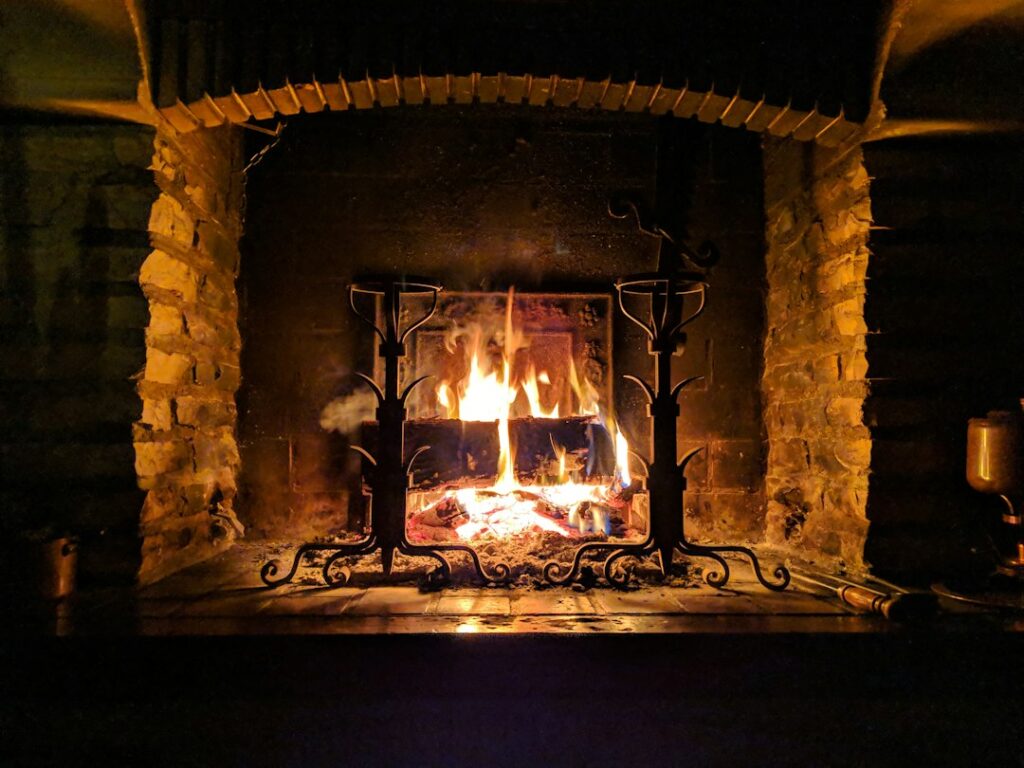
Glass fireplace doors are one of the most common upgrades to a traditional masonry fireplace, and one of the most misunderstood. Sellers often describe them as an efficiency feature, buyers often assume they make an open fireplace safe to leave unattended, and neither claim holds up without qualifications. Good fireplace doors can cut drafts when the fireplace is not in use, keep sparks and embers on the hearth and give the opening a finished look. Poorly chosen or poorly used doors can crack, overheat or create a false sense of security. This guide covers what glass doors actually do, the difference between tempered and ceramic glass, why manufacturers often say to keep doors open during a hot fire, how doors relate to the damper, when a gas or wood insert makes more sense, burn hazards from hot glass for young children, what inspectors look for and typical costs.
Part of our Heating, Cooling & Ventilation guide — start there for the full picture →
What Fireplace Doors Do and Do Not Do
A fireplace door assembly is a metal frame, usually steel or aluminum with a decorative finish, that mounts to the face of a masonry fireplace opening or slightly inside it, with bifold or cabinet-style glass doors and often a built-in mesh screen. Many units also include an adjustable air vent at the bottom so the fire can draw combustion air when the doors are closed.
What the doors can reasonably do:
- Reduce drafts when the fireplace is idle. A masonry chimney is a large hole in the building envelope. When the damper leaks, as many older cast-iron dampers do, warm room air can escape up the flue around the clock. Closed glass doors add a second barrier at the room side.
- Contain sparks and rolling logs. CPSC’s heating safety guidance advises keeping a screen or glass enclosure around a fireplace to prevent sparks or embers from igniting flammable materials.
- Limit how much room air a dying fire pulls. Closing the doors once a fire has burned down can reduce the volume of heated air the fireplace draws from the house while the damper must stay open for the embers.
What doors do not do:
- They do not turn an open fireplace into an efficient heater. EPA did not include typical indoor fireplaces in its residential wood heater standards, stating that data indicate typical fireplaces are not effective heaters. Doors improve some of the losses, but a fireplace with doors is still a fireplace, not a stove.
- They do not make a fire safe to leave unattended. Doors do not stop carbon monoxide, do not substitute for an inspected chimney and do not prevent a chimney fire.
- They do not replace a working damper. Doors are not airtight. A missing or broken damper is still a repair item.
Efficiency Claims, Hedged
Marketing for glass doors often cites dramatic savings. Real-world results depend on how leaky the damper is, how often the fireplace is used, the size of the opening, how tightly the doors seal to the masonry and how the homeowner operates them. In a home where the damper is routinely left open after fires, or where the damper plate is warped, doors can make a noticeable difference in drafts. In a home with a well-sealing top-mount damper that is closed whenever the fireplace is cold, the added benefit may be modest.
During a fire, the picture is more mixed. Closed doors reduce the amount of heated room air pulled up the chimney, but glass also blocks much of the radiant heat that made the fireplace feel warm in the first place. Some homeowners notice the room feels cooler with the doors closed on an active fire. That tradeoff is one reason many owners who want real heat from a masonry fireplace eventually choose an insert instead.
A sensible expectation: fireplace doors are a draft and safety accessory with some efficiency benefit, not a heating upgrade.
Tempered vs Ceramic Glass
The glass is the most important specification on a fireplace door, and two types dominate the market.
Tempered glass
Most standard fireplace doors use tempered glass. Tempered glass is strengthened by heating and rapid cooling, which makes it stronger than ordinary glass and causes it to break into small granular pieces rather than large shards. It handles the heat on the room side of an open fireplace in normal use, but it has temperature limits. A large, hot fire burning directly against closed tempered doors can overheat the glass. Sudden temperature changes, such as cold water hitting hot glass, can also cause breakage.
For these reasons, many door manufacturers instruct owners to keep tempered glass doors open while a wood fire is burning actively, and to close them only as the fire dies down or when the fireplace is not in use. The exact instructions differ by product, so the owner’s manual governs.
Ceramic glass
Ceramic glass, more accurately a transparent glass-ceramic, tolerates much higher temperatures and thermal shock. It is the material used in the viewing windows of wood stoves and many inserts. Doors with ceramic glass are typically marketed for use closed during a fire, subject to the manufacturer’s instructions. Ceramic glass often has a faint amber or gray tint, costs more and does not shatter into granules the way tempered glass does, so a broken panel requires careful handling.
When shopping, buyers should confirm which type the doors use. If the seller does not know and the manual is gone, it is safest to treat the doors as tempered and keep them open during a fire.
Using Doors With a Fire: The Damper and the Rules
Operating instructions vary, but a typical safe sequence looks like this:
- Open the damper fully before lighting. CPSC advises opening the fireplace damper before lighting a fire and keeping it open until the ashes are cool, and never closing the damper or going to bed while ashes are still warm. An open damper helps prevent a buildup of poisonous gases inside the home.
- Open the glass doors and close the mesh screen while starting and while the fire is burning hot, unless the manufacturer specifically allows closed-door operation.
- Close the glass doors as the fire burns down, if the manual permits. This reduces room air loss while the damper must remain open for the embers.
- Close the damper only when the ashes are completely cold, often the next day.
Other operating cautions apply to every fireplace. CPSC warns never to use gasoline, charcoal lighter or other fuel to start or relight a fire and never to burn charcoal in a fireplace because of the carbon monoxide risk. The U.S. Fire Administration advises keeping anything that can burn at least 3 feet from heat sources including fireplaces.
Doors are not a fix for a smoky fireplace
If a fireplace spills smoke into the room, closing the doors may hide the symptom while the underlying problem remains. Common causes include a cold flue, a fireplace opening that is too large for the flue, a blocked or undersized chimney, negative pressure from exhaust fans and wet wood. A chimney professional should diagnose smoking before anyone relies on doors to manage it.
Fit and Installation on Masonry Fireplaces
Fireplace doors are usually ordered to fit the specific opening. Measurements typically include the width at the top and bottom, the height on both sides and the depth available for the frame, because masonry openings are rarely perfectly square. Doors may mount on the outside face of the masonry with a surround that covers gaps, or fit inside the opening. Uneven brick or stone faces may require a thicker surround or gasket to seal.
Installation is usually mechanical: masonry clips, lintel clips or anchors hold the frame in place, and a fiberglass gasket seals the frame to the face. A few points matter for safety:
- Doors designed for masonry fireplaces should not be put on factory-built (prefabricated metal) fireplaces unless the door is specifically listed for that model. Adding unlisted doors to a factory-built fireplace can change how it handles heat and may conflict with its listing. The fireplace manufacturer’s approved door kit is the usual route.
- Air vents should remain unobstructed. Doors with closed or blocked vents can starve a fire and push smoke into the room.
- Gaskets and frames should be in good condition. Loose frames can fall, and failed gaskets allow drafts and smoke leakage.
Gas Inserts, Wood Inserts and Gas Fireplaces vs Doors
Glass doors are the least expensive way to dress up and partially close a masonry fireplace. Homeowners who actually want heat, convenience or a sealed system usually compare doors with other options:
- A wood-burning insert is essentially a stove designed to fit into a fireplace opening, venting through a stainless liner. It burns far more efficiently than an open fireplace with doors. The fireplace insert guide compares wood, gas and pellet inserts.
- A gas insert or a new gas fireplace provides push-button heat, typically with a sealed glass front and direct venting. See the gas fireplace installation guide for venting, gas line and permit considerations.
- Decorative gas logs in an existing fireplace are a separate category; vented logs generally require the damper to stay open, and doors must be compatible with the logs’ installation instructions.
Gas fireplaces and inserts already have glass fronts, so they are not candidates for aftermarket glass doors. That fixed glass carries its own hazard, discussed next.
Hot Glass and Young Children
Any glass in front of a fire gets hot, but the fixed glass fronts of gas fireplaces have drawn particular attention. CPSC’s safety blog on gas fireplace glass notes that glass fronts can reach 500°F or even 1,000°F and that children can be badly burned by touching the glass, with severe burns happening in seconds. CPSC reported that beginning January 1, 2015, new gas fireplaces and vented fireplace heaters would come with a protective barrier to prevent direct contact with the glass front, and it advises owners of older units to buy a protective retrofit barrier, check with the fireplace manufacturer for the right attachable screen, and supervise young children near the fireplace. CPSC now labels that blog post as archived, but the core safety advice remains widely repeated.
For wood-burning fireplaces with glass doors, the same logic applies. Closed doors on a burning or recently burned fire can be hot enough to burn skin, and the metal frame heats up too. A freestanding hearth gate or safety barrier, along with supervision and teaching children that the fireplace is off-limits, provides the protection doors alone do not.
What a Home Inspection Covers
Under the ASHI Standard of Practice, inspectors inspect fuel-burning fireplaces, stoves and inserts and the chimney and vent systems, but they are not required to inspect fire screens and doors, mantels and surrounds, or the interiors of flues and chimneys that are not readily accessible. In practice, many inspectors will still note cracked glass, a frame that is loose or blocks the damper handle, missing gaskets or a door installed on a factory-built unit without obvious listing, and recommend further evaluation.
Because the chimney interior is generally outside the general inspection’s scope, a chimney inspection by a qualified sweep is often recommended for homes with a used wood-burning fireplace. The U.S. Fire Administration recommends having chimneys cleaned and inspected by a professional each year, and CPSC recommends having flues and chimneys inspected before each heating season. A chimney cap and a properly sealing damper are often part of the same conversation. For help sorting which specialist does what, see the heating and cooling hiring guide or the general guide to hiring a home inspector.
Cleaning and Maintaining Fireplace Doors
Glass doors need modest but regular attention to stay safe and functional. Soot and creosote film build up on the inside of the glass, especially when wood is not fully seasoned or fires are allowed to smolder. Heavy, dark buildup on the glass is worth paying attention to; it often mirrors what is happening in the flue.
Basic care practices that door manufacturers commonly recommend include:
- Clean the glass only when it is completely cool. Spraying cleaner on warm glass risks thermal shock and streaking. Use a cleaner the manufacturer approves; some household products contain ammonia or abrasives that can etch finishes or coatings.
- Check the frame and hinges. Doors should open and close smoothly and latch without force. A sagging door can bind against the frame and stress the glass.
- Inspect gaskets. The fiberglass rope or tape gasket between frame and masonry can flatten or pull loose over time. A replacement gasket is inexpensive and restores the seal.
- Look for chips and cracks. A chipped edge on tempered glass is a weak point; the panel should be replaced rather than used with a hot fire.
- Keep the mesh screen intact. Torn mesh lets sparks escape when the glass doors are open, which is exactly when the fire is hottest.
Annual chimney service is a good moment to have the sweep look at the doors, damper and firebox together, since problems in one often show up in the others.
Costs to Expect
Prices depend on size, glass type, finish and whether doors are custom-made, so these are broad 2026 ranges:
- Standard-size tempered glass doors from home centers or online retailers commonly range from a few hundred dollars to around $800.
- Custom-fit doors for irregular or large openings, premium finishes or ceramic glass often run from roughly $1,000 to $2,500 or more.
- Professional measurement and installation may add a few hundred dollars, or be bundled with custom doors.
- Replacement glass panels vary widely by size and type; ceramic glass costs more than tempered.
- Gas fireplace safety barriers are generally inexpensive relative to the appliance, often under a couple of hundred dollars for manufacturer screens or freestanding gates.
By comparison, wood or gas inserts usually start in the low thousands installed. Doors make the most sense for owners who enjoy an occasional open fire and want to manage drafts and sparks; they make less sense as a heating investment.
References
- Protect Young Children from Burns on Glass Fronts of Gas Fireplaces — U.S. Consumer Product Safety Commission (archived blog)
- CPSC Warns of Hazards from Furnaces, Space Heaters and Fireplaces — U.S. Consumer Product Safety Commission
- New Source Performance Standards for Residential Wood Heaters — U.S. Environmental Protection Agency
- Heating Fire Safety — U.S. Fire Administration
- ASHI Standard of Practice for Home Inspections — American Society of Home Inspectors
Frequently asked questions
Should fireplace doors be open or closed during a fire?
Many manufacturers of tempered glass doors say to keep them open with the mesh screen closed while the fire burns hot, then close them as it dies down. Doors with ceramic glass may allow closed operation. Follow the specific product manual.
Do glass fireplace doors save energy?
They can reduce drafts when the fireplace is not in use, especially with a leaky damper, and limit room air loss as a fire dies down. They do not make an open fireplace an efficient heater, and savings vary widely.
What is the difference between tempered and ceramic fireplace glass?
Tempered glass is strengthened glass suited to typical fireplace doors but has heat limits. Ceramic glass tolerates much higher temperatures and thermal shock and is used in stoves and inserts. Ceramic glass costs more.
Can I put glass doors on a prefabricated fireplace?
Only doors listed for that specific factory-built fireplace should be used. Generic masonry doors can change how the unit handles heat and may conflict with its listing, so check the fireplace manufacturer's approved accessories.
How hot does fireplace glass get?
CPSC notes that gas fireplace glass fronts can reach 500°F or even 1,000°F and can burn a child in seconds. Barriers, safety screens and supervision are the recommended protections.
Want a second set of eyes on a fireplace, chimney or set of glass doors in a home you are buying? Contact us and we will help you connect with a Front Range inspector.