Gas Fireplace Installation: Venting, Gas Lines and CO Safety
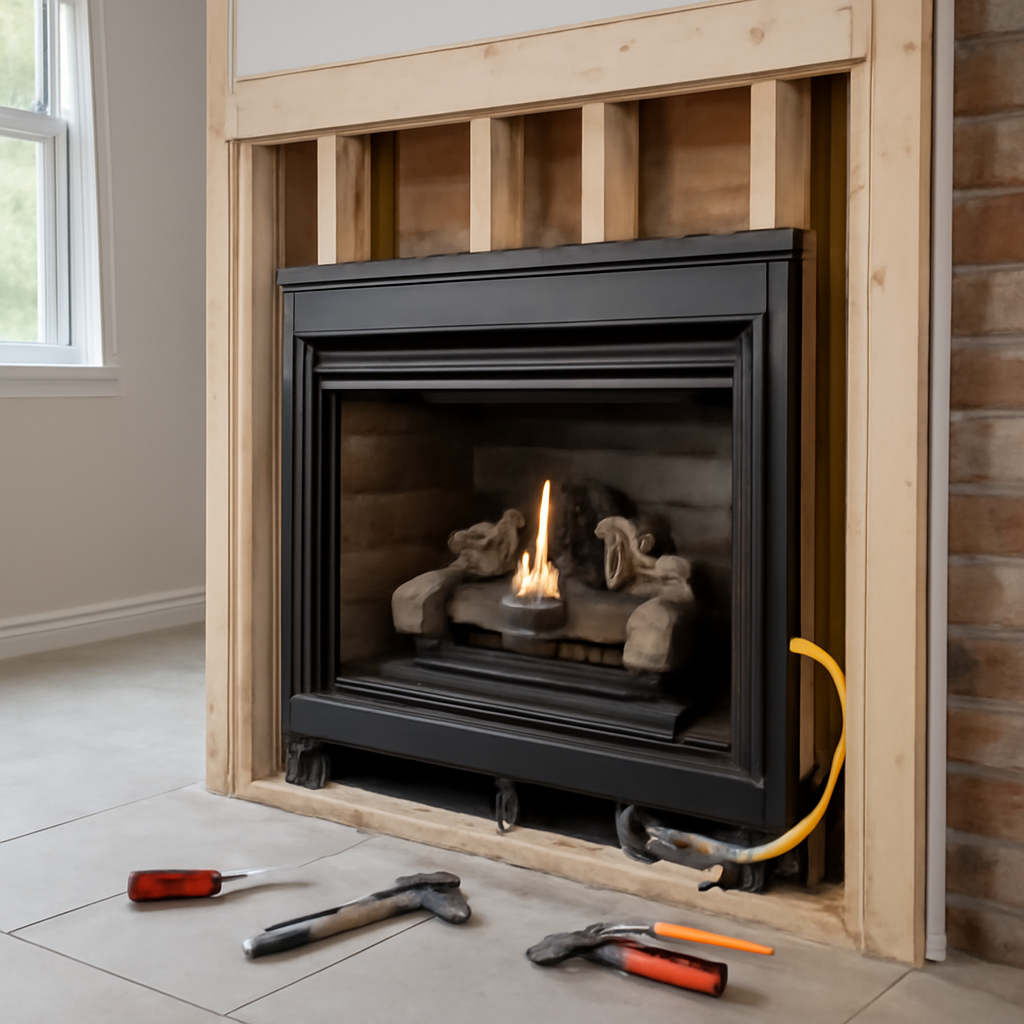
A gas fireplace gives instant flame at the flip of a switch, with no wood to haul and no ash to sweep. That convenience hides a fair amount of engineering. Every gas fireplace burns fuel inside the living space, so the way it gets combustion air, the way it gets rid of exhaust and the way gas reaches the burner all matter for safety. This guide walks Front Range homeowners through gas fireplace installation: the main venting types and their trade-offs, converting an existing masonry fireplace with an insert, the gas line and shutoff valve, carbon monoxide alarms, the burn risk from hot glass fronts, annual service, permits and typical cost ranges. Gas piping, venting and appliance connections are work for licensed professionals. If you ever smell gas, leave the house right away and call the gas utility or 911 from outside.
Part of our Heating, Cooling & Ventilation guide — start there for the full picture →
The Three Main Types: Direct-Vent, B-Vent and Vent-Free
Most residential gas fireplaces fall into three broad families. The type you choose shapes the installation cost, where the unit can go, how efficient it is and what it means for indoor air.
Direct-vent fireplaces
A direct-vent fireplace has a sealed combustion chamber behind a fixed glass front. A coaxial pipe, which is a pipe within a pipe, runs from the unit to the outdoors. Outside air is drawn in through the outer channel, and exhaust leaves through the inner one. Because the firebox is sealed from the room, the fireplace does not pull room air for combustion and is far less likely to spill exhaust into the house. Direct-vent units can usually terminate horizontally through an exterior wall or vertically through the roof, which gives builders and remodelers a lot of flexibility. They are the most common choice for new gas fireplace installation and for retrofits in rooms that never had a fireplace.
B-vent (natural draft) fireplaces
A B-vent fireplace, sometimes called a natural vent unit, uses room air for combustion and sends exhaust up a vertical Type B vent pipe by natural draft, the same way an older atmospheric furnace or water heater does. The front is often open or covered by operable glass doors. These units tend to have a more traditional look and a taller flame, but they lose a large share of their heat up the flue and depend on proper draft. In tight modern houses, competition from exhaust fans, dryers and other appliances can disrupt that draft and cause exhaust to spill into the room.
Vent-free (ventless) fireplaces
Vent-free or ventless gas fireplaces and log sets have no flue at all. They are designed to burn cleanly enough that the combustion products, including water vapor, carbon dioxide and small amounts of carbon monoxide and nitrogen dioxide, are released directly into the room. They typically include an oxygen depletion sensor that shuts off the burner if room oxygen drops. Vent-free units are inexpensive to install because no venting is needed, but they raise real indoor air concerns. They add moisture that can condense on cold windows, they can produce odors, and they release combustion byproducts into living space by design. Some local jurisdictions restrict or prohibit them, especially in bedrooms and bathrooms, and some manufacturers limit run times or room sizes. Anyone considering one should check local rules first and think carefully about household members with asthma or heart or lung conditions.
The U.S. Environmental Protection Agency lists unvented gas space heaters and back-drafting fireplaces among indoor sources of carbon monoxide, and its guidance on reducing exposure starts with keeping gas appliances properly adjusted and considering a vented heater when replacing an unvented one. For most homes, a sealed direct-vent unit is the conservative choice from an air quality standpoint.
Gas Inserts for Existing Masonry Fireplaces
Many older Front Range homes have a wood-burning masonry fireplace that rarely gets used because it is drafty, smoky or simply a chore. A gas insert is a self-contained firebox that slides into the existing opening. Most modern inserts are direct-vent and use two flexible aluminum liners run down the existing chimney, one for exhaust and one for combustion air, or a coaxial liner. The old chimney becomes a chase for the new vent rather than the vent itself.
Before any insert goes in, the existing chimney and firebox should be evaluated. A cracked flue liner, deteriorated mortar joints, a damaged crown or loose bricks at the top can all affect how the liner is supported and how water gets into the chimney. Creosote left from years of wood burning should be cleaned out before the liner is installed. Our guide to chimney inspection explains the inspection levels and what a sweep looks for, and the fireplace insert guide compares gas, wood and pellet inserts in more detail.
A few practical points for insert projects:
- Damper: The existing damper is usually removed or permanently locked open so the liners can pass through. A block-off plate is commonly installed above the insert to limit heat loss up the masonry chimney.
- Size: The insert has to fit the firebox opening and depth. Shallow or oddly shaped fireboxes may limit choices.
- Hearth and surround: The manufacturer specifies clearances to combustible mantels, trim and floor materials. A wooden mantel that was fine with an open wood fire may still need checking against the insert’s listing.
- Exterior flashing: If the chimney already leaks at the roof line, fix it first. A new liner will not solve water damage around the chase. See our guide to chimney flashing repair.
The Gas Line, Shutoff Valve and Leak Checks
Every gas fireplace needs a properly sized gas supply. If the house already has natural gas, a licensed gas fitter will run a branch line from the existing piping to the fireplace location. The line must be sized for the total load of all gas appliances in the home, not just the new fireplace, because adding a 30,000 to 40,000 Btu per hour unit to an undersized system can starve the furnace or water heater on cold days. Our guide to gas line installation cost covers pipe materials, typical distances and the factors that push prices up.
Fireplaces typically have an accessible manual shutoff valve near the appliance, often in the lower control compartment behind a removable grille or in an adjacent wall or floor box. Homeowners should know where it is and how to close it. Local codes and the manufacturer’s installation manual govern its exact location and type.
After the connection is made, the installer should test every joint for leaks with the gas on, using a leak detection solution or an electronic detector, never a flame. They should also confirm the burner lights properly, the flame pattern matches the manufacturer’s description, and the pilot assembly and thermocouple or thermopile work as designed. For more on how professionals find leaks and what warning signs look like, see our guides on gas line leak detection and what to do if you notice a gas leak smell.
Homes on propane need a fireplace configured for propane or a manufacturer conversion kit, which changes the burner orifices and regulator setting. A qualified technician should perform any conversion and verify the result.
Electrical needs
Standing-pilot millivolt units can run without household power. Electronic-ignition models need a 120-volt receptacle or battery backup for the ignition module, remote and blower, so ask whether a model will light during an outage.
Venting Details That Get Checked
The vent system is where many installation problems hide. Direct-vent units use listed vent components from the same manufacturer, assembled in specific lengths, elbows and termination positions. The installation manual lists the maximum and minimum vent run, the number of elbows allowed, and clearances from the exterior termination cap to windows, doors, soffits, decks, gas meters, walkways and inside corners. Those clearances exist so exhaust does not re-enter the house or collect where people stand.
Common issues inspectors and service technicians run into include:
- Terminations placed too close to an operable window, under a deck or in a recessed corner where exhaust can pool.
- Termination caps blocked by shrubs, snow drifts or siding added after the fact. On the Front Range, deep drifts against a low sidewall termination are worth watching after big storms.
- Mixed brands of vent pipe, missing locking bands or an unsealed joint inside a framed chase.
- Combustible framing, insulation or stored items too close to the firebox or vent inside the chase.
- A hot exterior termination cap mounted where children or pets can touch it, without the manufacturer’s guard.
B-vent installations need a correctly sized vertical vent with proper clearance to combustibles and a listed cap. Because they rely on natural draft, a technician may also check whether bath fans, range hoods and dryers running at the same time cause spillage at the draft hood.
Carbon Monoxide Alarms and Indoor Air
Any home with a fuel-burning appliance should have working carbon monoxide alarms. The Centers for Disease Control and Prevention describes CO as an odorless, colorless gas that can cause sudden illness and death, and lists fireplaces among the fuel-burning sources that produce it. The CDC recommends battery-operated or battery-backup CO detectors near every sleeping area, checking batteries twice a year, and having gas-burning appliances serviced by a qualified technician every year. It also advises against burning anything in a fireplace that is not vented.
The U.S. Consumer Product Safety Commission recommends installing battery-operated CO alarms, or alarms with battery backup, on every level of the home and outside sleeping areas, and notes that interconnected alarms are best because when one sounds, they all sound. Common symptoms the CPSC lists include headache, dizziness, weakness, nausea, vomiting, sleepiness and confusion.
A gas fireplace project is a natural time to add or upgrade alarms. Our guides to the best carbon monoxide detector options and carbon monoxide detector installation cover placement, power options and replacement intervals. If a CO alarm sounds, get everyone outside to fresh air and call 911 or the fire department from outside; do not go back in to look for the source.
Hot Glass Fronts and Child Safety
The glass on a sealed gas fireplace gets far hotter than many people expect. In a consumer safety blog, now archived as a historic resource, the CPSC warned that the glass fronts of fireplaces can reach 500 degrees Fahrenheit or even 1,000 degrees, that severe burns can happen in seconds, and that numerous young children have been burned by touching the glass. The agency explained that starting January 1, 2015, new gas fireplaces and fireplace heaters that vent to the outside would come with a protective barrier under an industry standard, and urged owners to use it.
For older units, the CPSC suggested buying a retrofit barrier, such as an attachable safety screen from the fireplace manufacturer, a safety gate or a freestanding fireplace screen, and supervising young children around the fireplace. Practical steps that follow from that advice:
- Confirm the barrier screen shipped with a newer unit is actually installed, not stored in the garage.
- Remember that the glass stays hot for a while after the flame goes out.
- Consider a wall switch lock, a remote stored out of reach, or a child-lock feature on the remote.
- Keep toys, blankets, decorations and furniture well back from the glass and the hearth.
Annual Service and Maintenance
Gas fireplaces need less upkeep than wood-burning ones, but they are not maintenance free. Spiders and insects nest in pilot tubes and burner ports, logs can shift and cause sooting, the glass gasket can deteriorate, and ignition parts and thermocouples wear out. An annual service visit by a hearth technician typically includes cleaning the burner and pilot assembly, checking the logs and embers placement, inspecting the glass and gasket, checking the vent termination and connections, testing for gas leaks, and measuring gas pressure. The EPA’s guidance on reducing CO exposure recommends having a trained professional inspect, clean and tune up central heating equipment, including flues and chimneys, every year, and the same habit makes sense for a gas fireplace. For a sense of what service visits run, our guide to chimney sweep cost covers sweeping and inspection pricing.
Warning signs between service visits include heavy soot on the glass or logs, a lazy yellow flame where the manual describes a crisp one, a persistent odor, a pilot that keeps going out, or condensation and staining around the vent termination outside. Any of these deserve a call to a qualified technician.
Permits, Codes and Typical Costs
Many jurisdictions treat gas fireplace installation as work that requires a mechanical or plumbing permit, often both, because it involves gas piping and venting. Requirements differ between cities and counties along the Front Range, so check with the local building department before work starts. A permitted job usually includes an inspection of the gas piping, a pressure test and an inspection of the vent installation. Keep the permit records; buyers may ask about them later.
Costs vary widely with the unit type, finish work and how far the gas line and vent have to run. As rough, hedged ranges for planning only:
- Gas insert into an existing masonry fireplace: often in the low to mid thousands of dollars installed, including liner, with higher-end units and detailed surrounds pushing costs higher.
- New direct-vent fireplace in a wall without an existing fireplace: frequently several thousand dollars to well over ten thousand once framing, a chase, drywall, a mantel, stone or tile and electrical work are included.
- Vented or vent-free log sets: generally the lowest installed cost, though gas line work can add a meaningful amount.
- New gas line run: an added cost that depends heavily on distance, access and whether the meter or main line needs upgrading.
Get written quotes that list the exact model, vent kit, gas line work, electrical work, permit fees and finish work so bids can be compared fairly.
What a Home Inspector Looks At
Under the American Society of Home Inspectors Standard of Practice, inspectors inspect fuel-burning fireplaces, stoves and fireplace inserts, fuel-burning accessories installed in fireplaces, and chimneys and vent systems, and describe those systems. The same standard says inspectors are not required to inspect vent and chimney interiors that are not readily accessible, fire screens and doors, seals and gaskets, or mantels and surrounds, and are not required to determine draft characteristics or move inserts.
In practice, that means a home inspection may note an obviously improper vent termination, missing glass barrier, soot, a damaged gasket visible from the front, a missing CO alarm or a gas odor, but it is not a full hearth service or a Level 2 chimney inspection. If an inspection report flags the fireplace, a hearth technician or chimney professional can follow up before closing. Our guide to hiring a home inspector explains what a standard inspection covers, and the heating and cooling hub collects related topics on furnaces, boilers and gas appliances.
References
- Carbon Monoxide’s Impact on Indoor Air Quality — U.S. Environmental Protection Agency
- Carbon Monoxide Poisoning Basics — Centers for Disease Control and Prevention
- Carbon Monoxide Information Center — U.S. Consumer Product Safety Commission
- Protect Young Children from Burns on Glass Fronts of Gas Fireplaces (archived) — U.S. Consumer Product Safety Commission
- ASHI Standard of Practice for Home Inspections — American Society of Home Inspectors
Frequently asked questions
Which type of gas fireplace is safest for indoor air?
A sealed direct-vent fireplace draws combustion air from outside and sends exhaust outside through a sealed pipe, so it is generally the most conservative choice. Vent-free units release combustion byproducts and moisture into the room by design and are restricted in some jurisdictions.
Can a gas insert go into my old wood-burning fireplace?
Usually, yes. Most gas inserts are direct-vent units that run liners down the existing chimney. The chimney and firebox should be cleaned and inspected first, and the insert must fit the opening and meet the manufacturer's clearances to the mantel and trim.
Do I need a carbon monoxide alarm with a gas fireplace?
Yes. The CDC recommends CO detectors near every sleeping area, and the CPSC recommends alarms on every level of the home and outside sleeping areas, ideally interconnected. Annual service of the fireplace by a qualified technician also helps.
How hot does gas fireplace glass get?
The CPSC has warned that fireplace glass fronts can reach 500 degrees Fahrenheit or even 1,000 degrees, and that severe burns can happen in seconds. Newer vented units ship with a protective barrier; older units can be fitted with a retrofit screen or safety gate.
Does gas fireplace installation need a permit?
In many Front Range jurisdictions, yes, because the work involves gas piping and venting. Requirements vary by city and county, so check with the local building department before work begins and keep the final inspection records.
Buying a home with a gas fireplace, or planning to add one? Reach out to us and we can help you find a Front Range inspector who looks closely at gas appliances and venting.