Fireplace Grates: Sizing, Airflow, and Firebox Protection
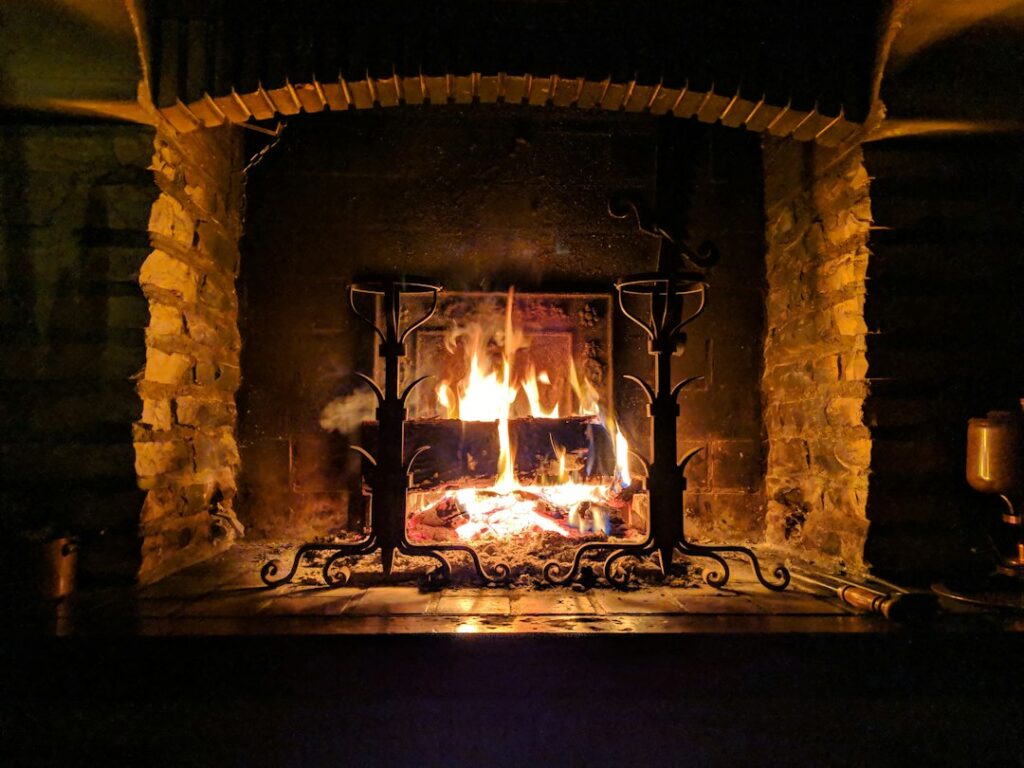
A fireplace grate is one of the least glamorous parts of a wood-burning fireplace, and one of the easiest to get wrong. Too small and logs roll toward the opening. Too large and it jams against the back wall, pushing the fire’s heat into the masonry rather than into the room. Warped or broken bars let burning wood slump onto the hearth floor and smother the fire with its own ashes. For Front Range homeowners who use an open fireplace on cold evenings, the right grate makes fires easier to light, cleaner burning and safer to tend. This guide explains what a grate actually does, how to size one to the firebox, how cast iron and steel bar designs compare, how grates relate to ash removal, doors and screens, and why fireplace inserts and wood stoves follow different rules.
Part of our Heating, Cooling & Ventilation guide — start there for the full picture →
What a Fireplace Grate Does
A fireplace grate is a raised metal rack that holds logs a few inches above the firebox floor in an open masonry or factory-built wood-burning fireplace. It does three jobs.
- It lets air reach the fire from below. Wood burns best when combustion air can move under and through the fuel. Logs lying flat on the hearth floor sit in their own ash and get air mostly from the top and front, which tends to produce a slow, smoky, smoldering fire.
- It keeps logs off the firebox floor. Lifting the fire creates a space where ash and coals collect beneath the burning wood instead of burying it, and it reduces direct, concentrated heat on the floor of the firebox.
- It contains the fuel. Upturned rear tines or a curved basket shape keep logs stacked toward the back of the firebox, away from the opening, so a burned-through log is less likely to roll forward toward the screen or doors.
EPA’s Burn Wise materials note that a smoldering fire is generally neither safe nor efficient and recommend building hot fires with dry, seasoned wood. A grate does not replace good fuel, but it helps a properly built fire get the air it needs.
Grates versus andirons
Andirons, sometimes called firedogs, are the traditional pair of upright supports that hold logs off the floor at each end. They do the same basic job, and many decorative sets are paired with a grate. A grate generally holds smaller and split wood better than andirons alone, because the bars support the fuel along its length rather than at two points.
How to Size a Fireplace Grate
Sizing starts with the firebox, the lined chamber where the fire burns. Most masonry fireboxes are wider at the front than at the back, and many have angled side walls and a sloped rear wall to reflect heat into the room. Our firebox guide covers firebrick, mortar joints and refractory panels in detail.
Measure four dimensions
- Front width: the opening width at the face of the fireplace.
- Rear width: the width of the back wall where it meets the floor.
- Depth: from the front edge of the firebox floor to the back wall.
- Height: the opening height, which matters for tall grates and for how high a stacked fire can be.
Grates are usually sold by front width, and many manufacturers also list rear width and depth. A common rule of thumb in retailer sizing guides is to choose a grate whose front width is a few inches narrower than the firebox opening and whose depth leaves clear space between the grate and the back wall. Exact recommendations vary by manufacturer, so the grate maker’s sizing chart and the fireplace manufacturer’s instructions take priority.
Why clearance matters
Some space on each side and at the back helps air circulate around the fire and keeps burning wood from sitting directly against the firebrick. Heat concentrated in one spot on the rear wall can accelerate wear on mortar joints and refractory panels. A grate that is too wide may not seat flat on the floor where the side walls angle in, which makes it rock, and a grate pushed hard against the back can tip forward as logs burn down.
Too small a grate has its own problems. Logs cut to the fireplace’s usual length can overhang the ends, ash can build up around a grate that does not fill enough of the floor, and the fire may sit farther forward than intended.
Factory-built fireplaces
Prefabricated metal fireplaces, common in Front Range homes built from the 1970s onward, often have refractory panels instead of brick and may come with a specific grate or require one of a particular size. Using an oversized grate or piling the fire higher than the manufacturer allows can overheat the unit. The listing label, usually visible inside the opening or behind a lower grille, identifies the model, and the installation manual specifies accessories and limits.
Grate Styles and Materials
Most grates fall into a few families. Price differences largely track material thickness and construction.
Cast iron grates
Cast iron grates are heavy, molded pieces with thick bars and, often, a basket shape with raised front and rear fingers. Cast iron holds heat and resists warping well, which suits long, hot burns. The tradeoff is weight and brittleness: a cast iron grate can crack if dropped or if water is thrown on it while hot, and very heavy grates can be awkward to remove when cleaning.
Steel bar grates
Steel bar grates are welded from solid or tubular steel bars. Heavy solid-bar designs, often with bars in the range of three-quarters of an inch to an inch thick, are durable and widely used. Thin, inexpensive steel grates tend to sag and warp after repeated hot fires, and once the bars bow, logs slide and air space under the fire shrinks. Bar thickness, weld quality and leg height are the details that separate grates that last many seasons from ones that need replacing every year or two.
C-shaped and basket grates
C-shaped grates, sometimes called hearth or curved grates, use bars bent in a C or J profile so the fuel sits in a cradle that rises at the back. Gravity pulls logs toward the rear as they burn, keeping coals concentrated and away from the opening. Basket grates with raised sides serve a similar purpose and are traditionally used for coal or smaller split wood. Some designs combine a grate with a front ember retainer.
Heat-exchanger grates
Tubular grates with hollow pipes, sometimes fan-assisted, draw room air in at the bottom and discharge it at the top, aiming to push more heat into the room. Results vary with the fireplace, and open masonry fireplaces generally remain inefficient heaters regardless of grate. Any powered unit should be listed and installed per its instructions, with the power cord kept well away from the fire.
Ash, Doors, Screens and Daily Use
A grate changes how ash behaves. Ash and coals drop beneath the fire instead of piling around the logs, which makes removal easier but also means a hot bed of coals can sit under the grate for a long time after the visible flames die down.
Ash management
Many people who burn wood leave a thin layer of ash beneath the grate, often described as about an inch, because it insulates the floor and helps coals stay lit. Ash that rises close to the bottom of the grate restricts airflow and starves the fire, so it should be removed regularly. EPA’s Burn Wise best practices advise removing ashes regularly into a covered metal container and storing it outdoors on a nonflammable surface. Our ash bucket guide covers lids, double-bottom designs and where to set the container down. Coals buried in ash can stay hot for days, so a paper grocery bag, cardboard box or plastic bin is never an appropriate container, and ash should not be dumped onto a deck or near a fence.
Doors and screens
A grate sits behind whatever covers the opening. A mesh screen stops sparks from popping onto the floor. Glass doors add a barrier and can reduce how much warm room air goes up the chimney when the fire is out and doors are closed, though they need to be opened or adjusted according to their instructions while burning. Grate height and depth should leave room for doors to close without touching logs. Our fireplace doors guide covers sizing, glass types and installation.
Building the fire on the grate
- Use dry, split, seasoned wood. EPA Burn Wise materials describe wood seasoned at least six months and burned at under 20 percent moisture content as burning best.
- Start with newspaper and dry kindling or an all-natural fire starter, never gasoline, kerosene or charcoal lighter fluid.
- Keep the fire size proportionate to the firebox. A grate piled to the top of the opening can send flames toward the lintel and damper area.
- Avoid burning trash, cardboard, painted, treated or glued wood. EPA lists these among materials that can release harmful chemicals and damage appliances.
- Check the operating instructions before burning manufactured logs on a grate. Many are made for open fireplaces only.
Signs the grate is part of the problem
Some common fireplace complaints trace back to the grate rather than the chimney. A fire that will not stay lit, or that collapses into a smoky heap within an hour, often sits on a grate that is too low, too sagged or buried in ash. Logs that keep rolling against the screen point to a grate without enough rear lift or one set too far forward. Heavy blackening and spalling on one patch of firebrick can mean the grate is jammed against the back wall. And a grate that wobbles on an uneven firebox floor can shift as logs burn down.
Smoke rolling into the room is a different matter. A closed or partly closed damper, a cold flue, a blocked chimney, a house under negative pressure from exhaust fans, or a fire built too large for the opening are more likely causes. Changing the grate will not fix those, and persistent smoke spillage is a reason to stop burning and have the system evaluated.
Inserts and Wood Stoves Are Different
A loose fireplace grate belongs in an open fireplace. Closed appliances follow their own manufacturer rules.
A fireplace insert is a sealed firebox that slides into an existing fireplace and connects to a chimney liner. A wood stove is a freestanding appliance with its own firebox. Both are designed around a specific internal layout, air-wash system and combustion path. Many are meant to burn on a bed of ash or on firebrick, while others have a built-in grate and ash pan. Adding an aftermarket grate inside a stove or insert can raise the fire closer to baffles and secondary-burn components, change airflow and overheat the unit. The owner’s manual decides whether a grate is used and which one.
Gas log sets also use a grate, but it is a component of a listed assembly that positions the logs over the burner. Replacing it with a generic wood grate, or moving logs around on it, can change the flame pattern and affect combustion. Only replacement parts specified by the gas log manufacturer belong there.
Inspection, Sweeping and Carbon Monoxide
A worn-out grate is often a symptom of how a fireplace is used and maintained. Bars that have burned through or sagged badly suggest very hot, frequent fires. Cracked firebrick, open mortar joints or a warped damper behind the grate are more serious and deserve attention.
Annual sweep and inspection
The U.S. Fire Administration recommends having heating equipment and chimneys cleaned and inspected every year by a professional and keeping anything that can burn at least 3 feet from heat sources including fireplaces and wood stoves. Our guides to chimney inspection levels and chimney sweep cost cover what a sweep checks and how pricing varies. A sweep can also tell homeowners whether the grate is properly sized for the firebox.
What a home inspector covers
The ASHI Standard of Practice requires inspectors to inspect fuel-burning fireplaces, stoves and inserts, fuel-burning accessories installed in fireplaces, and chimneys and vent systems. The same standard says inspectors are not required to inspect fire screens and doors, and not required to move fireplace inserts, stoves or firebox contents. In practice, a grate full of logs or ash can limit how much of the firebox floor and rear wall an inspector can see, so clearing the firebox before an inspection helps.
Carbon monoxide alarms
Any home with a wood-burning fireplace has a fuel-burning appliance that can produce carbon monoxide, especially when a fire smolders or the chimney drafts poorly. EPA’s Burn Wise guidance warns that harmful chemicals including carbon monoxide can be released into a home, and CPSC recommends CO alarms on every level of the home and outside sleeping areas, with interconnected alarms preferred. Our carbon monoxide detector installation guide covers placement and testing.
Fireplace Grate Costs and Replacement
Prices depend on size, material and construction. As hedged 2026 ranges:
- Light-duty steel grates: often in the range of a few dozen dollars, with a shorter service life under frequent hot fires.
- Heavy solid-bar steel and C-shaped grates: commonly somewhere around $75 to $250 or more depending on width and bar thickness.
- Cast iron grates: frequently in a similar or somewhat higher range, with large or decorative designs costing more.
- Heat-exchanger and blower grates: typically priced higher than plain grates, especially fan-assisted models.
- Manufacturer-specific grates for factory-built fireplaces and gas log sets vary by model and are sometimes only available through dealers.
Replacement time arrives when bars are sagging enough that logs will not stay put, welds have cracked, legs have burned short or the grate no longer sits level. For the bigger picture on wood-burning fireplaces, including dampers, smoke problems and conversions, see our wood-burning fireplace guide. Our heating and cooling inspection section explains how fireplaces fit into the rest of a home’s heating evaluation, and the main guide to hiring a home inspector walks through choosing an inspector and reading the report.
More Questions About Fireplace Grates
How long does a fireplace grate last?
A cast iron fireplace grate can last many years, often decades, with regular use, while thinner steel bar grates may warp or burn through in a few seasons of hot fires. Grate life depends on fire intensity, how much wood sits on it and whether ashes are cleared regularly. Grates with sagging bars, broken welds or cracks should be replaced, since a failed grate lets logs roll forward against doors or screens. Heavier bars and solid construction generally cost more but outlast lighter models.
Can you burn wood directly on the fireplace floor without a grate?
Yes. Wood can be burned directly on the fireplace floor, and some people prefer a bed of ash for slow, steady fires. A grate raises the wood for better airflow and easier lighting, and it helps keep logs contained. Without a grate, fires may smolder more and produce more smoke if air cannot reach the wood. Andirons are another way to hold logs off the hearth. Factory-built fireplaces may require a grate or specific accessories, so the manufacturer’s manual takes priority.
Is a heavier fireplace grate better?
A heavier fireplace grate is usually better for durability, because thicker bars and cast iron resist warping and burning through under high heat. Heavier grates hold logs more securely and last longer than thin steel models. Weight alone is not everything: bar spacing, height off the floor and fit within the firebox matter for airflow and clearance from the back wall. A properly sized, sturdy grate that leaves a few inches of space on each side and the rear usually performs best.
Do fireplace grates improve heat output?
Fireplace grates can modestly improve heat output by helping wood burn more completely and hotter thanks to better airflow underneath. Standard grates do not change the basic inefficiency of an open fireplace, which sends much of its heat up the chimney. Heat-exchanger grates that circulate room air through tubes can add more warmth to the room, though results vary. For a large improvement in heating efficiency, a fireplace insert is usually the more effective upgrade.
References
- Best Wood-Burning Practices (Burn Wise, archived program) — U.S. Environmental Protection Agency
- Burn Wise (historical record; program ran 2009 to 2025) — U.S. Environmental Protection Agency
- Heating Fire Safety — U.S. Fire Administration
- Carbon Monoxide Information Center — U.S. Consumer Product Safety Commission
- ASHI Standard of Practice for Home Inspections — American Society of Home Inspectors
Frequently asked questions
Do you need a grate in a fireplace?
In an open wood-burning fireplace, a grate or andirons is generally recommended because raising the logs lets air reach the fire from below and keeps the fuel out of its own ash. Inserts, wood stoves and gas log sets follow their manufacturer's instructions instead.
What size fireplace grate do I need?
Measure the firebox front width, rear width and depth. Many sizing guides suggest a grate a few inches narrower than the opening with clear space at the back and sides, but the grate maker's chart and the fireplace manual take priority.
Is cast iron or steel better for a fireplace grate?
Both can work well. Cast iron resists warping but is heavy and can crack if dropped or quenched, while heavy solid-bar steel is durable and less brittle. Thin, light-duty steel grates tend to sag after repeated hot fires.
How much ash should be left under a fireplace grate?
Many wood burners leave a thin layer, often about an inch, to insulate the floor and hold coals. Remove ash before it reaches the grate bars, and place it in a covered metal container stored outdoors on a nonflammable surface, as EPA Burn Wise guidance advises.
Can a fireplace grate be used in a wood stove?
Generally not unless the stove manufacturer specifies one. Stoves and inserts are designed around a specific firebox layout and airflow, and an aftermarket grate can raise the fire toward baffles and cause overheating.
What is the difference between a fireplace grate and andirons?
A fireplace grate is a basket or bar frame that holds logs off the hearth, while andirons are a pair of upright supports that hold logs between them. Grates contain wood more securely, while andirons give a traditional look and hold longer logs.
Can a warped fireplace grate be used?
A slightly warped fireplace grate can still be used if it sits stable and holds logs securely. A grate that rocks, sags or lets logs roll toward the opening should be replaced, since unstable logs can push against doors or screens and fall onto the hearth.
Should a fireplace grate touch the back wall?
No. A fireplace grate should leave a few inches of space from the back and side walls of the firebox, so heat and airflow do not concentrate against the firebrick. Pressing a hot grate against the back wall can speed cracking of firebrick or refractory panels.
Buying a home with a wood-burning fireplace and unsure about the firebox, damper or chimney? Get in touch here to connect with a Front Range inspector before your inspection window closes.