Wood Burning Fireplaces: Draft, Dampers, Creosote, and Safety
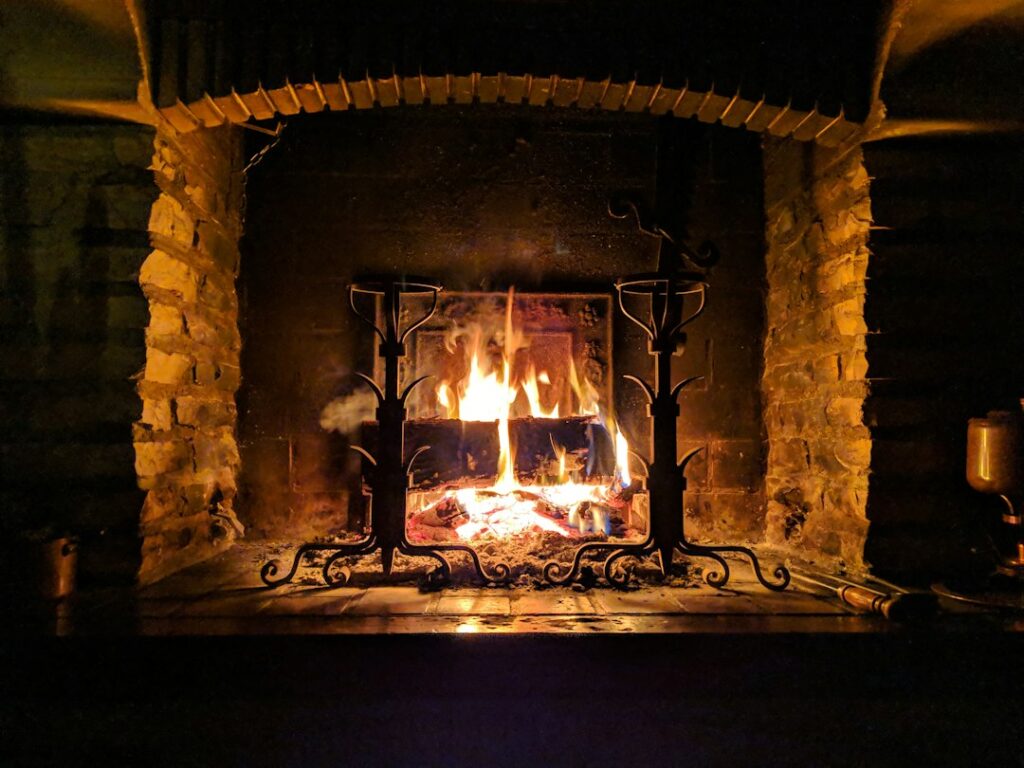
A crackling fire is one of the features buyers fall for during a showing, and a wood burning fireplace is also one of the systems most likely to hide expensive problems. The visible parts look simple: a brick opening, a grate, a damper handle. The parts that matter for safety sit out of sight in the smoke chamber, flue, liner, crown and cap. This guide explains how a traditional masonry fireplace works, why some fireplaces smoke into the room, how creosote forms and how often chimneys should be swept and inspected. It also covers the efficiency limits of an open fire, the upgrade paths, safe burning and ash handling, carbon monoxide and smoke alarms, and the wood-burning rules that can apply on high-pollution days along the Colorado Front Range. Costs are general 2026 ranges.
Part of our Heating, Cooling & Ventilation guide — start there for the full picture →
How a Wood Burning Fireplace Works
A traditional open masonry fireplace is a fire chamber connected to a vertical flue. Hot combustion gases are lighter than room air, so they rise up the flue and pull fresh air into the fire behind them. That upward flow is called draft. Nearly every fireplace component exists to start, guide or protect that flow.
Firebox
The firebox is the chamber where the fire burns, lined with firebrick laid in refractory mortar that tolerates high heat. Cracked or missing firebrick and eroded mortar joints can expose the surrounding masonry and framing to heat. Our firebox guide covers what damage looks like and when panels or bricks need replacing.
Damper
The damper is a metal plate that closes off the flue when the fireplace is not in use. A throat damper sits just above the firebox and is operated by a handle or chain. A top-sealing damper sits at the top of the chimney and is opened with a cable, and it usually seals more tightly. A damper must be fully open before a fire is lit and while any embers remain.
Smoke shelf and smoke chamber
Above the damper, the smoke shelf is a horizontal ledge that helps redirect downdrafts, and the smoke chamber is the tapered space that funnels gases into the flue. Rough, unparged smoke chambers collect creosote and can slow draft, and they are a common subject of chimney repair estimates.
Flue and liner
The flue is the passage that carries smoke out of the house. In most masonry chimneys it is lined with clay tile, a stainless steel liner or a cast-in-place liner. The liner protects the masonry from heat and corrosive byproducts and keeps heat from reaching nearby wood framing. Cracked tiles, gaps at joints and missing sections are among the more serious defects found during chimney inspections. Our chimney liner guide explains liner types and relining.
Crown and cap
The crown is the concrete or mortar slab that covers the top of the masonry chimney around the flue. Cracks let water into the chimney, and on the Front Range, repeated freeze-thaw cycles can widen those cracks quickly. Our guide to chimney crown repair covers sealing versus rebuilding. A cap sits above the flue opening to keep out rain, snow, birds and animals, and its mesh acts as a spark arrestor. A missing cap is one of the cheapest items to fix, covered in our chimney cap guide.
Draft Problems and Smoke Spillage
A fireplace that sends smoke into the room has a draft problem. The cause is not always the fireplace itself. Common culprits include:
- A cold flue. On a cold start, a column of cold air in the flue can resist the rising smoke. Warming the flue briefly with a lit roll of newspaper held near the open damper is a common technique.
- A closed or partly closed damper. Surprisingly common, especially with chain-operated dampers whose position is hard to see.
- House depressurization. Range hoods, bath fans, clothes dryers and tight construction can make the house pull air down the chimney. Cracking a nearby window often reveals whether this is the issue.
- Flue sizing. A flue that is too small for the fireplace opening, or a chimney that is too short relative to the roofline or nearby structures, can draft poorly.
- Obstructions. Nests, debris, fallen liner tiles and heavy creosote all restrict flow.
- Wind and terrain. Gusty Front Range winds, especially near the foothills, can cause downdrafts on chimneys that are otherwise sound.
Spillage matters for more than the smell. The EPA lists back-drafting from wood stoves and fireplaces, along with leaking chimneys, among the indoor sources of carbon monoxide. The EPA Burn Wise program’s best-practices page puts it simply: properly installed, correctly used wood-burning appliances should generate very little smoke, and regularly seeing or smelling smoke suggests a problem.
Creosote, Sweeping and Inspection Levels
Wood smoke cools as it rises, and some of what it carries condenses on the flue walls as creosote. Creosote ranges from a dusty soot to a crunchy, flaky layer to a hard, glazed coating that is very difficult to remove. It is combustible, and a chimney fire happens when that deposit ignites. Cool, smoldering fires and wet wood produce more creosote because combustion is incomplete and the flue stays cooler.
The U.S. Fire Administration advises having heating equipment and chimneys cleaned and inspected each year by a professional. A sweep removes creosote and debris and usually reports any visible damage. Our chimney sweep cost guide covers what a sweep includes and how pricing works.
Inspection levels
Chimney professionals commonly describe inspections in three levels, drawn from the NFPA 211 standard:
- Level 1. A visual check of the readily accessible portions of the chimney, appliance and connections. This suits a chimney in regular use with no changes.
- Level 2. A more thorough check that typically includes a video scan of the flue interior and accessible areas such as attics and crawlspaces. It is commonly recommended on a property sale, after a chimney fire or other event, or when the appliance or fuel changes.
- Level 3. Used when a serious hidden problem is suspected, and may require removing parts of the chimney or surrounding construction to gain access.
Signs a chimney fire may have occurred
Chimney fires are not always dramatic. Some roar with loud popping, dense smoke and flames from the chimney top, while others burn slowly and go unnoticed. Evidence a sweep or inspector may find afterward includes puffy, honeycombed creosote, cracked or displaced flue tiles, warped metal dampers or caps, discolored or distorted rain caps, roofing damage from falling debris and cracks in exterior masonry. Any of these is a reason to stop using the fireplace until a qualified chimney professional has evaluated it, because a damaged liner can let heat reach framing during the next fire.
Our chimney inspection guide covers the levels in more detail. A general home inspector evaluates the visible fireplace and chimney components but does not run a camera up the flue, so a specialist chimney evaluation is a common follow-up recommendation for buyers.
Efficiency: Why Open Fireplaces Lose Heat
An open masonry fireplace is a pleasant fire to sit near and an inefficient way to heat a house. A large share of the heat goes up the flue, and the draft pulls warm room air with it, which the furnace then has to replace with outdoor air leaking in elsewhere. When the fire dies down and the damper is still open, the chimney keeps drawing heated air out. In many homes the room nearest the fireplace feels warm while the rest of the house cools.
A leaky or missing damper causes heat loss even when the fireplace is never used. Top-sealing dampers and inflatable chimney balloons are common fixes for fireplaces kept mainly for occasional use.
Upgrade paths
- Glass doors. Doors reduce the amount of room air pulled up the flue and help contain sparks. They do not turn an open fireplace into a heater. See our fireplace doors guide.
- Fireplace inserts. An insert is a closed-combustion appliance installed inside the existing firebox, usually with a new stainless liner running the full height of the chimney. Wood, gas and pellet inserts are available. Our fireplace insert guide compares them.
- Freestanding wood stoves. A stove can be installed in front of the fireplace or elsewhere in the home with its own venting. The EPA Burn Wise program recommended upgrading older wood-burning devices to cleaner, more efficient appliances such as gas, a heat pump or an EPA-certified stove. Our wood stove guide covers clearances and certification.
Burning Safely: Wood, Ashes and Alarms
The EPA’s Burn Wise best-practices page advises burning only dry, split, well-seasoned wood, seasoning wood for at least six months, storing it outdoors off the ground with only the top covered, and testing with a wood moisture meter, since wood burns best below 20 percent moisture. It describes seasoned wood as darker and lighter, and it sounds hollow when knocked against another piece. The same page lists materials not to burn, including household trash, cardboard, plastics, painted or pressure-treated wood, plywood and particle board, and wet, rotted or moldy wood. It also advises never starting a fire with gasoline, kerosene or charcoal starter.
Note that EPA states the Burn Wise program ran from 2009 to 2025 and that its website is now kept as a historical record that is no longer updated. The guidance on wood moisture and what not to burn remains widely repeated by fire and air agencies.
Clearances and the hearth
The U.S. Fire Administration advises keeping anything that can burn at least 3 feet from heat sources, including fireplaces. That covers furniture, holiday decorations, stockings hung on the mantel during a fire, and firewood stacked beside the hearth. A screen or doors should be closed while the fire burns, and a hearth extension in front of the opening protects the floor from rolling embers.
Ash disposal
Ashes can hold live embers for days. EPA’s Burn Wise guidance advises regularly removing ashes into a covered metal container and storing it outdoors on a nonflammable surface, and keeping a fire extinguisher handy. Paper bags, cardboard boxes, plastic buckets and the garage floor next to the car are all poor choices. Our ash bucket guide covers lids, capacity and where to set the bucket.
Carbon monoxide and smoke alarms
The CPSC describes carbon monoxide as a colorless, odorless, poisonous gas and recommends battery-operated CO alarms or CO alarms with battery backup on every level of the home and outside sleeping areas, noting that interconnected alarms are best. It lists symptoms of CO poisoning as headache, dizziness, weakness, nausea, vomiting, sleepiness and confusion. Our guides to carbon monoxide detector installation and smoke detector placement cover where alarms belong. The EPA’s wood smoke page also points out that a properly installed and maintained smoke alarm is one of the best and cheapest ways to get early warning of a fire.
Wood Smoke, Health and Front Range Burn Rules
EPA’s wood smoke page explains that smoke is a mixture of gases and fine particles, and that the biggest health threat comes from fine particles (PM2.5), which can cause burning eyes and runny nose, worsen asthma and trigger heart attacks and strokes in people already at risk. It lists children, older adults and people with heart or lung disease among those at greater risk. The page also notes that residential wood smoke is a main contributor to wintertime fine particle pollution and poor air quality days in many areas.
That concern shapes local rules along the Front Range. Winter temperature inversions can trap pollution over the Denver metro area and other valleys, and state and local programs have historically issued high-pollution advisories during which burning in open fireplaces and non-certified stoves may be restricted or discouraged. Some cities and counties also limit the type of wood-burning device allowed in new construction or remodels. Rules, exemptions and enforcement vary by jurisdiction and change over time, so check your city or county regulations and the state’s air quality advisories before lighting a fire on a cold, still winter day. EPA’s guidance to check the local air quality forecast before burning reflects the same idea.
For buyers, these rules affect how much use a fireplace will realistically get. A home with an open masonry fireplace in a jurisdiction with frequent burn restrictions may see the fireplace used only occasionally, which is one reason gas inserts and certified stoves are popular conversions.
Costs and Hiring
Prices vary by region, chimney height, access and condition. As a rough 2026 guide:
- Chimney sweep with a basic inspection: often a few hundred dollars.
- Level 2 inspection with video scan: commonly a few hundred dollars more than a basic sweep, sometimes bundled.
- Chimney cap: often a modest cost for a standard single-flue cap installed, more for custom multi-flue caps.
- Crown repair or rebuild: from a few hundred dollars for sealing to well over $1,000 for a rebuild.
- Stainless steel relining: commonly several thousand dollars depending on height and diameter.
- Fireplace insert installed with liner: often several thousand dollars or more.
Red flags for buyers
Some findings during a showing or inspection deserve a closer look before closing: heavy black staining on the face of the brick above the opening, a damper that will not open or close, daylight visible through a damper that is supposedly shut, efflorescence or spalling brick on the exterior chimney, a leaning chimney, a missing cap, and water stains on ceilings or walls next to the chimney. Seller disclosures that mention a past chimney fire, a recent relining or a fireplace that has “never been used” are worth asking about too. Sweep and repair receipts help establish how the fireplace has been maintained.
During a general home inspection, the inspector looks at the visible firebox, damper, hearth, mantel clearances, exterior chimney, crown and cap, and notes signs of smoke staining, water entry or masonry damage. Our section on heating and cooling inspections explains how fireplaces fit into the heating portion of the report, and the main guide to hiring a home inspector covers choosing an inspector and when to add specialist evaluations.
References
- Best Wood-Burning Practices — U.S. Environmental Protection Agency (Burn Wise)
- Wood Smoke and Your Health — U.S. Environmental Protection Agency (Burn Wise)
- Heating Fire Safety — U.S. Fire Administration
- Carbon Monoxide Information Center — U.S. Consumer Product Safety Commission
- Carbon Monoxide’s Impact on Indoor Air Quality — U.S. Environmental Protection Agency
Frequently asked questions
How often should a wood burning fireplace chimney be cleaned?
The U.S. Fire Administration advises having chimneys cleaned and inspected each year by a professional. Fireplaces used heavily or with wet wood may build creosote faster and need attention sooner.
Why does a fireplace smoke into the room?
Common causes include a cold flue, a partly closed damper, negative pressure from exhaust fans, an undersized or short chimney, obstructions and wind. Persistent smoking calls for a chimney professional's evaluation.
Do glass doors make an open fireplace efficient?
Doors reduce the room air pulled up the flue and help contain sparks, but an open fireplace remains a poor heat source. An insert or certified wood stove is the usual route for real heating.
Can a fireplace be used on high-pollution days on the Front Range?
Some Front Range jurisdictions restrict or discourage burning in open fireplaces and non-certified stoves during high-pollution advisories. Check current city, county and state air quality rules before burning.
What level of chimney inspection does a buyer need?
A Level 2 inspection, which typically includes a video scan of the flue, is commonly recommended when a property changes hands. A general home inspection covers visible components only.
Buying a home with a wood fireplace and wondering what is hiding in the flue? Get in touch here and we can connect you with a Front Range inspector who knows what to flag for a chimney specialist.