Electric Fireplace: Wiring, Heat Output and Safety
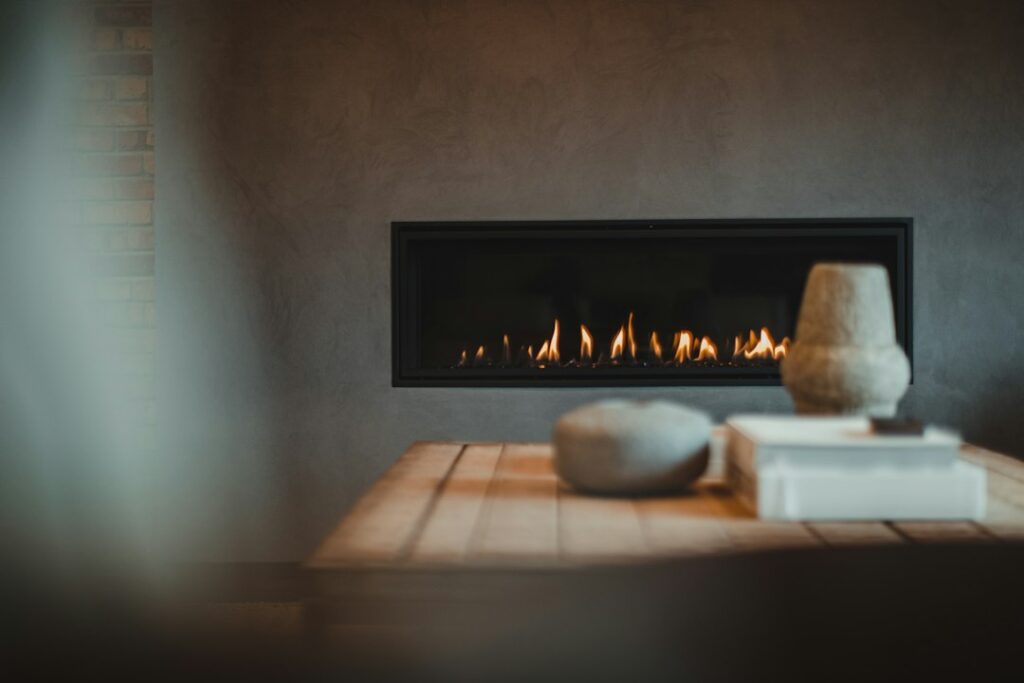
An electric fireplace offers the look of a fire without a chimney, a gas line or a pile of firewood. Units range from small plug-in stoves to long built-in linear models recessed into a wall, and many owners use them as much for ambiance as for heat. They are simple appliances, but they are not risk-free. Most contain a resistance heater that draws a significant share of a household circuit, and how that heater is powered matters for safety. This guide explains how electric fireplaces work, the difference between plug-in and hardwired units, what heat output and circuit load to expect, why extension cords are a bad idea, how clearances and mantels are handled, what converting an old wood fireplace involves, and how electric compares with gas. Cost figures are general ranges that vary by model, home and installer; safety guidance summarizes U.S. Fire Administration materials current as of 2026, and the manufacturer’s installation manual should always take priority.
Part of our Heating, Cooling & Ventilation guide — start there for the full picture →
Electrical problem? Talk to a licensed electrician.
📞 Call (877) 560-2714How an Electric Fireplace Works
An electric fireplace has two separate functions packaged in one cabinet. The first is the flame effect. Older models used a rotating reflector and incandescent bulbs; most current models use LEDs, light diffusers and sometimes fine water mist to create the illusion of flames and glowing embers. The flame effect uses relatively little power and can usually run on its own, so the fireplace can be enjoyed in summer without adding heat.
The second function is the heater. Most units contain a fan-forced resistance element, often a coil or ceramic heater, that blows warm air into the room through a grille near the top or bottom of the unit. Some models use infrared quartz elements. In practical terms, the heater behaves like an electric space heater built into a decorative box.
Because nothing is burned, electric fireplaces do not produce smoke, combustion gases or carbon monoxide, and they do not need a chimney or vent. That is the main reason they can go almost anywhere: apartments, basements, bedrooms and rooms where a vented appliance would be impractical.
Common formats include:
- Freestanding stoves and mantel packages: self-contained units that plug into a wall outlet.
- Wall-mounted and recessed linear units: long, shallow fireboxes hung on the wall or framed into it, often hardwired.
- Electric inserts: fireboxes sized to slide into an existing masonry or factory-built fireplace opening.
- Log sets: electric logs placed on the grate of an existing fireplace.
- Media consoles: TV stands with a built-in firebox.
Plug-In vs Hardwired Electric Fireplaces
Plug-in units
Many freestanding units, inserts and media consoles come with a standard cord and plug for a 120-volt outlet. Installation is mostly a matter of placement. The trade-off is that the heater shares a circuit with whatever else is plugged in on that circuit, and the cord and outlet carry a sustained load for as long as the heat is on.
Hardwired units
Larger built-in models, especially long linear units, are often designed to be hardwired to a junction box. Some run on 120 volts and some on 240 volts, and many manufacturers call for a dedicated circuit. Hardwiring typically requires a licensed electrician and, in most Front Range jurisdictions, an electrical permit. The benefit is a circuit sized for the appliance with no cord or plug to overheat.
Some models can be configured either way. When a recessed unit is installed in a new wall, planning the electrical feed before drywall goes up avoids awkward surface-run cords. Inspectors who find a built-in unit fed by a cord tucked behind trim or run through a wall cavity will usually flag it, because flexible cords are not meant to be concealed in walls.
Best Electric Fireplaces: our top 3 picks
| Product | Best for | Key features | Price | Buy |
|---|---|---|---|---|
| Touchstone Sideline 60 | Best recessed in-wall fireplace |
| $519.20as of Nov 19, 2026 10:21 pm GMT+0000 | Buy now →Check current price |
| Westinghouse WTH-50EF12B3 | Best wall-mount with longest warranty |
| $479.20as of Nov 19, 2026 10:21 pm GMT+0000 | Buy now →Check current price |
| R.W.FLAME RFH-5001L 50-inch | Best thin recessed for 2x6 walls |
| $165.79as of Nov 19, 2026 10:21 pm GMT+0000 | Buy now →Check current price |


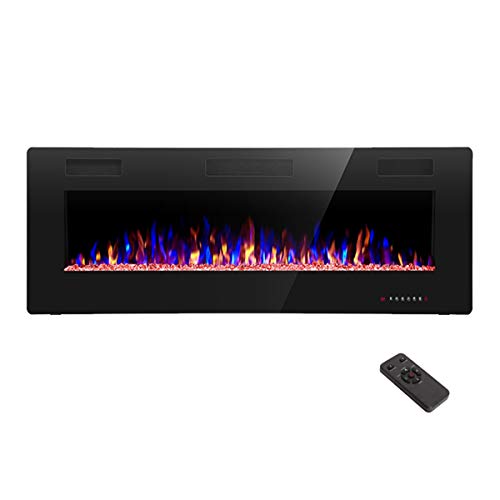
Prices are Amazon’s listed prices as of the time shown and change often; check Amazon for today’s price. As an Amazon Associate we earn from qualifying purchases.
Heat Output and Circuit Load
Most plug-in electric fireplaces have heaters rated around 1,500 watts on a 120-volt circuit, often with a lower setting around 750 watts. Some larger hardwired models are rated higher. These figures vary by model, so the data plate or manual is the authority.
Simple math shows why circuit planning matters. A 1,500-watt heater on 120 volts draws about 12.5 amps. A typical general-purpose household circuit is protected at 15 or 20 amps. On a 15-amp circuit, that heater alone uses most of the available capacity, and electricians often size circuits so continuous loads stay at or below about 80 percent of the breaker rating. Add a lamp, a TV and a game console on the same circuit and the breaker may trip.
A breaker that trips whenever the fireplace heater runs is doing its job. The guide on why a breaker keeps tripping explains how to tell an overloaded circuit from a fault. Repeated tripping is a sign to move the unit to a less loaded circuit or have an electrician add one, not a reason to install a larger breaker.
Heat output is modest. A 1,500-watt heater produces roughly 5,100 BTU per hour, enough for supplemental heat in a single room but not a substitute for a central furnace in a Colorado winter. For broader room-heating options that work on similar principles, see the guides on the baseboard heater and the wall heater.
Operating cost depends on the electricity rate. As an example, running a 1,500-watt heater for one hour uses 1.5 kilowatt-hours; at an assumed rate of 15 cents per kilowatt-hour, that is roughly 22 or 23 cents per hour. Check the current residential rate on a utility bill to estimate actual costs. The flame effect alone typically uses far less.
Extension Cords, Power Strips and Outlet Condition
A plug-in electric fireplace with the heat on behaves like a space heater, and the same cord safety rules apply. The U.S. Fire Administration’s portable heater fire safety flyer tells consumers to check space heaters for cracked or damaged cords and plugs and to plug space heaters directly into wall outlets, without an extension cord or power strip. The USFA’s appliance and electrical safety messages add that extension cords can overheat and start a fire when used with major appliances, and that outlets should not be overloaded.
The heating risk is not abstract. The USFA reports that home portable heater fires were only 3 percent of all home heating fires annually for 2017 to 2019 but accounted for 41 percent of fatal heating fires in homes. Electric fireplaces are not identical to portable space heaters, but the plug, cord and outlet carry the same sustained load.
Practical habits for plug-in units:
- Plug directly into a wall receptacle, not a power strip, surge protector or extension cord.
- Check the plug and outlet face after an hour of operation. A plug that feels hot, a discolored outlet or a burning smell means stop using it and call an electrician.
- Replace loose or worn outlets that no longer grip the plug firmly; the guide on outlet replacement covers when that is a DIY task and when it is not.
- Do not run the cord under rugs or furniture where it can be crushed or overheated.
- Turn the heater off when leaving the room or going to bed, as the USFA advises for space heaters.
Clearances, Mantels and Wall Installation
Because the heater outlet blows warm air, every electric fireplace has clearance requirements that appear in the installation manual. These typically cover the space above the heat outlet, clearance to the floor in front of the unit, and how close a mantel, shelf or television can be mounted. Requirements vary considerably by model, so there is no single rule to apply.
General fire safety guidance from the USFA advises keeping anything that can burn at least 3 feet from heat sources including fireplaces and space heaters. In a living room, that means rugs, curtains, throw blankets, holiday décor and stacks of paper deserve a little distance from the grille.
A few points come up often during installation and inspection:
- TVs above the unit: many manufacturers allow a TV above an electric fireplace if the heat outlet directs air forward and minimum spacing is met, but this varies by model.
- Recessed framing: built-in units list framing dimensions and whether the enclosure can be built with standard lumber and drywall.
- Bathrooms and damp locations: most indoor electric fireplaces are not listed for wet areas. Outdoor-rated models exist, but an indoor unit should not be used on a patio.
- Listing labels: look for a label from a recognized testing laboratory on the unit.
Converting an Old Wood Fireplace to Electric
Many Front Range homeowners have a masonry or factory-built wood fireplace that rarely gets used because of smoke, mess or wood-burning restrictions on high-pollution days. An electric insert or log set is one of the simplest conversions. The firebox becomes a decorative opening, and no gas line or new venting is needed.
A few steps make that conversion cleaner:
- Power: many inserts plug in, which means running a cord to an outlet inside or next to the firebox. Some owners have an electrician add a receptacle in a code-compliant location rather than snaking a cord through the opening.
- Chimney: an unused flue can still let cold air, moisture and animals into the house. Closing the damper, adding a chimney balloon or block-off plate, and keeping a chimney cap in good condition help with drafts and water entry.
- Future options: if there is a chance of going back to wood or switching to gas, a chimney inspection before converting gives a clearer picture of the flue’s condition.
Gas and wood inserts are a different project with venting, liners and combustion air to consider. The guide on the fireplace insert compares those options in more detail.
Maintenance and Common Problems
Electric fireplaces need far less upkeep than wood or gas units, but they are not maintenance-free. Most of the problems owners report trace back to dust, airflow or power supply rather than a failed heater.
Routine care
- Dust the grille and intake: lint and pet hair collect on the heater inlet and outlet. Manufacturers usually recommend unplugging or switching off the unit and vacuuming the grilles periodically, because restricted airflow makes the element run hotter.
- Clean the glass or screen: use the cleaner the manual specifies; some front panels have coatings that harsh products can damage.
- Refill and clean water-mist units: models that use water vapor for the flame effect have reservoirs and transducers that can build up minerals, especially with hard water. Many manuals suggest distilled water.
- Replace bulbs or LED modules: older units with incandescent bulbs need replacements of the correct wattage.
Troubleshooting signs
A heater that shuts off after a few minutes may be tripping its internal overheat protection, often because the grille is blocked or furniture sits too close. A burning smell on first use of the season is commonly dust burning off the element and should fade quickly; a persistent smell, melting plastic odor or discolored housing means unplug and stop using the unit. Clicking, rattling or a fan that runs without heat can point to a failing fan motor or thermal cutoff. Most units have no user-serviceable heater parts, so repairs usually go to the manufacturer or an authorized technician.
Remote controls, thermostats and timers are convenient, but owners should still treat the unit as a heater: off when the room is empty, and never left running with items draped over it.
Electric vs Gas Fireplaces
Electric and gas units are often compared head to head. Neither is better in every case.
- Installation: electric needs only power. Gas needs a gas line, venting (or a vent-free design where allowed) and usually a permit and a licensed installer.
- Heat: gas fireplaces generally produce considerably more heat than a typical 1,500-watt electric unit.
- Power outages: some gas fireplaces can operate without household power; electric units cannot.
- Combustion safety: electric units produce no combustion gases. Gas units need proper venting and maintenance.
- Realism: gas flames are real; electric flame effects have improved but remain a simulation.
The guide on gas fireplace installation explains venting types, permits and costs for the gas route.
Smoke Alarms, CO Alarms and Home Inspection Scope
An electric fireplace does not produce carbon monoxide, but most Front Range homes still contain fuel-burning appliances such as furnaces, water heaters and gas ranges, and attached garages are common. A heating appliance in a living space is also a good prompt to confirm smoke alarm coverage. The USFA advises placing smoke alarms inside and outside each bedroom and sleeping area and on every level of the home, testing them monthly and replacing them 10 years from the manufacture date. The guides on smoke detector placement and choosing the best carbon monoxide detector cover the details.
During a home inspection, an electric fireplace usually falls into a gray area. The ASHI Standard of Practice section on fireplaces covers fuel-burning fireplaces, stoves and fireplace inserts, so a purely electric unit may be treated as an appliance or simply noted. In the electrical section, inspectors report the presence or absence of smoke and carbon monoxide alarms but are not required to test them. A buyer who wants the unit evaluated should ask the inspector in advance or have an electrician check the circuit.
Typical Electric Fireplace Costs
Prices span a wide range. The figures below are general 2026 estimates, not quotes.
- Small plug-in stoves and inserts: often roughly $150 to $800.
- Mantel packages and media consoles: commonly around $300 to $2,000.
- Built-in linear units: frequently $800 to $4,000 or more for the appliance alone.
- New dedicated circuit: electricians often quote a few hundred dollars to around $1,000 or more, depending on panel capacity and wiring path.
- Framing, drywall and finish work: varies with design; a custom media wall can cost more than the fireplace itself.
For a broader view of what to ask before buying a home with built-in heating equipment, see the guide to hiring a home inspector, and explore related topics in the heating and cooling hub.
More Questions About Electric Fireplaces
How much does it cost to run an electric fireplace?
An electric fireplace running its heater at about 1,500 watts typically costs roughly 15 to 30 cents per hour, depending on local electricity rates. At 16 cents per kilowatt-hour, one hour on high heat uses 1.5 kilowatt-hours and costs about 24 cents. Running only the flame effect without heat usually uses far less power, often comparable to a few light bulbs. Lower heat settings and thermostat control reduce costs further. Checking the unit’s wattage and the local utility rate gives a more accurate estimate.
Is it safe to leave an electric fireplace on overnight?
Many electric fireplaces include overheat protection, thermostats and timers, but leaving one running unattended overnight is generally not recommended by fire safety organizations for portable heaters. Plug-in units should be connected directly to a wall outlet, never an extension cord or power strip, and kept away from bedding, curtains and furniture. Using the timer to shut off after a set time is a safer approach. Working smoke alarms on every level and outside sleeping areas remain essential.
Can an electric fireplace run without heat?
Yes, most electric fireplaces can run the flame effect without the heater, which allows the look of a fire in warm weather. Flame-only mode typically uses much less electricity than heating mode, often similar to a few LED or incandescent bulbs depending on the model. This makes electric fireplaces popular for year-round ambiance in living rooms and bedrooms. The owner’s manual explains how to switch modes and whether the heater needs a minimum clearance even when only the flames are on.
How long does an electric fireplace last?
An electric fireplace typically lasts around 10 years or more with normal use, though lifespan varies widely by quality and how often the heater runs. Heater fans, flame motors and LED lights are the parts most likely to wear out, and some can be replaced individually. Keeping vents free of dust, avoiding extension cords and following the manufacturer’s maintenance guidance help extend life. A unit that smells hot, makes grinding noises or trips its outlet should be unplugged and checked.
References
- Portable Heater Fire Safety (flyer) — U.S. Fire Administration
- Heating Fire Safety — U.S. Fire Administration
- Appliance and Electrical Fire Safety — U.S. Fire Administration
- Smoke Alarms — U.S. Fire Administration
- ASHI Standard of Practice for Home Inspections — American Society of Home Inspectors
Frequently asked questions
Can an electric fireplace be plugged into a regular outlet?
Many freestanding units, inserts and media consoles are designed to plug into a standard 120-volt outlet. The heater can draw a large share of the circuit, so plug it directly into a wall receptacle and avoid sharing the circuit with other heavy loads. Larger built-in units are often hardwired on a dedicated circuit.
Can an electric fireplace use an extension cord?
The U.S. Fire Administration advises plugging space heaters directly into wall outlets and not using an extension cord or power strip. A plug-in electric fireplace with the heat on carries a similar sustained load, so the same advice applies. Follow the manufacturer's instructions as well.
How much heat does an electric fireplace produce?
Most plug-in models have heaters rated around 1,500 watts, which works out to roughly 5,100 BTU per hour. That is enough for supplemental heat in one room but not for heating a whole house. Some hardwired models produce more.
Does an electric fireplace need a vent or chimney?
No. Electric fireplaces burn nothing, so they produce no smoke or combustion gases and need no venting. That is why they can be installed in rooms where a vented gas or wood unit would be impractical.
Do electric fireplaces trip breakers?
They can, especially on a 15-amp circuit shared with other devices. A 1,500-watt heater draws about 12.5 amps on 120 volts. Repeated tripping usually means the circuit is overloaded and the unit should be moved or given a dedicated circuit by an electrician.
Can an electric fireplace be installed in a bathroom?
Most electric fireplaces are not designed for bathrooms because of moisture and water exposure, and electrical codes restrict appliances near tubs and showers. A few models may be listed for damp locations. Check the manufacturer's listing and local code, and consult a licensed electrician.
Do electric fireplaces smell when first used?
A new electric fireplace may give off a mild odor the first few times the heater runs as manufacturing residues burn off the heating element. This usually fades quickly. A persistent burning or plastic smell is a reason to turn it off and have it checked.
Can a TV be mounted above an electric fireplace?
A TV can often be mounted above an electric fireplace because many units vent heat forward rather than upward, but clearances in the fireplace and TV manuals should be followed. Wall-mounted installations also need proper wall support and an appropriately placed outlet.
Buying a Front Range home with a built-in electric or gas fireplace and want the setup checked? Reach out through our contact page and we can connect you with a local inspector.