Fire Pit: Safe Distances, Fuel Types and Wildfire Rules
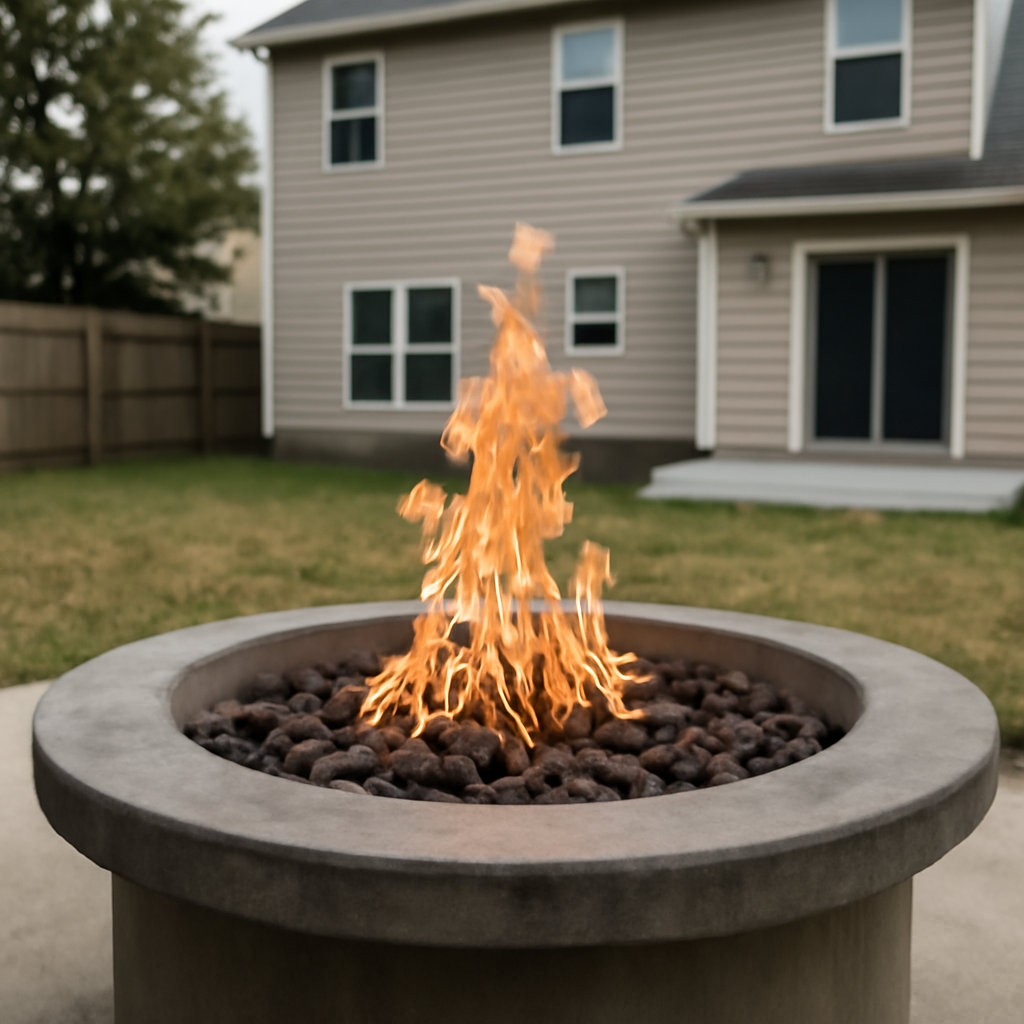
A backyard fire pit turns a cool Colorado evening into something worth staying outside for. It is also an open flame in a region where dry grass, gusty winds and wildfire restrictions are a regular part of life. Front Range homeowners have more choices than ever, from simple steel bowls and stacked-stone wood pits to propane tables and plumbed natural gas burners built into patios. Each option has different clearances, maintenance needs and rules about when it can legally be used. This guide explains the main fuel types, how far a fire pit should sit from the house, decks and trees, how fire bans and wildfire conditions affect use, the specific risks of fire pits on decks, what gas-fired units need, how smoke affects health and neighbors, and what installation typically costs. Cost figures are general 2026 estimates that vary by design, fuel, materials and site.
Part of our Structure & Exterior guide — start there for the full picture →
Wood vs Gas and Propane: Which Fire Pit Type Fits?
The first decision is fuel. It shapes almost everything else, from placement to whether the pit can be used during local fire restrictions.
Wood-Burning Fire Pits
Wood fire pits deliver the crackle, smell and radiant heat many people want. They range from portable steel bowls and cast-iron kettles to permanent masonry rings set into the patio. The downsides are sparks and embers that can drift, heavy smoke, ash to clean out and hot coals that stay dangerous for hours after the flames die down. Wood fires are also the type most often prohibited during fire restrictions.
Propane Fire Pits and Fire Tables
Propane units run on a standard tank hidden in a base or connected by hose. They light with a switch or knob, shut off instantly and produce far fewer sparks and much less smoke. Flame height and heat output are lower than a large wood fire, and tanks need regular leak checks and refills.
Natural Gas Fire Pits
Natural gas fire pits connect to the home’s gas supply through a buried line. They offer unlimited fuel and push-button convenience, but installation requires a licensed gas fitter, a permit in most jurisdictions and careful planning of the line route and shutoff valve.
Smokeless and Pellet Designs
So-called smokeless wood pits use double walls and secondary air to burn gases more completely. They reduce visible smoke once fully hot but still burn wood, still throw some sparks and are generally treated as wood-burning devices under local rules.
How Far Should a Fire Pit Be From the House?
The short answer from federal fire-safety guidance is at least 10 feet. The U.S. Fire Administration advises using chimneys, outdoor fireplaces and fire pits outdoors at least 10 feet away from the home or anything that can burn. That includes fences, sheds, wood decks, outdoor furniture, firewood stacks and overhanging branches, not just the house wall.
Ten feet is a minimum starting point, not a guarantee. Other factors often push the distance higher:
- Local rules: some Front Range cities, counties and fire districts set their own minimum clearances, permit requirements or outright limits on wood burning. These can be stricter than the federal guidance.
- Manufacturer instructions: gas fire pits and fire tables list specific clearances to combustibles above and around the unit.
- Wind: Front Range gusts can carry embers well beyond a few feet. A fire pit in a sheltered corner behaves differently from one on an exposed ridge.
- Overhead clearance: tree canopies, pergolas, umbrellas and roof overhangs above the pit can catch heat and sparks.
USFA also recommends using a metal screen over wood-burning fires to keep sparks from floating out, closely watching children when the fire pit is in use, and putting out fires before leaving the backyard. A 3-foot zone around the pit kept free of toys, chairs and kindling reduces burns and trips.
For trees, consider both the trunk and the canopy above. Low branches, dry needles and dead limbs within reach of rising heat are the concern. Siting the pit in the open, on a noncombustible surface such as gravel, pavers or concrete, gives the most margin.
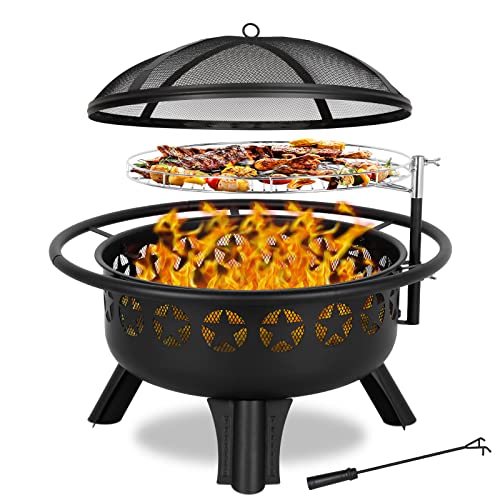
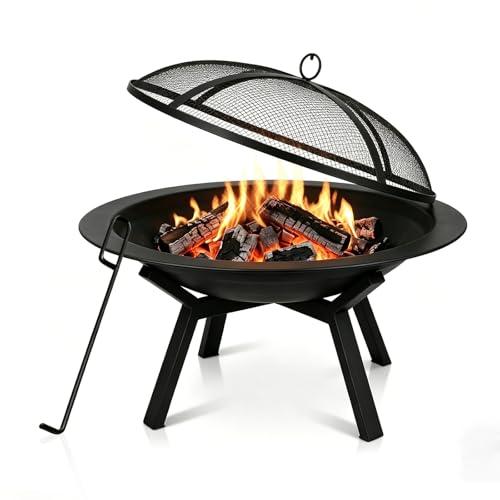
Best Fire Pits: our top 3 picks
| Product | Best for | Key features | Price | Buy |
|---|---|---|---|---|
| Hykolity WHP31 | Best overall wood fire pit |
| $98.99as of Nov 11, 2026 6:38 am GMT+0000 | Buy now →Check current price |
| IBGUC SFP5 | Simple bowl with tool-free setup |
| $89.99as of Nov 11, 2026 6:38 am GMT+0000 | Buy now →Check current price |
| OutVue 36 in. 3-in-1 | Grill table with a rain cover |
| $109.99as of Nov 11, 2026 6:38 am GMT+0000 | Buy now →Check current price |

Prices are Amazon’s listed prices as of the time shown and change often; check Amazon for today’s price. As an Amazon Associate we earn from qualifying purchases.
Fire Bans, Restrictions and Colorado Wildfire Conditions
Colorado counties, municipalities, fire protection districts and federal land managers commonly issue fire restrictions during dry, windy periods, often in stages. What those restrictions allow varies. In many places, early-stage restrictions ban wood fires in open pits while still allowing gas or propane devices with an on-off valve, and stricter stages can ban nearly all open flame. Rules can change from week to week during fire season, and red flag warnings can prompt additional limits.
Because the details differ by jurisdiction, the safe approach is to check current restrictions with the county sheriff, local fire department or fire district before lighting any fire pit, especially from late spring through fall and during dry, windy winter spells. HOAs may also have their own rules on wood burning, and some leases prohibit open fires entirely.
Even when no ban is in effect, conditions matter. A dry chinook afternoon with low humidity and strong gusts is a poor time to burn wood regardless of what the rules say. Keeping water, a hose or an extinguisher within reach is a sensible habit every time.
Defensible Space and Fire-Resistant Surroundings
In the foothills and many plains neighborhoods that border open space, a fire pit sits inside the area that wildfire scientists say determines whether a home survives. NFPA’s guidance on preparing homes for wildfire describes a home ignition zone extending up to 200 feet from the home, divided into an immediate zone (0 to 5 feet), an intermediate zone (5 to 30 feet) and an extended zone (30 to 100 feet and beyond). NFPA notes that embers are the main way most homes ignite in wildfires and can be carried more than a mile by the wind.
For a fire pit, that guidance points to a few practical habits:
- Keep the pit well outside the immediate zone and away from mulch, dry grass, junipers and other flammable plants.
- Store firewood away from the house and the pit, not stacked against siding or under a deck.
- Keep the area around the pit mowed and free of dry leaves and needles.
- Use gravel, stone or pavers around the pit instead of bark mulch or artificial turf.
Our guide to defensible space explains the zone approach in detail, and the fire-resistant house materials guide covers siding, decking and roofing choices that hold up better to embers and radiant heat.
Building a Fire Pit: Surfaces, Materials and Layout
A permanent fire pit is a small construction project, and the details below the flame matter as much as the stonework on top. The pit should sit on a noncombustible base such as compacted gravel, concrete or pavers. Our guides to the concrete patio and paver installation cost cover the base preparation that keeps a surrounding patio from heaving or settling around the pit.
Masonry wood pits are usually lined with firebrick or a steel insert. Ordinary concrete block and some river rock can crack or spall when heated, and stones that have absorbed water can fracture under heat. A liner protects the outer wall and makes the pit easier to repair. Drainage holes or a gravel bed at the bottom keep rain and snowmelt from pooling.
Gas fire pits often use lava rock or fire glass as decorative media over the burner. Manufacturers specify which media and how much to use, because too much or the wrong type can smother the flame and affect combustion. Burner systems and ignition components should be listed for outdoor use and match the fuel type, since natural gas and propane burners are not interchangeable without conversion parts.
Seating layout affects safety, too. Built-in benches or walls should leave a comfortable distance from the flame and room to move around without stepping over the pit. Lighting along paths helps guests find their way back to the house after dark. Before digging footings, seating walls or a gas trench, use the one-call utility locate service described in our call before you dig guide.
Fire Pits on Wood and Composite Decks
Placing a fire pit on a deck is one of the riskier setups. Wood decking is combustible, composite boards can melt or scorch, and heat radiating downward from a steel bowl can damage boards even without visible flames. Embers that fall between deck boards can smolder in debris beneath the deck, an area NFPA’s wildfire guidance specifically recommends keeping clear and screened.
If a fire feature is used on a deck at all, the safer approach is usually a gas or propane unit specifically listed by its manufacturer for deck use, set on a heat shield or pad as the instructions require, with the stated clearances to railings, walls and overhead structures. Many deck and composite manufacturers also publish their own guidance on heat sources, and some warranties exclude heat damage. Wood-burning pits on decks are generally discouraged.
The deck itself should be in sound condition before adding heavy masonry or a filled fire table. The deck inspection guide covers framing, ledger and footing checks.
Gas Lines, Propane Tanks and Leak Checks
Gas fire pits are cleaner and easier to control, but they bring their own maintenance. For natural gas, the supply line is typically buried in a trench from the house or meter to the pit, with an accessible shutoff valve. The run needs to be sized for the burner’s demand and installed with appropriate pipe, fittings and pressure testing. Our gas line installation cost guide covers what affects price and why licensed installation and permits matter.
For propane fire tables, NFPA’s grilling safety guidance recommends checking propane tanks for leaks before use, advice that applies just as well to fire tables that share the same tanks and hoses. A soapy-water test on hose connections, looking for bubbles, is the common method. Tanks should be stored outdoors and upright, never in a garage or basement.
Signs of a problem include a rotten-egg smell, hissing, uneven or lazy yellow flames, burners that will not stay lit, or dead grass along the line route. Our guide to gas line leak detection explains what to do if a leak is suspected. If gas odor is strong, leave the area and call the gas utility or 911 from a safe distance.
Gas fire pits also need clear burner ports and drain holes. Water and snow that pool in the burner pan can damage components over a Front Range winter, so covers are worth using.
Extinguishers, Water and Putting a Fire Out
Every fire pit session should start with a plan to put it out. A garden hose with a spray nozzle or a bucket of water should be within reach, along with a shovel and sand for wood fires. A multipurpose extinguisher kept nearby, not buried in a garage, adds another layer. Our guide to choosing a fire extinguisher for home use explains ratings and placement.
For wood fires, drown the coals with water, stir the ashes and drown them again until everything is cool to the touch. NFPA’s grilling guidance recommends letting coals cool completely before disposing of them in a metal container, and USFA likewise advises placing cooled coals in a metal can with a lid. Ashes dumped into a plastic trash bin or onto mulch have caused fires hours or even days later.
Smoke, Air Quality and Neighbors
Wood smoke is more than a nuisance. EPA’s Burn Wise materials explain that wood smoke is a mixture of gases and fine particles, and that fine particles, known as PM2.5, can get into the eyes and respiratory system, causing burning eyes, runny nose and illnesses such as bronchitis. EPA notes that fine particles can worsen asthma, trigger asthma attacks and, in people already at risk, contribute to heart attacks and strokes. Children, older adults and people with heart or lung disease are among the groups EPA lists as more susceptible.
EPA also notes that burning wood more efficiently, with dry, seasoned wood, produces less smoke. For fire pits, that translates into burning only dry firewood, never trash, treated lumber, painted wood or yard waste, and keeping fires small. On air-quality alert days along the Front Range, skipping the fire or switching to gas is the considerate choice. Neighbors with asthma or open windows are often the first to notice smoke drifting over a fence.
Placement can help as well. Prevailing evening breezes along the Front Range often flow downslope from the foothills, so a pit sited where smoke drifts toward a neighbor’s bedroom windows or back into the home’s own open doors and fresh-air intakes will cause friction. Gas and propane units largely sidestep the issue, which is one reason many households in denser neighborhoods choose them.
How Much Does a Fire Pit Cost?
Fire pit costs vary widely by fuel and construction. As rough 2026 estimates:
- Portable steel wood-burning pit: often $100 to $600.
- Smokeless wood pit: commonly $250 to $1,000.
- Propane fire table: frequently $400 to $3,000.
- Built-in masonry wood pit, professionally installed: often $1,500 to $5,000.
- Built-in natural gas fire pit with line run: commonly $3,000 to $10,000 or more, depending heavily on the gas line distance and finishes.
Permits, gas line trenching, patio work and seating walls can add substantially. Before trenching for a gas line, locating buried utilities is required.
Checking a Fire Pit When Buying a Home
A built-in fire pit that comes with a house deserves a look at its distance from the home and deck, the condition of surrounding materials, the gas line and shutoff for gas units, and evidence of scorching on nearby surfaces. Inspection scope for outdoor features varies, so ask in advance whether a fire pit will be looked at. Our guide to hiring a home inspector and the structure and exterior hub explain how to set expectations for exterior items.
References
- Outdoor Fire Safety — U.S. Fire Administration
- Preparing Homes for Wildfire — National Fire Protection Association
- Grilling Safety — National Fire Protection Association
- Wood Smoke and Your Health — U.S. Environmental Protection Agency
Frequently asked questions
How far should a fire pit be from a house?
The U.S. Fire Administration advises using fire pits at least 10 feet away from the home or anything that can burn. Local rules and manufacturer instructions may require more, and wind, trees and overhead structures can justify extra distance.
Can you use a fire pit during a Colorado fire ban?
It depends on the restriction stage and jurisdiction. Some restrictions ban wood fires but allow gas or propane devices with an on-off valve, while stricter stages can ban nearly all open flame. Check with the county sheriff or local fire district before lighting.
Is it safe to put a fire pit on a wood deck?
Wood-burning pits on decks are generally discouraged because embers and radiant heat can ignite or damage decking. If a fire feature is used on a deck, choose a gas unit the manufacturer lists for deck use and follow its clearance and heat-shield instructions.
Is fire pit smoke bad for your health?
EPA explains that wood smoke contains fine particles that can irritate eyes and lungs, worsen asthma and contribute to heart problems in people at risk. Burning only dry, seasoned wood and keeping fires small reduces smoke.
How much does a fire pit cost?
Portable wood pits often cost $100 to $600, propane fire tables $400 to $3,000, and built-in natural gas fire pits $3,000 to $10,000 or more depending on the gas line run, materials and permits.
Buying a Front Range home with a built-in fire pit or gas fire table? Schedule an inspection with us and ask about checking outdoor gas features and clearances along with the house.