How to Choose a Water Filter: Test, Match, Then Buy

To choose a water filter, start by finding out what is actually in your water, then pick a filter that is independently certified to reduce those specific contaminants, and finally choose the format, a pitcher, faucet, under-sink, refrigerator or whole-house system, that fits where you need treated water and how much you can spend on replacement cartridges. Skipping the first step is the most common mistake: a filter that removes chlorine taste does nothing for nitrate, and a whole-house sediment filter does nothing for lead at the kitchen tap.
Part of our Plumbing & Water guide — start there for the full picture →
This guide walks through that three-step process in detail, explains the NSF/ANSI standards printed on filter packaging, compares point-of-use and point-of-entry systems, and covers typical costs and Front Range considerations. It summarizes general guidance as of 2026. Your water test results and a product’s official certification listing take priority over any general advice.
| If your concern is | Look for certification to | Common filter types |
|---|---|---|
| Chlorine taste and odor | NSF/ANSI 42 | Carbon pitcher, faucet, refrigerator, whole-house carbon |
| Lead | NSF/ANSI 53 (or 58 for RO) with a lead claim | Certified pitcher, faucet, under-sink carbon block, RO |
| PFAS (PFOA/PFOS) | NSF/ANSI 53 or 58 with a PFAS claim | Under-sink carbon block, RO |
| Nitrate, arsenic, high dissolved solids | NSF/ANSI 58 with the specific claim | Reverse osmosis |
| Sediment, sand, rust particles | NSF/ANSI 42 (particulate class) | Whole-house sediment cartridge |
| Bacteria or viruses | NSF/ANSI 55 (UV) or a system certified for microbes | UV disinfection, often with pre-filtration |
| Hardness and scale | NSF/ANSI 44 (softeners) | Water softener, not a filter |
Certification is contaminant-specific. Always confirm that the contaminant you care about appears on the product’s listed claims, not just the standard number.
Step One: Test or Look Up Your Water First
The CDC’s overview of home water treatment systems puts it plainly: test your tap water, then choose a system that removes the harmful chemicals or germs you are concerned about. The CDC also notes that different systems remove different germs or chemicals, and that some households use more than one type of system to cover everything they need.
Public water customers
If your home is on a city or water district supply, the utility publishes an annual Consumer Confidence Report. The EPA’s Consumer Confidence Report page explains that community water systems must send these reports to customers each year by July 1, and that each report identifies the source water, any regulated contaminants detected, and the potential health effects of contaminants found above standards. Read it for three things: any violations, any contaminant detected near its limit, and secondary parameters such as hardness, iron or total dissolved solids that affect taste and scale.
One important limitation: the utility tests water as it leaves the treatment plant and at sample points in the distribution system, not at your faucet. Lead typically enters water from service lines, solder and fixtures inside or near the home, so a clean utility report does not rule out lead at your tap in an older house. The EPA’s basic information about lead in drinking water explains how lead gets into water and advises that anyone using a filter for lead should choose one certified to remove lead and replace the cartridge on schedule.
Private well owners
Private wells are not covered by utility reports, and the owner is responsible for testing. The CDC’s guidelines for testing well water recommend testing at least once a year for total coliform bacteria, nitrates, total dissolved solids and pH, using a state-certified laboratory, and contacting the health department about other contaminants common where you live. For filter shopping, adding hardness, iron, manganese, arsenic and uranium to the panel is common in areas where those occur naturally.
Home test strips
Inexpensive strips and kits are useful for screening hardness, chlorine and pH. They are not a substitute for a certified lab test when health contaminants such as lead, arsenic, nitrate or bacteria are the question.
Step Two: Match Each Contaminant to a Certification
Filter packaging is full of claims like “removes 99% of contaminants.” Those claims mean little unless they are backed by third-party certification against a recognized standard. The NSF/ANSI standards are the ones most commonly used for residential drinking water treatment in the United States:
- NSF/ANSI 42 covers aesthetic effects: chlorine taste and odor, and particulates. A filter certified only to 42 improves taste but makes no health claims.
- NSF/ANSI 53 covers health-related contaminants such as lead, certain volatile organic compounds, cysts and, for some products, PFOA and PFOS.
- NSF/ANSI 58 covers reverse osmosis systems, including total dissolved solids reduction and specific claims such as arsenic, nitrate, fluoride or PFAS.
- NSF/ANSI 55 covers ultraviolet disinfection systems for microorganisms.
- NSF/ANSI 401 covers certain emerging contaminants, such as some pharmaceuticals and pesticides.
- NSF/ANSI 177 covers shower filters for free available chlorine reduction.
- NSF/ANSI 44 covers water softeners, which are not filters but are often shopped alongside them.
Certification bodies maintain online listings where you can look up a specific model and see exactly which contaminants it is certified to reduce. Check the listing, not just the box. Two filters both certified to NSF/ANSI 53 can have completely different claim lists.
The EPA makes the same point for emerging contaminants. Its guidance on steps you can take to reduce PFAS risk suggests that people concerned about PFAS in drinking water consider in-home treatment, such as filters, that is certified to lower PFAS levels, and contact their state agency or utility for recommendations.
Best Water Filters: our top 3 picks
| Product | Best for | Key features | Price | Buy |
|---|---|---|---|---|
| DREO countertop RO 112 | Best overall for broad reduction |
| $152.99as of October 18, 2026 | Buy now →Check current price |
| Waterdrop PT-07B pitcher | Best pitcher |
| $17.99as of October 18, 2026 | Buy now →Check current price |
| iSpring WGB21B | Best whole-house filter |
| $155.99as of October 18, 2026 | Buy now →Check current price |
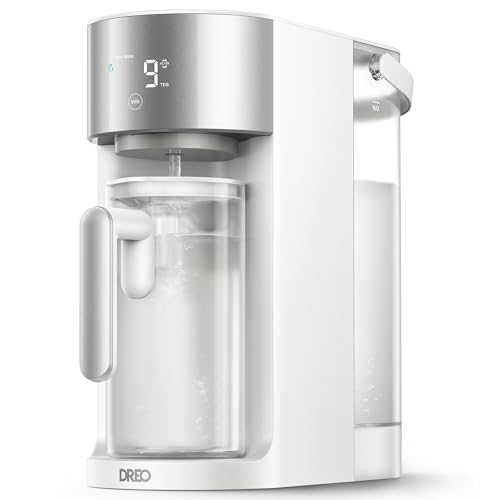

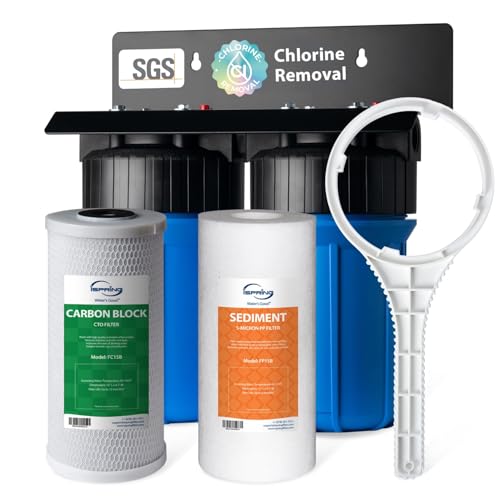
Prices are Amazon’s listed prices as of the time shown and change often; check Amazon for today’s price. As an Amazon Associate we earn from qualifying purchases.
Step Three: Choose Point-of-Use or Point-of-Entry
The CDC defines the two basic placement options. Point-of-use systems treat water and deliver it to a single tap, such as the kitchen sink. Whole-home or point-of-entry systems treat most or all of the water entering the home. The right choice depends on the contaminant and on where exposure happens.
Point-of-use options
- Pitchers and dispensers. Lowest upfront cost and no installation. Slow, small capacity, and cartridges need frequent replacement. Good for renters and for taste improvement or certified lead reduction on a budget. Our guide to water filter pitchers compares common designs.
- Faucet-mount filters. Attach to the faucet with a bypass lever. Moderate cost and capacity; do not fit every faucet style.
- Refrigerator filters. Convenient for chilled water and ice. Capacity is limited and certifications vary widely by cartridge.
- Under-sink carbon block. Higher capacity and flow, often certified for a broad set of health claims, with cartridges replaced every 6 to 12 months. A strong all-around choice for drinking and cooking water. See our under-sink water filter guide for installation details.
- Under-sink reverse osmosis. The broadest reduction for dissolved contaminants such as nitrate, arsenic and high total dissolved solids. Higher cost, more maintenance and some water sent to drain.
Point-of-entry options
- Sediment filters. Catch sand, silt and rust particles before they reach fixtures and appliances. Common on wells and on older municipal systems.
- Whole-house carbon. Reduces chlorine or chloramine taste and odor throughout the house, including showers. Our guide to whole-house water filters explains sizing and flow rates.
- Specialty media. Iron and manganese filters, acid neutralizers for low-pH well water, and other media chosen for specific lab results.
- UV disinfection. Treats microbial contamination for the whole house, typically installed after sediment filtration.
Which placement fits your concern
Contaminants that matter mostly through drinking, such as lead, nitrate and arsenic, are usually handled most cost-effectively at the kitchen tap. Contaminants that affect the whole house, such as sediment, iron staining, bacteria in well water, or chlorine odor in the shower, call for point-of-entry treatment. Many homes end up with both: a whole-house sediment or carbon filter plus an under-sink unit for drinking water.
Flow Rate, Capacity and Cartridge Cost
Once the contaminant and placement are settled, a few practical specs separate good choices from frustrating ones:
- Rated capacity. Every certified cartridge lists a capacity in gallons. Replace it at that point or at the stated time limit, whichever comes first. A filter used past its capacity can stop reducing contaminants.
- Flow rate. Whole-house systems must keep up with peak household demand, often several gallons per minute. An undersized whole-house filter causes noticeable pressure drop.
- Cartridge cost per gallon. Cheap housings with expensive proprietary cartridges can cost more over time than a pricier system with affordable replacements. Calculate the annual cartridge cost before buying.
- Pressure requirements. RO systems need adequate inlet pressure to work well. Low-pressure homes may need a booster pump.
Typical cost ranges
These are typical national ranges, not quotes. The main drivers are system type, certification scope and installation conditions.
- Pitchers: roughly $20 to $80 upfront, with cartridges that can add up to $50 to $150 per year depending on use.
- Faucet-mount: roughly $25 to $80 upfront, with replacement cartridges in a similar annual range.
- Under-sink carbon block: roughly $100 to $400 upfront, with cartridges commonly $40 to $150 per year.
- Under-sink RO: roughly $150 to $800 upfront, with filters and periodic membranes commonly $60 to $200 per year.
- Whole-house sediment or carbon: roughly $100 for a simple housing up to $3,000 or more for large media tanks, plus installation that often runs a few hundred dollars or more.
When you know which category fits, the roundups for the best water filters and, for rural homes, the best well water filters are a practical next step for comparing certified models.
Putting It Together: Three Example Households
These illustrative examples show how the test-match-choose process plays out. They are not prescriptions for any specific home.
Newer suburban home on city water
The utility report shows no violations and all regulated contaminants well below limits, but the family dislikes the taste. The house was built in the 2000s, so lead solder is unlikely. A filter certified to NSF/ANSI 42 for chlorine or chloramine taste, in a pitcher, faucet or refrigerator format, addresses the actual complaint. A health-focused under-sink system is optional rather than necessary.
1950s bungalow on city water
The utility report is clean, but the house is old enough that the service line and interior plumbing could contribute lead. The owners order a tap test and, while waiting, use a pitcher certified for lead reduction. If the test confirms lead, an under-sink carbon block certified to NSF/ANSI 53 with a lead claim is a good long-term choice, alongside asking the utility about service line replacement. Our guide to filters for lead in water covers the certified options in more depth.
Rural home on a private well
The lab panel shows sediment, moderate hardness, some iron and a positive coliform result. One filter will not solve this. A typical treatment train is a sediment filter first, an iron filter or a softener sized with iron compensation, and UV disinfection last, after the well is shock-chlorinated and retested as the health department advises. An under-sink RO unit may also be added if nitrate or dissolved solids are elevated. This is the kind of design where a water treatment professional earns their fee.
How to Read a Filter Label
Packaging and spec sheets contain a lot of information, and a few lines matter far more than the rest:
- Certification mark and standard number. Look for the certifying body’s mark and the standard, such as NSF/ANSI 53. A phrase like “tested to standards” without a certification mark is weaker.
- Performance data sheet. Certified products usually include a sheet listing each contaminant, the challenge concentration, and the percentage or level reduced. This is the most useful document in the box.
- Rated capacity. Gallons the cartridge is certified for, which sets the replacement schedule.
- Service flow rate. Gallons per minute the filter was tested at. Running water through faster than this can reduce performance.
- Operating limits. Pressure and temperature ranges, and whether the filter is intended only for microbiologically safe water. Many carbon filters carry that note, which means they are not designed to treat contaminated well water.
Front Range Considerations
- Chlorine versus chloramine. Some Front Range utilities disinfect with chloramine rather than chlorine. Chloramine is harder for standard carbon to remove; look for a carbon filter specifically certified for chloramine reduction if taste bothers you.
- Older homes and lead. Homes built before the mid-1980s may have lead solder, and some older neighborhoods still have lead or galvanized service lines. A tap test and a certified filter are reasonable steps while longer-term fixes are planned.
- Rural wells. Wells in parts of the region can carry hardness, iron, manganese, high dissolved solids or naturally occurring contaminants such as uranium. A lab panel drives the design; a single store-bought filter rarely covers everything.
- Freezing. Whole-house filter housings must be installed where they will not freeze. Cracked housings are a common winter leak in garages and crawlspaces.
- Radon in well water. Some Colorado wells carry dissolved radon. That calls for specialized treatment, not an ordinary filter, so include it in testing if your area is known for it.
Common Mistakes to Avoid
- Buying by brand reputation instead of certification. The listing matters more than the logo.
- Treating a softener as a filter. Softeners remove hardness; the CDC notes they do not remove parasites, bacteria or viruses.
- Ignoring maintenance. An overdue cartridge can perform worse than no filter, and wet cartridges can grow bacteria if neglected.
- Running hot water through a cold-water filter. Most drinking water filters are designed for cold water only, and hot water can release contaminants or damage the media.
- Assuming a whole-house filter protects drinking water. Many whole-house filters target sediment and chlorine taste, not lead or nitrate.
- Skipping a retest. After installing treatment for a health contaminant, retest the treated water to confirm it is working.
When to Call a Pro or an Inspector
Many point-of-use filters are simple DIY installs. A licensed plumber or certified water treatment professional is the better choice for whole-house systems, for wells with multiple contaminants, for any bacteria or nitrate result, and when the home has low water pressure or no easy access to the main line. They can also confirm that the chosen equipment is installed in the right order, for example sediment before carbon before UV.
During a home purchase, a standard home inspection notes visible plumbing conditions, leaks and the presence of treatment equipment, but water quality testing is a separate service that must be ordered. If the home is on a well or was built before the mid-1980s, adding a water test during the inspection period is a practical step. The plumbing and water hiring guides explain how to find and vet the right specialist, what questions to ask about lab certification, and how to fit testing into a tight contract timeline so results arrive before your objection deadline.
Whoever does the work, keep the lab report, the product’s performance data sheet and the installation date together. Those three documents make cartridge schedules, retesting and any future resale disclosure much easier.
References
- About Home Water Treatment Systems — Centers for Disease Control and Prevention
- Safe Drinking Water Act: Consumer Confidence Reports — U.S. Environmental Protection Agency
- Guidelines for Testing Well Water — Centers for Disease Control and Prevention
- Basic Information about Lead in Drinking Water — U.S. Environmental Protection Agency
- Meaningful and Achievable Steps You Can Take to Reduce Your Risk (PFAS) — U.S. Environmental Protection Agency
Frequently asked questions
What is the first step in choosing a water filter?
Find out what is in your water. City customers can read their utility's annual Consumer Confidence Report, and private well owners should use a state-certified lab. The results tell you which contaminants the filter needs to address.
What does NSF/ANSI 53 mean on a water filter?
It means the filter has been certified to reduce specific health-related contaminants, such as lead or certain organic chemicals. Check the product's certification listing to see which contaminants are covered.
Is a whole-house water filter better than an under-sink filter?
They do different jobs. Whole-house filters usually handle sediment, chlorine taste or well-water issues throughout the home, while under-sink filters and RO systems target drinking-water contaminants like lead, nitrate and PFAS at one tap.
Do pitcher filters remove lead?
Some do. Look for a pitcher certified to NSF/ANSI 53 with a lead reduction claim on its listing, and replace the cartridge at its rated capacity.
How often should water filter cartridges be replaced?
Follow the rated capacity in gallons or the time limit on the label, whichever comes first. Under-sink cartridges commonly last 6 to 12 months, while pitcher cartridges usually last a few months.
Buying a Front Range home on a private well or with older plumbing? Contact our team to schedule an inspection and ask about adding a water quality test.