Best Whole House Water Filters (2026): 6 Systems Compared
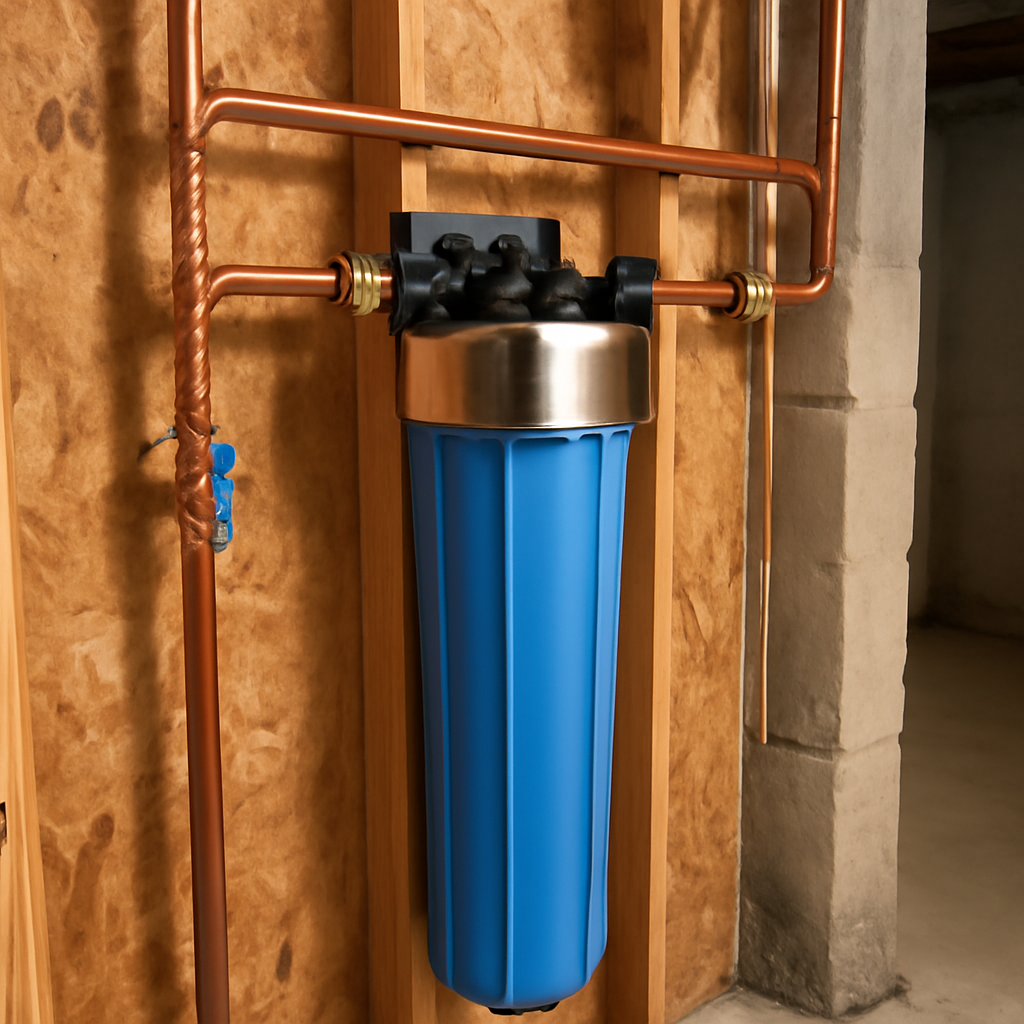
The best whole house water filter is a point-of-entry system sized to your plumbing and matched to what your water actually contains. Installed where the main line enters the house, it treats every faucet, shower, washing machine and water heater. That is its strength and its trap: a system that restricts flow, clogs quickly on sediment-heavy water or removes chlorine without proper maintenance creates new problems. Below are six systems chosen for different households, from a high-flow three-stage unit to a single-housing sediment guard, followed by a guide to stages, flow rate, port size, installation and the limits of what whole-house filtration can do.
Part of our Plumbing & Water guide — start there for the full picture →
As an Amazon Associate we earn from qualifying purchases.
How we compared: we compared 16 current Amazon listings for whole-house water filtration: nine complete systems with cartridges, two empty housings and five replacement cartridge packs. We judged the systems on what each listing states: filter stages and micron ratings, flow rate, port size, rated capacity, certifications and reduction claims, and what the listing says the system will not do. We did not lab-test any system or install them. Certification and reduction claims are reported as each listing words them. Prices and availability change often, so check the current listing before buying.
Quick picks: the best whole-house water filters
| Product | Best for | Key features | Price | Buy |
|---|---|---|---|---|
| iSpring WGB32B | Best overall high-flow system |
| $420.00as of Oct 19, 2026 8:59 pm GMT+0000 | Buy now →Check current price |
| A. O. Smith AO-WH-Filter | Best low-maintenance pick |
| $399.99as of Oct 19, 2026 8:59 pm GMT+0000 | Buy now →Check current price |
| Express Water WH300SCKP | Best for monitoring and scale |
| $487.99as of Oct 20, 2026 1:06 am GMT+0000 | Buy now →Check current price |
| Waterdrop WHF3T-PG | Best for city water with KDF |
| $254.99as of Oct 20, 2026 1:06 am GMT+0000 | Buy now →Check current price |
| Waterdrop WHF21-PG | Best compact two-stage system |
| $106.99as of Oct 19, 2026 8:59 pm GMT+0000 | Buy now →Check current price |
| Culligan WH-S200-C | Best sediment-only starter |
| $32.49as of Oct 19, 2026 11:11 pm GMT+0000 | Buy now →Check current price |
Prices are Amazon’s listed prices as of the time shown and change often; check Amazon for today’s price. As an Amazon Associate we earn from qualifying purchases.
The six systems, compared listing by listing
1. iSpring WGB32B — Best Overall High-Flow System

Three-stage whole-house system with 20 x 4.5 in sediment and carbon block filters, 1-inch ports and up to 15 GPM.
Check price on Amazon$420.00 as of Oct 19, 2026 8:59 pm GMT+0000 — prices change; see Amazon for current price.Why we like it
- Large 20 x 4.5 inch cartridges in all three stages
- Up to 15 GPM stated, with 1-inch NPT ports
- Two carbon block stages after 5-micron sediment
- 100,000-gallon capacity, about a year’s supply
| Specification | Details |
|---|---|
| Stages | 5-micron sediment, then two CTO coconut-shell carbon block filters |
| Reductions claimed | Up to 99% of chlorine; sediment, rust, taste, odor, herbicides |
| Testing named | Carbon tested by a third party to meet NSF/ANSI standards (number not given) |
| Flow / ports | Up to 15 GPM; 1-inch NPT inlet and outlet |
| Capacity | 100,000 gallons |
| Size / warranty | About 24.25 x 7.75 x 27.75 in; 45 lb; 1-year limited, extendable on registration |
iSpring WGB32B — 3-stage, 20 x 4.5 in, 5 µm sediment + 2 carbon blocks, 15 GPM, 1-in NPT, 100,000 gal, TDS unchanged
The Largest Cartridges Among the Complete Systems
Four of the 16 listings state a flow rate, and three of those claim 15 GPM: this iSpring, the Waterdrop WHF3T-PG and the XINSHUO kit. The WGB32B is the one that uses 20-inch-long, 4.5-inch-diameter cartridges in every stage, the largest format among the complete systems. Bigger cartridges hold more media, which is how iSpring reaches a 100,000-gallon capacity, twice the 50,000 gallons of its 10-inch WGB21B sibling.
That size is what a busy household needs. A family running two showers and a washing machine at once will feel a pressure drop through small housings long before they reach their rated life. Pairing 1-inch ports with large cartridges keeps restriction low.
iSpring says plainly that the system keeps minerals and does not reduce total dissolved solids, and it names no lead reduction or NSF system certification; its NSF reference is to third-party testing of the carbon. At 45 pounds and nearly 28 inches tall, it also needs real wall space beside the main line.
Pros
- Largest cartridge format here
- High stated flow with 1-inch ports
- Two carbon stages for chlorine and taste
Cons
- No lead reduction or system certification
- Bulky; needs wall space
- Three large cartridges to replace
Check iSpring WGB32B price on Amazon
2. A. O. Smith AO-WH-Filter — Best Low-Maintenance Pick
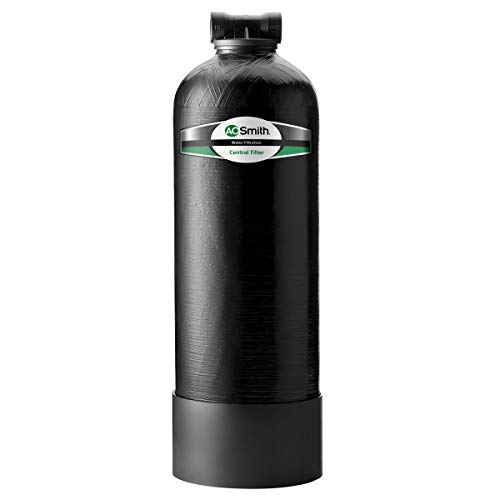
Single-tank whole-house carbon filter rated 6 years or 600,000 gallons, 14 GPM, 3/4-inch NPT, with a 6-year warranty.
Check price on Amazon$399.99 as of Oct 19, 2026 8:59 pm GMT+0000 — prices change; see Amazon for current price.Why we like it
- One central filter rated for 6 years
- Six-year limited warranty, longest here
- No drainage, backflushing or wasted water
- Honest about what it will not remove
| Specification | Details |
|---|---|
| Type | Single central carbon filter tank; not a softener |
| Reductions claimed | 96.9% of chlorine taste and odor |
| Certification named | NSF-certified per title (standard number not given) |
| Flow / ports | 14 GPM; 3/4-inch NPT |
| Capacity / warranty | 6 years or 600,000 gallons; 6-year limited warranty |
| Not reduced | TDS, sulfur and iron, per listing; pre-filter recommended |
A. O. Smith AO-WH-Filter — central carbon tank, 96.9% chlorine T&O, 14 GPM, 3/4-in NPT, 600,000 gal / 6 yr, 6-yr warranty
The Longest Rated Life and Warranty on the Shelf
Cartridge systems need new filters every few months to a year. This A. O. Smith tank is rated for 6 years or 600,000 gallons and carries a 6-year limited warranty, the longest life and longest warranty among all 16 listings. For a homeowner who wants to install a filter and largely forget about it, nothing else on the shelf comes close.
Its listing is also unusually clear about limits. It says the system is not a water softener and will not reduce TDS, sulfur or iron, and it recommends a pre-filter. That last point matters: a long-life carbon tank lasts its rated life only if sediment is caught before it reaches the media.
The NSF claim appears in the title without a standard number, so look up the model in NSF’s database before relying on it. The 3/4-inch connection suits most single-family homes but will be a step down if your main line is 1 inch. The listing describes DIY installation, but working on the main line is plumber territory for most owners.
Pros
- Six-year rated life and warranty
- No drain line or wasted water
- Clear about what it does not treat
Cons
- NSF standard not specified
- Separate pre-filter recommended
- 3/4-inch ports
Check A. O. Smith AO-WH-Filter price on Amazon
3. Express Water WH300SCKP — Best for Monitoring and Scale

Three-stage system with pressure gauges and release buttons, polyphosphate anti-scale media and heavy-metal claims.
Check price on Amazon$487.99 as of Oct 20, 2026 1:06 am GMT+0000 — prices change; see Amazon for current price.Why we like it
- Only system here with pressure gauges
- Pressure release button on each housing
- Polyphosphate stage aimed at scale buildup
- Stainless-steel bracket and free-standing frame
| Specification | Details |
|---|---|
| Stages | Three-stage Ultimate Protection system (stage media not itemized in bullets) |
| Reductions claimed | Chlorine; heavy metals such as lead, arsenic, mercury, chromium and cadmium |
| Scale control | Polyphosphate media to limit scale |
| Monitoring | Three pressure gauges; pressure release buttons for each filter |
| Certification named | Not stated in listing |
| Size / warranty | About 29 x 8.5 x 30 in; 63 lb; 1-year manufacturer warranty |
Express Water WH300SCKP — 3-stage, heavy-metal + chlorine claims, polyphosphate anti-scale, 3 gauges, stainless frame, 1-yr warranty
The Only System That Shows You When Filters Are Loading
One of the 16 listings includes pressure gauges, and it is this one. Gauges before and after the stages let you see the pressure drop grow as cartridges load with sediment, which is a far better replacement signal than a calendar. Pressure release buttons on each housing make changes less messy.
The polyphosphate stage is aimed at scale, which Front Range homeowners notice on fixtures and inside water heaters. Polyphosphate does not soften water; it is intended to keep minerals from depositing. The listing also claims heavy-metal reduction, including lead, which few whole-house listings on this shelf attempt.
That heavy-metal claim is not tied to any certification or standard in the listing, so treat it as a manufacturer claim. The CDC notes NSF certification is one way to confirm what a filter removes. Flow rate and port size are not stated in the bullets, and at 63 pounds on a free-standing frame it is the heaviest system here.
Pros
- Pressure gauges show filter loading
- Anti-scale stage included
- Sturdy stainless frame
Cons
- No certification named for metal claims
- Flow rate not stated
- Heaviest system at 63 lb
Check Express Water WH300SCKP price on Amazon
4. Waterdrop WHF3T-PG — Best for City Water With KDF

Three-stage system with sediment, KDF and carbon media, NSF/ANSI 372 lead-free materials and a stated 15 GPM flow.
Check price on Amazon$254.99 as of Oct 20, 2026 1:06 am GMT+0000 — prices change; see Amazon for current price.Why we like it
- Combines PP sediment, KDF, GAC and carbon fiber
- System materials certified to NSF/ANSI 372
- 15 GPM flow stated, 1-inch inlet and outlet
- 12-month filter life
| Specification | Details |
|---|---|
| Stages | Three housings; multi-layer PP, KDF media, granular activated carbon and carbon fiber |
| Reductions claimed | Up to 98% of chlorine; heavy metals, sediment, odor |
| Certifications named | IAPMO R&T to NSF/ANSI/CAN 372 for lead-free materials; KDF media meets NSF/ANSI 42 |
| Flow / ports | 15 GPM; 1-inch inlet and outlet |
| Filter life | About 12 months, depending on water quality |
| Size / weight | About 22.9 x 8.5 x 26.1 in; 42 lb |
Waterdrop WHF3T-PG — 3-stage PP + KDF + GAC + carbon fiber, 98% chlorine, NSF/ANSI 372, 15 GPM, 1-in ports, 12-month filters
The Only Pick Naming KDF Media
KDF, a copper-zinc process media, is often paired with carbon in shower and whole-house filters. The WHF3T-PG is the only system on the shelf to name it, and Waterdrop says the KDF media meets NSF/ANSI 42. Combined with granular carbon and carbon fiber, the system targets chlorine, the most common complaint for homes on treated city water.
It is also one of two systems on the shelf, both Waterdrop, whose listings name NSF/ANSI 372 certification. Remember what that standard covers: lead-free materials in the product itself, which the EPA explains is a limit on lead content in plumbing products. It is not a lead-removal claim.
The listing claims heavy-metal reduction without a certification for it, and the 12-month filter interval is a manufacturer estimate that depends on water quality. Waterdrop says the system supports well and municipal water, but its sibling WHF3T-FG is the version built with iron and manganese media for wells.
Pros
- KDF plus two carbon types
- NSF/ANSI 372 materials certification
- High stated flow
Cons
- No certified heavy-metal reduction
- Three cartridges to replace yearly
- Large footprint
Check Waterdrop WHF3T-PG price on Amazon
5. Waterdrop WHF21-PG — Best Compact Two-Stage System

Two-stage 10 x 4.5 in system with 5-micron sediment and coconut-shell GAC, NSF/ANSI 372 cartridges and SGS data.
Check price on Amazon$106.99 as of Oct 19, 2026 8:59 pm GMT+0000 — prices change; see Amazon for current price.Why we like it
- Compact 10 x 4.5 inch housings
- Both cartridges meet NSF/ANSI 372
- SGS-tested to NSF/ANSI 42: 98.42% free chlorine
- Pressure-tested from 25 to 90 psi
| Specification | Details |
|---|---|
| Stages | 5-micron PP sediment, then coconut-shell GAC |
| Reductions claimed | Up to 98.42% of free chlorine (SGS, NSF/ANSI 42 method); also lead, benzene, mercury, rust |
| Certification named | Both cartridges meet NSF/ANSI 372 lead-free standards |
| Filter life | GAC about 6 months; PP every 3 to 6 months |
| Pressure rating | Tested for 25 to 90 psi; 100,000+ water hammer cycles |
| Ports | 1-inch inlet and outlet; flow rate not stated |
Waterdrop WHF21-PG — 2-stage, 5 µm PP + coconut GAC, 98.42% free chlorine (SGS), NSF/ANSI 372, 25–90 psi, 1-in ports
The Only Complete System That States Its Tested Pressure Range
Pressure matters at the main line. The WHF21-PG is the only complete system on the shelf whose listing states the pressure range its housings were tested for, 25 to 90 psi, along with a water-hammer test. If your home sees high street pressure, the stated range gives you a number to compare against a pressure gauge reading at a hose bib.
As a two-stage system with standard 10-inch housings, it is smaller than the three-stage picks and uses common cartridge sizes. Its chlorine figure is unusually specific: 98.42% free chlorine reduction, tested by SGS using the NSF/ANSI 42 method. That is a test result, not a certification of the system to 42.
Shorter cartridge life is the trade-off. Waterdrop expects the carbon to last about six months and the sediment filter three to six, and it recommends municipal water to extend service life. The listing does not state a flow rate.
Pros
- Pressure range and water hammer testing stated
- Specific chlorine test figure
- Compact, standard-size cartridges
Cons
- Flow rate not stated
- Six-month carbon life
- 42 is test method, not certification
Check Waterdrop WHF21-PG price on Amazon
6. Culligan WH-S200-C — Best Sediment-Only Starter

Single clear-housing sediment filter with valve-in-head bypass, pressure release button and a P5 cartridge included.
Check price on Amazon$32.49 as of Oct 19, 2026 11:11 pm GMT+0000 — prices change; see Amazon for current price.Why we like it
- Valve-in-head bypass for easy cartridge changes
- Clear housing shows when the cartridge is dirty
- Takes four Culligan cartridge types
- Lightest stated weight among the picks, 3 lb
| Specification | Details |
|---|---|
| Type | Single-housing sediment filter |
| Reductions claimed | Sediment, dirt, sand and silt |
| Connections | 3/4-inch inlet and outlet; valve-in-head bypass shut-off |
| Cartridges | P5 included; also accepts CW-F, CW-MF and S1A-D |
| Certification named | IAPMO certified (title) |
| Size / weight | About 6.6 x 6.2 x 15.9 in; 3 lb |
Culligan WH-S200-C — single sediment housing, P5 included, 3/4-in, valve-in-head bypass, pressure release, clear sump, IAPMO
The Only Pick With a Built-In Bypass Valve in the Head
Changing a whole-house cartridge usually means shutting off the main and opening a faucet to relieve pressure. The Culligan’s valve-in-head bypass lets water flow around the filter while you swap it, and the pressure release button bleeds the housing. Among the six picks, it is the only one that builds a bypass into the head.
This is not a chlorine or chemical filter. It does one job, catching sediment, and it does it in a small, light housing that suits a tight utility closet. For many homes that is the right first step: sediment protection for fixtures, valves and appliances, with drinking-water treatment handled at the kitchen sink.
The clear housing makes it easy to see when the cartridge is loaded. The listing does not state flow rate, micron ratings for each cartridge or capacity, and the 3/4-inch connections suit typical service lines rather than larger 1-inch mains.
Pros
- Bypass valve built into the head
- Clear housing for visual checks
- Small, light, accepts several cartridges
Cons
- Sediment only, no chlorine reduction
- Flow and capacity not stated
- 3/4-inch ports only
Check Culligan WH-S200-C price on Amazon
What a whole-house filter does, and what it does not
The CDC describes whole-home, or point-of-entry, filters as treating water as it enters the house so that every tap is filtered. It suggests them when you need to remove a harmful substance, such as certain volatile organic chemicals, from all your water, including bathing and cleaning water. For drinking-only concerns, a point-of-use filter at the kitchen sink is usually simpler and cheaper.
The CDC also flags a risk that is easy to miss: if you install a whole-home filter that removes chlorine or other disinfectants, more germs may grow in your plumbing. That does not mean avoiding carbon systems, but it does mean keeping cartridges on schedule and not letting water sit in the system during long absences without flushing.
Five of the nine complete systems on the shelf state they do not reduce TDS, and none is a water softener. Iron, manganese and sulfur need dedicated media; see our iron filter guide if you have orange staining. For lead, a certified point-of-use filter is the reliable answer; our guide to filters for lead in water explains why.
How to size a whole-house system
Stages
A sediment stage, typically 5 microns, protects everything downstream. A carbon stage, either granular or block, reduces chlorine, taste and odor and some organic chemicals. EPA research identifies activated carbon as one of the technologies that can remove some PFAS, including at the point of entry, though effectiveness depends on the carbon, contact time and the specific compounds. A third stage may add finer carbon, KDF or specialty media.
Flow rate and port size
Only 4 of the 16 listings state a flow rate. Ask for one before buying. A household that runs two showers and an appliance at once needs a system that can keep up without a noticeable pressure drop. Match the port size to your main line: 1-inch ports on a 1-inch line avoid creating a bottleneck, while 3/4-inch systems suit typical 3/4-inch service.
Cartridge size and capacity
Big housings, 4.5 inches in diameter and 20 inches long, hold more media and last longer than 10-inch housings. Capacities on this shelf range from tens of thousands of gallons per cartridge set to 600,000 gallons for the A. O. Smith tank. Use your water bill to estimate annual household use and compare.
Certifications
Treat certification claims precisely. NSF/ANSI 372 covers lead-free materials. NSF/ANSI 42 covers aesthetic reductions such as chlorine taste and odor, according to the CDC’s summary. “Tested to” a standard is weaker than “certified to” it. Several listings here name NSF without a standard number; look up the model in the NSF database before relying on it.
Installation and maintenance
Whole-house systems go on the main line after the shut-off valve and usually before the water heater and any softener. Installation involves cutting into the main and adding shut-off or bypass valves. A licensed plumber is the right call for most homeowners; see our plumbing and water hiring guide.
Front Range installs have specific concerns. Systems in garages or unheated utility areas must be protected from freezing; a cracked housing floods quickly. Leave clearance below the housings to lower and change cartridges. The CDC recommends wearing gloves when changing filters and washing your hands afterward, and replacing filters on the manufacturer’s schedule.
Write the install date on each housing and watch for pressure drops, which mean a sediment cartridge is loading. For a deeper look at system types, see our whole-house water filter guide.
Test before you treat
The CDC’s advice applies to whole-house systems as much as pitchers: test your water and choose a filter that removes what you are concerned about. City water customers can read their utility’s annual Consumer Confidence Report. Homes on private wells should test at least annually for total coliform bacteria, nitrates, total dissolved solids and pH, as the EPA recommends, and choose treatment based on the results. A whole-house carbon system is not a substitute for disinfection when a well tests positive for bacteria.
When to call a professional
Call a plumber for installation, for homes with high or fluctuating pressure, and when you need a softener, iron filter or disinfection system combined with filtration. If testing shows a health-related contaminant, contact your local health department before choosing equipment. Buyers who want the main line, pressure-reducing valve, water heater and existing treatment equipment looked at during an inspection can contact us to connect with a local inspector.
References
- About Choosing Home Water Filters — Centers for Disease Control and Prevention
- Reducing PFAS in Drinking Water with Treatment Technologies — U.S. Environmental Protection Agency
- Basic Information about Lead in Drinking Water — U.S. Environmental Protection Agency
- Consumer Confidence Reports — U.S. Environmental Protection Agency
- Protect Your Home’s Water — U.S. Environmental Protection Agency
Frequently asked questions
Is a whole house water filter worth it?
It is worth it when you need to treat all of your water, for example to reduce chlorine in bathing water, protect fixtures from sediment or remove certain chemicals from every tap. For drinking water alone, a certified point-of-use filter at the kitchen sink is usually simpler.
Will a whole house water filter reduce water pressure?
Any filter adds some restriction. Systems with 1-inch ports and large 20 x 4.5 inch cartridges restrict less than small housings. Pressure drops as sediment cartridges load, so a growing drop is a sign the cartridge needs changing.
Does a whole house filter remove lead?
Most do not claim certified lead reduction. NSF/ANSI 372 on a listing refers to lead-free materials in the product, not lead removal. For lead, use a point-of-use filter certified for lead reduction and test your water.
Do whole house water filters soften water?
No. Sediment and carbon systems do not soften water or reduce total dissolved solids. Some include polyphosphate to limit scale deposits, but a water softener is a separate system.
How often do whole house filter cartridges need replacing?
It depends on the system and your water. On this shelf, cartridge sets are rated from about 3 to 12 months, while one central carbon tank is rated for 6 years or 600,000 gallons. Sediment-heavy water shortens every interval.
Planning a whole-house filter, softener or iron system and want the existing plumbing assessed first? Reach out through our contact page to connect with a vetted Front Range inspector.