Whole House Sediment Filters: Sizing, Micron Ratings and Changes
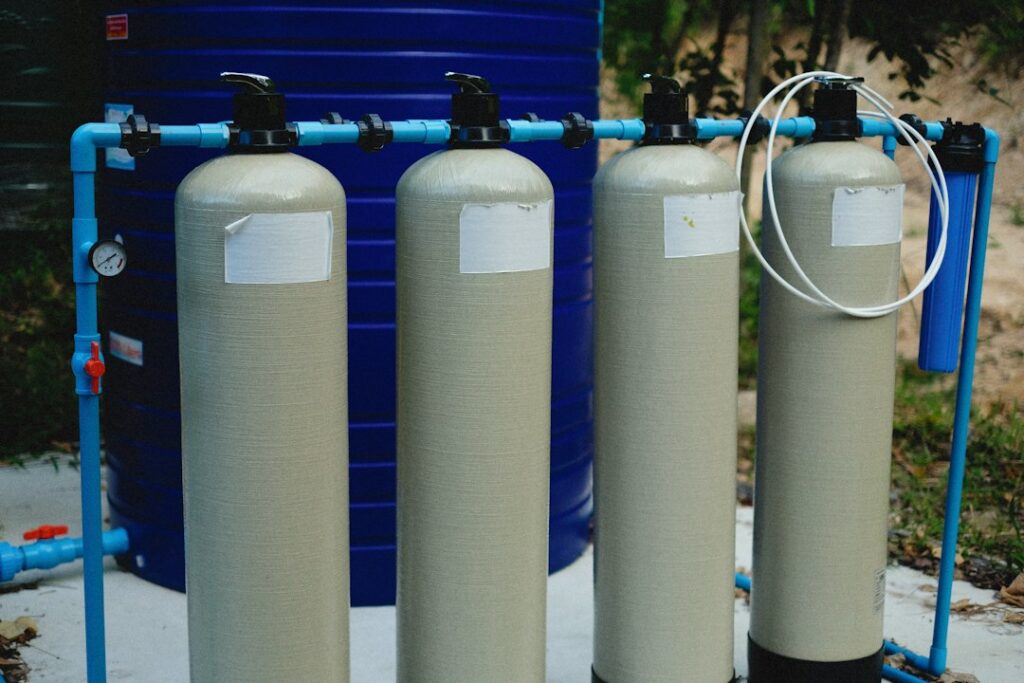
Sand in a toilet tank, grit in faucet aerators and a water heater that rumbles with settled debris all point to the same thing: particles are riding into the house with the water. A sediment filter is the simplest piece of water treatment equipment there is. It is a physical screen or filter cartridge that traps sand, silt, rust flakes and other suspended particles before they reach fixtures, appliances and other treatment equipment. It does not make water safe to drink, and it does nothing for dissolved minerals, bacteria or most chemicals. What it does well is protect everything downstream. This guide covers how sediment filters work, spin-down screens versus cartridge housings, how micron ratings and pressure drop interact, how often to change cartridges, why private wells in Colorado often need one, where the filter belongs relative to a softener or iron filter, bypass valves and what homeowners can expect to pay.
Part of our Plumbing & Water guide — start there for the full picture →
What a Sediment Filter Does and Does Not Do
A sediment filter removes undissolved particles. If a glass of water sits on the counter and a fine layer of sand or silt settles at the bottom, that material is exactly what a sediment filter is designed to catch. Common targets include well sand, silt drawn in from an aquifer, rust and scale that break loose from old galvanized pipe, debris after a water main break and particles stirred up after well pump work.
What a sediment filter does not do is equally important for buyers to understand:
- It does not disinfect. Bacteria and viruses are far smaller than the openings in typical sediment media. A filter is not a substitute for testing a well for coliform bacteria.
- It does not soften water. Hardness minerals such as calcium and magnesium are dissolved. They pass straight through.
- It does not remove dissolved iron or manganese unless that iron has already oxidized into visible particles. Clear water that turns orange after standing usually needs an oxidizing iron filter, not just a sediment cartridge.
- It does not remove most chemicals. Nitrates, arsenic, uranium and volatile organic compounds are dissolved contaminants that require specific treatment matched to a lab result.
In short, a sediment filter is a pre-treatment and protection device. It keeps grit out of valves, aerators, appliance solenoids, water heaters and the resin beds or media in more expensive treatment systems. Treating it as a general-purpose “water purifier” is the most common misunderstanding.
Spin-Down vs Cartridge Sediment Filters
Whole house sediment filtration usually comes in two forms, and many well systems use both in series.
Spin-down (screen) filters
A spin-down filter uses a reusable stainless steel or nylon mesh screen inside a clear housing. Incoming water is directed to swirl around the screen, which throws heavier particles outward and down toward the bottom of the housing. A flush valve at the bottom lets the homeowner purge the collected sand by opening the valve for a few seconds. Some models offer automatic flushing on a timer.
Spin-down filters are well suited to coarse, heavy sediment like well sand. Because the screen is cleaned rather than replaced, ongoing costs are low. The tradeoff is that screens are relatively coarse, commonly rated somewhere in a range from roughly 40 to several hundred microns, so fine silt and clay pass through. The clear housing is an advantage for inspection; it shows at a glance whether sand is accumulating and how fast.
Cartridge filters
Cartridge systems use a housing, often called a “big blue” or standard-diameter housing, that holds a disposable filter element. Elements are commonly 10 or 20 inches long and come in several styles:
- Spun polypropylene (melt-blown) cartridges trap particles through the depth of the media and are inexpensive.
- Pleated cartridges have more surface area and can sometimes be rinsed and reused a few times.
- String-wound cartridges are a traditional depth filter often used for coarser sediment.
- Graded-density cartridges are coarser on the outside and finer toward the core, which spreads the load across the media.
Cartridges can capture much finer particles than a typical spin-down screen. They also clog faster when a lot of sand is present, which is why many well owners place a spin-down screen first to catch heavy grit and a cartridge second to catch fines.
Micron Ratings, Pressure Drop and Sizing
A micron is one-millionth of a meter. The micron rating on a sediment filter describes the size of particle it is designed to catch, and lower numbers mean finer filtration. Common whole house ratings include 50, 30, 20, 5 and 1 micron.
Two terms appear on spec sheets. A nominal rating generally means the filter catches a large share of particles at that size but not all of them. An absolute rating generally claims near-complete capture at the stated size. Manufacturers define these terms differently, so comparing products requires reading the fine print rather than assuming two “5 micron” cartridges perform the same way.
Why finer is not always better
It is tempting to install the finest cartridge available. In practice, a very fine cartridge on sandy well water can clog within days or weeks, and as it loads the house loses water pressure. A more practical approach is staged filtration: a coarse stage first, then a finer stage. A typical arrangement on a sandy well might be a spin-down screen followed by a 20- or 30-micron cartridge, with an optional 5-micron stage after that if fine silt remains a problem. The right combination depends on what the sediment actually is, which is why looking at a sample of the debris, or having it identified, is useful before buying equipment.
Pressure drop and flow rate
Every filter adds resistance to flow. Manufacturers usually publish a flow rate in gallons per minute and the pressure drop at that flow when the cartridge is clean. As the element loads with sediment, the pressure drop increases. Homeowners notice this as weak showers when two fixtures run at once, or a well pump that cycles differently than it used to.
Sizing considerations include:
- Housing size. Larger-diameter housings (often called 4.5-inch or “big blue”) hold more media and clog less quickly than slim 2.5-inch housings.
- Port size. Ports of 1 inch are common for whole house service; undersized 3/4-inch housings on a large home can restrict flow.
- Peak demand. A household that runs a shower, dishwasher and irrigation fill at the same time needs a filter rated for that peak flow.
- Pressure gauges. Gauges before and after the filter make it easy to see pressure drop climb, which takes the guesswork out of change timing.
Change Intervals and Maintenance
There is no universal schedule for changing a sediment filter cartridge. Many manufacturers suggest a range of roughly every three to six months for typical municipal water, but the real answer depends on sediment load and water use. A sandy well can plug a fine cartridge in a few weeks. A city home with occasional rust flakes might go most of a year.
Practical signals that a cartridge needs attention include:
- A visible color change in the media or a dark layer on a clear housing.
- The pressure differential across the filter rising noticeably above the clean-cartridge reading.
- Reduced flow at fixtures, especially on the top floor.
- Grit reappearing in aerators, which can mean a cartridge is bypassing or has collapsed.
Routine maintenance steps are simple: shut off the inlet valve or put the system in bypass, relieve pressure with the housing’s pressure-release button, unscrew the housing with the correct wrench, discard the old element, clean the housing and check the O-ring, lubricate the O-ring with a food-grade silicone lubricant if the manufacturer calls for it, insert the new element and restore flow slowly while checking for leaks. Spin-down filters need their flush valve opened on a schedule that matches how quickly sand accumulates.
Well Water, Sand and Testing First
Private wells are where sediment filters earn their keep. Sand can enter a well through a deteriorating screen, an oversized pump drawing hard on the aquifer, a pump set too close to the bottom of the well or simply the geology of the formation. Some Front Range wells in Douglas, Elbert and El Paso counties draw from sandstone aquifers, and sand or silt in those systems is a familiar complaint, though conditions vary widely from well to well.
A sudden increase in sand is worth investigating rather than just filtering. It can indicate a failing well screen or a pump problem that will eventually damage the pump itself. A licensed well contractor can evaluate whether the issue is in the well, the pump setting or the plumbing.
Sediment is also a reminder to test. CDC guidance on testing well water says private well owners should test at least once every year for total coliform bacteria, nitrates, total dissolved solids and pH, use a state-certified laboratory and contact their health department about other local concerns. EPA’s private well guidance adds that owners should test immediately when they replace or repair any part of the well system or notice a change in water quality such as odor, color or taste. A noticeable change in sediment fits that description. The well water testing guide walks through what to order and how to read the results.
EPA also notes that private wells generally do not receive the same treatment and monitoring as public water systems, and well owners are responsible for protecting their own drinking water. A sediment filter is part of that responsibility, but it is only the first layer.
Placement Ahead of Softeners, Iron Filters and Other Treatment
Sequence matters. In most whole house systems, the sediment filter goes first, immediately after the pressure tank on a well or after the main shutoff and any pressure-reducing valve on a municipal supply. Downstream treatment then follows in an order set by the equipment manufacturers and the water test results.
The reasons for putting sediment filtration first:
- Softener protection. Sand and silt can foul softener resin and damage the control valve’s seals and pistons. Many softener manufacturers recommend sediment filtration where particles are present. The water softener installation guide covers sizing and setup in more detail.
- Iron filter protection. Oxidizing iron filters use media beds and backwash cycles. Heavy sand can cement into the bed and shorten media life. See the iron filter guide for how those systems handle dissolved iron and manganese.
- Carbon and UV protection. Carbon filters clog faster when sediment reaches them, and UV disinfection systems depend on clear water. Particles can shield microorganisms from UV light, so UV manufacturers typically call for a fine sediment prefilter.
One exception is worth mentioning. When iron is present as dissolved iron that oxidizes in the plumbing, a fine sediment cartridge placed ahead of the iron filter can clog rapidly with rust as the iron precipitates. Treatment designers sometimes adjust the order or the micron rating in that situation. EPA’s well testing table lists “stained plumbing fixtures, laundry” as a reason to test for iron, copper and manganese, and lists the need for a water softener as a reason to test for manganese and iron. Getting those numbers before buying equipment helps avoid stacking the wrong filters in the wrong order.
Bypass Valves, Installation and Code Considerations
Every whole house filter should have a way to route water around it. A bypass, typically three valves arranged so the filter can be isolated while water continues to flow to the house, allows cartridge changes without shutting down the entire home and keeps water available if a housing cracks. Some filter heads include an integral bypass. Without one, a stuck housing or a failed O-ring can leave a household without water until the problem is solved.
Other installation details inspectors and plumbers look for:
- Accessible location. The filter should be reachable for cartridge changes, with enough clearance below the housing to remove it.
- Mounting support. A full housing is heavy. Brackets anchored to a wall or backboard prevent stress on the pipe connections.
- Electrical bonding continuity. In homes where metal water piping is part of the electrical bonding or grounding path, installing a plastic filter housing can interrupt that path. A bonding jumper around the filter is a common correction; a licensed electrician can confirm what applies.
- Freeze protection. Filters in unheated well houses, crawl spaces or garages can crack in a hard Colorado freeze.
- Permits. Whether a permit is required for adding water treatment equipment varies by jurisdiction. Some Front Range building departments treat it as a plumbing alteration; others do not. Checking with the local department before work begins avoids surprises.
What a Home Inspection Covers
Buyers sometimes assume a standard home inspection evaluates water treatment equipment. Under the ASHI Standard of Practice, inspectors are not required to inspect wells, well pumps, water storage-related equipment or water conditioning systems, and are not required to determine water quality. Many inspectors will still note a visible sediment filter, a cracked or leaking housing, a missing bypass or a clogged cartridge, and recommend evaluation, but the system’s performance is generally outside the standard scope.
For a well-served property, a separate water test ordered through a certified laboratory, and possibly a well flow test, belong in the due-diligence plan alongside the general inspection. The plumbing and water hiring guide explains which specialists handle wells, treatment and plumbing, and the broader guide to hiring a home inspector covers how to scope an inspection.
Costs to Expect
Prices vary by brand, region and installer, so these are general 2026 ranges rather than quotes:
- Replacement cartridges often run from under $10 for basic spun polypropylene elements to $30 to $60 or more for large pleated or specialty elements.
- DIY whole house cartridge housing kits commonly range from roughly $60 to $250, depending on housing size and whether gauges and a bracket are included.
- Spin-down filters are often in a similar $50 to $250 range, with automatic-flush models costing more.
- Professional installation of a basic whole house filter with a bypass loop commonly adds a few hundred dollars in labor, more if piping must be rerouted or a drain added.
- Backwashing sediment tanks installed by a treatment company frequently land in the low thousands.
The ongoing cost depends almost entirely on sediment load. A household on sandy well water changing a cartridge every month will spend far more over time than one changing a cartridge twice a year, which is a good argument for a spin-down prefilter where sand is heavy.
A sediment filter is inexpensive insurance for a plumbing system. It will not solve every water problem, but on a sandy well or an older home with flaking pipes it can be the difference between a softener that lasts many years and one that fails early.
References
- Guidelines for Testing Well Water — Centers for Disease Control and Prevention
- Protect Your Home’s Water — U.S. Environmental Protection Agency
- Potential Well Water Contaminants and Their Impacts — U.S. Environmental Protection Agency
- ASHI Standard of Practice for Home Inspections — American Society of Home Inspectors
Frequently asked questions
What micron sediment filter is best for well water?
There is no single best rating. Many sandy wells do well with a spin-down screen first, then a 20- to 30-micron cartridge, adding a 5-micron stage only if fine silt remains. Starting too fine usually causes rapid clogging and pressure loss.
How often should a whole house sediment filter be changed?
It depends on sediment load and water use. Some manufacturers suggest roughly every three to six months, but a sandy well may need changes far more often. Pressure gauges before and after the filter show when the cartridge is loading up.
Does a sediment filter make well water safe to drink?
No. A sediment filter removes particles, not bacteria, nitrates or dissolved chemicals. CDC recommends testing private wells at least yearly for coliform bacteria, nitrates, total dissolved solids and pH through a certified lab.
Should the sediment filter go before or after the water softener?
In most systems the sediment filter goes first to protect the softener's resin and control valve. Iron-heavy water can be an exception, so the order should follow the equipment manufacturers' instructions and the water test results.
Will a sediment filter reduce water pressure?
Every filter adds some pressure drop, and the drop grows as the cartridge loads with sediment. Choosing a large housing with 1-inch ports and changing cartridges on time keeps the loss small for most homes.
Buying a home on a private well and unsure what the treatment equipment in the basement is doing? Get in touch and we can connect you with a Front Range inspector and point you toward the right water specialists.