Carbon Water Filters: What They Remove and Change Intervals
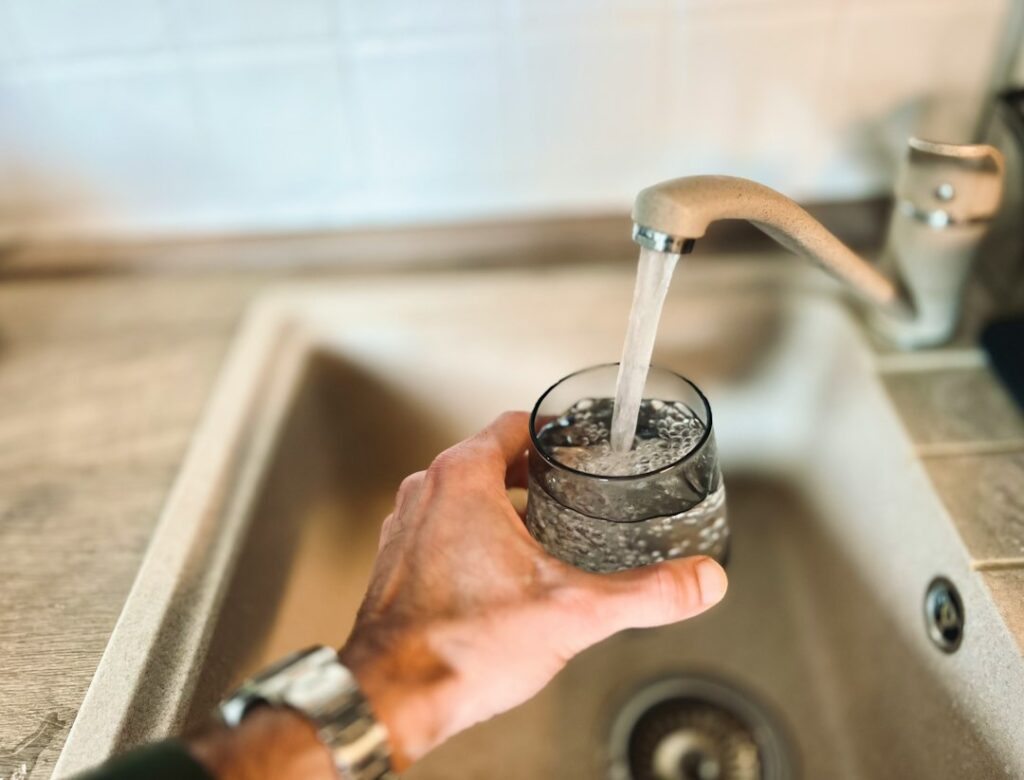
Activated carbon is the workhorse of home water treatment. It sits inside most pitcher filters, refrigerator cartridges, faucet-mount units and many under-sink and whole-house systems. A carbon water filter is very good at some jobs, such as reducing chlorine taste and odor, and is certified for others, such as lead reduction, only in specific products. It does not make unsafe water safe on its own, and it can become a problem if cartridges are left in service too long. This guide summarizes EPA and CDC guidance current as of 2026 and explains how activated carbon works, what it typically removes, how to read certification claims, when lead reduction claims hold up, why change intervals matter, how carbon fits into private well treatment, and what different setups usually cost. Anyone with health concerns about their water should consult a physician and have the water tested by a certified laboratory before choosing treatment.
Part of our Plumbing & Water guide — start there for the full picture →
What a Carbon Water Filter Does
Activated carbon is carbon that has been processed, usually from coconut shells, coal or wood, to create an enormous internal surface area full of tiny pores. As water passes through, many dissolved substances stick to that surface through a process called adsorption. Carbon also reacts chemically with free chlorine, converting it so it no longer affects taste and smell.
The CDC’s guidance on choosing home water filters explains that pitcher and refrigerator filters often use activated carbon and that their main purpose is to improve taste and smell rather than safety. The same page lists activated carbon and certification to NSF Standard 42 as markers of filters that improve taste and smell. It also notes that most home water filters, including pitcher and fridge filters, are not designed to remove germs.
That framing is a useful starting point. Carbon filters are primarily aesthetic tools that can, in specific certified products, also reduce certain health-related contaminants.
Granular Carbon vs. Carbon Block
Carbon filters come in two main forms:
- Granular activated carbon (GAC). Loose granules packed into a cartridge or tank. Water flows easily, which suits high-flow applications such as whole-house filters, but water can channel around the granules and spend less time in contact with the carbon.
- Carbon block. Powdered carbon compressed with a binder into a solid cylinder. The tighter structure generally gives more contact time and can also strain out fine particles, which is why many under-sink and certified lead-reduction products use carbon block. Flow rates are typically lower.
Catalytic carbon, a modified form, is sometimes marketed for chloramine reduction, which matters in communities whose utilities disinfect with chloramine rather than chlorine. Utility water quality reports state which disinfectant is used.
What Carbon Typically Removes, and What It Does Not
Capabilities vary widely by product, carbon type, contact time and certification. In general terms:
Commonly Reduced
- Chlorine taste and odor. The most consistent benefit and the main reason many people use carbon filters on city water.
- Other taste and odor compounds. Earthy or musty tastes from some organic compounds.
- Some volatile organic compounds (VOCs). Certain carbon products are certified to reduce specific VOCs. Which ones depends on the product’s certification.
- Lead, in certified products only. Some carbon block filters are certified for lead reduction, discussed below.
- Sediment, in carbon block products. Fine particles may be trapped, though a dedicated prefilter often handles this better.
Generally Not Removed by Carbon Alone
- Bacteria and viruses. CDC notes that most home filters are not designed to remove germs. Removing bacteria requires much smaller absolute pore sizes or processes such as reverse osmosis.
- Dissolved minerals and hardness. Calcium and magnesium pass through; that is a softener’s job.
- Nitrates and many dissolved salts. These typically require reverse osmosis or other specialized treatment.
- Fluoride. Standard carbon filters generally do not remove it; CDC lists reverse osmosis among methods that may.
- Arsenic and radium. Usually require specialized media or reverse osmosis.
The CDC guidance makes a broader point worth repeating: taste, smell and appearance are not reliable indicators of water safety. Water can taste fine and still carry harmful germs or chemicals, so testing comes before choosing a filter.
Reading Certification Claims
Because carbon filters vary so much, the label is where the meaningful information lives. CDC explains that NSF International develops public health standards for products and that one way to see what a filter removes is to look for certification on the label and look up specific products. It lists several standards relevant to home water treatment, including:
- Standard 42, covering aesthetic effects such as taste and odor.
- Standard 53, covering health-related contaminants; CDC references it for cyst reduction.
- Standard 58, covering reverse osmosis systems.
- Standard 62, covering distillation.
A few practical points when reading a label:
- Certified vs. tested. “Certified” by an accredited third party means the product was evaluated against the standard. “Tested to” or “meets the requirements of” may mean the manufacturer ran its own tests.
- Specific contaminants. Certification applies to listed contaminants, not everything a standard could cover. A filter certified under Standard 53 for one contaminant may not be certified for another.
- Capacity. Certifications are tied to a rated capacity in gallons. Beyond that, performance is not assured.
- Model numbers. Replacement cartridges should match the certified model. Knock-off cartridges may fit the housing without carrying the same certification.
Lead Reduction Claims
Lead is the contaminant that most often sends people shopping for a carbon water filter, especially in older homes with lead service lines, lead solder or older brass fixtures. EPA’s consumer tool for identifying point-of-use and pitcher filters certified to reduce lead explains that lead can enter drinking water when service pipes containing lead corrode, and that homes may also have internal plumbing materials containing lead.
The EPA tool is designed to help consumers select filters that have been evaluated by an accredited third-party certification body for lead reduction to 5 parts per billion or less, along with particulate reduction, under both NSF/ANSI Standards 53 and 42. That combination matters because lead can be present as dissolved lead and as small particles.
For practical purposes:
- Only rely on a filter for lead reduction if the specific product is certified for it.
- Use the EPA tool’s criteria when comparing pitcher and point-of-use products.
- Change cartridges on schedule, because lead reduction performance is rated only up to the certified capacity.
- Use filtered water for drinking, cooking and preparing infant formula when lead is a concern.
A filter is a risk-reduction step, not a fix for the source. Lead service line replacement and plumbing upgrades address the cause. Front Range utilities, including Denver Water, have run lead service line programs, and utility water quality reports describe local conditions.
Why Change Intervals Matter
Activated carbon has a finite capacity. Once its adsorption sites fill, contaminants pass through, and in some cases loosely held compounds can be released back into the water. Manufacturers rate cartridges by gallons, months or both, and certified performance applies only within that rating.
A second issue is microbial growth. Carbon filters remove chlorine, which is what keeps tap water from supporting bacterial growth in the plumbing. The trapped organic material inside a cartridge can then become a place where bacteria grow, especially when water sits still for days. CDC advises maintaining any filter by changing it according to the manufacturer’s recommendations to keep it working and prevent germs from growing in it, wearing gloves while changing filters and washing hands afterward. CDC also advises people with weakened immune systems to avoid changing water filters themselves.
CDC adds a related point for whole-home systems: if a whole-home filter removes chlorine or other disinfectants, more germs may grow in the household plumbing. That does not mean whole-house carbon is a bad idea, but it does mean maintenance and water use patterns matter, particularly in homes that sit empty for long periods.
Practical habits that help:
- Write the installation date on the cartridge or housing.
- Set a calendar reminder based on the manufacturer’s interval.
- Flush a new cartridge as instructed before drinking from it.
- Run water for a short time after a vacation or long period of non-use.
- Keep pitcher filters refrigerated, and wash the pitcher reservoir regularly.
Signs a Carbon Filter Needs Attention
Calendar reminders are the most reliable approach, but a few signs suggest a cartridge is overdue or a system has a problem:
- Chlorine taste returns. On treated city water, a returning chlorine smell often means the carbon is exhausted.
- Flow drops noticeably. Carbon block cartridges clog with sediment over time, which slows flow at the filtered faucet or reduces pressure throughout the house with whole-house systems.
- Black specks appear. Small carbon fines are common briefly after installing a new cartridge and are usually flushed out as directed. Persistent specks may indicate a damaged cartridge.
- Odd odors develop. A musty or sulfur-like smell from filtered water, particularly after the system has sat unused, can point to microbial growth inside an old cartridge.
- Leaks or condensation at the housing. Worn O-rings, cross-threaded housings and cracked sumps are common failure points, especially on under-sink units in cabinets where leaks can go unnoticed.
None of these signs reliably indicates whether health-related contaminants are getting through, which is another reason certified capacity ratings and change schedules matter more than taste.
Installation Details That Matter
Whole-house filters are typically installed after the main shutoff and, on wells, after the pressure tank. A bypass valve lets the household keep water flowing during cartridge changes or service. Housings need enough clearance below to remove the sump, and a nearby shutoff on each side simplifies maintenance. In homes with metal water piping used for electrical grounding, a plastic filter housing can interrupt that path, and electricians often install a bonding jumper around it. Under-sink systems should be secured so the weight of the housing does not stress supply connections, and many owners add a small leak sensor in the cabinet.
Where Carbon Filters Fit in a Home
Carbon shows up at several points in a plumbing system. Each has tradeoffs:
- Pitcher filters. Inexpensive and portable, with small cartridges that need frequent replacement. The guide to water filter pitchers compares certifications and capacity.
- Refrigerator filters. Convenient for drinking water and ice. Replacement cartridges vary widely in certification, as covered in the article on refrigerator water filters.
- Under-sink systems. Larger carbon block cartridges, often with higher capacity and broader certifications, delivered through a dedicated faucet. The under-sink water filter guide explains installation and leak checks.
- Whole-house systems. Large GAC tanks or high-capacity cartridges at the point of entry that treat all water, including showers and laundry. CDC notes whole-home filters may be worth considering when a harmful substance, such as certain volatile organic chemicals, needs to be removed from all the water. The overview of whole-house water filters covers sizing, bypass valves and pressure drop.
CDC describes point-of-use filters as a fit when only drinking and cooking water needs treatment, and whole-home filters when all water does.
Carbon Filters and Private Wells
Private wells are common in parts of Elbert, Douglas, El Paso and Jefferson counties, and they change the picture. EPA’s private well information explains that private well owners are responsible for the safety of their water, and that private domestic wells are not regulated by the federal government under the Safe Drinking Water Act or by most state governments. EPA also cites a U.S. Geological Survey study of about 2,100 private wells that found roughly one in five contained one or more contaminants above a human-health benchmark.
CDC’s well testing guidance recommends testing well water at least once a year for total coliform bacteria, nitrates, total dissolved solids and pH, using a state-certified laboratory, and contacting the local health department about other contaminants of concern in the area.
For well owners, that means:
- Test before choosing treatment. A carbon filter addresses some well problems, such as certain odors and organic compounds, but not bacteria, nitrates or many naturally occurring minerals. The guide to well water testing explains what to test for and how often.
- Watch for no residual disinfectant. Well water typically has no chlorine, so carbon cartridges on wells may be more vulnerable to microbial growth if not changed regularly.
- Add prefiltration. Well water often carries sand and silt that clog carbon quickly. A sediment filter ahead of the carbon protects it and extends cartridge life.
- Consider combined treatment. Wells with bacteria, iron, manganese, hardness or radionuclides typically need dedicated treatment designed around test results, with carbon as one stage rather than the whole solution.
The plumbing and water inspection hub explains which parts of a home’s water system a standard inspection covers and when to call in a well or water treatment specialist.
Carbon Filters During a Home Purchase
Home inspectors commonly note the presence of water treatment equipment, but the ASHI Standard of Practice does not require inspectors to inspect water conditioning systems or determine water quality. Buyers often inherit filter housings with cartridges of unknown age.
Useful steps include asking the seller for model numbers and replacement dates, replacing all cartridges after closing, confirming the whole-house bypass valve works, checking under-sink connections for drips, and arranging separate water testing when a well serves the property. For guidance on choosing qualified professionals, the hiring process guide walks through credentials and scope.
Typical Carbon Filter Costs
As general 2026 ranges, not quotes:
- Pitcher filters: low upfront cost, with cartridges replaced frequently.
- Refrigerator cartridges: often a modest price per cartridge, replaced a couple of times a year in many households.
- Under-sink carbon systems: commonly one to several hundred dollars, plus installation if hired out, and periodic cartridges.
- Whole-house carbon systems: frequently several hundred to a few thousand dollars installed, depending on capacity and whether a tank or cartridge design is used.
- Water testing: varies with the panel of contaminants and the laboratory.
Ongoing cartridge costs often exceed the initial purchase over the life of a system, so comparing cost per gallon helps.
References
- About Choosing Home Water Filters — Centers for Disease Control and Prevention
- Consumer Tool for Identifying Point-of-Use and Pitcher Filters Certified to Reduce Lead in Drinking Water — U.S. Environmental Protection Agency
- Private Drinking Water Wells — U.S. Environmental Protection Agency
- Guidelines for Testing Well Water — Centers for Disease Control and Prevention
- ASHI Standard of Practice for Home Inspections — American Society of Home Inspectors
Frequently asked questions
What does a carbon water filter remove?
Activated carbon most consistently reduces chlorine taste and odor and other taste and odor compounds. Some certified products also reduce specific VOCs or lead. CDC notes that most pitcher and fridge filters are not designed to remove germs.
Do carbon filters remove lead?
Only certified products should be relied on for lead. EPA's consumer tool focuses on filters certified by an accredited third party for lead reduction to 5 parts per billion or less under NSF/ANSI Standards 53 and 42.
How often should a carbon filter be changed?
Follow the manufacturer's rating in gallons or months, whichever comes first. CDC advises changing filters as recommended to keep them working and to prevent germs from growing in them.
Can a carbon filter make well water safe to drink?
Not by itself. Carbon does not remove bacteria, nitrates or many minerals. CDC recommends testing well water at least yearly with a state-certified lab and choosing treatment based on the results.
How much does a carbon water filter cost?
Pitchers and fridge cartridges are inexpensive upfront but need frequent replacement, under-sink systems often run one to several hundred dollars, and whole-house systems can reach a few thousand installed. These are general 2026 ranges.
Buying a Front Range home on a well or with filtration equipment of unknown age? Reach out here to connect with a local inspector who can help you plan the right water checks.