How to Get Rid of a Mobile Home With Asbestos: Step by Step
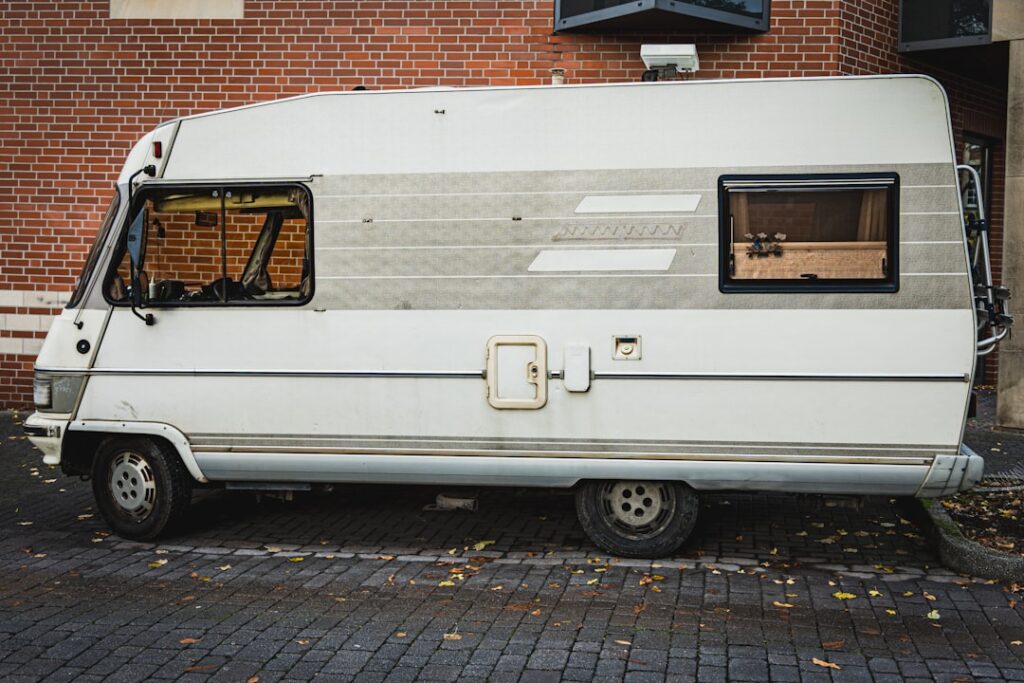
An old mobile home that has reached the end of its useful life can be surprisingly hard to get rid of. It may be sitting on inherited land, blocking a new build, or stuck on a lot in a park that wants it gone. If the unit was built before asbestos use declined, there is a real chance some of its materials contain asbestos, and that changes how it can be torn down, hauled away and disposed of. This guide walks through the practical sequence: what may contain asbestos, why testing comes first, which rules can apply, the main options for removal, rough cost drivers and the paperwork side. It is general information for owners on the Colorado Front Range and elsewhere, and it does not replace advice from an accredited asbestos consultant, your state air quality program, your county or a lawyer.
Part of our Asbestos in the Home guide — start there for the full picture →
Is this mold, asbestos, or water damage? Get a free instant screen
Upload a clear photo of the suspect area. You'll get an instant AI screening opinion and what to do next. This is screening guidance, not a professional determination.
Screening guidance only. AI can be wrong. Confirm asbestos, mold type, or lead with lab testing or a licensed professional before acting.
Where Asbestos Hides in Older Mobile Homes
Manufactured and mobile homes were built with many of the same products used in site-built houses, often in thinner, lighter versions. Which ones contain asbestos depends on the manufacturer, the year and any later repairs, so no list can tell you what is in a particular unit. EPA’s general list of where asbestos may be found in homes includes vinyl floor tiles and the backing on vinyl sheet flooring and adhesives, roofing and siding shingles, textured paint and patching compounds used on walls and ceilings, and materials around heating equipment. In older mobile homes, materials that commonly get a closer look include:
- Floor tiles, sheet flooring and mastic. Often the most common suspect material, sometimes buried under later flooring layers.
- Joint compound and wall panel seams. Some units used drywall with taped seams; others used panels with battens.
- Ceiling texture. Sprayed or troweled textures can contain asbestos in some older homes.
- Roof coatings and sealants. Many mobile homes had metal roofs that were coated over the years, and some older coatings and mastics may contain asbestos.
- Siding. Some units were sided with cement-based panels. Our guide to asbestos siding explains how to recognize the type.
- Ductwork and furnace areas. Duct tape, wrap, gaskets and the material around a furnace closet can be suspect.
- Skirting, underbelly and window glazing. Less common, but worth noting in a survey.
None of these confirm asbestos. EPA states that, generally, you can’t tell whether a material contains asbestos simply by looking at it, unless it is labeled. That is why every plan to remove an old mobile home starts with testing. A general mobile home inspection and our mobile home inspection checklist cover the rest of the unit’s condition.
Step 1: Get an Asbestos Inspection Before Anything Else
Before a single panel comes off, have the unit surveyed by an accredited asbestos inspector. EPA recommends that a trained and accredited asbestos professional take samples, because a professional knows what to look for and because there may be an increased health risk if fibers are released. EPA also notes that sampling done incorrectly can be more hazardous than leaving the material alone.
A pre-demolition survey is more thorough than a spot test. The inspector typically identifies each distinct material in the unit, takes samples through all layers, sends them to an accredited lab and writes up a report listing which materials contain asbestos, where they are and roughly how much there is. That report is the document that demolition contractors, haulers, landfills and regulators will usually ask for. Home kits, discussed in our guide to asbestos home testing kits, can answer a narrow question about one material, but they rarely meet the documentation expectations of a demolition project. Our guide to asbestos test results explains how to read the lab report once it arrives.
Two practical tips: ask the inspector to sample roof coatings and hidden flooring layers, which are easy to miss, and confirm that the survey is suitable for demolition rather than only for a renovation, because the scope differs.
Step 2: Check Which Demolition Rules Apply
Several layers of rules can apply when a structure containing asbestos is demolished. Which ones reach your mobile home depends on where it is, who owns it, what it is used for and how it will be removed.
Federal NESHAP
EPA’s asbestos laws and regulations page explains that the asbestos National Emission Standards for Hazardous Air Pollutants (NESHAP) specify work practices for asbestos to be followed during demolitions and renovations of all structures, installations and buildings, excluding residential buildings that have four or fewer dwelling units. It adds that the regulations require the owner of the building or the operator to notify the appropriate state agency before any demolition, or before any renovations of buildings that could contain a certain threshold amount of asbestos. A single privately owned mobile home used as a residence may therefore fall outside the federal NESHAP in many cases. That exclusion is not universal, however. A unit that is part of a larger demolition project, used commercially, or demolished in certain public projects may be treated differently, and an accredited consultant or your state agency can confirm how the rule applies to your situation.
Colorado Regulation 8 and other state rules
States can and often do go further than the federal rule. In Colorado, asbestos is regulated under the Air Quality Control Commission’s Regulation Number 8, which, as generally understood, can require an asbestos inspection and a state demolition permit for residential demolitions that the federal rule would exclude. Requirements change over time and depend on the details of the project, so confirm current rules with the state air pollution control program or an accredited Colorado consultant before scheduling work. Our guides to asbestos abatement in Colorado and asbestos certification in Colorado cover the local landscape. Outside Colorado, check with your state air quality or environmental agency.
Local permits and landfill acceptance
Counties and cities often require a demolition permit, and many ask for the asbestos survey as part of the application. Landfills set their own acceptance rules as well. Many will not take demolition debris without documentation that asbestos was removed or that the load contains no regulated asbestos, and asbestos waste usually has to go to a facility permitted to accept it, packaged and labeled as the facility requires. Call the landfill early. Our guide to disposing of asbestos tiles covers typical packaging expectations.
Worker protection
Anyone paid to remove asbestos materials falls under OSHA’s construction asbestos standard, 29 CFR 1926.1101. The standard sets a permissible exposure limit of 0.1 fiber per cubic centimeter of air as an eight-hour time-weighted average and groups asbestos work into classes. Its definition of Class II work includes the removal of asbestos-containing wallboard, floor tile and sheeting, roofing and siding shingles, and construction mastics, which describes much of what is in an old mobile home. Our guide to the four classes of asbestos work explains the categories.
Step 3: Choose a Removal Option
Once you know what is in the unit and which rules apply, there are generally three routes. The right one depends on how much asbestos was found, the condition of the home, local rules and your budget.
Option A: Abatement, then demolition
In the most common approach, a licensed abatement contractor removes the asbestos-containing materials first, following the required work practices, and disposes of them at a permitted facility. Once clearance is documented, the remaining structure is demolished and hauled as ordinary demolition debris or, in some cases, scrapped for metal. This route usually costs more upfront but tends to simplify disposal and can lower demolition costs, because the remaining debris is treated as regular waste. EPA advises that if you hire an asbestos professional contractor, you get a written contract before work begins specifying the work plan, cleanup and the applicable federal, state and local regulations the contractor must follow, such as notification requirements, removal, handling and disposal procedures.
Option B: Demolition of the home with asbestos in place
In some circumstances, depending on the materials, their condition and local rules, a properly permitted contractor may be allowed to demolish the unit with certain non-friable asbestos materials still in place, handling the entire debris load as asbestos waste. This is not a DIY shortcut. It typically requires a permit, wetting and controlled demolition methods, and disposal of all debris at a facility permitted to take asbestos waste, which can be expensive by weight. Whether it is allowed, and whether it is cheaper than abating first, varies from case to case.
Option C: Sale, donation or relocation with disclosure
Some older mobile homes still have value as a structure. Selling, donating or relocating the unit avoids demolition, but the asbestos does not go away. Disclosure duties vary by state and by type of transaction, so check with a real estate professional or attorney before marketing the home. Providing the survey report to a buyer is generally the safest course. Moving the unit can also damage materials, so plan with the mover and consider abating fragile materials first.
In practice, many owners find that the cost of abatement plus demolition exceeds the unit’s resale value, which pushes the decision toward Option A. A consultant can price each route so the comparison is concrete.
Step-by-Step Overview
The table below summarizes the sequence. Details vary by state, county and project, so treat it as a checklist to discuss with your consultant rather than a legal procedure.
| Step | Who | Notes |
|---|---|---|
| Pre-demolition asbestos survey | Accredited asbestos inspector | Sample all distinct materials and layers, including roof coatings and flooring |
| Confirm applicable rules | Owner with consultant or state agency | Federal NESHAP may exclude small residential buildings; state rules can still apply |
| Permits and notifications | Contractor or owner, per local rules | County demolition permit; state permit or notice where required |
| Arrange disposal | Contractor with landfill | Confirm acceptance, packaging and paperwork before work starts |
| Abatement | Licensed abatement contractor | Written contract; OSHA work practices; clearance documented |
| Demolition and hauling | Demolition contractor | Remaining structure treated as ordinary debris after clearance, or as asbestos waste if left in place |
| Title and county paperwork | Owner | Title surrender or retirement and tax records, depending on county |
Costs, Title and Paperwork
What drives the cost
Costs vary widely, and any single figure would be misleading. The main drivers are the number and type of asbestos-containing materials, how friable they are, access, the distance to a permitted landfill and disposal fees, local labor rates and whether the unit can be scrapped for metal. A survey that finds only floor tiles is a very different job from one that finds asbestos in ceiling texture, joint compound and roof coatings. Getting at least two written bids based on the same survey report is the most reliable way to see the real number. Our guide to asbestos removal price explains common pricing structures.
Title and county paperwork
Mobile homes are often titled like vehicles, especially if they were never converted to real property. When a unit is demolished, many states and counties expect the owner to surrender or retire the title and update property tax records so that taxes stop accruing. Some counties also ask for proof of demolition or a tax clearance before issuing a permit or allowing removal. The exact process differs by state and county, so call the county treasurer, assessor or motor vehicle office before demolition and keep copies of every receipt, survey and disposal manifest. If the home sits in a park, check the lease and park rules as well; many parks have their own requirements for removing units.
Hiring and Managing the Contractors
Most owners deal with two or three separate parties: the asbestos inspector or consultant, the abatement contractor and the demolition or hauling company. Some firms offer more than one of these services, but EPA’s homeowner guidance advises avoiding a conflict of interest: a professional hired to assess the need for repair or removal should not be connected with the firm that does the actual removal, and EPA says it is better to use two different firms. That separation tends to keep the survey and any clearance testing objective.
Questions worth asking
- Licensing and accreditation. Ask each firm for its state certification or license, and confirm that the individuals doing the work hold the required accreditations. EPA suggests asking asbestos professionals to document their completion of federal or state-approved training, and says each person performing work should provide proof of accreditation. EPA also suggests checking a firm’s past performance with the local air pollution control board and the agency responsible for worker safety, and asking about safety violations or legal actions.
- Scope tied to the survey. The bid should reference the survey report and list each material to be removed, so nothing is missed or double-counted.
- Permits and notifications. Ask who files the state and county paperwork and who pays the fees.
- Disposal. Ask which landfill will receive the waste and if copies of disposal manifests or receipts will be provided to you.
- Clearance. Ask how the end of abatement will be documented and who performs any visual inspection or air testing.
- Insurance. Confirm that the contractor carries liability coverage appropriate for asbestos work.
Preparing the site
Before work starts, arrange for utilities to be disconnected and capped by the providers, including electricity, gas or propane, water and sewer or septic connections. Remove personal belongings that you want to keep, but leave suspect materials untouched. If the home sits on a pad or piers, ask the demolition contractor how the chassis, axles and tie-downs will be handled, since steel frames are often scrapped separately. Keep neighbors informed about the schedule, especially in a park where homes sit close together, and make sure children and pets stay away from the work area. After demolition, confirm that the site is left free of visible debris, and keep every survey, permit, clearance record and disposal receipt in one folder in case a buyer, lender or county office asks for them later.
Reading the bids side by side
Bids for the same job can look very different on paper. One contractor may quote abatement and demolition together, another may quote only the asbestos portion, and a third may exclude disposal fees or permit costs. Line the bids up against the survey report and check that each one covers the same materials, the same disposal arrangements and the same clearance step. A much lower price sometimes reflects a narrower scope, such as leaving the roof coating or a hidden flooring layer out of the work. Ask each contractor to explain anything that differs, and get revisions in writing before you sign.
Timing matters as well. Survey results, permits and landfill scheduling can each take time, so starting the process several weeks before you need the lot cleared avoids pressure to cut corners. If a park or buyer has set a deadline, share it with the consultant at the outset so the sequence can be planned around it.
Why You Should Not Demolish It Yourself
Tearing down a mobile home with a pry bar and a dumpster can look like the cheapest option. With asbestos involved, it is likely the most expensive and dangerous one. EPA’s homeowner guidance lists clear don’ts: don’t dust, sweep or vacuum debris that may contain asbestos; don’t saw, sand, scrape or drill holes in asbestos-containing materials; and don’t sand or try to level asbestos flooring or its backing. EPA advises having removal and major repair done by people trained and qualified in handling asbestos. Demolition does all of the things on that list at once.
EPA explains that asbestos fibers may be released into the air when asbestos-containing material is disturbed during demolition work, maintenance, repair and remodeling, and that exposure increases the risk of developing lung disease, with symptoms that may take many years to develop. Beyond health, a DIY teardown can leave contaminated debris that no landfill will accept, contaminated soil on your property, and potential penalties if state or local rules applied. Cleaning up after an uncontrolled demolition usually costs far more than planned abatement would have. If you have already disturbed material, stop, keep people away from the area and read our guide to asbestos cleaning before calling a professional.
Practical Takeaways
- Assume nothing: test first with an accredited inspector, and make sure the survey is suitable for demolition.
- Federal NESHAP may exclude a small residential unit, but Colorado’s Regulation 8, county permits and landfill rules can still apply.
- Abatement before demolition is the most common route and often simplifies disposal.
- Get written, survey-based bids and a contract that spells out notifications and disposal.
- Handle the title and tax paperwork so the county stops treating the unit as property you still own.
- Do not demolish a suspect mobile home yourself.
The broader asbestos and lead section and our asbestos hub have more on testing, abatement and safe handling.
References
- U.S. EPA. Asbestos Laws and Regulations
- U.S. EPA. Protect Your Family from Exposures to Asbestos
- U.S. EPA. Learn About Asbestos
- Occupational Safety and Health Administration. 29 CFR 1926.1101, Asbestos
Frequently asked questions
Can a homeowner demolish a mobile home that contains asbestos?
It is strongly discouraged and may not be legal depending on state and local rules. EPA advises having removal done by people trained and qualified in handling asbestos and warns against sawing, sanding or scraping asbestos materials. Demolition disturbs all of them at once.
Does the federal asbestos NESHAP apply to a single mobile home?
EPA explains that the asbestos NESHAP covers demolitions and renovations but excludes residential buildings with four or fewer dwelling units. A single private mobile home may fall outside it in many cases, but state rules such as Colorado's Regulation 8, local permits and landfill requirements can still apply.
Do older mobile homes always contain asbestos?
No. Some do and some do not, depending on the manufacturer, year and later repairs. EPA notes that you generally cannot tell whether a material contains asbestos by looking at it, so a survey by an accredited inspector is the only reliable way to know.
What happens to the title when a mobile home is demolished?
In many states and counties the owner surrenders or retires the title and updates property tax records after demolition. The process varies, so check with the county treasurer, assessor or motor vehicle office before work begins and keep proof of demolition and disposal.
Is it cheaper to sell an old mobile home than demolish it?
Sometimes. If the unit still has value, a sale or donation with full disclosure can avoid demolition costs. When abatement and demolition cost more than the home is worth, owners often choose abatement followed by demolition.
Planning to clear an old mobile home off your land? Drop us a line with the unit’s age, location and what you already know about its materials, and we can help you map out testing and next steps before anyone picks up a crowbar.