Can You Get Rid of Asbestos? Direct Answer for Homeowners
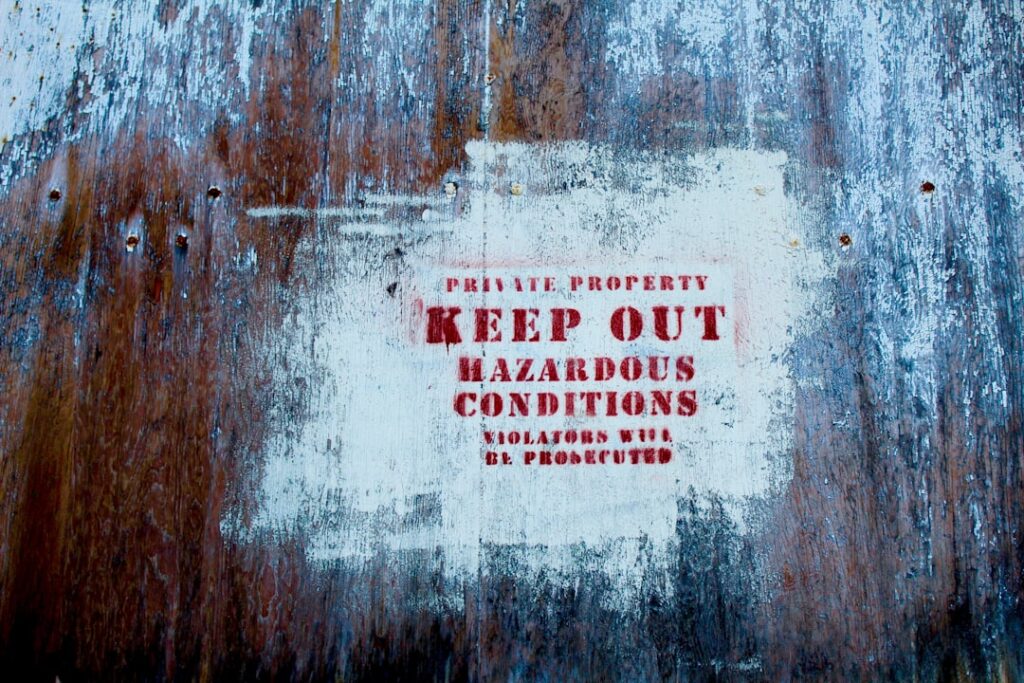
The direct answer to “can you get rid of asbestos” is yes, but only through a tightly regulated process performed by state-licensed abatement contractors under negative-air containment. Asbestos cannot be neutralized, dissolved, burned, or chemically converted into a safe form. The only legitimate response is physical removal of the material, double-bagging it, and transporting it to an EPA-approved landfill on a signed waste manifest. This guide gives the yes-or-no answer first, then explains why DIY is dangerous, why bleach and chemical “treatments” do nothing, and what the licensed-only workflow looks like. Material here summarizes EPA, OSHA, and CDC guidance current as of 2026; the actual abatement is professional work.
Is this mold, asbestos, or water damage? Get a free instant screen
Upload a clear photo of the suspect area. You'll get an instant AI screening opinion and what to do next. This is screening guidance, not a professional determination.
Screening guidance only. AI can be wrong. Confirm asbestos, mold type, or lead with lab testing or a licensed professional before acting.
Yes — but the answer comes with conditions
You can get rid of asbestos. People do it every day, all over the country, on hundreds of buildings ranging from single-family homes to industrial sites. The qualifier is that “getting rid of it” means licensed abatement, not household removal. The federal framework (EPA AHERA, EPA NESHAP, OSHA 29 CFR 1926.1101) plus state programs (CDPHE in Colorado, similar agencies elsewhere) collectively dictate who can do the work, what protective measures are required, how the waste is packaged, where it goes, and what paperwork follows the property afterward.
What you cannot do is get rid of asbestos through any household method. There is no chemical you can apply that converts asbestos into a safe substance. There is no temperature you can reach at home that destroys the fibers. There is no cleaning method that captures them. The “getting rid of” answer is always: licensed abatement contractor, AHERA-credentialed pre-inspection, NESHAP-compliant disposal. Anything else is not getting rid of it — it is moving it around or pretending it does not exist.
Why DIY removal is not the answer
In most jurisdictions, DIY asbestos removal by homeowners is either explicitly illegal or restricted to narrow categories of non-friable material in single-family owner-occupied homes. Even where technically legal, DIY removal is uninsurable, undocumented, and exposes the homeowner and household to fiber concentrations that licensed work would never produce. Insurance policies typically exclude coverage for self-performed asbestos work, meaning any future health claim or property contamination claim falls on the homeowner. For broader context on asbestos and lead hazards in older homes, the pre-1978 housing hazard pillar guide covers the full risk landscape.
Beyond legality, the practical problem is containment. A licensed crew sets up negative-air containment with 6-mil poly barriers, HEPA-filtered air machines, decontamination units, and trained workers in full PPE. A homeowner has none of this. The fibers disturbed during DIY removal contaminate the entire house, the HVAC system, and personal belongings. Insurance carriers and future buyers treat that contamination as a permanent disclosure on the property. The can you remove asbestos homeowner guide covers the parallel legal nuances in more depth.
What chemical “treatments” do not work
Searches for asbestos solutions sometimes surface DIY methods involving bleach, vinegar, encapsulating paints applied without prep, or commercial “asbestos neutralizers.” None of these work. Bleach is a disinfectant for biological contamination (bacteria, mold) and has no effect on mineral fibers. Vinegar is a mild acid that does not break down silicate minerals at any concentration available to consumers. Encapsulating paints applied without proper surface preparation simply trap fibers temporarily under a coating that fails within years; encapsulation is a recognized professional treatment but is performed by licensed contractors using specific products under controlled conditions, not as a homeowner spray-and-go.
Heat does not destroy asbestos. The minerals are stable up to roughly 1,500 degrees Fahrenheit (chrysotile starts to decompose around 1,470 to 1,830 degrees F). No household process reaches those temperatures, and the decomposition products at extreme heat are themselves hazardous. Industrial vitrification (melting asbestos waste into glass) exists at specialized facilities but is not a household method.
The licensed-only workflow, end to end
Getting rid of asbestos through the legitimate workflow follows a defined sequence. First, an AHERA-credentialed inspector samples the suspect material and a NVLAP-accredited lab analyzes the samples by polarized light microscopy. The written report identifies ACM by material and homogeneous area and recommends a response: leave intact and monitor, encapsulate, enclose, or remove. If removal is the recommendation, the homeowner moves to step two.
Step two is hiring a state-licensed asbestos abatement contractor (a different firm from the inspector). The contractor files a 10-working-day NESHAP notification with the EPA-delegated state authority, sets up negative-air containment in the work area, removes the material wet using HEPA-equipped tools, double-bags the waste in 6-mil polyethylene, and transports it to an EPA-approved Class III landfill on a signed manifest. Step three is post-abatement clearance air sampling conducted by the original inspector or a third party — not the abatement contractor.
What the homeowner pays for
The pre-abatement inspection runs $400 to $800 in 2026. The licensed abatement itself runs $20 to $65 per square foot of friable material, with most residential projects landing $1,500 to $30,000 depending on scope. Post-abatement clearance air sampling adds $250 to $600 depending on the number of samples. Total project cost for a typical homeowner with a single-room popcorn ceiling abatement is in the $2,500 to $5,000 range; whole-house projects scale upward into five figures.
What “licensed abatement contractor” actually means at the state level
State licensing for asbestos abatement contractors varies in detail but follows a common framework. The contractor’s company holds a state license, the contractor’s workers hold individual worker certifications, and the company holds an EPA waste generator ID required for landfill acceptance of asbestos waste. In Colorado, CDPHE issues both the company-level Asbestos Abatement Contractor certification and the individual Asbestos Worker certification, and the EPA generator ID is issued separately upon application.
Verifying credentials means checking all three. The company license is on the CDPHE roster. Individual worker certifications can be requested from the contractor (workers carry credential cards on site during projects). The EPA generator ID appears on the waste manifest. A contractor missing any of the three is not fully credentialed and the work product will not meet regulatory expectations.
How the 2024 EPA chrysotile asbestos ban affects existing materials
In March 2024, EPA finalized a rule under the Toxic Substances Control Act banning the ongoing use of chrysotile asbestos in new products, with phase-out periods of varying length for different product categories. The 2024 ban does not affect existing asbestos in buildings — it only prohibits new manufacturing and import of chrysotile-containing products. Homes built pre-1980 still contain ACM, and the regulatory framework for managing existing ACM (AHERA, NESHAP, OSHA standards, state programs) is unchanged.
What the 2024 ban does change is the supply chain: products that historically contained chrysotile asbestos (some friction materials, certain gaskets, specific industrial applications) will phase out, reducing the future creation of new ACM in commercial settings. For homeowners with existing ACM in residential buildings, the ban is not relevant to abatement decisions. The existing material is still ACM, the existing rules still apply, and the existing licensed-only workflow still governs removal.
Decision logic: remove, encapsulate, or leave alone
Not every asbestos finding requires removal. EPA’s position is that intact, undamaged, undisturbed ACM in low-traffic areas can be safely managed in place. Vermiculite attic insulation that no one walks on, transite siding in good condition that is not flaking, vinyl floor tile under a layer of resilient flooring — these are candidates for the management-in-place approach, where the material is documented, signage posted where relevant, and periodic re-inspection conducted.
Encapsulation is a middle option for materials that are accessible but not yet damaged. A licensed contractor applies a bonding sealant designed to lock fibers in place. Encapsulation is appropriate for some pipe insulation, boiler insulation, and acoustic ceiling treatments. It is not appropriate for friable materials in poor condition or for materials that will be disturbed by future work. Full removal is reserved for damaged ACM, ACM in renovation paths, and materials at high risk of disturbance.
What happens to your property after abatement
After successful abatement and clearance, the property carries a disclosure record. The pre-abatement inspection report, NESHAP notification, signed waste manifest, and clearance air sampling report all become part of the property’s history. Future buyers may request these documents during their own inspection contingency. The documents prove that the work was performed under licensed conditions and that the area was cleared by air sampling. This is one of the reasons DIY removal is so problematic — it leaves no chain of custody.
Why insurance and disclosure considerations make documented work essential
Documented licensed abatement protects the homeowner in three ways. First, insurance: most homeowner policies exclude coverage for self-performed asbestos work, and undocumented removal creates a contamination claim that may not be covered if discovered later. Second, disclosure: most state real-estate transaction disclosure forms require sellers to identify known asbestos materials and any prior abatement work. Documented licensed work satisfies the disclosure obligation; undocumented work creates a disclosure gap that can void the transaction or trigger post-closing litigation.
Third, future renovation: a future contractor planning work in the property checks for prior ACM history before disturbing materials. Documented prior abatement (with clearance air sampling proving the area is clean) allows renovation to proceed without re-testing the abated areas. Undocumented prior removal forces the renovation contractor to assume contamination and re-test everything, adding cost and delay.
How to evaluate a “we found asbestos in your home” verbal claim
Homeowners sometimes get verbal claims from contractors working on unrelated projects — a roofer, plumber, or electrician — that they “saw asbestos” while doing their work. Verbal claims without lab testing are not actionable. The visual identification of asbestos is unreliable; many materials look identical to ACM but test negative, and many actual ACM materials look identical to non-asbestos substitutes. Treat verbal claims as a prompt to schedule a proper AHERA-credentialed inspection with lab analysis.
Verbal claims also sometimes come with pressure to act quickly — “you need to stop work and abate immediately.” That pressure is a sign of either inexperience or a sales tactic. Real ACM in good condition that is not being actively disturbed is rarely an immediate emergency. The right response is to pause the disturbing work, isolate the area, and call a credentialed inspector for proper sampling. Do not authorize emergency abatement based on verbal claims alone.
When to call a professional
Any homeowner asking “can you get rid of asbestos” should start by calling an AHERA-credentialed inspector for sampling. The inspector confirms whether the material is actually asbestos (many suspect materials test negative), documents the condition, and recommends a response. If removal is warranted, hire a state-licensed abatement contractor with verified credentials and references from completed projects. Never hire a single firm to perform both inspection and removal — that combination violates the separation principle and creates a conflict of interest.
References
- EPA learn about asbestos and managing the hazard — Environmental Protection Agency
- OSHA Asbestos Standard 29 CFR 1926.1101 — Occupational Safety and Health Administration
- CDPHE Asbestos Abatement Program and licensed contractor verification — Colorado Department of Public Health and Environment
- CDC/NIOSH asbestos exposure prevention guidance — Centers for Disease Control and Prevention
Front Range homeowners weighing whether to abate or manage in place can get in touch through our contact page for a referral to a credentialed inspector for the sampling step that comes first.