Best Asbestos Test Kit: A 2026 Buyer’s Guide
An asbestos test kit is not a test you read at home. Every legitimate kit is a sampling and shipping package: you collect a small piece of suspect material, seal it, and mail it to a laboratory that examines it under a microscope. The kits on Amazon differ in which lab does the work, what accreditation and method they name, how many samples are covered, how fast results come back and whether the lab fee is included. Before buying any of them, know the EPA’s position: taking samples yourself is not recommended, because done incorrectly, sampling can be more hazardous than leaving the material alone. This guide compares six kits and then explains when a kit is reasonable and when to hire an accredited professional instead.
Part of our Asbestos in the Home guide — start there for the full picture →
As an Amazon Associate we earn from qualifying purchases.
How we compared: we compared 12 current Amazon listings for asbestos test kits on what each listing actually states: number of samples, whether the lab fee and return shipping are included, analysis method, laboratory accreditation named and turnaround after the lab receives the sample. We did not lab-test any of these kits or use them hands-on. The 12 listings come from four sellers, several in multiple pack sizes. Prices and availability change often, so check the current listing before buying.
Is this mold, asbestos, or water damage? Get a free instant screen
Upload a clear photo of the suspect area. You'll get an instant AI screening opinion and what to do next. This is screening guidance, not a professional determination.
Screening guidance only. AI can be wrong. Confirm asbestos, mold type, or lead with lab testing or a licensed professional before acting.
Quick picks: the best asbestos test kits by use case
| Pick | Best for | Key spec | Key detail |
|---|---|---|---|
| Seeml Labs Asbestos Inspector in a Box | Verifiable lab accreditation | 1 sample, lab included | Gives an NVLAP lab code; 2–3 business days |
| SLGi 1-Pack (5 Day) | Single sample with return postage | 1 sample, PLM by EPA 600/R-93 | Prepaid ground return label included |
| Asbestos-Sampling.com 2-Sample | Type and percentage in the result | 2 samples, 72-hour lab | Reports asbestos type and concentration |
| PRO-LAB AS608 3-Sample | Several materials, shipping included | 3 samples with lab | Lab fee and return shipping included |
| SLGi 3-Pack (3 Day) | Fast multi-sample batch | 3 samples, 3-day lab | Names EPA Method 600/R-93; samples ship together |
| PRO-LAB AS108 | Collect now, pay the lab later | 2 samples, lab fee separate | Names an AIHA-accredited lab |
The six picks, compared listing by listing
1. Seeml Labs Asbestos Inspector in a Box — Best for Verifiable Lab Accreditation
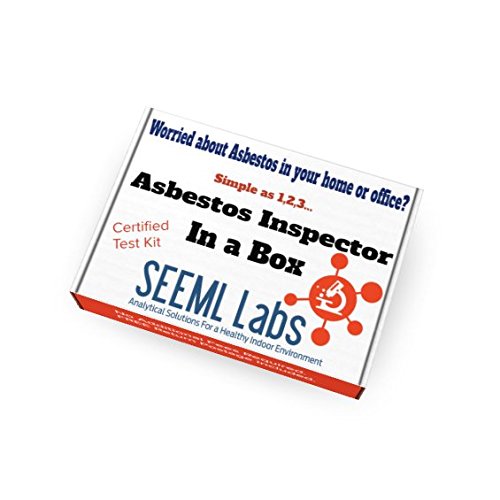
One-sample kit with lab fees, consultation and a written report from a lab that gives its NVLAP code.
Check price on Amazon$22.00 as of Oct 10, 2026 10:01 pm GMT+0000 — prices change; see Amazon for current price.| Specification | Details |
|---|---|
| Samples | 1 sample included; extra samples can be added for a fee |
| Lab fee | Included, with no additional lab fees for the included sample |
| Accreditation named | NVLAP accredited laboratory, code 201031-0 |
| Turnaround | 2 to 3 business days after samples are received |
| Report / support | Professional written report and free consultation |
| Analysis method | not stated in listing |
Seeml Labs asbestos kit — 1 sample (add more), lab included, NVLAP code 201031-0, 2–3 business days, written report
The Only Listing That Gives a Lab Accreditation Code You Can Look Up
Four of the 12 listings mention NVLAP, the accreditation program the EPA says the National Institute of Standards and Technology was required to develop for asbestos laboratories under AHERA. Three of those mentions are in the Asbestos-Sampling.com titles; the fourth is this Seeml kit, and it is the only listing that gives an actual lab code. A code lets you confirm the accreditation yourself before mailing anything.
The Seeml kit also has one of the fastest stated turnarounds on the shelf at 2 to 3 business days after receipt, alongside the 72-hour Asbestos-Sampling.com kits and the 3-day SLGi packs. Adding samples to the same order, rather than buying a second kit, keeps several materials under one report.
What the listing leaves out: it does not name the analysis method, though 10 of the 12 listings name PLM. It does not describe return shipping or what collection tools are in the box. Ask before ordering if those details matter to you.
Pros
- Only listing with a specific NVLAP lab code
- 2 to 3 business day turnaround on receipt
- Extra samples can join the same order
- Written report and consultation included
Cons
- Analysis method not stated
- Return shipping not described
- Kit contents not listed
2. SLGi Asbestos Test Kit 1-Pack (5 Day) — Best Single Sample With Return Postage

Single-sample kit with sampling tools, prepaid ground return label and PLM analysis by EPA Method 600/R-93.
Check price on Amazon$35.00 as of Oct 10, 2026 10:01 pm GMT+0000 — prices change; see Amazon for current price.| Specification | Details |
|---|---|
| Samples | 1 |
| Analysis method | Polarized light microscopy (PLM) by EPA Method 600/R-93 |
| Lab fee / shipping | Analysis included; prepaid return ground shipping label |
| Turnaround | Within 5 business days of the kit reaching the lab; transit 1 to 5 business days |
| Kit contents | Sampling tools, return label and instructions |
| Accreditation named | not stated in listing |
SLGi Kit1 — 1 sample, PLM by EPA 600/R-93, prepaid ground return, 5 business days on receipt, 1–5 days transit
One of Four SLGi Listings, the Only Brand to Name a Specific EPA Test Method
Ten of the 12 listings say their lab uses PLM, the standard microscope method for building-material samples. Only SLGi’s four listings name the specific method, EPA Method 600/R-93. That is a small detail, but it tells you exactly what analysis you are paying for, which is what an inspector or contractor will ask.
This 1-pack is also one of three SLGi listings that say the return label is prepaid, and the only SLGi listing whose title says return ground shipping is included. It is also unusually candid about time: transit to the lab takes 1 to 5 business days, and the 5-day clock starts on arrival. Plan on up to two weeks door to door.
It is the slowest of the four SLGi listings; the other three are 3-day packs. The listing does not name the lab’s accreditation, so confirm NVLAP status before mailing.
Pros
- Names PLM and EPA Method 600/R-93
- Prepaid ground return label
- Clear about transit and lab time
Cons
- Slowest turnaround on the shelf
- Accreditation not named in listing
- One sample only
3. Asbestos-Sampling.com 2-Sample Kit — Best for Type and Percentage in the Result
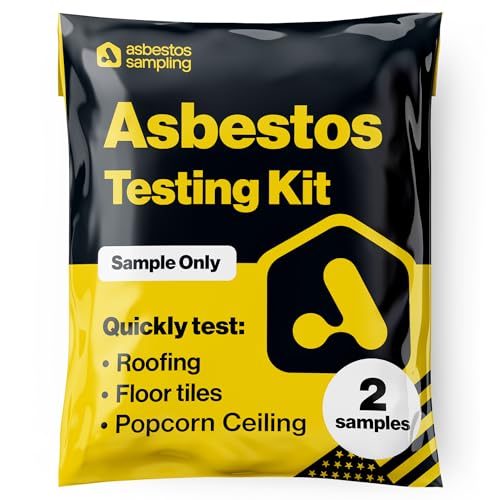
Two-sample PLM kit with a 72-hour NVLAP lab result that reports asbestos type and percentage concentration.
Check price on Amazon$59.95 as of Oct 10, 2026 10:01 pm GMT+0000 — prices change; see Amazon for current price.| Specification | Details |
|---|---|
| Samples | 2 |
| Analysis method | PLM |
| Result detail | Which type of asbestos was found, with a percentage concentration |
| Lab fee | Included; no further processing costs |
| Turnaround | Tested within 72 hours of receipt |
| Accreditation named | NVLAP lab, per title (no code given) |
Asbestos-Sampling.com 2-sample — PLM, type + percentage reported, 72 h after receipt, lab fee included, NVLAP per title
The Only Seller That Says the Report Names Asbestos Type and Percentage
Two of the 12 listings state that results identify which kind of asbestos was detected and its percentage concentration, and both are from Asbestos-Sampling.com (the 2-sample and 4-sample versions). Other listings promise “results” or a “report” without saying what is in it. Type and percentage are standard PLM outputs, so other labs may provide them too, but this is the only seller that commits to it in the listing.
Percentage matters because building-material results are usually discussed in terms of whether a material is above or below a percentage threshold. A report that only says “detected” leaves a contractor guessing.
The listing names popcorn ceilings, cement, siding, guttering, boarding and floor tiles as typical materials. It does not describe sampling tools, return shipping or the lab’s identity beyond the NVLAP mention in the title. The 1-sample version of this kit has no bullet points at all, which is why the 2-sample listing is the pick.
Pros
- Commits to asbestos type and percentage
- 72-hour lab turnaround
- Two samples with lab fee included
Cons
- No NVLAP code given
- Return shipping not described
- Kit contents not listed
4. PRO-LAB AS608 3-Sample Kit — Best for Several Materials With Shipping Included

Three-sample PLM kit with the lab fee and return shipping included and a report within one week.
Check price on Amazon$75.99 as of Oct 10, 2026 10:01 pm GMT+0000 — prices change; see Amazon for current price.| Specification | Details |
|---|---|
| Samples | 3 (listing size and count) |
| Analysis method | PLM, described as EPA-approved lab methods |
| Lab fee / shipping | Lab analysis fee and return shipping included |
| Turnaround | Professional report within 1 week |
| Typical use | Popcorn ceilings and other household materials |
| Model | AS608 |
PRO-LAB AS608 — 3 samples, PLM, lab fee + return shipping included, report within 1 week
The Largest All-Inclusive Kit From the Brand With the Most Pack Sizes
PRO-LAB has four listings on the shelf, from 1 to 3 samples, and three of them include both the lab fee and return shipping. The AS608 is the largest of those three. Only one listing on the entire shelf covers more samples: the Asbestos-Sampling.com 4-sample kit.
Three samples fit a common homeowner question: a textured ceiling, an old vinyl floor and the mastic underneath, or the same ceiling in three rooms that may have been sprayed at different times. The EPA lists textured paint and patching compounds, vinyl floor tiles and the backing and adhesives on sheet flooring among the materials where asbestos may be found.
Two cautions. One bullet says the kit collects “1 sample” while the title, size and another bullet say three; trust the box and confirm with the seller. PRO-LAB’s listings also call this an “asbestos air test kit,” but the method described is PLM analysis of material samples, not an air test. Turnaround of up to a week is slower than the 3-day options.
Pros
- Three samples with lab fee and return shipping included
- Names PLM analysis
- Pitched at common materials like popcorn ceilings
Cons
- Contradictory sample-count bullet
- Misleading “air test” wording
- Up to a week for results
5. SLGi Asbestos Test Kit 3-Pack (3 Day) — Best Fast Multi-Sample Batch
Three-sample kit with prepaid return label and PLM by EPA Method 600/R-93, results 3 business days after arrival.
Check price on Amazon$68.95 as of Oct 10, 2026 10:01 pm GMT+0000 — prices change; see Amazon for current price.| Specification | Details |
|---|---|
| Samples | 3, submitted together |
| Analysis method | PLM by EPA Method 600/R-93 |
| Lab fee / shipping | Analysis included; prepaid return shipping label |
| Turnaround | Within 3 business days of arrival; transit 1 to 5 business days |
| Kit contents | Sampling tools, return label and instructions |
| Part number | A3P3D |
SLGi A3P3D — 3 samples, PLM by EPA 600/R-93, prepaid return, 3 business days on receipt, ship together
Three Samples, a Named Method and a 3-Day Lab Clock
Among the multi-sample listings, this SLGi 3-pack is the only one that combines three samples, a named EPA method, a prepaid return label and a 3-business-day turnaround. The PRO-LAB 3-sample kit takes up to a week; the Asbestos-Sampling.com kits are faster but do not name a method beyond PLM or describe return postage.
The listing states that all samples must be submitted together, one of two SLGi listings (with the 2-pack) to say so. That suits a single sampling session: collect from each material on the same day, label each bag, and mail them as one package.
As with the other SLGi listings, the lab’s accreditation is not stated in listing. Transit to the lab is quoted at 1 to 5 business days on top of the 3-day lab time.
Pros
- Named EPA method plus 3-day turnaround
- Prepaid return label
- Three samples under one order
Cons
- All samples must ship together
- Accreditation not named in listing
- Transit adds up to 5 business days
6. PRO-LAB AS108 — Best for Collecting Now and Paying the Lab Later

Two-sample collection kit with mailer; lab fee per sample is separate, analysis by an AIHA-accredited lab.
Check price on Amazon$7.99 as of Oct 10, 2026 10:01 pm GMT+0000 — prices change; see Amazon for current price.| Specification | Details |
|---|---|
| Samples | 2 |
| Lab fee | Not included; charged per sample when you send it in |
| Accreditation named | AIHA-accredited lab |
| Analysis / turnaround | PLM; report within 1 week |
| Kit contents | Collection materials, instructions and a mailer |
| Model / size | AS108; about 7 x 5 x 0.75 in, 0.1 lb |
PRO-LAB AS108 — 2 samples, PLM, mailer included, lab fee separate per sample, AIHA-accredited lab, ~1 week
The Only Listing Where the Lab Fee Is Separate
Eleven of the 12 listings bundle analysis into the purchase. The AS108 is the only one that does not; you pay the lab per sample when you mail it. Read that as a cost warning, not a feature, unless you specifically want the kit on hand before deciding whether to send anything. It is also the only listing that names AIHA accreditation for its asbestos lab.
The separate-fee model is the one most likely to surprise buyers, which is why our breakdown of how much asbestos testing costs separates kit price from per-sample lab fees.
Like its siblings, the listing calls itself an “asbestos air test kit” while describing PLM analysis of collected material. The title says the lab fee is required; one bullet calls it optional. Both cannot be true for getting a result.
Pros
- Names an AIHA-accredited lab
- Mailer included
- Two samples per kit
Cons
- Lab fee extra for every sample
- “Air test” wording does not match the method
- Contradictory “required” vs “optional” lab wording
Read this before collecting any sample
The EPA’s guidance for homeowners is direct. You generally cannot tell whether a material contains asbestos by looking at it, and if in doubt you should treat it as if it does and leave it alone. A trained and accredited asbestos professional should take samples, because there may be an increased health risk if fibers are released, and taking samples yourself is not recommended. If materials are undamaged and will not be disturbed, the EPA says you do not need to have your home tested at all.
OSHA’s position on exposure is just as plain: there is no “safe” level of asbestos exposure for any type of asbestos fiber, and exposures lasting only a few days have caused mesothelioma. The EPA lists lung cancer, mesothelioma and asbestosis as the major health effects, and notes that disease symptoms may take many years to develop.
So the realistic role for a mail-in kit is narrow: a homeowner who has decided, against that advice, to sample a small amount of a single material before a remodel. If that is you, follow the kit instructions exactly, and treat the steps below as the minimum, not a guarantee of safety.
- Keep children and pets away from the area; the EPA advises limiting children’s access to any materials that may contain asbestos.
- Follow the kit’s own instructions for wetting the material, protective equipment and sealing the sample, and take the smallest piece the lab needs.
- Do not use power tools. The EPA’s homeowner do’s and don’ts say not to saw, sand, scrape or drill holes in asbestos-containing materials.
- Do not dust, sweep or vacuum debris afterward; the EPA says to avoid that and to wet-mop if the area must be cleaned, calling a professional for larger cleanups.
Our guide to the DIY asbestos test kit covers the sampling process in more detail, including why some materials should never be sampled by a homeowner.
Specs that matter in an asbestos kit
Laboratory accreditation
The EPA notes that AHERA required NIST to develop an accreditation program for labs analyzing asbestos in bulk and air samples, and NIST maintains the list. Four listings mention NVLAP, one gives a code and one names AIHA. Whatever kit you choose, confirm the lab’s accreditation before mailing a sample.
Analysis method
Polarized light microscopy is the standard method for building materials, and 10 of the 12 listings name it. A lab that also names its specific procedure, as SLGi does with EPA Method 600/R-93, is being more transparent. For how PLM and other methods differ, see our asbestos lab testing explainer.
What the report includes
A useful report states, for each sample, whether asbestos was detected, which type and an estimated percentage. Only two listings promise type and percentage in writing. Our guide to reading asbestos test results explains what “none detected,” “trace” and percentage results mean.
Samples per kit and lab fees
Listings on this shelf range from 1 to 4 samples, and 11 of 12 include the lab fee. Each distinct material needs its own sample, and a ceiling sprayed at different times may need more than one.
Turnaround and transit
Stated lab times range from 72 hours to about a week after receipt. SLGi is the only seller that also quotes transit time, 1 to 5 business days. Build both into any remodeling schedule.
Where Front Range homeowners find suspect materials
Older neighborhoods across the Denver metro and Colorado Springs, along with many mountain cabins, include homes built when asbestos-containing building products were in common use. The EPA’s list of places asbestos may be found reads like a tour of a mid-century Front Range ranch: textured ceiling and wall finishes, vinyl floor tiles and sheet-flooring backing and adhesive, roofing and siding shingles, vermiculite attic insulation, and wrap on old hot water and steam pipes and furnaces.
Popcorn ceilings are the most common reason homeowners buy a kit; our popcorn ceiling asbestos test guide covers that case specifically. Local requirements also vary. The EPA notes that federal law does not require people who inspect, repair or remove asbestos in detached single-family homes to be accredited, but some states and localities do, so check Colorado and local rules before any removal work. For town-specific notes, see asbestos testing in Lyons or asbestos testing in Conifer.
Limits of a DIY kit and when to hire an accredited professional
A mail-in kit answers one question about one material. It cannot tell you how much of a material is in the house, whether fibers are already in the air, or whether a removal was done correctly. The EPA recommends that sampling and even minor repair be done by a trained and accredited asbestos professional, and that removal and major repair always be done by people trained and qualified in handling asbestos. It also advises using separate firms for the inspection and for any abatement, to avoid a conflict of interest.
Hire a professional instead of using a kit when:
- The material is damaged, crumbling or friable, such as pipe or boiler insulation or a deteriorating ceiling.
- You plan a remodel that will disturb several materials and need a full survey.
- The home has vermiculite attic insulation.
- You need documentation for a sale, a rental or a contractor.
Our guide to professional asbestos testing explains what an inspection includes, and the asbestos and lead testing hub covers the bigger picture. When you would rather not handle suspect material at all, contact us to reach an accredited local inspector.
References
- Protect Your Family from Exposures to Asbestos — U.S. Environmental Protection Agency
- Learn About Asbestos — U.S. Environmental Protection Agency
- Asbestos Professionals — U.S. Environmental Protection Agency
- Asbestos Overview — Occupational Safety and Health Administration
Frequently asked questions
What is the best asbestos test kit?
The best kits mail your sample to an accredited laboratory, include the lab fee, name the analysis method (usually PLM) and state turnaround after receipt. Look for a lab you can verify, such as one giving an NVLAP code. Remember that the EPA recommends having an accredited professional take samples rather than doing it yourself.
Can you test for asbestos at home without a lab?
No reliable home test reads asbestos on the spot. Confirming asbestos requires microscope analysis, so every legitimate kit is a collection kit that you mail to a laboratory. Kits sold as air tests that describe PLM analysis are still testing collected material.
Does the EPA recommend asbestos test kits?
The EPA says taking samples yourself is not recommended and that sampling should be done by a trained and accredited asbestos professional, because sampling done incorrectly can be more hazardous than leaving the material alone. It also says undamaged material that will not be disturbed does not need testing.
How long do asbestos test kit results take?
Current listings state lab turnaround of about 72 hours to one week after the lab receives the sample. Transit time is extra; one seller quotes 1 to 5 business days to reach the lab.
What should I do if my asbestos test is positive?
Leave the material undisturbed if it is in good condition, and limit access if it is slightly damaged. If it is more than slightly damaged or a remodel will disturb it, the EPA says repair or removal should be done by a trained and accredited asbestos professional.
Planning a remodel in an older Front Range home and unsure what is in the ceilings or floors? Reach out through our contact page to connect with an accredited local asbestos inspector.
Asbestos test kits
Asbestos can only be confirmed by a lab. A mail-in kit gets you a sealed sample container and accredited analysis — never sand or disturb suspect material first.
| Product | Why | Buy |
|---|---|---|
 Asbestos Test Kit (mail-in lab) Asbestos Test Kit (mail-in lab) | Includes PPE + sealed mailer. | Amazon — $34.99 |
| Pro-Lab Asbestos Test Kit | Widely available; lab fee separate. | Amazon — $34.99 |