Professional Asbestos Testing: Process, Cost and Results
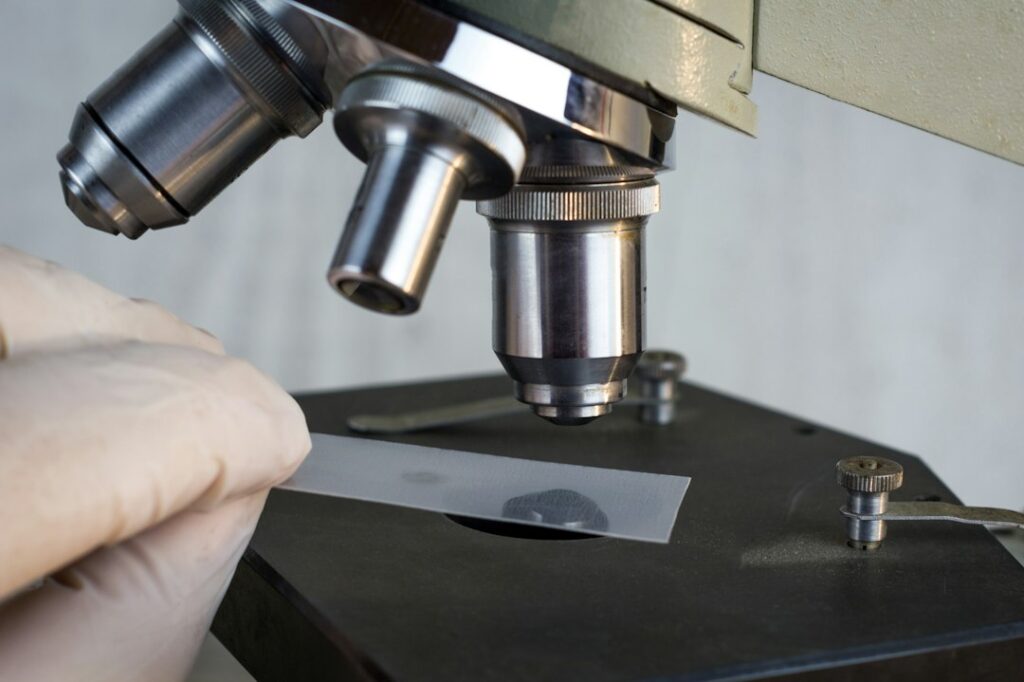
Asbestos cannot be identified by looking at it. Popcorn ceilings, vinyl floor tiles, pipe wrap, joint compound and old siding can all contain it, or not, and the only way to know is laboratory analysis. That is where a professional asbestos test comes in. A trained inspector collects samples safely, documents them, and sends them to an accredited lab that reports what type of asbestos is present and how much. This guide explains when hiring a professional makes more sense than a mail-in kit, what an accredited inspector actually does, how labs analyze samples, what the process typically costs, and how to read a lab report. It summarizes EPA and OSHA guidance current as of 2026; it is general information, so consult a certified asbestos professional for testing decisions on a specific property and a physician for any health concerns.
Part of our Asbestos in the Home guide — start there for the full picture →
Is this mold, asbestos, or water damage? Get a free instant screen
Upload a clear photo of the suspect area. You'll get an instant AI screening opinion and what to do next. This is screening guidance, not a professional determination.
Screening guidance only. AI can be wrong. Confirm asbestos, mold type, or lead with lab testing or a licensed professional before acting.
When You Need a Professional Asbestos Test
A professional asbestos test is the right choice whenever a material will be disturbed, whenever the material is crumbly or damaged, and whenever the results need to stand up to a contractor, a buyer, a lender or a regulator. If you are planning a remodel, demolition or flooring replacement in a home built before the 1980s, testing before work begins is the safest and often the legally required path.
The EPA’s general advice is that material in good condition that will not be disturbed is often best left alone. Asbestos becomes a hazard mainly when fibers are released into the air, which happens when materials are sanded, cut, drilled, broken or allowed to deteriorate. So the question is less “does my house have asbestos?” and more “am I about to disturb something that might?”
Situations that generally call for a professional rather than a DIY kit:
- Renovation or demolition: removing walls, ceilings, flooring, ductwork insulation or siding in an older home.
- Friable materials: anything that can be crumbled, crushed or powdered by hand pressure, such as some pipe insulation, sprayed-on ceiling texture and loose-fill attic insulation. Friable materials release fibers easily, and sampling them yourself can contaminate the home.
- Damaged materials: water-damaged ceilings, broken tiles, deteriorating boiler insulation.
- Real estate transactions: buyers who want documented results before closing, or sellers who want to disclose with confidence.
- Multiple suspect materials: a full survey is more efficient than sending samples one at a time.
- Regulatory requirements: some renovation and demolition projects require an inspection by a state-certified inspector before a permit is issued.
DIY Asbestos Test Kits vs Professional Testing
Mail-in kits are sold widely. The homeowner cuts a small piece of material, seals it in a bag and mails it to a lab. Many of these kits route samples to legitimate accredited labs, and the analysis itself can be sound. The limitations are elsewhere.
Where kits fall short
- Exposure during sampling: cutting into a suspect material is exactly the kind of disturbance that releases fibers. Professionals wet the material, use protective equipment and seal the sample site afterward.
- Sampling strategy: one chip from one tile may not represent the whole floor. Inspectors identify “homogeneous areas” (materials that look and were installed the same way) and take multiple samples from each to reduce the chance of a false negative.
- Layered materials: flooring often has several layers, plus mastic adhesive underneath. Joint compound and plaster can have different layers too. Each layer may need separate analysis.
- Documentation: a kit result tells you what was in one sample. It usually will not satisfy a contractor, a permitting office or an abatement firm that needs a formal survey.
When a kit can make sense
For a single, small, non-friable material that will not be part of a larger project, a kit can answer a simple yes-or-no question. If the result is positive, or if the work will be bigger than originally planned, bring in a professional before doing anything else. For a broader overview of how labs handle samples, see the guide to asbestos analysis.
What an Accredited Asbestos Inspector Does
Asbestos inspectors are trained and accredited under a federal model accreditation plan that grew out of the Asbestos Hazard Emergency Response Act (AHERA), and many states, including Colorado, add their own certification requirements. The background on that training path is covered in the guide on becoming a certified asbestos inspector. A typical residential inspection looks like this:
1. Walkthrough and scoping
The inspector asks about the age of the home, past renovations and the planned project. Then they walk the areas that will be affected and list suspect materials: ceiling texture, drywall and joint compound, plaster, floor tiles and sheet flooring, mastics, duct wrap, pipe and boiler insulation, vermiculite attic insulation, roofing and siding.
2. Sampling
For each homogeneous area, the inspector collects a set number of bulk samples, often more for surfacing materials like ceiling texture that cover large areas. Standard practice includes misting the material with water to keep dust down, wearing a respirator and disposable coveralls where appropriate, using clean tools for each sample to prevent cross-contamination, and patching or sealing each sample location afterward.
3. Chain of custody
Every sample is labeled with a unique ID, its location and material description. The inspector fills out a chain-of-custody form that travels with the samples to the lab. Each person who handles the samples signs the form. This paper trail is what makes the results defensible if they are later questioned by a contractor, regulator or the other side of a real estate deal.
4. Report
After lab results return, the inspector prepares a report listing every sampled material, its location, its condition, whether it is friable, and the lab result. Good reports include a floor plan or photos showing sample locations and recommendations for materials that test positive.
How Labs Analyze Asbestos Samples
Professional samples should go to a lab accredited through the National Voluntary Laboratory Accreditation Program (NVLAP), which is administered by the National Institute of Standards and Technology. Accreditation means the lab’s methods, staff proficiency and quality control are periodically audited. Ask the inspector which lab they use and confirm its accreditation for the analysis method being run.
PLM: polarized light microscopy
PLM is the standard method for bulk building materials. An analyst examines the sample under a polarized light microscope and identifies asbestos fibers by their optical properties, then estimates what percentage of the sample is asbestos. PLM is relatively fast and inexpensive, and it is the method most residential surveys rely on.
PLM has limits. Very fine fibers may be too small to see, and some materials, such as certain floor tiles and mastics where fibers are bound tightly in a matrix, can be hard to analyze accurately. Labs sometimes use a point-count method to refine estimates for samples close to the regulatory threshold.
TEM: transmission electron microscopy
TEM uses an electron beam and can resolve far smaller fibers than PLM. It is commonly used for air samples after abatement, for dust and settled-debris samples, and to confirm “none detected” or low results in non-friable organically bound materials such as vinyl floor tile. TEM costs more and usually takes longer.
Air sampling
Bulk samples tell you what is in a material. Air samples tell you what is in the air. Air sampling is typically done during or after abatement, either by phase contrast microscopy (PCM), which counts fibers but cannot confirm they are asbestos, or by TEM, which can. Clearance air testing after removal is a key step in many abatement projects.
Turnaround Time and Typical Costs
Costs vary widely by region, number of samples, analysis method and how fast results are needed. The figures below are industry ranges rather than quotes, and Front Range pricing can sit above or below them.
- Inspector site visit and report: often a few hundred dollars for a small residential project, more for a whole-house survey or a large home with many materials.
- PLM analysis: priced per sample, usually in the tens of dollars per sample at standard turnaround.
- TEM analysis: priced per sample and typically several times the PLM rate.
- Rush turnaround: same-day or 24-hour results usually carry a premium over standard turnaround of several business days.
- Air clearance testing: priced separately, typically after abatement.
Because samples are priced individually, the number of homogeneous areas drives the total more than square footage does. A kitchen remodel touching drywall, joint compound, a ceiling texture, two flooring layers and mastic could need a dozen or more samples. Ask for an itemized quote and the expected sample count before work begins.
Standard turnaround for PLM bulk samples is commonly a few business days. Planning testing early in a renovation timeline avoids holding up contractors.
How to Read an Asbestos Lab Report
A lab report lists each sample with its ID, a description, the analysis method and the result. The key line is the asbestos content.
The 1% threshold
Under EPA regulations, a material containing more than 1% asbestos is classified as an asbestos-containing material (ACM). Results are typically reported by fiber type, such as chrysotile, amosite or crocidolite, with a percentage.
- None Detected (ND): no asbestos was found in the sample using that method.
- Trace or less than 1%: asbestos was observed but below the 1% threshold. This does not automatically mean the material is safe to disturb; OSHA worker-protection rules can still apply to work involving materials with any detectable asbestos. Many inspectors recommend point counting or TEM to confirm.
- Greater than 1%: the material is considered ACM. Disturbing it generally requires trained, licensed abatement professionals and compliance with federal and state rules.
Fiber type matters
Chrysotile is the most common type in U.S. building products. Amphibole types such as amosite, crocidolite and tremolite are less common in homes but are considered especially hazardous. The guide to amphibole asbestos covers those in more detail.
Watch for layered results
If a flooring sample contains a tile and a mastic, the lab may report them separately. A clean tile on a positive mastic still means the floor system contains ACM. Read every line, not just the summary.
Materials Inspectors Commonly Sample in Older Homes
Much of the Front Range housing stock dates from the postwar building boom, when asbestos was common in residential products. Ranch homes in Aurora, Lakewood and Littleton, split-levels in Arvada and Westminster, and older bungalows in Denver’s central neighborhoods frequently contain at least one suspect material. Knowing what an inspector is likely to look at helps homeowners plan.
Ceilings and walls
Sprayed or troweled “popcorn” and textured ceilings were a frequent use of asbestos through the 1970s and into the early 1980s. Drywall joint compound, texture coats and some plasters can also contain it. Inspectors usually sample each distinct texture separately, since an addition or a later patch may use different products from the original ceiling. The guide on what asbestos looks like in walls describes the materials in more detail.
Flooring
Nine-inch and twelve-inch vinyl floor tiles, sheet vinyl with a fibrous backing, and the black mastic used to glue them down are among the most commonly tested residential materials. Basements and kitchens often hide several generations of flooring stacked on top of each other, and each layer and adhesive may need its own sample.
Heating systems and insulation
Older boilers, furnace duct joints, pipe insulation and duct wrap can contain asbestos. So can vermiculite attic insulation, which is often analyzed with specialized methods because standard bulk PLM can underreport asbestos in vermiculite. If a home has loose, pebble-like gray-brown or gold insulation in the attic, the EPA advises leaving it undisturbed and having it handled by trained professionals.
Exterior materials
Cement-asbestos siding shingles, some roofing products and older window glazing compounds can contain asbestos. These are usually non-friable while intact but can release fibers when broken, drilled or power-washed aggressively.
What to Do Before the Inspector Arrives
A little preparation makes the visit faster and the report more useful.
- Pause any work. If demolition has already started and suspect debris is lying around, stop, keep people and pets out of the area, and tell the inspector. Do not sweep or vacuum the debris with a household vacuum.
- Gather records. Build dates, remodel permits and any previous asbestos reports help the inspector understand which materials are original.
- Define the scope. Share contractor plans or a sketch of what will be removed so every affected material is sampled, not just the obvious ones.
- Clear access. Make attics, crawl spaces, mechanical rooms and closets reachable.
Colorado Rules for Renovation and Demolition
Colorado regulates asbestos through the Colorado Department of Public Health and Environment (CDPHE). The state’s air-quality rules address asbestos inspections, abatement and demolition, and they work alongside the federal EPA asbestos NESHAP regulations for renovation and demolition.
In general terms, Colorado rules can require an inspection by a Colorado-certified asbestos building inspector before renovation or demolition that will disturb more than certain trigger amounts of material, and abatement of ACM above those amounts must be done by certified professionals with state notification. Demolition of a structure often triggers its own permit and inspection requirements. Single-family homes are treated differently from commercial or multifamily buildings in some respects, and the details change over time.
Because thresholds, exemptions and permit steps are updated periodically, check CDPHE’s current requirements before starting any renovation or demolition in Denver, Jefferson, El Paso, Boulder or any other Colorado county. Many local building departments along the Front Range also ask for asbestos documentation before issuing demolition permits. A Colorado-certified inspector will know the current rules and can tell you what your specific project needs.
Choosing an Inspector and Next Steps
Questions to ask before hiring:
- Are you certified as an asbestos building inspector in Colorado, and can I see the certification?
- Which NVLAP-accredited lab do you use, and for which methods?
- How many samples do you expect for this project, and what is the per-sample cost?
- What turnaround options are available?
- Will the report include sample locations, photos and condition assessments?
- Are you independent from any abatement contractor? An inspector who does not also profit from removal avoids a conflict of interest.
If results come back positive, the options usually include leaving the material in place undisturbed, encapsulating or enclosing it, or having it removed by a licensed abatement contractor. The right choice depends on the material’s condition and the planned work. The asbestos and lead hub covers those options alongside lead paint considerations, which often apply to the same pre-1978 homes. If you are wondering whether a specific product might contain asbestos, the overview of asbestos products is a useful companion.
References
- Asbestos — U.S. Environmental Protection Agency
- Protect Your Family from Exposures to Asbestos — U.S. Environmental Protection Agency
- Asbestos National Emission Standards for Hazardous Air Pollutants (NESHAP) — U.S. Environmental Protection Agency
- Asbestos Safety and Health Topics — Occupational Safety and Health Administration
Frequently asked questions
Is a professional asbestos test more accurate than a home kit?
The lab analysis can be similar if a kit uses an accredited lab. The difference is sampling: professionals take multiple samples from each homogeneous material, handle layers separately, minimize fiber release and document chain of custody, which makes results more reliable and defensible.
How much does professional asbestos testing cost?
Costs depend on the number of samples and the analysis method. Industry ranges suggest a few hundred dollars for a small residential inspection, with PLM lab fees in the tens of dollars per sample and TEM costing several times more. Ask for an itemized quote.
What does less than 1% asbestos mean on a lab report?
Under EPA definitions, materials with more than 1% asbestos are asbestos-containing materials. A trace result below 1% is not automatically safe to disturb, because worker-protection rules may still apply. Many inspectors recommend point counting or TEM to confirm low results.
How long do asbestos test results take?
Standard PLM analysis of bulk samples commonly takes a few business days. Many labs offer 24-hour or same-day rush service at a higher price. TEM analysis usually takes longer than PLM.
Do I need an asbestos inspection before remodeling in Colorado?
Many renovation and demolition projects in Colorado require an inspection by a Colorado-certified asbestos inspector when material above certain amounts will be disturbed. Rules differ by building type and change over time, so check CDPHE's current requirements and your local building department.
Planning a remodel in an older Front Range home and want suspect materials checked before the first wall comes down? Reach out through our contact page to be connected with a qualified local inspector.
Asbestos test kits
Asbestos can only be confirmed by a lab. A mail-in kit gets you a sealed sample container and accredited analysis — never sand or disturb suspect material first.
| Product | Why | Buy |
|---|---|---|
 Asbestos Test Kit (mail-in lab) Asbestos Test Kit (mail-in lab) | Includes PPE + sealed mailer. | Amazon — $52.99 |
 Pro-Lab Asbestos Test Kit Pro-Lab Asbestos Test Kit | Widely available; lab fee separate. | Amazon — $34.99 |